Free Carbon Free Electricity
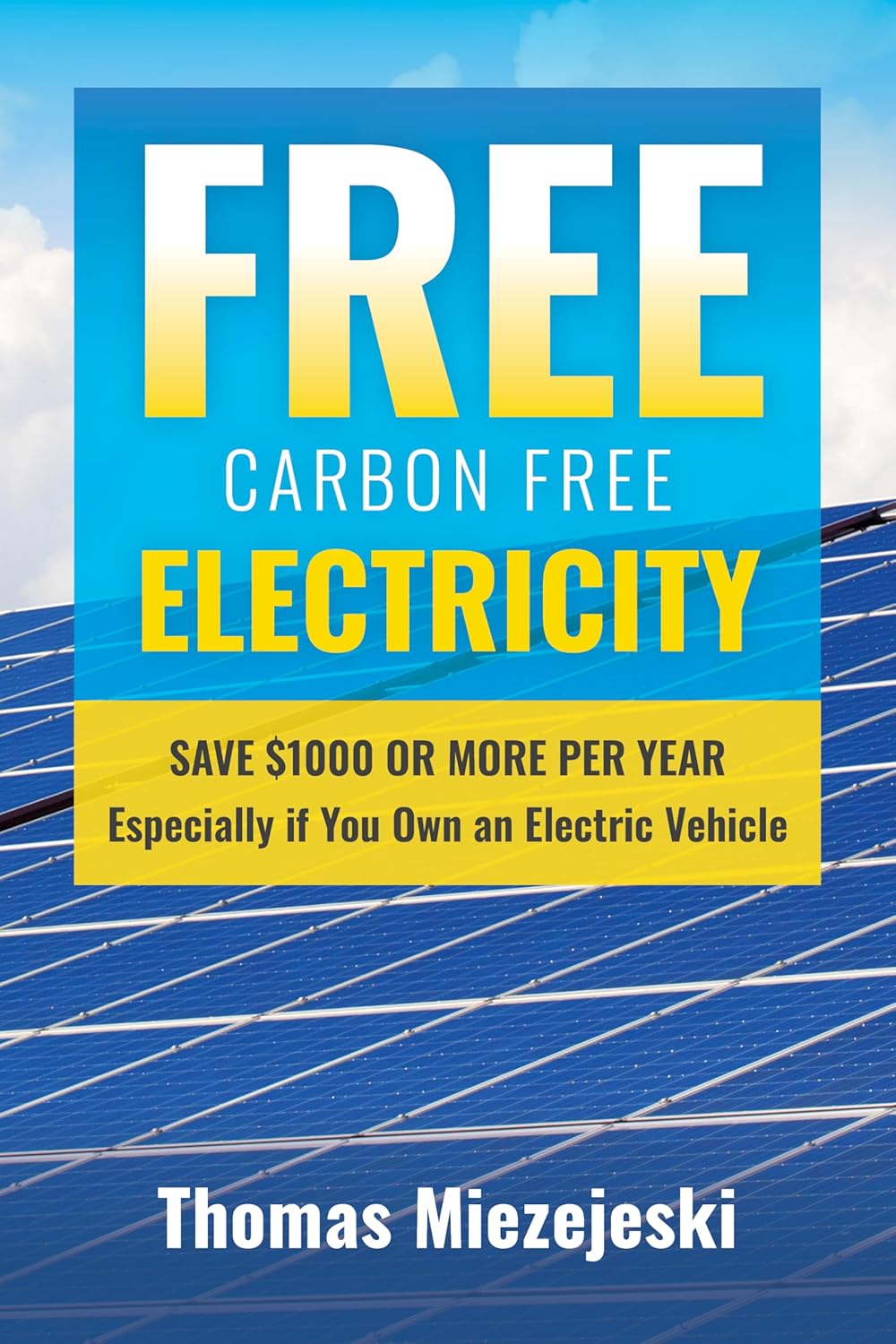

Free Carbon Free Electricity is a practical and urgent argument for residential solar as both an economic opportunity and a cultural turning point. Author Thomas Miezejeski frames solar not merely as green technology, but as a shift in power itself, away from centralized utilities and fossil-fuel dependence and toward homeowners producing, storing, and even driving on their own electricity. The book moves from Edison’s centralized power model to China’s solar dominance, then into storage systems, billing structures, tax credits, renewable energy credits, EV savings, and the author’s larger conviction that sunlight may change daily life as profoundly as agriculture once did.
What I appreciated most was the book’s plainspoken sense of possibility. Miezejeski writes with the enthusiasm of someone who genuinely wants readers to look at their roof, their electric bill, and their assumptions in a new way. His comparison between a well that makes water feel “free” and a solar system that can make electricity feel similarly liberated stayed with me, because it gives the book’s core idea a familiar, almost domestic warmth. I also found the sections on battery storage and electric vehicles especially persuasive, since they connect solar to everyday anxieties: outages, rising rates, fuel costs, and the small helplessness people feel when the grid fails. The Superstorm Sandy example gives that argument emotional weight without needing to overdramatize it.
The writing has an almost conversational feel. The ideas are strongest when Miezejeski is explaining a paradigm shift, such as the difference between generating electricity through motion and harvesting it directly from sunlight, or when he warns readers not to rely too heavily on subsidies that can vanish with political change. I liked that the book doesn’t hide its passion. Its certainty gives it momentum, and even when I wanted more nuance or sourcing, I felt the author’s sincerity pushing through the page.
I liked the book’s willingness to connect solar energy to larger patterns of technological change. The comparisons to Apple computers, cell phones, and the shift from centralized systems to decentralized personal tools made the argument feel broader than just “solar can save you money.” It gave the book a sense of historical movement, as if residential solar isn’t just a home upgrade, but part of a bigger reordering of how people live with technology and infrastructure.
I found Free Carbon Free Electricity to be an engaging and useful introduction to the economic case for solar power. It’s not a detached academic treatment. It’s a call to pay attention, ask better questions, negotiate with installers, understand the bill, and imagine a home that is less dependent on old systems. I’d recommend it to homeowners, EV owners, and curious readers who want a clear, accessible argument for why solar energy matters financially as well as environmentally.
Pages: 82 | ASIN: B0GZ5F52Q3


Posted on May 15, 2026, in Book Reviews, Four Stars and tagged Free Carbon Free Electricity, nonfiction, Thomas Miezejeski. Bookmark the permalink. Leave a comment.



Leave a comment
Comments 0