Blog Archives
Time Travel is About Contradictions
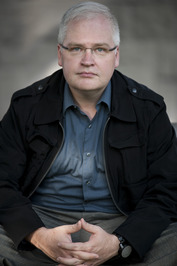
The Monster interviews author Allen Brady, author of The Fruithandler Time Engine.
The Fruithandler Time Engine is about time traveling, from the past to the preset. There are many paradoxes involved with time traveling. How did you handle these in your novel, or were they an obstacle in any way?
The paradoxes aren’t an obstacle; they’re a large part of the charm.
Time travel is all about contradictions. At its core, every single time travel story is about the inversion of cause and effect—about someone in a place they cannot be, armed with information they couldn’t possibly have. When contradiction is your starting point, paradoxes are not merely inevitable, they’re where the fun begins.
Exploring the logical ramifications of esoteric premises is precisely what science fiction was invented for. In no other genre does more entertainment derive from learning the rules, then expanding upon them, and there are no subjects more rife for this kind of speculation than time travel. If thrusting a character out of his proper time leads to paradoxes, my preference is not to ignore or dismiss them, but to embrace them.
One of the primary ground-rules of The Fruithandler Time Engine is that no one in the novel really understands how time travel works. Both Colonel Fruithandler and Deirdre are experiencing a brand new phenomenon for the first time. There are no subject-matter experts to consult here. Deirdre’s decisions are her own to make, and she has no way of knowing what the full consequences of those decisions will be. I wanted the reader to be in the same boat.
The Whenstones do indeed cause paradoxes in the world of the novel. For the most part, the universe doesn’t care. The novel’s focus is on individual timelines. The stones change characters dramatically, but only with respect only to themselves. Thus will effects endure even when their causes cease to be. The daughter will remain even when the mother never had children.
Not because it makes sense, but because it’s fun.
The book was more satirical than expected. Did you intend for the book to be created this way or was this more of an organic growth?
The time travel genre lends itself to satire almost by default. When you remove a character from his own culture and transpose him into another, you’ve created a natural springboard for commentary upon both those cultures. Add humor to the mix, and satire is inevitable.
From the outset, I knew the subject matter of this story would require a comedic tone. The Fruithandler Time Engine is a story of time travelers who know nothing about history. This provides an ample playground for satirizing not only the characters and the worlds they inhabit, but the time travel genre itself.
But while the book may be satirical, my hope is that it will not be read as ridicule. If I play with the conventions of time travel, it is only because I find them fascinating. The Fruithandler Time Engine is meant to contribute to the genre, not to subvert it.
Which part of The Fruithandler Time Engine did you enjoy writing the most?
This is a bit like picking a favorite child. In truth, the book was a hoot to write from start to finish. The Estimable Fellowship of Esteemed Fellows was where the book began, both in concept and finished product. The original germ from which the EFEF sprang was an idea for a radio play in which a group of 19th century gentlemen scientists struggle to conceive of an experiment that would suitably prove the efficacy of their new time machine. That survives in the novel in the form of Fruithandler’s demonstration with the cashew and the aventurine box. When I got the notion to expand that into a contest among the EFEF, I suddenly found myself with a forum for commenting upon phrenology, cryptozoology, and all my favorite pseudosciences.
As the plot of the story unfolded from this seed, each new scene seemed to be a goldmine for exploring a different facet of storytelling. The scene in the future allowed me to experiment with how our language may be evolving. The congregation of the Deirdres let me consider the possibility of a character literally growing tired of her own company. The explosion of the hyper-charged Whenstone gave me the opportunity for a stream-of-consciousness segment unlike anything I’d ever written before.
But if I’m honest, I think Deirdre’s escape from the Wykoff farm was probably the most satisfying section to write. I always find myself doing far more research for each of my projects than I had initially anticipated. Fact-checking one plot point inevitably leads to the discovery of half a dozen tangential bits of trivia, which in turn spawn ideas for new directions to take the story I had not considered before.
In this story, this pattern was most prevalent when I was trying to figure out how Deirdre might charge her Whenstones with only what she could find on an 18th century farm. Once I had decided on the overall plan, I needed to research what kinds of materials Deirdre would need to implement it. That in turn led to consideration of where she might find components like copper and zinc. In the end, I spent hours reading about the history of currency and coinage in pre-Revolutionary America, as well as a good deal on how batteries work.
The end result is a sequence I’m particularly happy with. Deirdre’s plan feels natural, logical, and well within the means of a twelve year-old girl. Being able to produce this kind of material, while simultaneously feeling like I’ve learned something, is exceptionally gratifying.
The characters were smart, but sometimes bumbling and humorous. What was your inspiration for creating these characters?
The first seeds for The Fruithandler Time Engine were planted during an online conversation about time travel. Someone had posited a device that could send you back to any place or time, but only as an observer. If you could not interact with anyone, but only watch events unfold around you, invisible and intangible, where and when would you go?
I suggested that this would be a good way to unravel the Ripper murders. Just post yourself in Buck’s Row on the night of August 30, 1888, and you’re bound to learn something interesting. Another participant, on the other hand, suggested that he would like to be present for the Sermon on the Mount.
I found this answer preposterous. Setting aside the question of whether the sermon actually occurred at all, and wasn’t simply a collection of material culled from other sermons, a conflation of speeches by other prophets, or invented out of whole cloth by the author of the Matthew Gospel, we’re still left with no clue as to when or where it is supposed to have taken place. Forget about the date or time; even selecting a year would be a matter of pure conjecture. And even if you stumbled upon the right location at the right time, would your grasp of ancient Aramaic really be strong enough to allow you to follow along?
This answer reminded me of a sketch from the old Ben Stiller Show, in which Janeane Garofalo played “B-Minus Time Traveler”. The premise was that Garofalo found herself shunted back into the middle of crucial historical events, with only a typical high-schooler’s understanding of what actually transpired. When she met George Washington, she could offer no better advice than that his troops would need more shoes. She tried to warn General MacArthur about the attack on Pearl Harbor, but couldn’t quite remember exactly what day it was that would live in infamy.
Without the opportunity to study rigorously for a specific place and time, a time traveler couldn’t help but do a good bit of bumbling. Transplant anyone a century or more into the past, and he is necessarily going to find himself out of his element. Even the most educated time-displaced character is going to need some time to catch up.
Besides, smart characters who are in over their head are a lot more fun to write than morons.
Alright, you have a time machine, it can only go in one direction, which way do you go; to the future or to the past?
The Fruithandler Time Engine

 The Fruithandler Time Engine is a different time travel book than others I have read. It’s part satire and part adventure. The satire is what I connected with most, which is brilliantly displayed in the language. For example, there is a line in the book that goes” true epiphany can only be found in the dance of the monkey who is not there”. This line is just one example of the many lines that keep the humor fresh and adds a new dimension to the story. Instead of the typical, mad scientist or love-struck genius trying to change time, you get a group of bumbling scientists (by their own definition) who time travel as part of a contest to see which of their “inventions” was better. This is a really unique approach to the time travel genre that kept me intrigued throughout the book. I wanted to know how the story would end because the characters weren’t really sure how they got in the situation in the first place.
I also liked the fact that the time travel was in reverse. Instead of the characters going through time to the 21st century, the 21st century is brought back to them in their time. This creates a unique (mostly humorous) situation where we (as the reader) can view our own history from a different perspective. An example of this occurs when Deidre talks with the group of scientists about intervening in time to prevent something horrible from happening in the future. The question is asked whether it’s OK to stop a bad person now before they get to the time where they do horrible things. This ends up in a discussion about an evil historical figure from our time. The interesting part is that the group of 17th century scientists don’t know or understand who this figure is.
The only issue I had with the book was with the language and word choice. The author displays a very powerful sense of word choice, that required me to look at a thesaurus (or Google) more than a few times. In some cases, this was actually fun. I learned a few more words than I knew before. At other times, it became an obstacle. There were a few times when a simpler word choice might have been better.
The Fruithandler Time Engine does a great job of sticking to the language and dialect, which is a good thing. The bad thing is that it involves words and associations that were a little shocking to read at first. Deidre is an African-American character who gets lost in a time when African-Americans were not recognized as African-Americans. This leads to humorous, but occasionally uncomfortable interactions, between herself and the group of scientists.
Overall, the book was a very unique way to approach the time travel. It was more satirical than expected, but also more realistic as well. Because we get to see unintentional time travel, we see humans as they are-bumbling, sometimes humorous, sometimes not creatures that are trying to make sense of the time that we have we with each other. This book challenged my own perception of time (We can get so caught up in our time.) and allowed me to engage in another time period for a little while. That was an interesting trip!
Pages: 379
ISBN: 1514265818



 LITERARY TITAN