No Borders for Truth
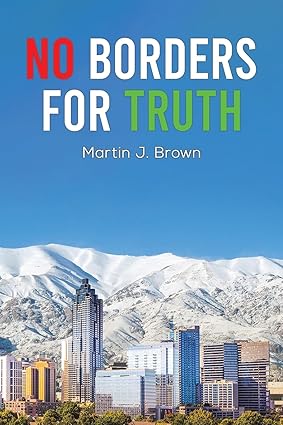

Set against the tumultuous backdrop of the 1970s, No Borders for Truth, by Martin J. Brown, unfolds across two worlds, a family in Iran, entangled in the upheaval of revolution, and another in New Jersey, navigating the quiet devastation of loss. At its heart is Shideh, a perceptive, introspective girl watching her sister drift into the tide of rebellion sweeping through Tehran. Across the ocean, Richard grapples with his own burdens, abandoning personal aspirations to support his grieving family, haunted by his father’s final words. The novel thrives on what remains unspoken silence, carrying the weight of unresolved tension, loss, and fate’s inexplicable intersections. Two souls, untethered by grief, cross paths without fully understanding what forces have drawn them together.
Brown’s portrayal of women in this story is especially striking. Shideh’s mother, a figure of quiet resilience, prays through the night, her whispered faith a thread holding her family together. Shideh herself, torn between helplessness and hope, clings to what remains. Then there is Mahin, adrift in loss. The echoes of Esteri’s death, her vibrant curiosity extinguished in the flames of the Cinema Rex fire, linger hauntingly through Shideh’s narrative. Iranian history, so often sidelined in Western literature, breathes fully in these pages. From the orange groves of Tehran to the creeping suffocation of an emerging regime, every detail is rendered with immersive precision.
From the opening pages, Brown’s prose reads like poetry, vivid, meticulous, and arresting. Each sentence lands with precision, demanding the reader’s full attention. While their paths intertwine meaningfully, the novel remains steadfast in its refusal to become a love story. Instead, it is a meditation on family, exile, and the scars left by revolution and war. The pain of leaving home in search of something better while still yearning for the familiar is captured with heartbreaking authenticity.
What lingers most is how the novel treats history not as a backdrop but as a living force, shaping and shattering lives. The fear in Shideh’s home, the tension in the streets, and the gradual loss of a place that once felt safe all seeps into the narrative, inescapable and raw. Meanwhile, Richard’s grief mirrors this displacement in a quieter, more insular way. Their connection, subtle yet significant, reinforces the novel’s central theme: history, grief, and the indelible imprints left on those who are forced to leave everything behind.
I highly recommend No Borders for Truth to readers who appreciate historical fiction that is both intimate and immersive. This is a story of faith, sacrifice, and the bittersweet reality of gaining something while losing something else. With its lyrical prose and deeply human characters, it is a novel that lingers long after the final page.
Pages: 211 | ASIN : B0DMK8KV9W


Posted on February 4, 2025, in Book Reviews, Five Stars and tagged author, book, book recommendations, book review, Book Reviews, book shelf, bookblogger, books, books to read, ebook, fiction, goodreads, historical fiction, indie author, kindle, kobo, literature, Martin J. Brown, No Borders for Truth, nook, novel, read, reader, reading, story, writer, writing. Bookmark the permalink. Leave a comment.



 LITERARY TITAN
Leave a comment
Comments 0