The Devil’s Footprints (The Dittos of Dawlish)
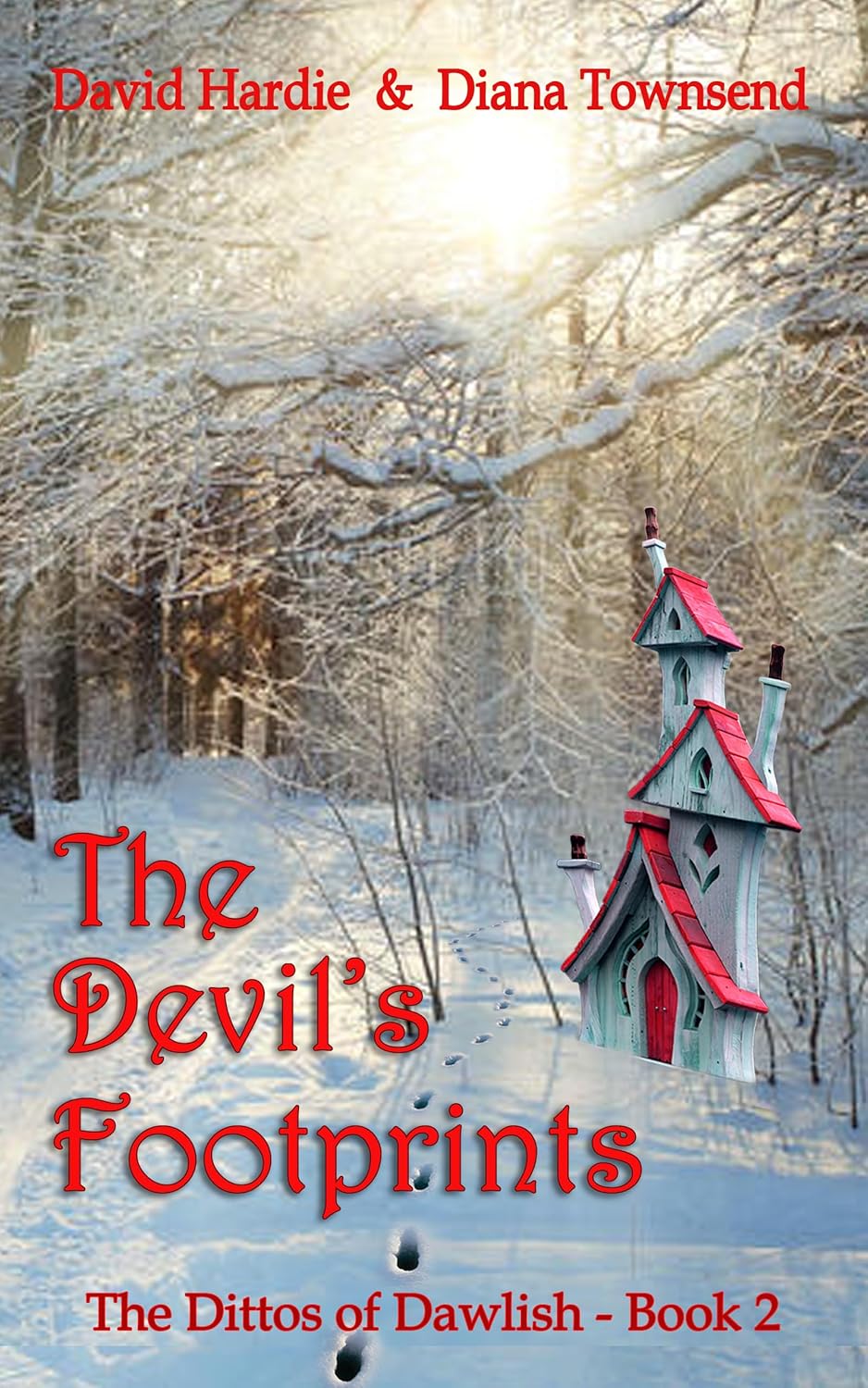

Diana Townsend and David Hardie’s The Devil’s Footprints is a charming and imaginative story set in the Victorian era, blending folklore, history, and adventure. The story follows a secret world of small, humanoid creatures called dittos who live alongside humans in the coastal village of Dawlish. As Queen Victoria’s reign ushers in an age of scientific progress, the dittos face changes and challenges of their own. With a mix of whimsy and real-world consequences, the book explores themes of community, deception, and survival.
The writing style is easy to follow, though it has an old-fashioned charm that fits the historical setting. The story shines in its world-building. The village of Dawlish feels alive, both in its human and ditto forms. The authors do a fantastic job making us feel the size difference between humans and dittos. A simple horse-drawn carriage becomes a monstrous threat, and something as mundane as a wheelbarrow full of manure is an adventure in itself. I particularly enjoyed how the dittos see humans as these powerful, careless giants, oblivious to the tiny lives scurrying beneath their feet. The early chapters introduce us to young Dudley, who immediately captures sympathy with his struggles. His near-miss with the carriage is a heart-racing moment, and it sets the stage for bigger dangers to come.
William, on the other hand, is a fascinating contrast to Dudley. He’s older, hardened by experiences outside of Dawlish, and quick with a lie. His return to the village is filled with deception, and the way he spins grand stories about his time in Bristol, especially the fake tale about being enslaved by elves, is both entertaining and infuriating. The dittos are eager to believe him, which makes his manipulation even more frustrating to witness. It’s clear William sees himself as superior, and his smooth-talking ways make him a formidable presence. The authors make it easy to dislike him while still keeping him interesting. His speech on the beach, where he convinces the dittos to follow his plans, is a standout scene that shows his cunning.
The underlying tension of human expansion adds a deeper layer to the story. The arrival of railway workers, and the slow but inevitable encroachment of industry, feels like an unstoppable force. The dittos, who have lived hidden for so long, are suddenly faced with a problem they can’t ignore. The book does a great job of showing the contrast between those who see change as an opportunity, like William who wants to profit from human waste, and those who see it as a threat, like Emil the elf, who warns of dark times ahead. One of the most striking moments is when Kate and Dudley get stranded on the rocks, caught between rising tides and aggressive seagulls. The tension in that scene is fantastic, and Emil’s rescue flight is a great pay-off. The mix of small-scale action and larger, looming changes keeps the book engaging.
The Devil’s Footprints (The Dittos of Dawlish) is a unique and enjoyable read that I think is perfect for fans of folklore and historical fantasy. It has the feel of a classic adventure story, with strong characters, clever twists, and a world that feels rich and lived-in. Younger readers and fans of books like The Borrowers or The Secret World of Arrietty will especially enjoy it. It’s light enough for casual reading but has enough depth to keep you thinking.
Pages: 308 | ASIN: B0D4JG7RTY


Posted on March 5, 2025, in Book Reviews, Four Stars and tagged author, book, book recommendations, book review, Book Reviews, book shelf, bookblogger, books, books to read, Diana Townsend, ebook, fantasy, ficiton, goodreads, indie author, kindle, kobo, literature, nook, novel, read, reader, reading, story, The Devil's Footprints, writer, writing. Bookmark the permalink. Leave a comment.



 LITERARY TITAN
Leave a comment
Comments 0