Diamonds in Auschwitz
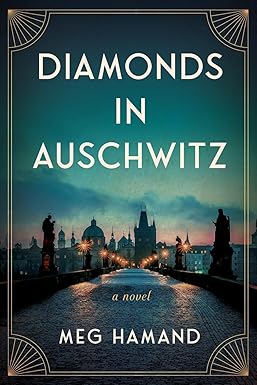

Diamonds in Auschwitz by Meg Hamand is a gut-wrenching novel set during World War II, centered on Rachael, a Jewish woman struggling to survive the brutal realities of Auschwitz, and Samual, a man trying to build a future in a Prague crumbling under Nazi occupation. Their stories orbit a ring, an engagement ring found buried in the mud, a small glittering symbol of hope, memory, and devastating loss. Through vivid, often painful prose, Hamand paints a picture of resilience, shattered dreams, and the stubborn pulse of humanity in the darkest places.
The writing in this book just grabbed me by the heart right from the first page. Hamand’s descriptions of Rachael clawing through mud, finding what she thinks is just a rock, only to later discover it’s a diamond ring, hit me like a punch to the chest. It’s not just the horror of her surroundings; it’s the tiny spark of something beautiful refusing to be snuffed out. Hamand’s style is sharp but full of heart. No flowery nonsense, no wasted words. I found myself rereading sentences like, “Grief had replaced the marrow of her bones,” because they felt true. You can almost feel the mud in your hands, the cold in your bones, the ache that never quite goes away.
One aspect that particularly struck me was Hamand’s ability to use small, carefully chosen details to convey a much larger emotional impact. Like when Rachael keeps the ring dirty on purpose, leaving a bit of mud on it because it reminds her of her daughter Catarina’s brown eyes. That killed me. It’s such a small thing, but it shows how survival isn’t always about food and shelter; it’s about finding reasons to still feel something when everything around you tells you not to. Samual’s chapters brought a different kind of heartbreak. Watching him risk everything to buy that ring for Hanna, then seeing the city he loved crumble into silence and hatred, felt like watching someone lose their home inch by inch, day by day. I was rooting for him, even knowing full well how history tends to end for characters like him.
There were moments when the book was honestly hard to read. Not because the writing dragged, but because Hamand doesn’t flinch away from showing what Auschwitz really was: a machine for killing hope just as much as it killed people. Scenes like Rachael debating whether to throw herself into the electrified fence, or the eerie way she describes the fog she imagines to block out her surroundings, hit me harder than any graphic violence could have. This book hurts, but it’s the kind of hurt that feels important. Like you’re being trusted to sit with someone else’s pain instead of being shielded from it.
Diamonds in Auschwitz isn’t just a story about survival; it’s a story about memory. About the tiny, stubborn things people hold onto when everything else has been taken from them. I would absolutely recommend this book to anyone who loves deeply emotional historical fiction, or who wants a story that punches you in the gut but leaves you grateful for having felt it. Fans of Kristin Hannah’s The Nightingale or Anthony Doerr’s All the Light We Cannot See will feel right at home, though “home” might not be the right word when you’re sobbing into a crumpled tissue at midnight.
Pages: 340 | ASIN : B0DXH3GMWW


Posted on June 16, 2025, in Book Reviews, Five Stars and tagged author, book, book recommendations, book review, Book Reviews, book shelf, bookblogger, books, books to read, Diamonds in Auschwitz: A Novel, ebook, fiction, goodreads, historical fiction, Historical World War II & Holocaust Fiction, indie author, Jewish Literature & Fiction, kindle, kobo, literature, Meg Hamand, nook, novel, read, reader, reading, story, writer, writing. Bookmark the permalink. Leave a comment.


 LITERARY TITAN
Leave a comment
Comments 0