The Sage and the General
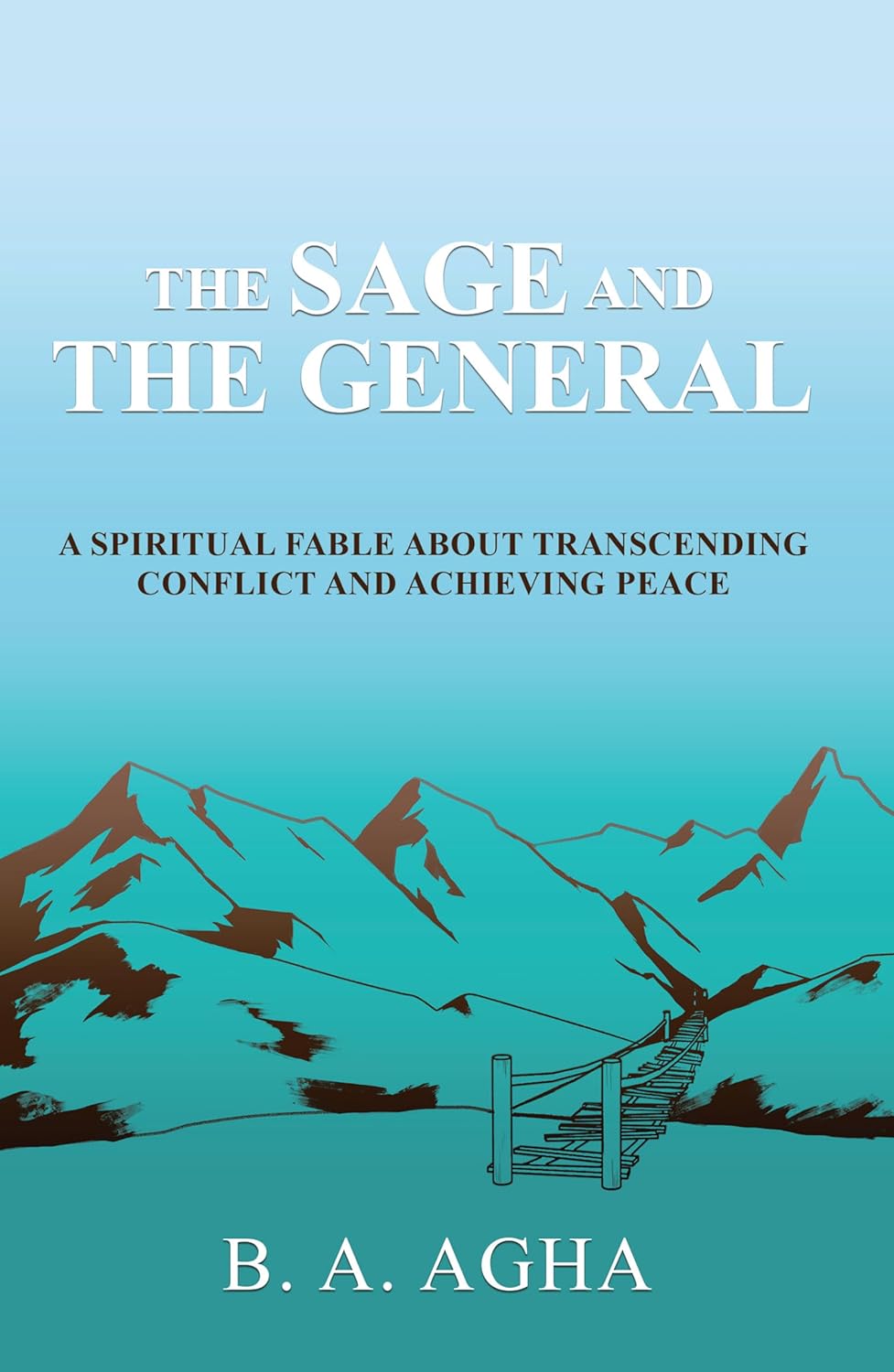

The Sage and the General is a thought-provoking spiritual fable. Author B. A. Agha builds the book around a Himalayan village torn apart by violent swarms of bees, then uses that conflict to tell a larger story about fear, power, revenge, and the hard work of choosing peace. At the center are two opposing figures: the Sage, who believes compassion and understanding can break cycles of harm, and the General, who answers danger with force and control. What follows is less a literal battle story than a moral and philosophical one, where the village becomes a testing ground for how communities think, panic, divide, and either harden or heal.
I enjoyed how direct the writing is. Agha doesn’t hide the book’s intentions behind irony or fancy prose. The story is clean, simple, and deliberate, which fits the fable form. I felt that clearly in the way the bees, the village, and the two leaders are set up, almost like living ideas, but still given enough human tension to keep the book moving. The dialogue can feel more symbolic. This book is not really chasing realism in the ordinary novelistic sense. It’s trying to make moral conflict visible. It wants the reader to stop and consider how quickly self-defense turns into identity, and how easily leadership can start feeding on fear.
I was especially interested in the author’s decision to make the General more than a simple villain. The book could have settled for an easy contrast between wisdom and aggression, but it pushes further and shows how conflict can become its own system, with followers, rewards, habits, and a logic that keeps reproducing itself. The sections where force only creates a tougher enemy felt pointed and uncomfortably familiar, and the later movement toward transformation gives the novel its real weight. When the villagers begin to see that victory might mean something other than domination, the book opens up. It stops feeling like an argument and starts feeling like an invitation. That shift worked for me. It stopped feeling so rigid and gave the story more room for reflection and possibility, and it made the ending feel earned rather than merely hopeful.
I would recommend The Sage and the General most strongly to readers who enjoy spiritual fiction, allegorical novels, and reflective moral tales that are more interested in ideas than plot twists. It will speak most to people who like books about peacebuilding, inner change, and the psychology of conflict, especially if they appreciate fiction that reads almost like a parable. For readers open to a clear-eyed, sincere, and thoughtful spiritual fable, this book has something real to offer. It feels like a conversation about how people lose themselves in conflict, and how they might still find a way back.
Pages: 146 | ASIN : B0CW19TSDM


Posted on April 15, 2026, in Book Reviews, Five Stars and tagged author, BA Agha, book, book recommendations, book review, book reviews, book shelf, bookblogger, books, books to read, ebook, goodreads, indie author, inspirational religious fiction, kindle, kobo, literature, Metaphysical & Visionary Fiction, nook, novel, read, reader, reading, story, The Sage and the General, writer, writing. Bookmark the permalink. Leave a comment.



Leave a comment
Comments 0