Blog Archives
Overcoming Bad Decisions

American Jukebox follows a young boy and his father, Dancer, a baseball pitcher whose life takes an unexpected turn, leading them to a small town where he learns life lessons about shattered dreams and the challenges of growing up. What was the inspiration for the setup of your story?
My first novel, American Past Time (published in 2014) is the prequel to American Jukebox. American Past Time is primarily Dancer Stonemason’s story – his fall from grace, and his recovery. It ends in 1973 when Clayton Stonemason has just returned from Viet Nam. American Jukebox, revisits those early years, but from Clayton’s perspective as a boy growing to adulthood. The second half of the novel follows Clayton on his journey.
Were you able to achieve everything you wanted with the characters in the novel?
I think so. Clayton was a challenge. He had idolized his father as a young boy, and when Dancer was disgraced that wounded Clayton, and he didn’t want anything to do with his father. He didn’t want to be compared to him, but as he grows up it is obvious that he is much like his father and despite his protests he doesn’t hate him. He loves him. The challenge was showing his evolution from wounded child to an adult who through his own bad choices and failures comes to understand that no one is perfect.
What were some themes that were important for you to explore in this book?
All of the Stonemason stories – not just American Jukebox, but also the prequel, American Past Time, and the third book in the trilogy, Everyone Dies Famous are about people making bad decisions and their struggle to overcome those decisions. In Jim Stonemason’s commencement address to his high school, he finishes with this exhortation:
“When we fail, it doesn’t have to be forever. We have to forgive ourselves. Let me repeat that. We have to forgive ourselves. As long as we’re still breathing, we have a chance to make things right. But we can’t if we’re spending all our energy blaming ourselves. So when you stumble, give yourself a break.”
Forgiveness. Perseverance. The opportunity for redemption if we keep trying. If we stay in the game. I guess I would call those the themes I explored in all of these novels.
What is the next book that you are working on and when will it be available?
The novel I am working on now is titled, “Nothing Left to Lose” and it is the sequel to my novel, “Freedom’s Just Another Word…” which are lines from the late, great Kris Kristofferson’s classic song, “Me and Bobby McGee”. I am hoping it will be available next fall, but I have a lot of work to do.
Author Links: GoodReads | X | Facebook | Website | Book Review
Clayton Stonemason idolized his father, a hometown hero in their small Missouri town. But when his father’s life unravels, Clayton loses his way, too. He tries to escape his father’s legacy but discovers he can’t run from his destiny.
AMERICAN JUKEBOX, a story of small-town America in the last decades of the twentieth century, explores the many ways our relationships, hopes, and dreams can alter the course of our lives.
American Jukebox
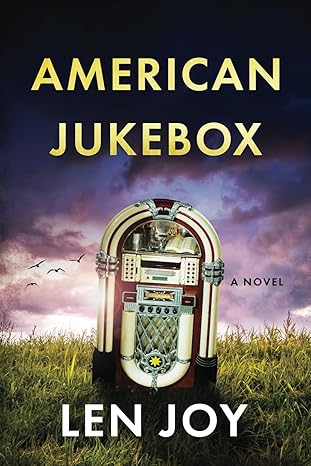

American Jukebox, by Len Joy, is a heartfelt exploration of childhood, family, and the bittersweet transition into adulthood. Set in mid-20th century America, the story centers on Clayton, a young boy, and his father, Dancer, a baseball pitcher whose life takes an unexpected turn. Through snapshots of Clayton’s childhood, the narrative delves into his relationship with his father, who eventually leaves baseball and faces a series of personal and financial hardships. As Clayton navigates the complexities of family life, he learns tough lessons about shattered dreams, harsh realities, and the inevitable challenges of growing up. The story vividly portrays small-town life and the struggles families face when their aspirations falter, weaving a tale of resilience and emotional growth.
In this literary fiction piece, Len Joy captures the essence of how personal choices, family ties, and unforeseen events shape one’s future. Readers are taken on Clayton’s emotional journey as he wrestles with his father’s downfall, his mother’s endurance, and his own coming-of-age. The book’s nostalgic tone, coupled with its vivid depiction of 1950s and 60s America, paints a picture of a time when baseball symbolized not just sport, but hope and heartbreak. Each chapter is concise, making it an easy read, yet packed with emotional depth.
The theme of a dysfunctional family makes for a poignant and, at times, difficult read, with Clayton’s relationship with his father serving as the novel’s emotional core. Dancer’s fall from the pitcher’s mound to working in a factory is a tragic arc, one that resonates with anyone who’s experienced the disillusionment of seeing a parent’s dreams crumble. Clayton’s idealization of his father is gradually dismantled as he confronts the painful truths of adulthood. This depiction of family turbulence and childhood disillusionment is delivered in a subtle yet powerful manner. Joy’s writing is simple yet descriptive, offering vivid imagery without over-complication. Clayton’s emotional growth is paced perfectly, making his journey feel both intimate and relatable. The book touches on universal themes: the fleeting moments of childhood, the bonds within a family, and the inevitable loss of innocence.
American Jukebox is an emotional rollercoaster, filled with relatable characters and a fast-paced narrative that keeps readers engaged. Len Joy’s storytelling brings to life the joys and sorrows of growing up in a world where dreams and reality often collide. It’s a touching and simple read, deeply resonant with anyone who’s ever grappled with the complexities of family and the passage of time.
Pages: 326 | ASIN : B0DF5B3QV4




 LITERARY TITAN