Blog Archives
Deep, Soul-Level Understanding

Safe Haven follows a fallen Chicago news anchor who retreats to a crumbling farmhouse and finds redemption among strangers learning to live with their own brokenness. What inspired you to center Safe Haven around rebuilding after loss?
I love writing stories with broken characters—individuals struggling with grief, loss, and regret. People whose wounds run deep, whose silence often speaks louder than words. Yet within this brokenness, they somehow find a thread of hope, a quiet courage, a stubborn perseverance that keeps them moving forward. If they push through the pain, they come out on the other side changed in a way that makes them view the world in a different light. And when their eyes are open, they start to see the silent battles others are fighting. That recognition—that deep, soul-level understanding—is empathy. Empathy is not a character weakness. It is strength wrapped in softness. It is the heartbeat of humanity. To feel deeply is not to be fragile—it is to be brave. In my writing, I strive to illuminate the power of empathy, compassion, and hope for humans and animals alike.
The relationships in East Haven feel real. Were any of the characters or their struggles drawn from people you’ve known?
They didn’t come from any one person, but from a collection of individuals. People who have endured pain and carry wounds that don’t always show, but shape the way they move through the world. I’ve known people who have been through unimaginable tragedies, who have suffered physical, mental, and emotional abuse, and have found a way to heal those wounds through faith, hope, and love. Not in a religious sense—although many people find healing that way—but in a spiritual sense: in the presence of someone who cares deeply, in the quiet of nature, in the soul of an animal. Those are the kind of people I love to write about. The kind I find strength in. The kind that endures and transforms.
You write grief with so much restraint and honesty. How did you find the right emotional balance without tipping into sentimentality?
Finding that balance was incredibly difficult for me. I’ve always been someone who feels deeply, so stepping into Michael’s point of view—a man who struggles to name, express, or even acknowledge his emotions—was a struggle. His tendency to shut down or get angry felt foreign to me. But what started as a challenge became a blessing. It was a character fault that didn’t just serve the story—it shaped it. Michael’s silence, his internal battles, became a starting place for the growth he’d experience throughout the novel. Two things helped me keep the portrayal raw and honest. First, I created Mac—a character who became a mirror and a guide for Michael. Mac wasn’t just a sounding board; he’d done his own emotional work and could recognize the pain Michael was trying to hide. Through their dynamic, I could give Michael space to stumble, to resist, and eventually to speak. Mac helped him find language for the things he’d buried, and in doing so, helped me stay true to the emotional arc without forcing it.
Second, I had a writing partner who acted as an emotional compass. Doug wasn’t afraid to tell me when my own feelings were bleeding too heavily into the narrative—when Michael’s voice started sounding more like mine. That feedback was invaluable. And I learned that emotional truth doesn’t always mean emotional intensity. Sometimes, it means restraint. Sometimes, it means letting the silence speak.
What is the next book that you are working on, and when will it be available?
I’m currently working on the sequel to Safe Haven and, if all the stars align, hope to have it published sometime next year. I am also looking at publishing a collection of short stories.
Author Links: GoodReads | Facebook | Instagram | Amazon
On the eve of his 40th birthday, Michael Russo faces a devastating trifecta: the loss of his job, a crisis of self-doubt, and a broken engagement with the love of his life, Anna. On impulse, he buys a run-down forty-acre farm unaware the dilapidated barn, home to a one-legged turkey and a blind rooster, harbors mystery.
It isn’t long before Michael’s life is once again turned upside down and he finds himself raising his daughter, Brie, alongside Anna’s overbearing parents. While they fight about what’s best for Brie, she develops an enigmatic attachment to the barn’s residents. A bond that cannot be broken.
As Brie struggles with one mysterious illness after another, Michael discovers she was born with a unique gift. One that has the power to change the world, but also the potential to endanger her life.
In a race against time, Michael must face his greatest fear to safeguard his daughter, whose innocence and extraordinary talent have forever altered his life.
Elizabeth Stiles’ debut novel, Save Haven: Where Hope Lives, intricately weaves together themes of loss, resilience, and the unexplainable, culminating in a poignant exploration of the power of love, healing, and the interconnectedness of all beings.
Safe Haven – Where Hope Lives
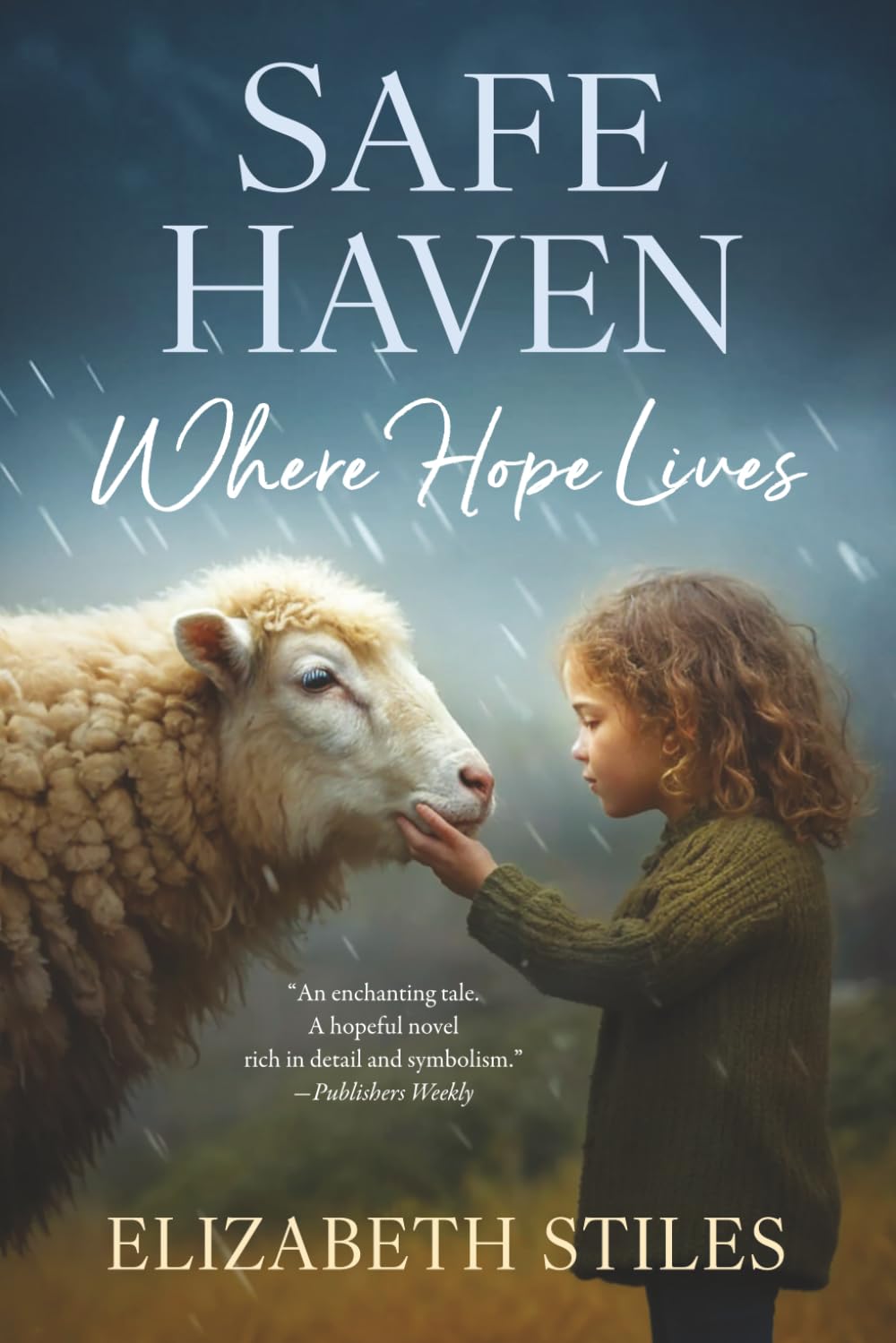

Elizabeth Stiles’s Safe Haven: Where Hope Lives tells the story of Michael Russo, a Chicago news anchor whose seemingly perfect life shatters overnight. After losing his career and fiancée, he retreats to a crumbling farmhouse in East Haven, hoping to rebuild both his home and himself. There, he meets a cast of characters who carry their own wounds. Mac, a man haunted by loss; Sally, a sharp-tongued shop owner raising her nonverbal son; and Charlie, a tough young woman scarred in ways that go far beyond the physical. What begins as a story of personal failure grows into a web of redemption and second chances. The novel weaves pain, love, and hope into something honest and deeply human.
From the first chapter, I felt swept into the quiet ache of this story. The writing has a cinematic pull. Clean dialogue, vivid imagery, and just enough restraint to make the emotional moments land hard. Stiles doesn’t rush anything; she lets grief breathe. Her prose reads like conversation, unpolished in a way that makes it real. The story asks what happens when life strips away all the things you think define you. I liked that it never promises easy answers. At times, the pacing slowed, but the stillness fit the theme. It felt like sitting beside someone who’s hurting and finally ready to talk.
This book hit me harder than I expected. I caught myself caring about these people as if they were neighbors. There’s a quiet beauty in the way Stiles writes brokenness, not as tragedy but as possibility. The connection between Michael and Mac, and later with Sally and Henry, shows how love can exist in small gestures, in the messy middle of pain. The themes of faith and suffering run deep, yet they never feel preachy. What stood out most was how the story treats hope not as something shiny or naive, but as something fought for. It reminded me that redemption doesn’t come in one grand moment; it seeps in slowly, like light through old windows.
It’s emotional but not sentimental, thoughtful without being heavy-handed. The story speaks to anyone who’s ever had to start over, anyone who’s loved and lost and dared to love again. I’d recommend it to readers who enjoy character-driven fiction, to fans of Nicholas Sparks or Kristin Hannah, or to anyone looking for a story that feels grounded in real pain and real grace.
Pages: 300 | ASIN: B0DS16ZBCX




 LITERARY TITAN