Blog Archives
Gone The Sun
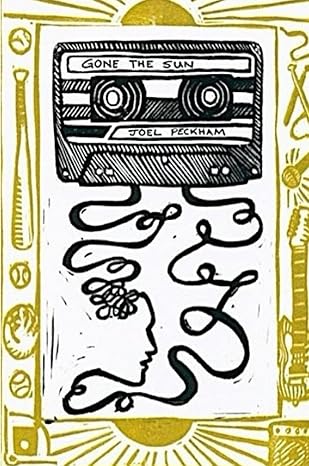

Joel Peckham’s Gone the Sun is a searing memoir wrapped in a tender love letter to his father, himself, and the complicated beauty of memory. Set mostly in the nostalgic-yet-chaotic backdrop of Camp Manitou, this book tracks Peckham’s navigation through grief, identity, generational legacies, and dementia, his father’s, and possibly his own. Through lyrical storytelling, he examines what it means to lose and find oneself in the rhythms of place, people, and pain. The memoir reads like a long conversation with an old friend, raw and honest, never trying to fix things, only to understand.
What struck me most and most powerfully was the depth of emotional vulnerability Peckham allows himself to reveal. In the opening scene, as he portrays his father’s anger as both atmospheric and oppressive, I felt a visceral sense of unease stir within me. The description of his father’s explosive moods, their routine eruptions, and the fallout that ripples through a summer camp already humming with energy, hit home. “You just don’t understand,” his father says, and suddenly, we’re in it. The first chapter is remarkable, striking a careful balance between lyricism and impact, maintaining poetic grace without sacrificing clarity or momentum. I found myself returning to certain passages, drawn by the cadence and precision of the prose.
Peckham’s integration of rhythm and sound into the structure of the narrative is both deliberate and profoundly affecting. His relationship with music serves as a form of sanctuary, a language he continues to share with his father when spoken words no longer suffice. When he writes, “Rhythm is life. Is peace,” the sentiment resonates with unmistakable weight. His descriptions of baseball drills as musical compositions and the ambient noise of camp life as a kind of symphonic backdrop elevate the prose beyond observation into something lived and embodied. The music program he builds becomes a refuge not only for himself but for the marginalized and overlooked, both campers and staff. It is not merely about music; it is about creating meaning and belonging in a world that can so often feel overwhelming and dissonant.
Peckham’s portrayal of his father’s dementia is both devastating and deeply unsettling. He captures, with unflinching clarity, the painful contradiction of witnessing someone gradually disappear while still physically present. “He doesn’t just forget things, he forgets who he is,” he writes a line that lingers long after it is read. Peckham does not exempt himself from scrutiny; his own history of trauma, brain injury, and profound personal loss permeates the narrative, often just beneath the surface. Yet he continues to persevere, showing up for his students, the camp community, and most of all, his father. At times, this devotion is marked by resentment, at others by tenderness, but it is always rendered with striking honesty. In one particularly affecting moment, he embraces his father and simply says, “I know, Dad. I know.” It is a moment of raw human truth, an acknowledgment that sometimes presence and empathy are the only answers we have.
This is not a neatly structured memoir. It is expansive, circuitous, and deliberately so, mirroring the unpredictability and complexity of lived experience. Gone the Sun resists the temptation to impose order on chaos, instead offering a narrative that embraces uncertainty and emotional truth. I would recommend this book to anyone who has cared for a loved one facing memory loss, struggled to hold a family together through sheer will and fragile hope, or turned to music as a means of survival. This is more than a tribute; it is an unflinching reckoning with grief, identity, and love.
Pages: 97 | ASIN : B0DNTQV5FS




 LITERARY TITAN