Blog Archives
El regalo especial de Áloe Vera
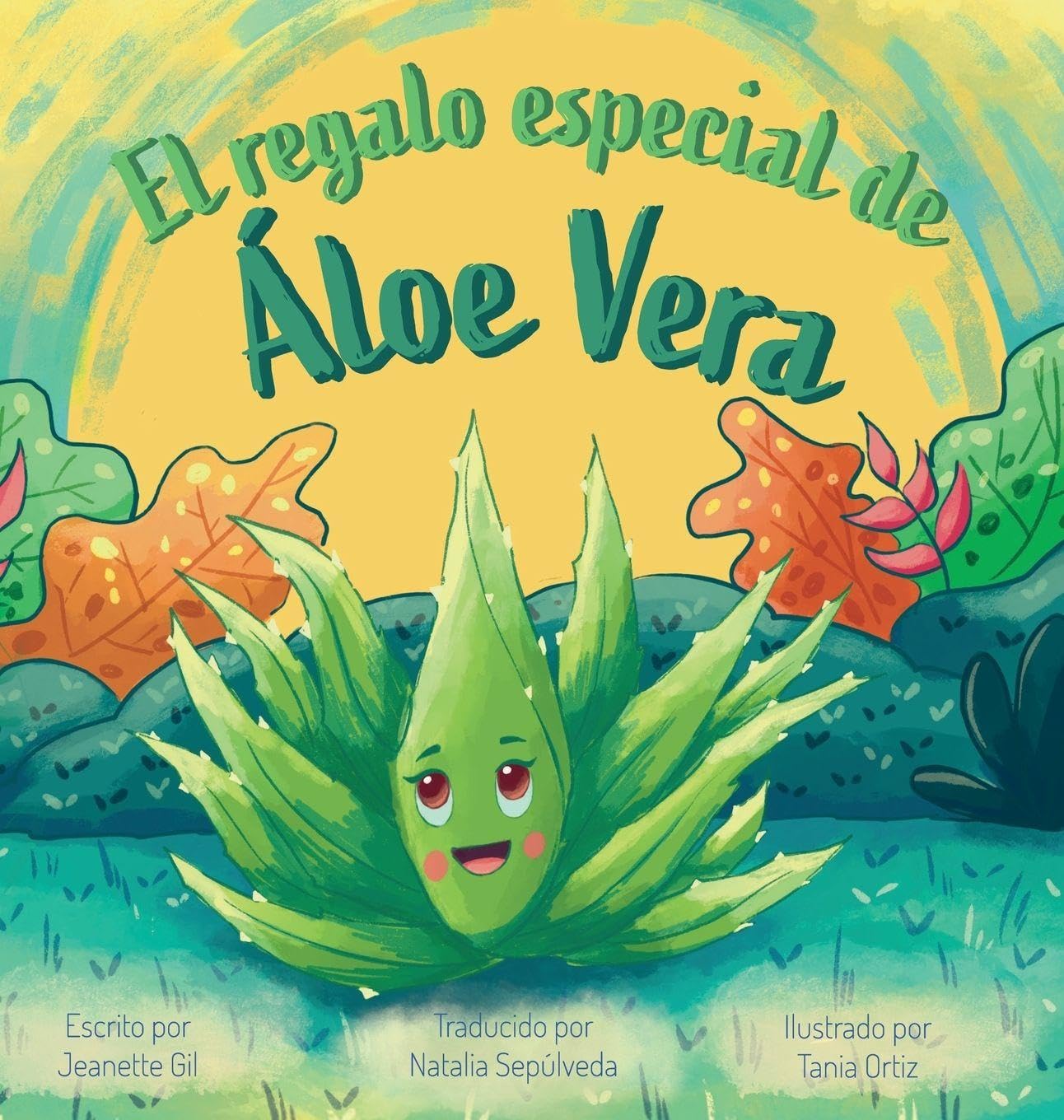

El regalo especial de Áloe Vera, de Jeanette Gil, es un libro infantil entrañable sobre una pequeña planta de aloe que se siente común y corriente al lado de las flores coloridas y fragantes del jardín. Áloe observa que las rosas tienen pétalos hermosos y la lavanda posee un aroma delicioso, mientras que sus propias hojas son gruesas, puntiagudas y sencillas en comparación. Mientras las demás criaturas admiran las flores, ella se pregunta en silencio qué es lo que la hace especial. Esa sencilla inquietud dota a la historia de un núcleo emocional que los niños pequeños pueden comprender fácilmente, especialmente aquellos que alguna vez se han comparado con otra persona.
La historia cobra un tono más alegre cuando los animales del jardín empiezan a descubrir lo que Áloe puede hacer. Cuando Conejita se lastima, el gel de Áloe ayuda a aliviar su piel, y más tarde Robin descubre que el gel refrescante de la planta también puede ayudarle a él. Esos momentos transforman gradualmente la percepción que Áloe tiene de sí misma. En lugar de medir su valor por los pétalos o el perfume, empieza a ver que posee un don útil y bondadoso. Me gustó que esta revelación surja a través de sus interacciones con los demás; esto mantiene el mensaje vinculado a la acción de la historia y otorga un propósito real a los animales secundarios.
Me encantaron las ilustraciones. El jardín está lleno de verdes intensos, cielos turquesa, hojas naranjas, flores moradas y animalitos muy expresivos, por lo que casi todas las páginas dobles transmiten una sensación de actividad divertida y acogedora. El rostro de Áloe es especialmente expresivo: pasa de la tristeza y la incertidumbre a la sorpresa y la felicidad a medida que empieza a conocerse mejor. Las ilustraciones también aprovechan muy bien los efectos de sonido exagerados, como «¡CROAC!», «¡ZUM ZUM!» y «¡CRI! ¡CRI!», lo que hace que el libro sea muy entretenido para leer en voz alta. Cuando todas las criaturas del jardín se reúnen alrededor de Áloe, las imágenes refuerzan visualmente cómo se ha ampliado su mundo.
Al final, Áloe comprende que lo más importante es lo que lleva en su interior; esta conclusión resulta muy convincente porque los lectores han visto cómo su bondad se vuelve útil para las criaturas que la rodean. El paso de las estaciones añade otro detalle encantador, mostrando que las flores se marchitan y el jardín cambia, mientras que Áloe permanece verde y fuerte. Es una forma atractiva de hablar con los niños sobre la autoestima, la utilidad y el valor de aquellas cualidades que no siempre resultan evidentes a primera vista. Con sus personajes amables, sus ilustraciones llenas de vida y su delicada evolución emocional, El regalo especial de Áloe Vera resulta especialmente idóneo para la lectura compartida y para conversar sobre aquello que hace única a cada persona.
Paginas: 44 | ASIN: B0HF2LSHSJ

Bubbles in Summer (Seasons with Bubble Girl series)

Bubbles in Summer by Wanda Carter Roush is a cheerful children’s book that follows Bubble Girl through the sights, sounds, and small pleasures of summertime. The book moves from one familiar summer moment to the next, with bubbles floating through backyards, gardens, beaches, boardwalks, fireworks displays, and warm evenings outside. The rhyming text gives the story an easy read-aloud rhythm, and the bubbles create a playful thread that connects every scene. I especially liked how the book notices ordinary things children might recognize from their own summers, such as sprinklers, strawberries, picnics, sandcastles, fireflies, ice cream, and playing outdoors. That gives the story a cozy, recognizable feeling while still keeping each page visually busy and fun.
The illustrations are bright, colorful, and packed with details, so younger readers have plenty to look at even after the words have been read. The bubbles themselves are especially eye-catching, with swirling rainbow colors that make them seem almost magical as they drift from scene to scene. The illustrators also fill the pages with children of different backgrounds and abilities enjoying summer together. One of the strongest visual moments comes near the end, when Bubble Girl, who uses a wheelchair, is shown spending time with new friends on the beach. The pictures make her part of the action naturally and warmly. There are also little animals, beach toys, flowers, food, kites, shells, and other details tucked into the scenes, which makes the picture book feel like something children can explore.
There’s a gentle message about friendship running underneath all the summer fun. Near the end, Bubble Girl connects with a new friend who uses sign language, and the story emphasizes that laughter, kindness, expressions, and shared play can bring people together. The back pages extend that idea by introducing American Sign Language, showing a few signs and an ASL alphabet that children can try for themselves. The book also adds interactive activities, including an “I Spy” search for summer words beginning with S and a hidden puppy that readers can look for throughout the pages. Those extras fit the book well because they encourage children to slow down, study the illustrations, and participate in what they’re seeing.
Bubbles in Summer feels like a celebration of childhood summer days, with an emphasis on play, friendship, curiosity, and inclusion. It would work especially well as a read-aloud for preschool and early elementary children because the rhyme keeps the language lively while the illustrations give them plenty to discuss. The book’s strongest quality is the way it turns simple seasonal experiences into something worth noticing. A bubble floating past a garden, a beach ball bouncing along the boardwalk, or friends laughing together becomes part of a larger picture of what summer feels like to a child. By the final pages, the story leaves readers with the sense that friendship can begin in quiet, simple ways, sometimes with little more than a smile, a shared game, and the willingness to join in.
Pages: 30 | ASIN: B0GXKGH8T7
Do You Know You’re Precious?

Do You Know You’re Precious? by Audum Griffin is a tender Christian picture book built around the small details that make caring for a child feel so personal. The narrator delights in baby toes, smiles, sneezes, laughter, bath time, books, meals, cuddles, and sleep, turning ordinary moments into expressions of deep affection. As the book continues, that parental love becomes a way of introducing a larger spiritual idea: a child is precious not only to a parent, but also to God. The simple, rhythmic language gives the book the feel of something meant to be read aloud, especially during quiet time with a young child.
I liked how naturally the book moves from playful observations into its faith-centered message. Early pages focus on familiar family experiences such as peek-a-boo, baths, reading, and feeding, while later pages connect those acts of care to ideas about God’s love, protection, and purpose. The line about a parent’s heart loving a baby before their eyes ever did is especially effective because it gives the book an emotional center before the spiritual parallels become more explicit. By the time the narrator calls the child God’s “masterpiece,” the idea feels connected to everything that came before it.
The illustrations are loose, expressive, and full of movement, with soft washes of color that suit the affectionate tone of the text. They also show a variety of children and caregivers in different everyday situations, which helps the message of being loved and valued feel broad and welcoming. Some of the most memorable spreads turn the book’s ideas into visual metaphors, especially the shelves of jars labeled with treasured memories. That image makes the thought of a parent storing away precious moments feel concrete and child-friendly. The artwork also has a handmade quality that fits the intimate voice of the book.
What gives Do You Know You’re Precious? its identity is the way it blends a baby book, a celebration of parenthood, and a Christian message about worth. Griffin’s note to readers makes clear that the book is meant for adults as well as children, and that the experience of parental love inspired her understanding of God’s love. The Scripture selections at the end reinforce ideas already woven through the story, including being wonderfully made, cared for, protected, and called a child of God. That makes the book especially well suited for families looking for a faith-based read-aloud that connects spiritual ideas to the ordinary tenderness of raising a child.
Children Learn With Their Entire Bodies

Gigglet and Wigglet’s Alphabet Hop! transforms learning the alphabet into a colorful, movement-filled adventure that invites young readers to say, dance, laugh, and hop their way from A to Z. What inspired you to turn the alphabet into such an active, movement-based experience?
As we all know, children don’t just learn with their eyes, they learn with their entire bodies. Traditional alphabet books are wonderful, but I wanted to tap into the natural energy of young kids and bridge the gap between reading and physical play. Growing up, I never sat still long enough to read a single sentence, let alone an entire book! I was intensely energetic and active, and I would much rather have been playing outside than sitting still in a classroom.
By turning letters into active movements, we use gross motor skills to help anchor cognitive learning. When kids are hopping, giggling, wiggling, and dancing their way from A to Z, learning the alphabet stops feeling like a lesson and becomes pure fun. That joyful association is the best way to spark a lifelong love of reading.
How did you choose the words, settings, and activities that represent each letter of the alphabet?
Honestly, I just tapped into my inner big kid! When I was brainstorming, I asked myself: If I were diving into an alphabet adventure right now, what would I want to see, where would I go and where would my imagination take me? When I have readings at schools and events, I always ask the kids what they want to see as well. They have great imaginations and sometimes it’s up to us as adults to help them unlock and explore their creative mindset.
My extremely talented Illustrator and I wanted the settings and activities to jump off the page and to feel alive and playful. But beyond that, we paid a lot of attention to the pure joy of language, specifically, which words are just plain fun to say out loud, especially when you repeat them three times. For example, saying ‘yo-yo’ three times fast is so fun; we dare anyone to try it without giggling! That kind of playful rhythm is what makes the alphabet stick in a child’s mind well after they have closed the physical book.
What led you to include the “Alphabet Hop” dance and QR code as part of the reading experience?
Books don’t have to stay flat on the page anymore. I wanted to build a bridge between traditional reading and the digital world that kids love today, while keeping them physically active.
The QR code brings the ‘Alphabet Hop’ dance to life right on screen, giving little ones a guide to match the physical actions in the book. It transforms storytime into an interactive, whole-body experience where parents, guardians, teachers and kids can dance and laugh together. When reading feels like an event, it creates memories that make kids want to pick up a book again and again.
I didn’t have anything like this growing up, and I think I would have loved to learn the alphabet in such a fun, interactive way. I want kids to feel empowered and excited about coming up with their own dance moves to the bouncy rhythm. Ultimately, I hope it encourages children to collaborate, spark new friendships, and have fun creating something together.
Why was it important to include an English-Spanish vocabulary chart at the end of the book?
Language learning was a huge part of my upbringing, my parents and teachers always encouraged us to explore other languages. Plus, during my background as an opera singer, I had the incredible joy of learning and performing in multiple languages, and Spanish has always been an absolute favorite of mine.
There is such a profound sense of joy, pride, and connection when you can interact with others in their native tongue. Because I do a lot of readings in predominantly Spanish-speaking areas, I wanted to ensure those communities felt included and celebrated right on the page. Ultimately, providing this resource is about giving kids an approachable way to discover another language and supporting childhood literacy for families who might not otherwise have access to beginner bilingual tools.
Author Links: GoodReads | X | Facebook | Website
Meet Gigglet and Wigglet, two high-energy piggy siblings who believe that learning should never sit still. In this vibrant and interactive tale, join big sister Gigglet as she takes her enthusiastic baby brother, Wigglet, on a joyful journey to discover the true magic of the alphabet. But this isn’t your average, quiet storytime book―it is a full-body, high-energy experience designed to encourage children (and adults!) to giggle, wiggle, and hop their way from A to Z.
Turn Storytime Into a Dance Party! Why just read the alphabet when you can dance it? This “piggy perfect” adventure turns every letter of the alphabet into an absolute party.
*Interactive QR Code: Packed with modern fun, readers can scan the built-in QR code to unlock guided, kid-friendly dance moves that bring the story to life.
*Bouncy Rhythm & Rhyme: Prefer to set your own pace? Create your own groove to the book’s infectious, bouncy rhythm that naturally gets little feet hopping and bodies wiggling.
*Active Learning: Perfect for burning off extra energy, this book seamlessly blends early literacy with motor skills, making it a dream for beginning readers.Bonus Bilingual Learning Inside!
The fun doesn’t stop at the letter Z. Flip to the back of the book to find a special A to Z learning chart featuring both English and Spanish translations for every single letter. It’s the perfect tool for building vocabulary, introducing a second language, and reinforcing everything your little one learned during their dance-along adventure.
Whether you are a parent looking for a way to make reading more engaging, a teacher wanting to liven up circle time, or just a fan of irresistibly cute piglets, Gigglet and Wigglet are ready to jump off the page and into your heart.
Are you ready to shake up your reading routine? Grab your dancing shoes and join the piggy party today!
Made to Fly Free

Made to Fly Free by Alison Schmidgall follows Little Peep, a young robin who’s eager to leave the nest and experience the freedom he sees around him. He wants to fly before his wings are ready, and much of the story centers on the tension between that eagerness and the patience growing requires. His parents gently remind him that his wings need time to strengthen, so Peep eats, waits, watches, and slowly changes until the day finally comes when he’s ready to fledge. The story gives young readers an easy way to understand that wanting something badly and being ready for it aren’t always the same thing.
Schmidgall’s writing has a lively read-aloud rhythm, with short phrases, repetition, rhymes, and playful sounds such as “chirp, slurp, gulp” and “flutter, flutter, flutter.” Those choices keep the story moving even during the sections when Peep is waiting. I especially liked how his impatience feels believable. He tries to spread his wings, gets frustrated when he can’t do what the other birds can do, and then remembers his mother’s reassurance that his time will come. That gives the book a warm emotional center without turning the lesson about patience and courage into a lecture.
Hannah Bird’s illustrations add a great deal to the storytelling. The soft, earthy palette of rust, brown, gold, green, and pale sky blue gives the book a gentle outdoor feel, while Peep’s expressive poses make his emotions immediately readable. The pictures also become more energetic as he gets closer to flying. Earlier spreads show him nestled safely in the nest or watching the world from above, while the flight sequence fills the pages with repeated images of Peep tumbling, spinning, swooshing, and finally soaring. Hand-lettered sound effects and looping motion lines make those pages feel almost animated. The illustrations carry much of the humor, suspense, and sense of movement.
What makes Made to Fly Free appealing is the way a small moment in nature becomes a story about growing into something you’re meant to do. Peep’s first flight isn’t presented as a single burst of bravery. It comes after waiting, nourishment, physical growth, encouragement, one shaky attempt, and then continued practice. By the end, he’s flying freely day after day while the children below cheer him on. It’s a sweet, visually inviting picture book that should work especially well for children facing a new skill, a big milestone, or one of those frustrating stretches when they’re ready for the next thing before the next thing is quite ready for them.
Pages: 32 | ASIN: 1947871072
Peanut Butter’s Problem

Brian Taylor’s Peanut Butter’s Problem is a playful children’s book about a jar of peanut butter who can’t understand why the kind woodcutter he lives with keeps passing him over. Feeling unwanted, Peanut Butter turns to the other foods in the refrigerator for advice, hoping to discover a sweet food that will make him more appealing. Ketchup, Lemon, and Butter each try to help, while Hot Sauce responds harshly. The story uses rhyme and plenty of casual dialogue to give the refrigerator characters distinct personalities and keep the plot moving at a lively pace.
What gives the story some emotional weight is Peanut Butter’s search for a place where he belongs. He goes from feeling like “a nobody” to becoming hopeful when Butter suggests honey, only to learn that the woodcutter is allergic to it. His disappointment is met with encouragement from his friends, who promise that there’s another sweet food out there for him. That turns a funny story about talking condiments into one about friendship, persistence, and the effect kindness can have when someone is discouraged. The relaxed language, with characters calling each other “dude” and “bro,” also makes their conversations sound like friendly banter children can easily follow.
Peanut Butter, Ketchup, Lemon, Butter, and Hot Sauce have expressive faces that make their moods immediately clear, from Peanut Butter’s teary frustration to his friends’ excitement when grape jelly finally arrives. Many spreads alternate between text presented against the inside of the refrigerator and colorful full-page scenes, so the refrigerator itself becomes almost like a little neighborhood where the characters live. The pictures also carry some of the humor, such as Peanut Butter crashing into the newly arrived jelly jar and his friends literally jumping for joy afterward. That visual storytelling helps younger readers understand the emotions even when they aren’t reading every word themselves.
The arrival of Sadie O’Grady brings the different parts of the story together in a satisfying way. Her care package helps the sick woodcutter, introduces the grape jelly Peanut Butter has been searching for, and leads to a dinner party where food and friendship are shared with everyone. The final moments also return to the story’s message about kindness when the other foods confront Hot Sauce and he admits that he was mean. Peanut Butter’s Problem has the cheerful silliness of a talking-food adventure, but underneath that is a warm story about finding companionship, accepting help, treating others well, and discovering that sometimes the right match arrives when you least expect it.
Pages: 60 | ASIN: B0FBRBW6R8
Gigglet and Wigglet’s Alphabet Hop!
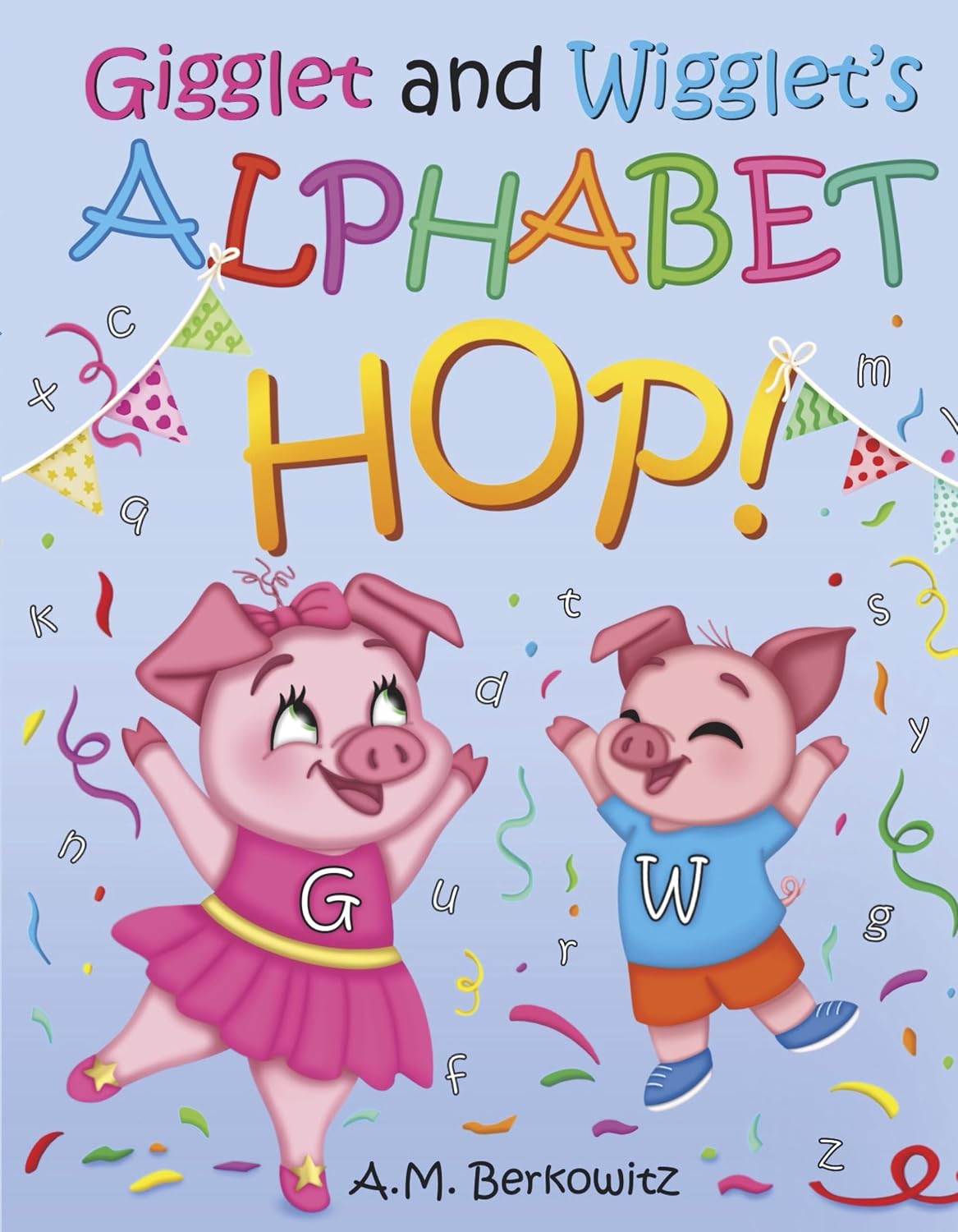
Gigglet and Wigglet’s Alphabet Hop! by A.M. Berkowitz turns learning the alphabet into an energetic trip from A to Z. Each letter is paired with a familiar word, such as apple, bubbles, dinosaur, ice cream, rocket, and zebra, while Gigglet and Wigglet act out a playful scene connected to it. The repeated wording invites children to say each word aloud several times before joining in with the recurring “Hip, hop, hooray!” saying. That predictable pattern makes the picture book especially easy for young children to follow and participate in.
The book has a strong read-aloud quality because it treats the alphabet as something children can say, move to, and enjoy rather than simply look at. There’s even a QR code near the beginning that introduces an “Alphabet Hop” dance, encouraging readers to create their own movements along with the rhythm. The word choices also give the book plenty of variety. One page might send the characters into the jungle, while another puts them on a train, at a party, in a garden, or riding a unicorn. That constant change of setting keeps the alphabet sequence lively without making the basic structure difficult to understand.
The illustrations are bright, colorful, and packed with cheerful details, with the two pig characters changing costumes and activities to match each letter. For F, they appear around a bright red fire truck, while R sends them into space in a rocket, and Z has them dressed in zebra stripes beside a zebra. The pictures often add little visual jokes and story details beyond the main vocabulary word, so children have plenty to notice even after they know the alphabet pattern. Large letters and color-coordinated vocabulary words also stand out clearly on each page, helping connect the printed letter with the object or idea shown in the illustration.
There’s also a useful bonus at the end: an English-Spanish vocabulary chart covering the alphabet words from the book, giving families another way to revisit what they’ve read. Alphabet Hop! feels built for participation. It combines repetition, movement, colorful scenes, and simple vocabulary in a way that should work especially well for preschoolers and beginning readers. It’s the kind of children’s book that invites a child to speak up, point at the pictures, bounce along, and probably ask to start again once Z has had its turn.
Pages: 32 | ASIN: B0H8WZ453R
So You Want To Be A Geologist

So You Want To Be A Geologist is an engaging and informative introduction to geology for young readers. A Grand Prize winner in the 2026 Purple Dragonfly Book Awards, the book is especially well suited for children ages 10–14, although younger rock lovers may also enjoy reading it with an adult. It invites readers to look more closely at the ground beneath their feet and discover how rocks, cliffs, fossils, and minerals reveal the history of our planet.
The book clearly explains important geological concepts without overwhelming its audience. Readers learn about igneous, sedimentary, and metamorphic rocks, the layers of the Earth, plate tectonics, volcanoes, fossils, crystals, and deep time. It also introduces the tools geologists use, including rock hammers, hand lenses, and geologic maps. One of the book’s strongest sections follows a geologist through a typical day in the field, giving children an honest and exciting picture of what the work actually involves.
Another strength is the book’s exploration of geological careers. Young readers are introduced to volcanologists, paleontologists, seismologists, hydrogeologists, and planetary geologists, along with famous scientists such as James Hutton, Mary Anning, and Inge Lehmann. The book shows that geologists do much more than study rocks: they help locate clean water and valuable minerals, understand climate history, and protect communities from earthquakes, eruptions, and other natural hazards. Its beautiful illustrations complement the text and make the scientific information easier and more enjoyable to understand.
I recommend this book to children who love rocks, fossils, dinosaurs, volcanoes, or science in general. It is thorough and educational, yet it never feels like a dull collection of facts because it speaks directly to readers and shares the passion and curiosity of real geologists. The fun facts, career guidance, glossary, and additional resources may inspire children to continue learning, and perhaps even ask for their own geology tools. Whether or not a reader plans to become a geologist, this book offers a fascinating new appreciation for the Earth and the stories written in stone beneath our feet.
Pages: 43 | ASIN: B0HB8HS1B2


