Blog Archives
Curiosity First

So You Want To Be A Video Game Designer is an engaging introduction to video game design that combines creativity, real-world insight, and practical guidance for young aspiring creators. What inspired you to write a career-focused book specifically for kids interested in video game design?
It started with my son. He was captivated by gaming from about the age of one (and that is no exaggeration), and as a parent, I had to make a choice. I could spend the next decade telling him to put down the controller, or I could pay attention to what was actually happening when he played. And what was happening was thinking. He was pattern-matching, problem-solving, building, breaking, rebuilding. So instead of fighting his passion, I tried to help him see what was underneath it. He is twelve now, deeply immersed in coding and technology, and at this point, I’m pretty sure he has taught me more about the industry than I have taught him. So You Want To Be A Video Game Designer came from that experience. There are millions of kids out there who love games the way he does, and I wanted them to see that the thing they already love can lead somewhere real.
The book emphasizes that game design is real work, not just playing games. Why was that important to highlight?
Because the assumption that gaming is just play is exactly what stops kids — and the adults around them — from taking the interest seriously. Game design is engineering. It is storytelling. It is psychology, art, and project management all at once. When a kid finishes a level and thinks “that was fun,” they are not seeing the thousands of decisions someone made to produce that feeling. The book seeks to open that up. Once you see how much real work goes into making something feel effortless, you also see why it might be worth dedicating a career to. And I think kids deserve to be told the truth about the work behind the things they love. They can handle it. In my experience, they are usually relieved to hear that the field they are drawn to has substance.
The book does a great job of showing collaboration. Why was it important to highlight roles beyond “the designer”?
Because no game gets made by one person. Even small indie games involve programmers, artists, sound designers, writers, testers, and people whose entire job is making sure the game runs without crashing. If a kid only sees “the designer” as the path forward, they might miss the role that actually fits them. Maybe they love drawing. Maybe they are obsessed with how music makes people feel. Maybe they like finding things that are broken and figuring out why. There is a place in the industry for all of those kids. I wanted the book to show that the door is wider than it looks from the outside.
You include practical ways kids can start learning now. What first step would you most recommend to a curious reader?
Start playing differently. The same game you have played a hundred times will teach you something new if you start asking why. Why does the music shift right at that moment? Why does the jump feel right? Why do you keep coming back even when the game beats you? That is a designer’s eye, and you can develop it without writing a single line of code. From there, the technical tools — Scratch, GameMaker, Unity, learning to code — become much easier because you have already been thinking like someone who builds games. Curiosity first. Tools second.
Author Links: GoodReads | Website
So You Want To Be A Video Game Designer is an illustrated nonfiction guide for kids ages 10 to 14 who are curious about one of the most exciting creative careers in science and technology. It goes far beyond surface-level inspiration to show young readers what game designers actually do every day — the real process of turning a rough concept sketch into a living, breathing game that players cannot put down.
You will learn how game design works from the inside: how designers prototype mechanics and test them until they break, how writers build interactive stories that respond to the player’s choices, and how artists, engineers, and sound designers collaborate to create worlds that feel impossibly real. You will discover the science and psychology behind why certain games hook you and others do not — and why understanding that difference is the foundation of great design.
This book does not skip the hard parts. It covers the history of video games and the visionary designers who invented the creative language the entire industry now speaks. It explains what development teams look like, what every role on a team actually contributes, and what it takes to push a project from first draft to finished product. It is honest about what the work demands, because kids who are serious about this future career deserve a real answer, not a simplified one.
You will also find practical guidance on what young people can start doing right now — from sketching game ideas and learning basic coding concepts to studying the games they already play with a designer’s eye. Whether your passion leans toward art, storytelling, programming, or the science of how players think, there is a path into game design that fits the way your mind works.
For the kid who builds worlds in notebooks and debates game mechanics with friends. For the young reader who senses that video games are something more than entertainment — that they are an art form, a science, and an engineering challenge all at once.
The next great game is waiting for someone to imagine it. That someone might be you.
Ages 10 to 14. Nonfiction. Careers and Professions. Illustrated.
So You Want To Be A Video Game Designer
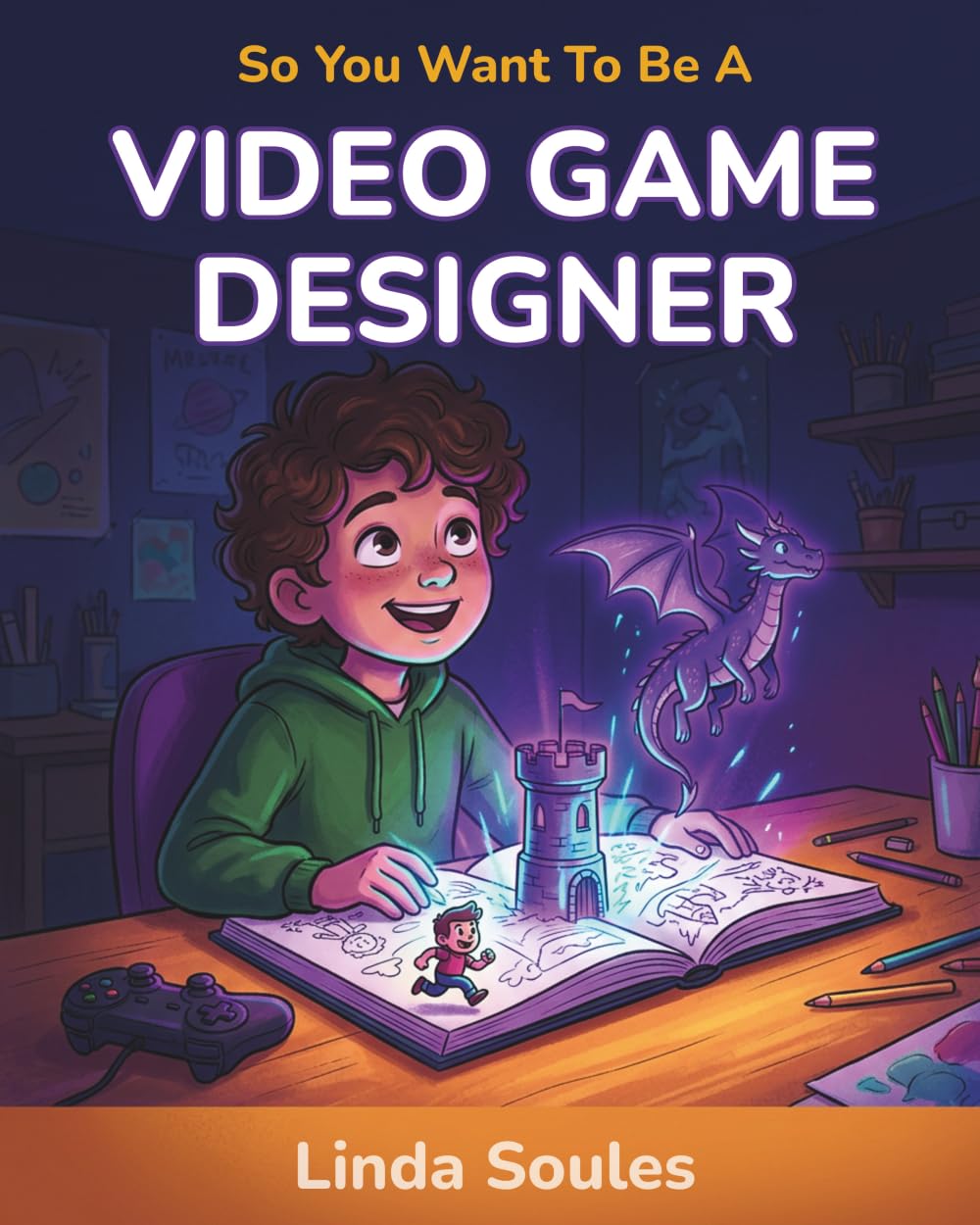

So You Want To Be A Video Game Designer is a solid starter book for kids who love video games and have started wondering what it would be like to actually make them. It does a nice job showing that game design isn’t just sitting around playing games all day. The book breaks down the real work behind the scenes, from building mechanics and stories to working with artists, engineers, writers, and sound designers. For a kid who is curious about creating games, it gives a much clearer picture of what the job actually involves.
One of the best things about this children’s book is that it stays positive and inspiring without pretending the career is easy. It talks about the fun, creative parts of game design, but it also covers the harder parts, like problem-solving, teamwork, revision, and all the trial and error that happens before a game is finished. I especially like that it includes practical details, like what a day in the life of a game designer might look like. That kind of information helps kids understand the career in a real way instead of just imagining the cool parts.
The book also works well for a pretty wide age range. Even though it is aimed at ages 10–14, younger kids can still enjoy the illustrations and big ideas, especially if a parent reads it with them. Older kids and even adults can get something out of it too, because it explains the industry, the skills involved, and the history behind game design in an easy-to-follow way.
The artwork in this book is wonderful and detailed on every page. Each scene has a consistent look, feel, and color style that makes the whole book flow together beautifully. I loved all the small details tucked into the illustrations, like little toys on the desks of the video game developers, because they make the world feel fun. The characters are expressive, and the colorful scenes really pop, making the world of video game design feel exciting, creative, and almost like a fantasy.
This is a great pick for any kid who talks about wanting to make video games someday. It gives them encouragement, but also gives them a realistic look at what it takes. I like that it offers ideas for how kids can start preparing now, whether that means learning new skills, paying closer attention to how games work, or just thinking more creatively. It’s educational, interesting, and inspiring, and it may help a young reader decide whether game design is something they really want to pursue.
Pages: 38 | ASIN : B0GXH18B8G



