I Had To Tell Our Story
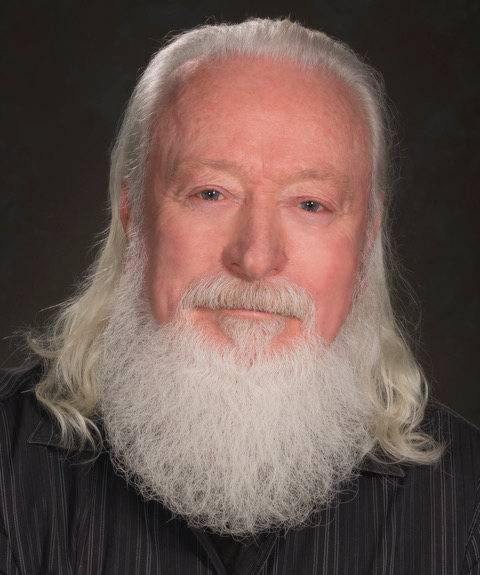
In Conscientious Objector, you take readers on a journey from your early years in New Jersey to your recognition as a conscientious objector during the Vietnam War. Why was this an important book for you to write?
When the military draft was reinstituted during the Vietnam War, it was clear I would be eligible to be drafted when I graduated college in 1970. I knew I was against all wars and would refuse to fight in the Vietnam War if my draft lottery number was low enough, which it was. What would be my path? Would I leave the country? Would I be sentenced as a felon for refusing to perform military service and spend time in federal prison as one of my friends did? Or, perhaps I would file a claim as a conscientious objector, someone who based on his conscience as a result of religious training or based one’s ethics or morals is against war. I chose the latter path and after explaining my beliefs and appearing before my draft board I finally received by “CO” status and served two years of alternative civilian service. I always felt my experience could serve as a guide to others who might find themselves in a similar situation. Years later I discovered a name quite similar to mine on the Vietnam War Memorial, that of a nineteen year old born the same year as me and killed in 1968 when his plane was shot down – the father of a daughter he never met. I was haunted by the duality of the two Waynes, and felt I had to tell our story, emphasizing war is never the answer. With the many conflicts in the world today, my antiwar position is as relevant now as it was over 50 years ago.
I appreciated the candid nature with which you told your story. What was the hardest thing for you to write about?
My book is a multifaceted memoir covering the complex times and events of the mid-twentieth century, with a focus on the impacts of the Vietnam War abroad and at home. The topics of peace and war, culture, family, justice, and the environment are a continuum of interrelated phenomena in which I matured and learned to navigate. My journey included a difficult relationship with my family, particularly my father, but the most difficult subject to include was my younger sister’s story, especially her abuse and death, for which I blame my father. She was married to an alcoholic, disabled Vietnam War veteran, which also provided a direct link to my antiwar position. I miss my sister and relate her story was an important aspect of my life. The dark details of one’s family are never easy to reveal, especially if there is no rational explanation for the behaviors. Articulating her difficult, shortened life provides some form of justice in the context of the complicated themes in my book.
What is one piece of advice you wish someone had given you when you were younger?
At the time I was drafted, I was the only person I knew who had a low lottery number and also refused to enter the military. Yes, my family, friends, and colleagues were there for me, writing incredibly supportive letters to the draft board, which I include in my memoir, and providing suggestions for my claim as a conscientious objector. Antiwar organizations also assisted. So I was fortunate to have a community to help me. My childhood religious background, my training in science, and my love of the natural world provided the context for my application to be classified a conscientious objector. Looking back on this journey, I was fortunate to be educated and articulate. Other youth with fewer opportunities might not be able to represent themselves as favorably during the complex application, personal appearance, and appeal process. Still, I wish someone had advised me similar to what I now know through Eastern religious insights: “Everything is okay in the end. If it is not okay, it is not the end.”
What is one thing you hope readers take away from your experience?
You should always stand up for your convictions no matter how serious the consequences might be. My long, successful, and positive life may not have been possible if I had not stood up and said no to war and yes to peace. Following my alternative civilian service, I have lived my life with the goals of Peace on Earth and Harmony with Nature. The opportunity given me to provide meaning alternative service consistent with my antiwar beliefs was a gift and privilege that has guided my life. I believe strongly in the universal desire, “Do that which is right.”
Author Links: Goodreads | Amazon | Audible | YouTube | Pinterest | Website
As a conscientious objector opposed to all wars, Wayne R. Ferren Jr. had to answer that question during the Vietnam War.
He called on his religious and scientific backgrounds as well as his environmental activism to argue that he should be excluded from fighting in, or supporting this war. Following a successful defense of his claim, Wayne served two years of alternative civilian service, which influenced his professional and personal life for the next fifty years.
Decades after his service, he was shocked to find his name on the Vietnam War Memorial, which turned out to be that of another young man with a similar name born the same year Wayne was born. That man died in 1968 when his plane was hit by artillery fire and crash landed at Khe Sanh Marine Combat Base. He will forever remain a teenage father killed in a senseless war.
To this day, the duality haunts the author, and in this multifaceted memoir, he looks back at a lifetime and how his background, scientific training, and transcendentalism have guided him on a path of conscientious objection, service, and conservation, believing all things are sacred.

Posted on January 6, 2025, in Interviews and tagged author, book, book recommendations, book review, Book Reviews, book shelf, bookblogger, books, books to read, Conscientious Objector, ebook, goodreads, indie author, kindle, kobo, literature, memoir, nonfiction, nook, novel, read, reader, reading, story, Wayne Ferren, writer, writing. Bookmark the permalink. 2 Comments.



 LITERARY TITAN
Reading Wayne’s book is a journey you will want to take. His thoughts are based in truth and help us to understand the impact of war on all living things.
His commitment to be honest with yourself and to never give up on your beliefs can be a roadmap for all of us in perseverance. Once you start to read Conscientious Objector, A Journey of Peace, Justice, Culture and the Environment, you will not want to put it down, in fact, you will be asking for more.
Pingback: International Conscientious Objectors Day - Conscientious Objector