To The Ones We Love
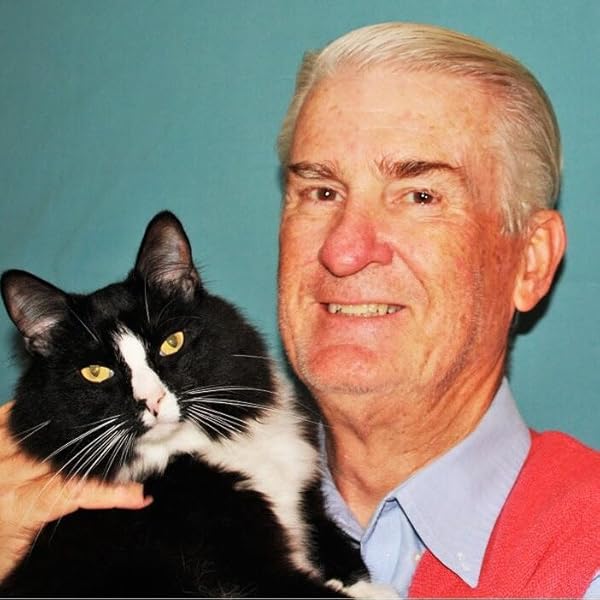
Deadly Dilemma shares with readers your tumultuous emotional journey as you recount your childhood living in the housing projects to your struggles with self-worth as an adult. Why was this an essential book for you to write?
My original intention was to tell my story to my children and grandchildren. That’s all. They all know ‘Pappy.’ But they didn’t know me. Many of us work hard to allow only a select picture of ourselves to show through to the ones we love. I planned to tell my story, with all the warts and blemishes, so the now grown children and grandchildren would know all of me. I thought I owed them that.
I never intended to publish the manuscript. I “made the mistake” of having a friend who has authored numerous novels over the years read The Letter… I Never Sent, which serves as a sort of prologue and the first two chapters. I wanted her thoughts. After reading it, she told me I should rethink my plans. I thought she would tell me to burn it and never let it see the light of day. That’s not what she did. First, she said the work was well done and liked my style. She shared my real-life experiences in the chapters and then reflected on the story just told. She then told me that my story was just my story. I am not famous. I am not wealthy. I am not a stud athlete or powerful politician. I’m just an average guy. But my story was worth sharing. She pointed out that I am not the only one who has experienced such struggles. She told me not to undervalue the courage it took to collect and face all those memories. She said (to use a metaphor), “There’s a plumber in Dubuque, IA who has a story to tell, but he has never had the courage to face his story. Maybe if he comes across your story, he can find the courage to confront his.”
At that point, I had no choice but to take the path I did to publish. I spent over thirty years working on a small college campus, trying to positively impact young men’s and women’s lives. Rethinking my plans and jumping into the world of publishing a memoir was the only path forward.
What were some ideas that were important for you to share in this book?
Once I accepted my friend’s advice, the real message for public consideration was the core question around which the memoir was constructed. As my friend said, this memoir is just an average guy’s story. The sociologist in me recognized that the story, if it was worth publishing for broader distribution, needed to be told under the umbrella of asking the Big Question, “Are those peaks of cherishable memories and moments of happiness and joy sufficient in number, scope, magnitude, and frequency enough to outweigh the valleys of fear, isolation, failure, and disappointments coloring the landscape of my life?“
At that point, it became clear that the experiences retold in each chapter covering a specific point in time were not the meaningful content I was sharing. The Reflections that followed each chapter’s experiential story were to be the real meat of the manuscript. After all, it is just my story. The Reflections were the tool for inviting the readers to revisit their stories under that umbrella and drive themselves to search for answers to that Big Question in ways that might enhance their life experiences.
What was the most challenging part of writing your memoir and what was the most rewarding?
Producing this work was, at times, therapeutic and cathartic. When I reached the period where my father walked out on the family, I came to an absolute wall. I could not write a word for a couple of months. I tried everything to start moving again, but nothing worked. I don’t know what triggered it, but suddenly, one day, I decided to drive back to my hometown, about 150 miles from where I have lived for the past fifty-five years. I went to the cemetery where my dad was buried. I did not attend his funeral many years ago. I stood in the rain at his graveside for an hour and a half, letting my mind go wherever it would go. Then I drove home and went straight to my laptop. The words began to flow faster than i could type them I don’t know. I can’t explain it.
The manuscript I shared with my friend concluded at the end of the 20th chapter. Your Editorial Review noted that the memoir begins with The Letter… I Never Sent and called it a gut punch. I revisited the theme of the Big Question throughout the manuscript, but I did not answer that question. My friend told me I had to write either a 21st chapter or an epilogue. I must answer that question… for myself. I could not tell anyone how to answer the question, but it was too important and serious an issue to leave it unanswered- for myself. I was forced to go further than I had been prepared to go. I am so glad I did. As I said previously, I made no attempt to suggest answers for anyone else. I did, however, arrive at what, for me, was/is a life-altering understanding of my story.
As a result of this exercise and finding a path to my answers, I am now working on the sequel to the memoir exploring relationships between Friends, Choices, and Consequences. I developed a mantra of sorts— Friends… choose them carefully; Choices… make them wisely; Consequences…embrace them graciously, and move on. The sequel will be the results of interviews with several folks who shaped parts of the original memoir and who were willing to talk about various aspects of the role of friends and choices in their lives and how they handled dealing with consequences resulting from some of those choices.
The second part of my answer to the question centered around Jethro, my five-year-old furball. Jethro showed up in my life after a hurricane in 2019, a pound and a half and five weeks old, with a 50/50 chance of survival. I never wanted a cat. Today, I am contracted with an illustrator to produce my first children’s book in a four-book series about Jethro. I hope to have When LOVE Comes on Four Legs available to the public in mid-October. I have laughed more in the past five years than ever. Jethro continues to help me appreciate life in ways I didn’t before his arrival. No one will ever convince me his arrival was an accident.
What do you hope is one thing readers take away from your story?
That’s easy. When I have speaking opportunities at civic groups, churches, etc., I always try to leave time for questions. The same thing always happens. No one has any questions. No one! Then it takes me a half hour, or longer, to get to my car. One by one, I am stopped by someone who comes up to me and quietly says, “I understand what you’re talking about, but we don’t talk about it.” “I wrestle with the same feelings. Some days I just want to find a dark hole and crawl into it.” “I have a brother (or a sister, a friend, a spouse, etc) who struggles with what you talked about.” The stories are endless and essentially the same. Everyone thinks their story is unique and that they are the only ones who have whatever their problems are. I want that plumber in Dubuque, that teacher in Tuscon, that carpenter in Columbus, and that lawyer in LA, etc., to find the courage to confront their story, to face their demons, to answer that Big Question in a way that leads them to a healthier, more fulfilling, and productive life.
Author Links: GoodReads | Website
In Deadly Dilemma, Anthony takes you on a journey of remembrance and reflection. Everyone has a story. Sometimes, we need a nudge to revisit our stories and confront the experiences that have shaped our lives.
Anthony is not famous. He is not a celebrity, an athlete, or a politician. He’s an ordinary guy with a story to tell, asking that bigger question about life. He grew up in a small town in eastern North Carolina. A stellar student, he enrolled in college, where it took him ten years to get a four-year degree. He got married, started raising a family, and embarked on a lifelong career working with college students and mentors.
Anthony has battled poor self-image and lack of self-esteem all his life. His daddy told him to “Get out of the way. I can’t see through muddy water” and “Don’t ask me for a damn thing.” Those words have haunted him as he struggled to value his own self-worth.
As a college counselor, Anthony’s advice to young people reflects his life experience:
Friends- choose them carefully, and cultivate
Choices- make them wisely, and learn
Consequences- embrace them graciously, and move on.

Posted on January 23, 2025, in Interviews and tagged Anthony Gurley, author, book, book recommendations, book review, Book Reviews, book shelf, bookblogger, books, books to read, Deadly Dilemma: A Memoir, ebook, goodreads, indie author, kindle, kobo, literature, memoir, nonfiction, nook, novel, read, reader, reading, story, writer, writing. Bookmark the permalink. Leave a comment.



 LITERARY TITAN
Leave a comment
Comments 0