Beautiful Journey
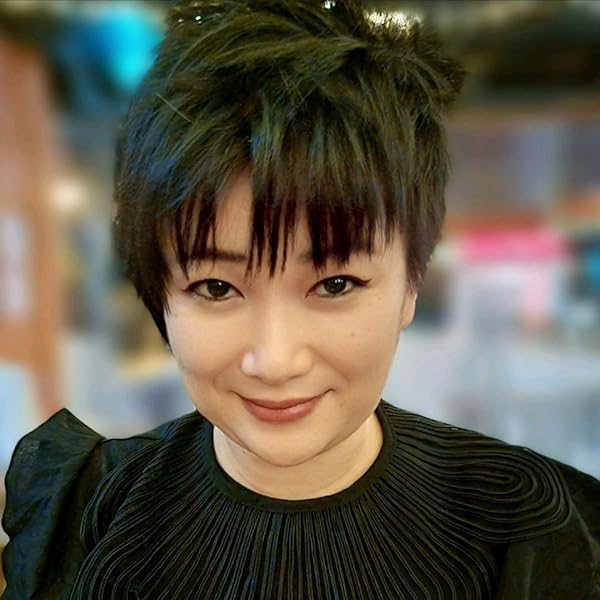
Reigning Fire tells the story of a princess raised in a world built on Smokeveil magic, rigid hierarchy, and brutal expectations, whose Emberkin arrives too early and in a form that is forbidden. What was the inspiration for the setup of your story?
Reigning Fire grew out of two long-standing fascinations: mythical creatures inspired by East Asian folklore, and the question of what it costs a person to exist in a world that often values conformity over authenticity.
As a late-identified neurodivergent writer, I’ve spent much of my life feeling out of sync with the rhythm everyone else seemed to follow. When I was younger, a head teacher once described me as “a square in a world of circles.” It took years to realize she was right, but also that I wasn’t a square at all. I was a triangle. And ultimately, the problem wasn’t my shape, but the assumption that everyone should be the same.
That realization shaped the world of Reigning Fire more than anything. The Emberkin system—smoke creatures that take the form of real-world animals and bond with Weavers—became a way to explore identity, hierarchy, and the rules we’re told to accept without question. Characters in this world are taught that the timing of the bond and the “acceptable” Emberkin forms dictate their social status. Through that lens, I could examine the tension between who we’re expected to be and who we actually are.
As children, many of us inherit a set of rules about “how the world works.” But as we grow, we start looking closer and asking: Who created these rules? Why do they exist? Who benefits from them?
Xun’s Emberkin arriving too early and in a forbidden form allowed me to explore what happens when someone’s identity refuses to fit the timeline—or the template—that society sets for them. It’s a fantasy world, but the emotional truth beneath it is very real: the quiet, painful, and sometimes beautiful journey of learning to take up space as you are.
What were some themes that were important for you to explore in this book?
Beyond the question of identity, Reigning Fire explores three main themes that felt important for me to write about: historical erasure, loyalty, and the politics of perception.
First, I wanted to examine historical negationism—specifically, how societies can outlaw an aspect of human variation and then gradually erase all record of its existence. In the world of Reigning Fire, certain Emberkin forms are not only forbidden but deliberately removed from documented history and rewritten as “abnormal.” That dynamic mirrors the way real-world institutions sometimes control which narratives are preserved, which are buried, and which are reframed as taboo.
The second theme is loyalty, especially the form that exists between child and parent. I wanted to explore what happens when that bond is used as a tool—when a parent treats a child’s love and devotion not as something to nurture, but as a vessel for achieving their own agenda. It’s a painful tension: the longing to honor the people who raised you, and the slow, shattering realization that they may not always have acted in your best interests.
The third theme centers on power and perception. Throughout human history, the most enduring form of power hasn’t always come from weapons or armies—it has come from whoever controls the narrative. In Reigning Fire, characters constantly navigate a world where truth is malleable and obscure, and those in authority will go to extraordinary lengths to maintain their version of events. I wanted to explore the quiet, insidious ways people manipulate stories, memory, and even “facts” to protect their position.
All three themes—erasure, loyalty, and narrative control—shape the emotional core of the book. Even in a world of magic and mythical creatures, the human consequences of these forces are strikingly real.
What were some goals you set for yourself as a writer in this book?
One of my biggest goals with Reigning Fire was to write a story that felt deeply human, even inside a world full of magic, myth, and political danger. To do that, I challenged myself not only to explore the emotional territory I naturally gravitate toward, but also to sit with characters who unsettled me. I would ask them, “Who are you underneath your facade? What drives you? And how exactly did you become this version of yourself?”
Writing from perspectives that diverged sharply from my own was unnerving at times. There were chapters where stepping into another character’s inner world genuinely messed with my head for a while. But those were also the moments I’m proudest of because they made the story richer and more honest.
Another goal was to portray human choices in all their moral complexity. I wanted to move away from clean categories of “good or evil,” “loving or cruel,” and instead explore how intentions, fear, loyalty, and survival instincts collide. In real life, choices rarely fall into neat boxes—even the most well-meaning intentions can sometimes cause harm. One question that guided a lot of my writing was: At what point do good intentions stop being able to justify the consequences they create?
If readers walk away from the book holding more questions than answers, then I’ve achieved what I set out to do. Complex questions aren’t meant to have simple resolutions—but it doesn’t make them any less important to ask.
What is the next book you are working on, and when will it be available?
I’m currently working on the sequel to Reigning Fire, which will be released in late 2026. Without giving away any major spoilers, this next book explores how Xun—now going by Ling—ironically grows more in her years as a fugitive than she ever did as a princess. Stepping outside that gilded palace cage gives her the freedom to redefine who she is when no one is scrutinizing her every breath, even when her path is still fraught with danger.
Readers can expect to encounter more mythic Emberkin and new characters, as the world expands far beyond the political and cultural boundaries of the first book. Some familiar faces from Reigning Fire will return, while others may be absent… and I’ll leave it to readers to decide which disappearances should worry them.
One of the core themes of the sequel is reclamation—of identity, of history, and of personal power. That’s all I’ll say for now, but I’m excited for readers to see where the story leads next.
Author Links: GoodReads | Facebook | Instagram | Website | Amazon
In a realm where power is sealed through smoke and blood, Yan Xun was born to inherit a crown-or be destroyed by it.
When her Emberkin arrives far too early, and in a form the world has no place for, Xun becomes a danger to the very empire she was meant to serve. As she uncovers long-buried truths and navigates a court built on silence, loyalty, and control, her existence alone threatens to unravel everything.
Set in an ancient Chinese-inspired empire of myth and ash, Reigning Fire is a lyrical fantasy about forbidden power, political unrest, and the ghosts we carry. Through richly layered worldbuilding and emotional depth, this debut novel explores the complexities of trauma, neurodivergence, and what it means to survive when your truth has no place in the world.
Perfect for readers who love introspective characters, slow-burn rebellion, and myth-infused storytelling, Reigning Fire blends co
Posted on December 14, 2025, in Interviews and tagged Asian Myth & Legend, author, book, book recommendations, book review, Book Reviews, book shelf, bookblogger, books, books to read, Dragons & Mythical Creatures Fantasy, ebook, fantasy, fiction, goodreads, Greco-Roman Myth & Legend Fantasy, historical fantasy, indie author, Jasmine Kah Yan Loo, kindle, kobo, legend, literature, nook, novel, read, reader, reading, Reigning Fire, story, writer, writing. Bookmark the permalink. Leave a comment.



 LITERARY TITAN
Leave a comment
Comments 0