Blog Archives
The Love For Truth

PHOENIXA: THE NEST is a story blending history and fantasy and follows a spirited girl growing up in turbulent time in China’s history. Where did the idea behind this novel come from?
I AM PHOENIXA. PHOENIXA: THE NEST is my personal, lived history, and a passionate initiation of dialogue between myself, my grandfather, and my ancestors—whose connection to me was, in essence, cut off by politics and by time. PHOENIXA: THE NEST can be viewed as a bioepic, in which a real-life story is elevated to mythic, historic and moral significance. I was born and raised in Beijing in Mao’s China, and with only a small dose of private education from my family- one that had been essentially torn apart – I was able to somehow survive the very sweet, sugar-coated terror of collectivism and brainwashing. I am eternally grateful to the motherland that has nurtured me. Yet there is something greater than the love for your motherland, that is the love for truth – truth that lies beyond familiar borders and comfort zones.
The idea behind this novel came from my midlife cry for roots. After leaving my job as a CCTV anchor/journalist in the late 1980s, and living an adventurous, self-exiled life in the United States for two decades, I grew increasingly restless, uncertain of who I was, or what—or where—home truly meant. After a willful search for Cheng family history – I stumbled upon my grandfather’s name – one that my father had hidden all his life, one that struck me like lightning: Cheng Zhenjun 程振鈞, a western-educated Chinese pioneer and leader who died on duty in 1932, advancing China’s modernization. In that moment, I trembled, shocked by the magnitude of family drama as well as the voice of history itself—muffled, suppressed, and long silenced. I felt betrayed, lied to by omission. Someone—or something larger—had cut off my roots, my very source of becoming.
I picked up my pen and my camera. What followed was more than a decade of research into the life of my grandfather and the forces that shaped him into a hero and a martyr, I have traversing not only the physical terrain of China, but also the inner fabric of Chinese civilization including Chinese mythology. Here you are, PHOENIXA: THE NEST, the first in PHOENIXA trilogy.
Looking back, I’ve come to realize that I paid a dear price to preserve my naïveté, my idealism, my conscience and, ultimately, my freedom as an individual human being. I am so thrilled today that I am now able to share “the pearl of life “with you – formed over the course of my entire life, but cultivated into shape in the solitude of the three-year COVID lockdown. I feel I have been metamorphosed through creating PHOENIXA and reinventing myself as an author and mythic thinker— and I hope my readers will be too, through reading and listening to this novel ( yes, as an audiobook, too), through pursuing something truly meaningful, something that allows each of us to make a contribution to this troubled yet beautiful world.
What is it that draws you to this period in history?
The dominant narrative throughline centers around PHOENIXA’s life inside CHENG COURTYARD during the onset of the Cultural Revolution in 1966 — echoes of which a careful reader will recognize not only in today’s China but also other parts of the world. It is the violent nature and its insidious chain of indoctrination that I defy, and from which we must break free; PEACE – world peace – must begin with inner peace. But how does one attain inner peace as an individual? Let the ancient wisdom of Chinese sages guide you. The novel detours into, and occasionally references, several sub‑timelines, each designed to illuminate the depth of Chinese culture, history, and philosophy, which runs at the core of Cheng values and education. Some explore the dynasties and the Enlightenment of the early twentieth‑century Republic of China; others drift into the timeless, fantastical realms of the Chinese Phoenix and other magical beings. My hope is to lift the spirits of readers, guiding them to navigate this troubled world. Glide with me, and soar on the wings of a child’s imagination!
What was your writing process to ensure you captured the essence of the characters?
As the Cheng family historian, I have devoted years to meticulous research on my grandfather’s life—his struggles, his achievements—and the tumultuous era he lived in: China at a crossroads in the late 19th and early 20th centuries, transforming from a wounded, fragile imperial dynasty into a young, hopeful, and vigorous Republic. I am fortunate to read both simplified and traditional Chinese, as well as classical Chinese. I have delved deep into the layers of centuries, savoring the flavor and absorbing the nutrients of Chinese antiquity. My research will continue across China, the United States, and soon, Europe, in preparation for the PHOENIXA Trilogy.
Writing, to me, is confessional and a deep act of soul-searching—therefore, an act of courage. You cannot lie; you must lay yourself bare in order to connect with, and perhaps even be rescued by, a higher power—be it your ancestors, a guardian angel, or God.
Can fans of PHOENIXA: THE NEST look forward to a follow-up soon? Where will it take readers?
Yes, I have created my life’s work and brand: PHOENIXA or P.H.O.E.N.I.X.A. Each acronym has its distinct meaning. please discover yours and share with me.
Here is the PHOENIXA Trilogy: THE NEST, THE FLIGHT, and THE RETURN.
From the enchanted childhood and coming-of-age in tumultuous China in PHOENIXA: THE NEST, to the evocative youth odyssey in America in PHOENIXA: THE FLIGHT, and onward to her middle-age return confronting the dark fate of Cheng Courtyard and enacting a Cheng ancestral resurrection, Cheng continues her bioepic fantasy storytelling deeply rooted in her intimate personal adventure and the unflinching history of China.
Author Website
A Mystical Quest for The Cheng Legacy
A novel
by J.J. Cheng
Phoenixa, rising from the ashes of her ancestors, the six-and-half-year-old kite-flying, Phoenix-riding, Chinese girl embarks on a mystical journey into China’s tumultuous past searching for her Renaissance Grandpa who read her Shan Hai Jing, The Lore of Mountains and Seas, seeking cures for human greed.
From the interior of a traditional Beijing courtyard to the tip top of a giant Wu Tong Tree, Phoenixa found her nest being moved from safety to danger. Fortunately, the enduring incandescent Feng Huang, the Phoenix, has kept her amused and protected as a secret guardian from a relentless hidden Red force ready to strip her home bare.
Written in the genre-defining style now called“mystical realism”, Cheng tapped into the subconsciousness and beyond in search of human goodness. Cheng’s debut novel is stunningly visual, fantastical, dreamlike yet achingly real, demystifying China, as it offers a luminous insider’s view on why and how the dragon roared.
Phoenixa: The Nest, A Mystical Quest for the Cheng Legacy, is a story of courage, of hope, of madness, of redemption, of humanity at the brink of self-destruction.
PHOENIXA: THE NEST, A Mystical Quest for the Cheng Legacy


J.J. Cheng’s Phoenixa: The Nest is an enchanting and emotionally rich journey through memory, heritage, and identity. It tells the story of Phoenixa, a spirited girl growing up in Beijing’s Cheng Courtyard during a turbulent time in China’s history. Blending myth with memory, Cheng ties the magical imagery of the Feng Huang, the Chinese phoenix, to the struggles and rebirth of her protagonist’s family. Through vivid storytelling, she bridges centuries of Chinese philosophy and Western narrative grace, crafting a novel that feels part myth, part memoir, and part historical reflection. It’s a lush, multi-layered story about roots, loss, and the unbreakable bond between generations.
Cheng’s writing is lyrical yet grounded, full of color and heart. The dialogue between Phoenixa and her grandfather glows with tenderness and wisdom, while the scenes of the Cultural Revolution sting with fear and sorrow. I found myself caught between awe and ache, drawn by the book’s rhythm like a song I didn’t want to end. Sometimes the prose wandered into philosophy, looping through abstract reflections, but even then, I stayed hooked. It wasn’t just about what happened, it was about what it meant. The ideas of reincarnation, ancestral duty, and peace after turmoil stayed with me long after I closed the last page.
There’s a personal courage in the way Cheng writes. You can feel the author wrestling with memory, with love for a homeland that both nurtured and wounded her. I admired how the author never rushed the emotions. It’s dense at times, poetic in a way that demands patience. But it rewards that patience with quiet beauty and truth. The illustrations throughout the book blend generational joy with cultural myth. The artist uses a loose, sketch-like style that is eye-catching.
I’d recommend Phoenixa: The Nest to readers who love lyrical storytelling and mythic realism. It’s perfect for those drawn to family sagas, Eastern philosophy, or stories that blur the line between dream and reality. If you enjoy books that make you feel something deep and unexpected, this one will stay with you. It’s not just a story about a girl, it’s a story about belonging, transformation, and the quiet magic of remembering who you are.
Pages: 538 | ISBN : 978-1956427059

Beautiful Journey
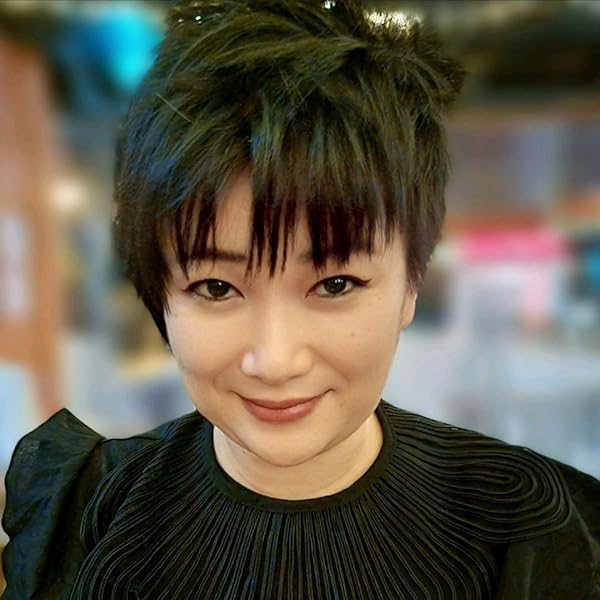
Reigning Fire tells the story of a princess raised in a world built on Smokeveil magic, rigid hierarchy, and brutal expectations, whose Emberkin arrives too early and in a form that is forbidden. What was the inspiration for the setup of your story?
Reigning Fire grew out of two long-standing fascinations: mythical creatures inspired by East Asian folklore, and the question of what it costs a person to exist in a world that often values conformity over authenticity.
As a late-identified neurodivergent writer, I’ve spent much of my life feeling out of sync with the rhythm everyone else seemed to follow. When I was younger, a head teacher once described me as “a square in a world of circles.” It took years to realize she was right, but also that I wasn’t a square at all. I was a triangle. And ultimately, the problem wasn’t my shape, but the assumption that everyone should be the same.
That realization shaped the world of Reigning Fire more than anything. The Emberkin system—smoke creatures that take the form of real-world animals and bond with Weavers—became a way to explore identity, hierarchy, and the rules we’re told to accept without question. Characters in this world are taught that the timing of the bond and the “acceptable” Emberkin forms dictate their social status. Through that lens, I could examine the tension between who we’re expected to be and who we actually are.
As children, many of us inherit a set of rules about “how the world works.” But as we grow, we start looking closer and asking: Who created these rules? Why do they exist? Who benefits from them?
Xun’s Emberkin arriving too early and in a forbidden form allowed me to explore what happens when someone’s identity refuses to fit the timeline—or the template—that society sets for them. It’s a fantasy world, but the emotional truth beneath it is very real: the quiet, painful, and sometimes beautiful journey of learning to take up space as you are.
What were some themes that were important for you to explore in this book?
Beyond the question of identity, Reigning Fire explores three main themes that felt important for me to write about: historical erasure, loyalty, and the politics of perception.
First, I wanted to examine historical negationism—specifically, how societies can outlaw an aspect of human variation and then gradually erase all record of its existence. In the world of Reigning Fire, certain Emberkin forms are not only forbidden but deliberately removed from documented history and rewritten as “abnormal.” That dynamic mirrors the way real-world institutions sometimes control which narratives are preserved, which are buried, and which are reframed as taboo.
The second theme is loyalty, especially the form that exists between child and parent. I wanted to explore what happens when that bond is used as a tool—when a parent treats a child’s love and devotion not as something to nurture, but as a vessel for achieving their own agenda. It’s a painful tension: the longing to honor the people who raised you, and the slow, shattering realization that they may not always have acted in your best interests.
The third theme centers on power and perception. Throughout human history, the most enduring form of power hasn’t always come from weapons or armies—it has come from whoever controls the narrative. In Reigning Fire, characters constantly navigate a world where truth is malleable and obscure, and those in authority will go to extraordinary lengths to maintain their version of events. I wanted to explore the quiet, insidious ways people manipulate stories, memory, and even “facts” to protect their position.
All three themes—erasure, loyalty, and narrative control—shape the emotional core of the book. Even in a world of magic and mythical creatures, the human consequences of these forces are strikingly real.
What were some goals you set for yourself as a writer in this book?
One of my biggest goals with Reigning Fire was to write a story that felt deeply human, even inside a world full of magic, myth, and political danger. To do that, I challenged myself not only to explore the emotional territory I naturally gravitate toward, but also to sit with characters who unsettled me. I would ask them, “Who are you underneath your facade? What drives you? And how exactly did you become this version of yourself?”
Writing from perspectives that diverged sharply from my own was unnerving at times. There were chapters where stepping into another character’s inner world genuinely messed with my head for a while. But those were also the moments I’m proudest of because they made the story richer and more honest.
Another goal was to portray human choices in all their moral complexity. I wanted to move away from clean categories of “good or evil,” “loving or cruel,” and instead explore how intentions, fear, loyalty, and survival instincts collide. In real life, choices rarely fall into neat boxes—even the most well-meaning intentions can sometimes cause harm. One question that guided a lot of my writing was: At what point do good intentions stop being able to justify the consequences they create?
If readers walk away from the book holding more questions than answers, then I’ve achieved what I set out to do. Complex questions aren’t meant to have simple resolutions—but it doesn’t make them any less important to ask.
What is the next book you are working on, and when will it be available?
I’m currently working on the sequel to Reigning Fire, which will be released in late 2026. Without giving away any major spoilers, this next book explores how Xun—now going by Ling—ironically grows more in her years as a fugitive than she ever did as a princess. Stepping outside that gilded palace cage gives her the freedom to redefine who she is when no one is scrutinizing her every breath, even when her path is still fraught with danger.
Readers can expect to encounter more mythic Emberkin and new characters, as the world expands far beyond the political and cultural boundaries of the first book. Some familiar faces from Reigning Fire will return, while others may be absent… and I’ll leave it to readers to decide which disappearances should worry them.
One of the core themes of the sequel is reclamation—of identity, of history, and of personal power. That’s all I’ll say for now, but I’m excited for readers to see where the story leads next.
Author Links: GoodReads | Facebook | Instagram | Website | Amazon
In a realm where power is sealed through smoke and blood, Yan Xun was born to inherit a crown-or be destroyed by it.
When her Emberkin arrives far too early, and in a form the world has no place for, Xun becomes a danger to the very empire she was meant to serve. As she uncovers long-buried truths and navigates a court built on silence, loyalty, and control, her existence alone threatens to unravel everything.
Set in an ancient Chinese-inspired empire of myth and ash, Reigning Fire is a lyrical fantasy about forbidden power, political unrest, and the ghosts we carry. Through richly layered worldbuilding and emotional depth, this debut novel explores the complexities of trauma, neurodivergence, and what it means to survive when your truth has no place in the world.
Perfect for readers who love introspective characters, slow-burn rebellion, and myth-infused storytelling, Reigning Fire blends co
Hunting Demons

ShadowBane follows twins bound not only by blood but by their role as formidable demon hunters who each are taking on the role of demon hunting for different personal reasons. What was the inspiration for the setup of your story?
The original inspiration was a nightmare I had where Demons were attacking our home. It was really intense, really frightening. I woke up to my dog howling and growling at the door. I checked the whole place, thinking maybe someone had tried to break in, but everything was fine. When I came back to bed, my dog sat sideways on my chest, staring alertly at the door for about an hour. He’s never done that before or since.
It was really unsettling, and it had me wondering if there was any stock in the nothing that animals can sense otherworldly entities. I don’t believe in that stuff, but I thought it might make a cool story. So the original idea was “a guy and his dog hunting demons,” and that eventually transformed into “two twins and their pet tiger hunting demons in feudal Japan.”
Shura and Jin may be twins, but they have unique personalities. What character did you enjoy writing for? Was there one that was more challenging to write for?
I definitely enjoyed writing Jin more. I had a lot of fun with his and Wallace’s dynamic (once he stops being such a jerk), and I liked peeling back the layers of his surly personality over the course of the novel. I love anti-hero characters, and Jin was no exception. He’s got this weird honor code where he can do some terrible things in pursuit of his goals, but his goals are noble and he pursues them even at great personal risk. He’s weirdly selfless. I can’t help but root for the guy like that, hoping he can both achieve his goals and change for the better.
Shura was more difficult to write because I had to step further outside my own experiences. As someone who has spent her life being constantly overlooked, underestimated, and dictated to, she’s built up a lot of resentment for the very society she’s trying to rise up in. She’s cunning and ambitious, but she also is insecure about her place in the world and her ability to achieve her goals, all the while feeling this immense pressure due to her lineage. It’s a powerful mix of fears and driving factors, and it took me a while to distill it all into a clear, consistent worldview that also evolved throughout the narrative. It was a challenge, but I’m glad I took the time to work through it.
What kind of research did you do for this novel to ensure you captured the essence of the story’s theme?
So much research… I read two books about the cultural significance of the yokai (non-human beings in Japanese folklore) just to get a feel for it, then combed through a list of hundreds of yokai to find the ones I wanted to represent in the novel. I also had to do a ton of historical and mythological research, everything from creation myths to major wars to tiny details like the proper way to hand over a weapon, honorific usage, or the differences in men’s and women’s kimonos.
Then I worked with a translator to create all the names (places and people) and in-world terms. I followed real Japanese naming conventions for locations and any fictional terms have a real meaning in Japanese. For example, Shikōken, the bloodline from which Shura and Jin are descended, translates to “supreme sword.” It was a ton of work, and although I took some creative liberties when I felt it better served the story, I tried to faithfully portray the spirit of feudal Japan and pay due respect to a truly fascinating culture & period of history.
Where does the story go in the next book and where do you see it going in the future?
Well, I won’t want to spoil too much, but if ShadowBane is the story of Shura and Jin operating as a duo and being driven apart by their own choices, the sequel will explore how they function once they can’t rely on each other. You get a glimpse of that in ShadowBane, and it takes a heavy toll on both of them. Amidst a full-scale war, things get pretty dire, and then there’s that ominous prophecy hanging over their heads…
A Schism of Souls will be a trilogy, and I have the ending all planned out, even if the minor details haven’t worked themselves out yet. To say much about the third book would heavily spoil the second, so I’ll just say that Book 2 sees some major plot threads resolved. If you had a lot of questions in ShadowBane, the sequel will see them answered.
Author Links: GoodReads | X (Twitter) | Facebook | Website | Amazon
One womb, one soul, two fates. One will rise. One will fall.
Shura and Jin are the last of a divine bloodline, operating at the bloodiest fringes of society where they wield might and magic against the demons they are sworn to destroy. For Shura, it’s the only way to restore honor to her lineage and claim her rightful place in the world. For Jin, it’s a matter of begrudging duty—and escaping the influence of the three kings vying for control of the continent.
In their pursuit of the sadistic cult behind the demons’ resurgence, the twins find themselves hunted by an ancient demon harboring a blood vendetta, and are forced to set aside past grudges and seek the kings’ alliance. When Shura discovers a chilling prophecy, she fears that even her newfound allies may not be enough to stem the rising tide of shadow.
Even the palest chance of victory will come at a brutal price. But the prophecy never foretold whose fate would settle the debt: Shura’s or her brother’s.
ShadowBane

ShadowBane, by Cal Logan, is an enthralling journey set in the backdrop of feudal Japan, melding the essence of historical authenticity with the allure of fantasy. The narrative follows the lives of Shura and Jin, twins bound not only by blood but by their role as formidable demon hunters in the realm of Tankikoku. Tasked by King Migataro, they confront the chilling threats of creatures like the chunari and kimengani, weaving a tale of courage and perseverance.
Logan’s portrayal of Shura, enhanced by her symbiotic relationship with her white tiger, Feng, adds a unique dimension to the storyline. The novel adeptly intertwines the duo’s relentless battles against demonic forces with their personal struggles, painting a vivid picture of warriors caught between duty and desire for peace. Employing a third-person narrative, the story oscillates between the perspectives of Shura and Jin, offering insights into their hardened exteriors shaped by their daunting experiences. This perspective shift deepens the reader’s understanding of their internal conflicts, enhancing the narrative’s complexity.
ShadowBane skillfully integrates elements of political intrigue into its core theme of demon hunting, presenting a rich tapestry of tension and conflict. The rivalry between King Oda and King Migataro adds a layer of political complexity, further entangling the twins in a web of diplomacy and war. As the story progresses towards its climax, the inevitability of a clash between the kings becomes apparent, placing Shura and Jin in a precarious position within a kingdom teetering on the brink of war.
The novel’s meticulously crafted battle scenes, coupled with an undercurrent of suspense, underscore its literary merit. Character development is another of Logan’s strong suits, with each persona evolving meaningfully throughout the narrative. This aspect, combined with the novel’s rich setting and blend of historical and fantastical elements, makes ShadowBane a compelling read for fans of epic fantasy and Japanese history alike. Its intricate plot and well-developed characters are sure to engage readers, offering a captivating escape into a world where legends come to life.
Pages: 609 | ASIN : B0CZ95T51R
Strange and Often Quite Humorous Places

Club X: Vampire in the Closet follows four boys attending an elite all-boys Catholic school in Thailand who try to uncover the school’s dark secrets while figuring out their own sexual identities. What was the inspiration for the setup of your story?
Long story but here goes…I had a friend, a former executive of The Nation TV, a major media outlet in Thailand. He said to me, “Can you think of a Thai series I could sell to a Western platform?” I researched all the Thai TV series that were available on Netflix and other internationally available sites, and it was clear that the most popular subject matter, the one that Western felt to be “Thai” in feel, by far, were stories known as “BL”…tales of high school romances between boys. Generally rather innocent. In Asia, the main audience for these stories is actually young women. European and American TV are only just starting to toy with this genre (notably shows like the British Heartstopper for instance) but in Asia it is a huge genre, dominating the young adult market. I told my friend that this wasn’t a genre I was that familiar with. But, if I could combine the milieu with a storyline kind of like what I am more known for…that is horror or fantasy…perhaps, I could create a hybrid that might be quite fresh. So, I basically grafted the American “boys discover the dark secrets of their school” genre on top of the “BL” genre, and it led to very strange and often quite humorous places. And I started to create the pilot for this putative series.
Now, Amazon Vella was being born at that very time. So, I thought, as a serial format, it could be a way of testing out the story on people who like to read stories with cliffhangers. This is how the novel came about. At first, no one really noticed it, but after a few months, some of my regular book readers started to pick up on the series, and it was briefly one of the more highly-rated series on Vella, enough that I was able to use it to find people to invest in an independent production of the live-action version. So…it happened all at once, and we found ourselves shooting a series in various converted offices and people’s houses while I started writing Book II of Club X. Well, the series is in post-production and on the verge of appearing on some web TV platforms.
So, this is how this rather unusual setup came into being.
In a lot of contemporary coming-of-age fiction novels, authors often add their own life experiences to the story. Are there any bits of you in this story?
Yes and no. I did go to an elite boarding school but in England. I was also briefly in a Catholic school in Thailand but not a boarding school. As the director of a youth orchestra program, I’m often surrounded by people in this age bracket and able to observe how they talk and think at close hand. I’ve raised someone with Asperger’s, and my adopted son had many gender issues. All the characters are, in fact, inspired by real people.
What were some themes that were important for you to explore in this book?
The genre hands you a set of readymade characters — you can see this in everything from “IT” to “Stranger Things.” The coming-of-age trope says you must have four boys: a cute one, a tough one, a fat one, and a geek. You must have a girl that they all like because she plays their games, but will normally end up with the cute one. The tough one is usually also vulnerable. The cute one is often a writer, dreamer, a thinking man, and often a stand-in for the author himself. So, when I moved the milieu to a Thai-style BL milieu, the four compulsory boys underwent transformation. The main kid, the thinking one suffers from Asperger Syndrome. His best friend is a child prodigy. The kid who is usually presented as “fat” has a different social “issue” – he’s gender fluid, but he’s completely ok with it and so are all his friends. The “geek” becomes the kid with strange paranormal powers. So, there are many themes of identity and selfhood that are common to kids everywhere but are given a new twist because of the cultural setting. Interestingly, the original book and serial are written in English, but I had to write the screenplay in Thai (a first for me although I am bicultural.)
I hope the series continues in other books. If so, where will the story take readers?
The second book, Zombie in the Fridge is already out. I’m working on a third, the title unsure, but I might go with Banshee in the Bathtub.
Author Links: GoodReads | Twitter | Facebook | S.P. Somtow | Patreon | Website | Amazon
St. Cecilia’s boys’ school is an elite boys’ school in a remote part of Thailand, a hotbed of hormones, mystery, fantasy, and dark secrets! Five kids (binary and non-binary) uncover the dark secrets of their school amid mysteries of identity and sexual attraction.
Why does Dr. Leopold Strange only teach after sundown? Why is Sister Euphemia dancing in the forest without her habit? And why can’t Kim and Fluke talk about the awful thing that happened to them in Oldenburg? And what’s in the closet?
Club X: Vampire in the Closet

Club X: Vampire in the Closet by S.P. Somtow delves into the complexities of high school life through the lens of Fluke, Kim, Polo, and Danger, four students grappling not only with typical adolescent challenges but also with the extraordinary. Set within the confines of an elite, all-boys Catholic school in Thailand, the narrative unfolds against a backdrop of teleporting nuns, a potentially vampiric English teacher, and the unexpected intrusion of Donut, the principal’s daughter, into their tight-knit group.
Somtow skillfully weaves a tale of mystery and camaraderie, employing alternating perspectives to flesh out the distinct personalities of each protagonist. As the narrative progresses, the addition of Donut introduces both cohesion and conflict, enriching the group dynamic. While the storyline veers into the supernatural realm rapidly, it maintains a sense of playful absurdity without veering into excess. Beneath the fantastical veneer lies a narrative imbued with poignant themes of identity, friendship, and burgeoning romance. Somtow deftly navigates topics such as individuality and gender identity, portraying them as integral components of the characters’ growth amidst the fantastical backdrop. Despite the escalating absurdity, the core experiences remain grounded in the relatable struggles of adolescence. The novel’s frequent shifts in perspective are navigable due to the distinct voices of each character, enhancing the reader’s immersion in the unfolding adventure. While the conclusion leaves room for interpretation, it tantalizingly hints at future exploits, suggesting a continuation of the captivating journey.
Club X: Vampire in the Closet offers a compelling blend of mystery, humor, and heartfelt exploration, promising an engaging reading experience with lingering mysteries yet to be unveiled.
Pages: 226 | ASIN : B09MJQQ9R9
Wish of the White Tiger

Wish of the White Tiger, authored by Joseph Harkreader, emerges as a compelling narrative set in the mystical realm of Mèngjìng. This ethereal sanctuary, resplendent with luxury and excess, is governed by formidable rulers. The story follows Baihu, an elite guard who harbors aspirations of freedom and love. His life takes an unexpected turn when he stumbles upon a mystical golden lamp, which, upon a gentle touch, releases a white light and summons a Genie from another world, ready to grant Baihu’s deepest wishes.
Set against the backdrop of a world teetering on the brink of disaster, Baihu’s story weaves a delicate balance between personal desires and the looming threat posed by a tyrannical ruler. Harkreader’s narrative style is a fusion of magical realism and detailed world-building, creating a vivid and tangible universe that engrosses readers with its authenticity and rich imagery. The story is an invitation to a bygone era, adorned with emperors, cherry blossoms, and samurais, and is underscored by a keen eye for detail.
Central to this tale is Baihu, a character whose depth and complexity captivate the reader’s imagination. His journey from a lowly guard under the Ming Dynasty to a figure challenging his destiny is both moving and profound. Baihu’s character development is skilfully portrayed, reflecting a natural progression as he grapples with the harsh realities of his world and the possibility of achieving freedom and love.
A notable aspect of Wish of the White Tiger is its exploration of a male-to-male relationship, presented not as a mere subplot but as a pivotal element of the story. Harkreader approaches this theme with sensitivity and depth, offering an authentic and inclusive portrayal of love in its many forms. The book’s strength lies in its immersive world-building and the seamless blend of fantasy and historical elements. Baihu’s character serves as a compelling focal point, encouraging the reader to invest emotionally in his journey. The resolution of the love story is both satisfying and impactful, underscoring the narrative’s overall success.
Joseph Harkreader’s Wish of the White Tiger is a standout novel for readers who appreciate a blend of fantasy and historical elements, and for those who value diverse and nuanced portrayals of relationships. It is a story that remains with the reader, resonating long after the final page is turned. This novel is more than just a tale; it is an experience that invites readers into a world both enchanting and profound.
Pages: 348 | ASIN : B0CN3W6PCW


