A Story That Had To Be Told
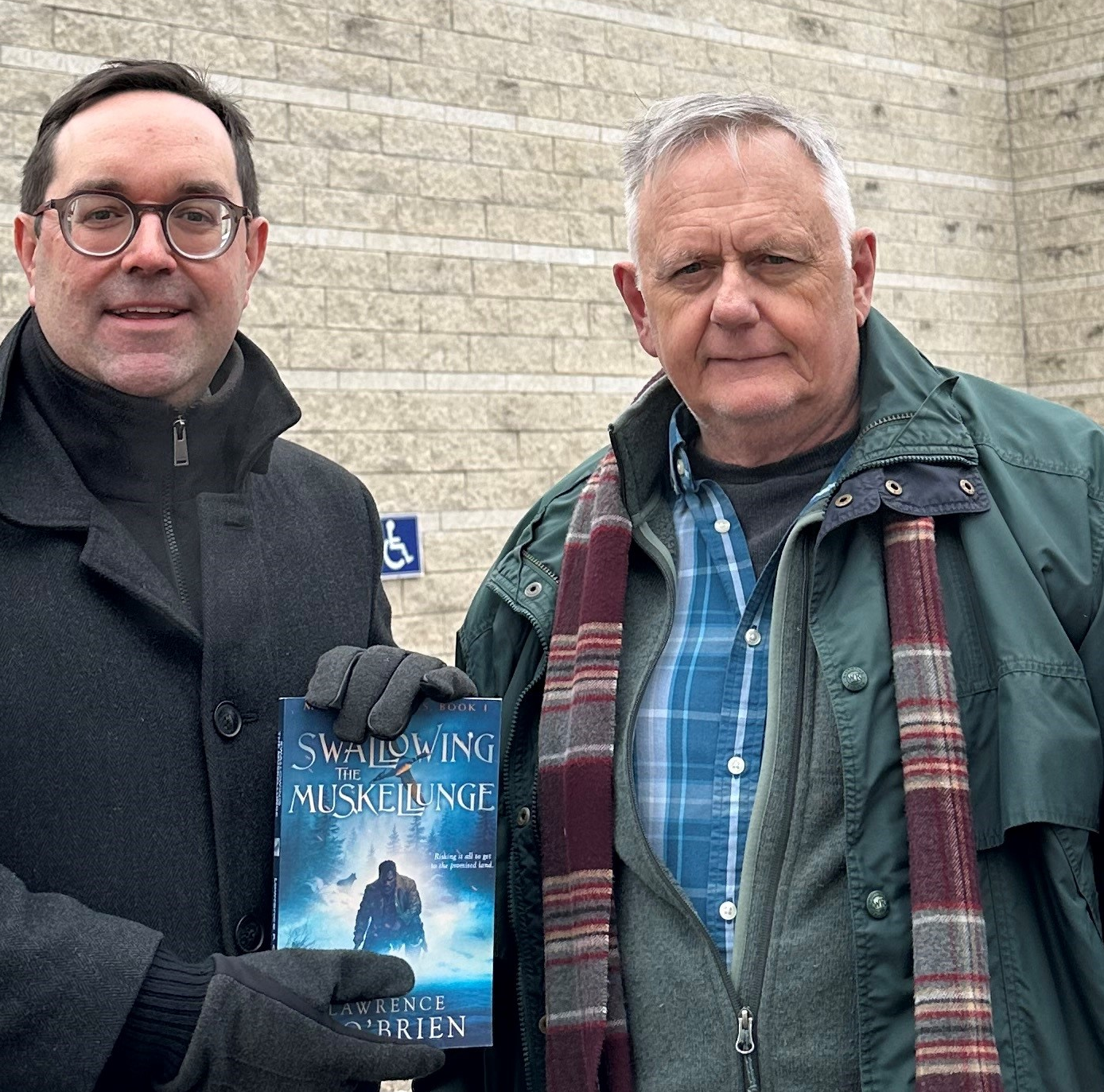
(The other fella is the author)
Swallowing the Muskellunge follows a Black family in the late 1700s as they confront human cruelty and eerie folktale terrors that haunt the forests and rivers surrounding their fragile search for belonging. What was the inspiration for the setup of your story?
I wrote a book about the early Wrightville settlement. Although I never published it, from its bones will come a telling of life during the early period but from the point of view of an Anishinaabe woman. In my research, London’s name kept coming up. There were missing sections within the historical record, which made me curious as to who he was.
My father’s people settled north of his property in the Gatineau hills two life times after he arrived. My grandfather’s parents got married in a church that was built on his land. In recent times, uncles and aunts settled, or acquired land in the area. I had an indirect connection with him, and I felt that his story had to be told, and SWALLOWING THE MUSKELLUNGE is my take on it.
The father–son relationship between London and Abner feels especially raw and vulnerable. Were any real historical accounts or personal experiences influential in shaping their dynamic?
Although the Oxford family had lived in Massachusetts with a label that said they were free, it was still a dangerous place for an African American. Before 1800, one didn’t have to travel far before being vulnerable to the prey of slave holders. It would have been difficult to prove one had papers once they were stolen.
The dynamic of my writing was influenced from numerous cross country drives with my kids, as well as isolated work in the wilderness during my younger days (e.g. logging, surveying, mining, & farming). For the specific dangers in the early part of the book (e.g. Woburn and Framingham), I relied on historical records.
The story balances human cruelty with moments of tenderness. How did you navigate that emotional rhythm without overwhelming the reader?
Whether it was harvesting meteorites for Inco, applying a paint brush during a “Perfect Storm,” witnessing a Chinook disappear two inches of snow within half an hour while sipping a thick cup of lumberjack from behind a cabin by the foothills, I learned that the extraordinary was never far from the mundane. Returning to the time of my grandparents and before also reminded me that hard work most of the time prevented starvation. Folks put up with a lot in order not to go hungry. Although family tenderness made life bearable, its warmth was a counterweight to tragedy, which was not in short supply.
The shadowy forces near the river feel symbolic as well as literal. How do you see the folklore elements interacting with your themes of freedom, fear, and belonging?
Freedom: Persons, mythological beasts, and creatures of the wilderness will not be free if a population attempts to force subservience. Any of the entities can be interpreted as shadowy forces when something attempts to bind them. Ultimately, to be free, a living thing has to be able to feel that it can say no. Others might consider that their ways that are different, but to not be afraid, the entities have to have rights that allow them not to be the same.
Fear: Tribes in the wilderness (of any of the continents) used to acquire mates from beyond their borders. To keep the community vibrant and vital, the other were actively integrated. Whether “the other” remained feared depended on how free they were to show their differences and disagreements when it mattered.
Belonging: To be accepted by “the other,” there has to be a clear understanding that saying no to the norm is socially acceptable. Lacking that, it would not be possible to have a lasting peaceful coexistence. People otherwise would spend their lives trying to escape or doing self-harm.
Author Links: GoodReads | Facebook | Website | Bluesky | Instagram
Young Abner Oxford has kept something of his mother’s. Something else needs what he has. It’s patient, can be quite disarming, and has a monstrous, fierce appetite. Abner and his family, along with a caravan of sleighs, are moving north.
The frigid cold and the blinding white have made the adults slow, weary, and numb. Very few questioned the drag marks in the snow or the mounting number of disappearances. Abner’s father felt like that—until it woke him up.
Fans of The Terror, the Fisherman, and El Norte will be hooked.
Posted on December 15, 2025, in Interviews and tagged author, book, book recommendations, book review, Book Reviews, book shelf, bookblogger, books, books to read, ebook, fiction, goodreads, historical fiction, indie author, kindle, kobo, Lawrence P. O'Brien, literature, nook, novel, read, reader, reading, story, SWALLOWING THE MUSKELLUNGE, writer, writing. Bookmark the permalink. Leave a comment.



 LITERARY TITAN
Leave a comment
Comments 0