RAGNAR: A novella
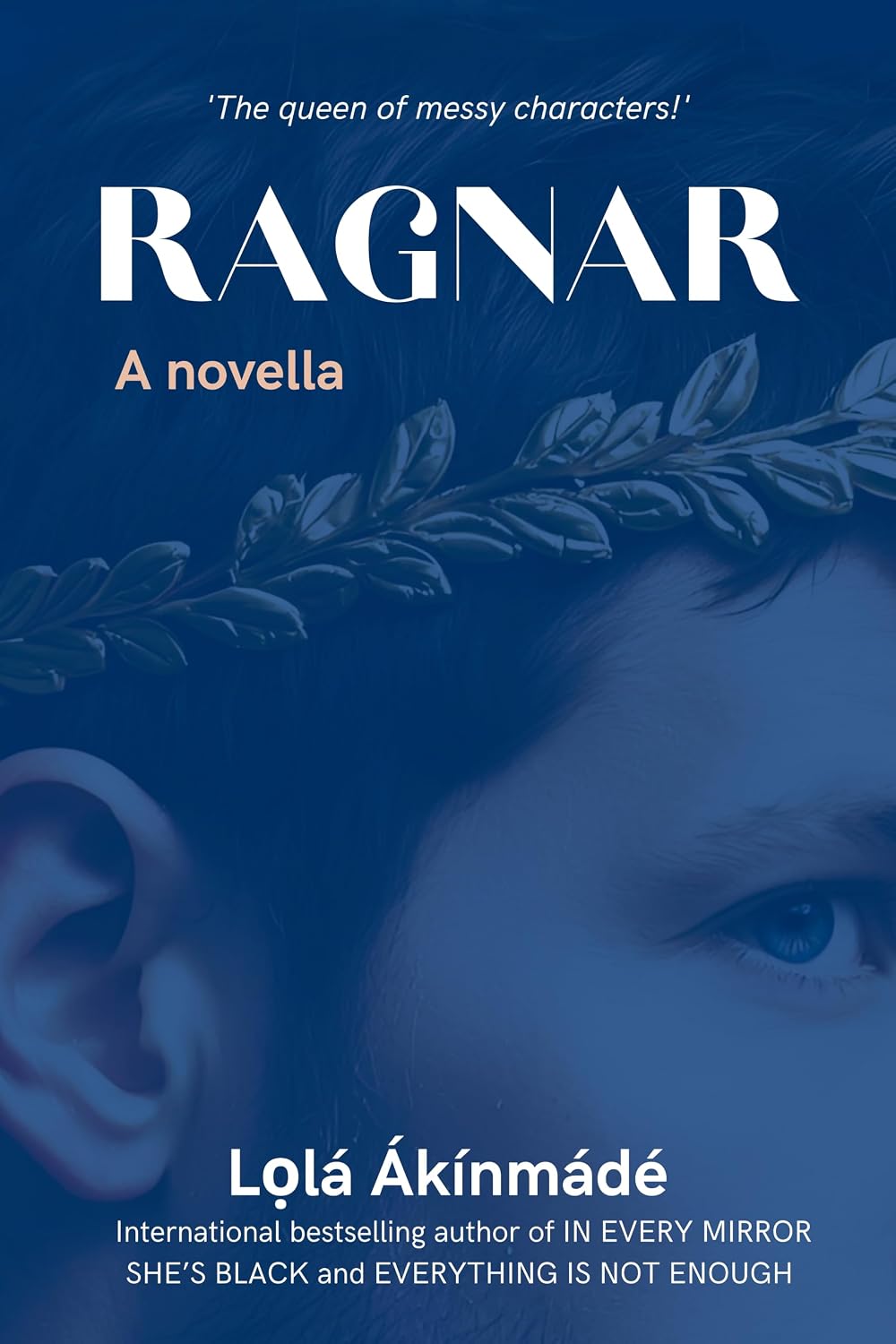

Some people spend their entire lives trying to prove they’re powerful, only to discover that the things they’re running from have been controlling them all along. That’s the uncomfortable territory Lọlá Ákínmádé explores in Ragnar, a provocative, psychologically layered novella that takes readers inside the mind of one of the most divisive characters from her In Every Mirror She’s Black series. Spanning roughly three decades, the story follows Ragnar Pettersen from his privileged but emotionally turbulent childhood in Sweden to his adult life as a wealthy, charismatic businessman who expects the world to bend to his desires. Growing up surrounded by domestic conflict, Ragnar makes an early promise to himself that he’ll never become the kind of man he believes his father to be. That determination shapes his relationships, ambitions, and increasingly distorted understanding of masculinity. Ákínmádé gives readers an intimate look at how a frightened boy becomes a man obsessed with strength, status, and control, even as his carefully constructed confidence conceals a profound fear of vulnerability.
What makes Ragnar particularly compelling is the way Ákínmádé examines the relationship between privilege and insecurity. Ragnar has nearly everything society associates with success: wealth, good looks, influence, and access to powerful people. Yet he’s constantly measuring himself against others, especially his lifelong best friend, Johan von Lundin. Their complicated friendship is one of the novella’s most revealing relationships, exposing Ragnar’s genuine capacity for loyalty alongside his jealousy and need for validation. His romantic relationships offer another window into his contradictions. He craves affection and emotional security, but his instinct to dominate frequently overwhelms his ability to connect. Ákínmádé also explores how racism, misogyny, and social hierarchy operate within wealthy Swedish circles, particularly when Ragnar’s desires collide with the independence of the women around him. The story’s emotional tension comes from watching someone who understands the language of love and loyalty continually struggle to practice either with consistency.
There’s something of Oscar Wilde’s The Picture of Dorian Gray in Ragnar’s character. Both stories explore men whose outward advantages disguise an increasingly troubling inner life, and both examine what happens when vanity and entitlement become substitutes for self-awareness. Ragnar’s fascination with Roman emperors, complete with elaborate parties, ceremonial crowns, and imperial fantasies, adds an especially revealing dimension to this comparison. His imagined kingdom becomes a symbol of the authority he desperately wants to possess. Where Wilde uses gothic imagery and supernatural elements to explore moral deterioration, Ákínmádé grounds her examination in contemporary relationships, inherited privilege, family trauma, and social expectations. Her writing is direct, emotionally charged, and frequently uncomfortable, particularly when Ragnar’s private thoughts expose the distance between how he views himself and how he treats other people. The novella’s close attention to his perspective creates an unsettling intimacy. Readers can recognize the origins of his behavior without being asked to excuse the harm it causes.
One of the most interesting things about Ragnar is how it expands the emotional landscape of Ákínmádé’s existing fictional world. Readers familiar with In Every Mirror She’s Black and Everything Is Not Enough will recognize characters and relationships from those novels, but experiencing events through Ragnar’s perspective adds a different layer to their complexities. His story raises difficult questions about masculinity, accountability, inherited emotional wounds, and the seductive nature of power. Ákínmádé is especially effective at showing how the lessons people absorb in childhood can become the very beliefs that damage their adult lives. At times, Ragnar’s relentless self-absorption makes spending time inside his head exhausting, but that discomfort is central to the reading experience. He’s a character who invites scrutiny, frustration, occasional sympathy, and plenty of reflection. Ragnar is a sharp, intimate character study about a man desperate to be seen as an emperor while struggling to understand the person looking back at him in the mirror.
Pages: 187 | ASIN: B0H8ZCZT88


Posted on November 2, 2026, in Book Reviews, Five Stars and tagged author, book, book recommendations, book review, book reviews, book shelf, bookblogger, books, books to read, ebook, fiction, goodreads, historical fiction, indie author, kindle, kobo, literature, Lola Akinmade, nook, novel, RAGNAR: A novella, read, reader, reading, story, writer, writing. Bookmark the permalink. Leave a comment.



Leave a comment
Comments 0