I Love the Me I See In You
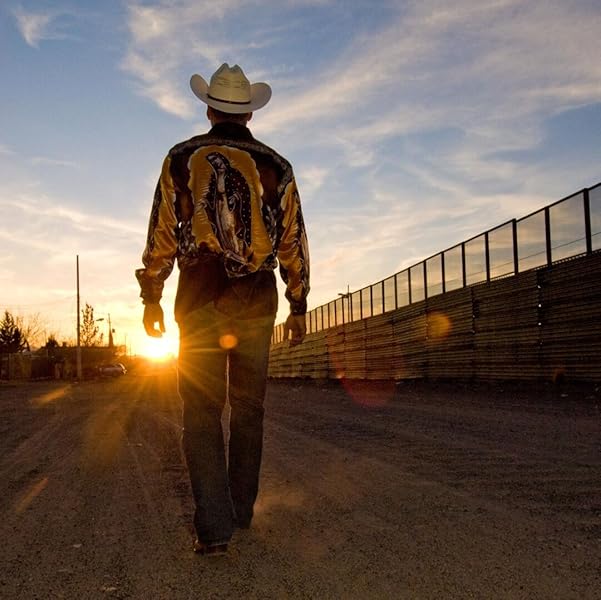
In Hope on the Border, you address existing misconceptions surrounding the US–Mexico border and offer an honest look at life in this perilous area. Why was this an important book for you to write?
America is in trouble. We are more divided and unhappy than ever. In the 2024 World Happiness Report, people under 30 in the U.S. ranked 62nd globally out of 143 countries in happiness and life satisfaction. And this abysmal ranking is plummeting. Suicide is now one of the leading causes of death for American preteens (ages 8–12). How can this be when roughly 95% of the planet is financially worse off than the average American?
(Of interest, Mexico ranked 25th in the 2024 World Happiness Report.)
At our four-decade-old Rancho Feliz Charitable Foundation, Inc., we have a proven solution, and America needs to know what we have to offer. So I decided to write a book.
Ensnared in technology’s frenetic pace, many youth and young adults in America are experiencing a poverty of purpose, meaning, and connection in an environment of unparalleled abundance. Paradoxically, this poverty fosters the same primal fear, alienation, loneliness and emptiness that haunt the poor and underprivileged in Mexico, on the U.S. southern border. In fact, both have the same negative symptoms, just on opposite ends of the socioeconomic spectrum.
Rancho Feliz’s volunteer program allows both sides of the charitable transaction to be simultaneously donors and recipients, thereby thriving in tandem. In a very real sense, the volunteers feed the stomachs of the poor and, in turn, the poor feed the souls of the volunteers. It’s an equal exchange of energy with no logical end—and it transforms the lives of everyone.
This two-pronged approach of serving the poor and creating purpose for the privileged fosters a symbiotic relationship—one in which givers become receivers and receivers become givers. Everyone benefits equally from the same service transaction. We call this reciprocal giving. Under this operating mandate, we have changed thousands of lives on both sides of the border.
To run a successful volunteer-based charity, the greed of human nature must be recognized and harnessed. In other words, service work is foremost in your best interest, and the recipient benefits as a result.
10,000 years of failed religious teachings have taught us that presenting charity as a sacrifice, an action grounded in lack, doesn’t work.
Rather, Rancho Feliz appeals to the driving force of basic human self-interest. Out of selfishness, a form of altruism blossoms.
This isn’t about helping Mexicans – it’s about helping ourselves (by which the Mexicans get helped in the process). This is a true win-win.
In light of our current situation, Americans need to hear this message now more than ever.
How long did it take to research and put this book together?
“Hope on the Border” is a collection of lessons and experiences I gleaned over 38 years of volunteering on the Mexican border, coupled with a lifetime interest in the workings of the mind. My interest in the mind led me to five expeditions into Tibet’s Himalayan “Hidden Lands of the Blossoming Lotus” A.K.A. “Beyul Pemakö” where I studied with several learned Buddhist monks and indigenous ascetics. I firmly believe that in the arena of the mind, what we believe to be true is.
To this end, I also had an early interest in hypnosis and visualization. In the late 1970’s this fascination led me to the Institute of Noetic Sciences which, in turn, led me to studying eastern philosopher Paramahansa Yogananda and his self-realization teachings. Though Yogananda was a Hindu, this study led me to a profound interest in Tibetan Buddhism. In 1993, I took my Bodhisattva Vow of Compassion directly from His Holiness the 14th Dalai Lama. This experience further strengthened my resolve to help others as a path to a rich and full life.
I attended Buddhist meditation master Chögyam Trungpa’s “Shambhala: The Sacred Path of the Warrior” classes in Boulder, Colorado, and completed all 12 levels of the meditation teachings in 1998. It’s important to me to note that I do not consider myself a Buddhist – rather I am a student of Buddhism and how our minds work.
It has been my experience that meditation changes us. It changes our brains. It changes the way we think and relate to our world and to each other. It breaks down the hard boundaries that separate us. As a life-long meditator, I have experienced this firsthand. Likewise, when I am in service, the distinction between me and you is blurred. I see myself in others.
At Rancho Feliz we have created a venue where our volunteers can see themselves in others less-fortunate. When this true view is mastered, the only logical conclusion is to serve – for in serving others you are serving yourself.
Both meditation and serving others unveil the interconnected nature of all things. This awareness further strengthens one’s resolve to help others as a path to a rich and full life.
And this is what led me to start Rancho Feliz. I began seeing myself in others. I could no longer default to ‘empathic blindness’ as I realized that the only difference between me and the poor on the border was ‘luck’ – just blind luck.”
Did you learn anything in the course of writing Hope on the Border that surprised you?
Yes. I came to understand the difference between the statements, Love thy neighbor as thyself and I love the me I see in you. I learned that the worn-out and ineffectual statement Love thy neighbor as thyself is a gullible and simply impossible moral imperative that doesn’t work. It goes against our basic instincts of self-interest. To love a stranger is treacherous. It’s a dualistic love. It assumes a separateness, a distinction between you and your neighbor. And all divisions invite conflict. All I had to do was look at our border wall for proof of that.
I love the me I see in you, on the other handis the “true view”(as the Buddhists would say) of our human condition. We are not separate and independent from each other. Rather we only exist in relation to, and are dependent upon, everything else as strands in a universal web of cause and effect.
I love the me I see in you is personal and reflective. It concentrates on unity and shared being. It’s about recognition and connection. It’s self-referential – focused on how the other person reflects you back to you. It suggests that when you look at another human being, you see yourself – echoing the same emotions, wants, needs, hopes, joys, and vulnerability of our shared experience. And you love them because they mirror what is familiar in you.
This is love based on recognizing our “oneness” – the sense that you and I are not truly separate. Love here comes from seeing ourselves in the other and recognizing our shared existence – our shared humanity. We’re all in this together. None of us knows exactly why we’re here, yet we’re all doing the best we can with the circumstances we were born into. This is a non-dual love – a love that dissolves the boundary between self and other.
In writing “Hope on the Border” I was forced to define what made Rancho Feliz different from other charities and religions. Working in one of the most divisive atmospheres on earth – the U.S./MX border – made me contemplate deeply what approach to charity is in sync with our basic human nature and what approaches are not. I attribute much of Rancho Feliz’s success to this simple but all-powerful understanding.
What is one thing you hope readers take away from this book?
We all have a hand in the maladies that plague our southern border. And the pain, suffering, desperation, misunderstanding and divisive contempt will continue until such time as we truly take to heart the fact that you can best serve yourself by serving others.
Author Links: GoodReads | Facebook-Author | Facebook-Book | Website-Author | Website-Book | Instagram
The U.S.–México border is more than a line on a map. It’s a place of hardship and resilience, inequity and generosity, division and connection. In Hope on the Border, Gil Gillenwater draws on nearly four decades of firsthand experience to bring readers face-to-face with the realities of the world’s most dangerous migrant corridor—and the hope that still thrives there.
Through vivid storytelling and dramatic photography, Gillenwater reveals the heartache and humanity that define life on both sides of the border. His unflinching accounts expose the shared responsibilities of two nations, while his insights point to a deeper truth: Mexico’s material poverty and America’s spiritual poverty are intertwined.
Readers will discover:
Authentic border experiences free from partisan narratives and media distortion.
Stories and photography capturing resilience and humanity.
Insights into poverty on both sides of the border.
A blueprint for hope through reciprocal giving.
A challenge to reflect on personal responsibility.
Hope on the Border won’t just inform you—it will transform how you see division, compassion, and your own capacity for change. If you’re willing to move beyond comfortable assumptions and discover what truly has the power to unite us, this book will be your guide.
Join the movement. Start reading Hope on the Border today.
$5 of each book’s proceeds will support Rancho Feliz’s life-changing work on the U.S.–México border.
Posted on November 14, 2025, in Interviews and tagged author, book, book recommendations, book review, Book Reviews, book shelf, bookblogger, books, books to read, current events, ebook, emigration, Emigration & Immigration Studies, Gil Gillenwater, goodreads, Hope on the Border, immigration, indie author, kindle, kobo, literature, nonfiction, nook, novel, read, reader, reading, social issues, story, writer, writing. Bookmark the permalink. 1 Comment.



Here is my new book