Abigail Trench
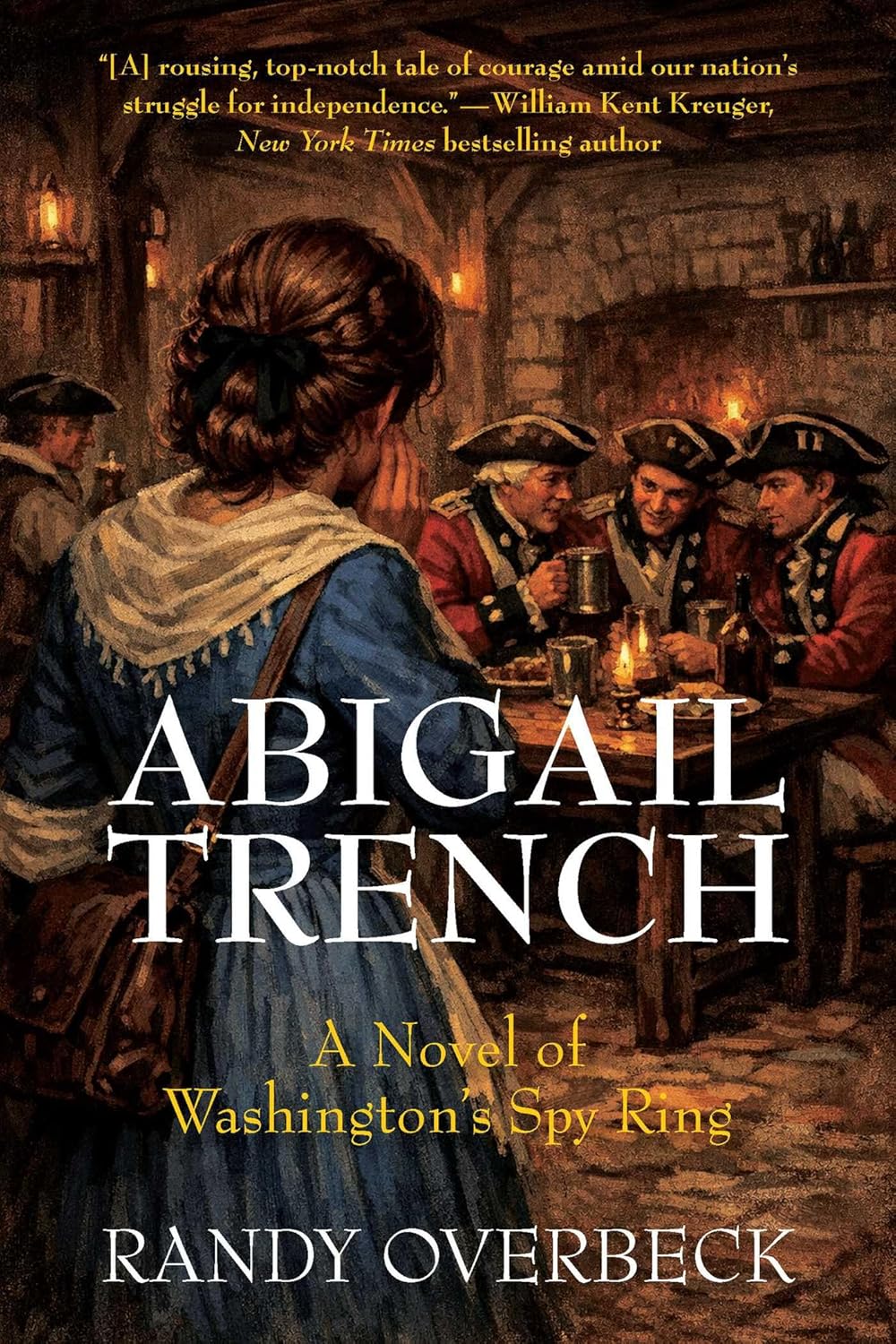

Abigail Trench is a historical spy novel that starts in the muck, noise, and cruelty of Revolutionary-era New York and never really lets you forget how precarious daily life is there. The opening makes that clear right away, with Abigail arriving in the city looking for work and instead finding herself in a crowd watching a public hanging. When Molly tells her, “Your first hangin’, huh? Ya get used to it,” the line works as both character detail and mission statement: this is a book about what people get forced to live with, and what it costs them to keep going.
What the author does well is build the novel from the ground up. Abigail isn’t introduced as a ready-made legend. She’s a teacher, recently uprooted, trying to earn a living, carrying trauma she can’t fully speak aloud, and learning the city through its taverns, dockyards, drawing rooms, and alleys. That gives the book a strong sense of texture. It feels interested in work, class, danger, and the small negotiations people make just to get through the day. The result is a story that treats espionage not as glamour, but as something stitched out of observation, nerve, timing, and need.
The novel is also a character-driven account of political awakening. Abigail’s path into the world of Nathan Hale, Robert Townsend, and the wider intelligence struggle grows naturally from who she is, rather than from plot machinery alone. One of the book’s strongest ideas is that the Revolution isn’t only being shaped by officers and generals. It’s also being shaped by tutors, servants, laborers, sex workers, hustlers, and merchants, all of whom move through spaces the powerful don’t fully control. When Nathan says, “Men and women need to decide if they are willing to knuckle under to the crown’s tyranny or . . . do something about it,” the novel’s real interest comes into focus. It’s not just telling a spy story. It’s telling a story about civic courage spreading through ordinary lives.
I also liked that the book keeps its emotional center close to Abigail even as the historical stakes widen. The friendships with Molly and Jamie give the story warmth and rough humor. The shifts from Nathan Hale to Robert Townsend add different shades of intimacy, grief, and trust. And the espionage plot works best when it grows out of those relationships, especially in scenes where Abigail has to listen, improvise, and hold her nerve while moving through British-controlled spaces. By the later sections, the novel has become a portrait of a woman learning how to make herself legible in one world and invisible in another.
Abigail Trench is an accessible, vivid piece of historical fiction that blends Revolutionary War intrigue with a personal story of survival and self-invention. What I liked most wasn’t just the spy-ring premise, though that’s a strong hook. It was the book’s sense that history is lived at street level by people who are frightened, resourceful, wounded, stubborn, and often underestimated. Abigail’s journey from displaced schoolteacher to someone capable of operating inside a dangerous political world gives the novel its pulse. It’s a story with grit, momentum, and real affection for the people history usually leaves at the edges.
Pages: 384 | ASIN: B0G93VFZTD


Posted on April 24, 2026, in Book Reviews, Five Stars and tagged Abigail Trench, author, book, book recommendations, book review, book reviews, book shelf, bookblogger, books, books to read, ebook, fiction, goodreads, historical fiction, indie author, kindle, kobo, literature, nook, novel, Randy Overbeck, read, reader, reading, story, suspense, thriller, writer, writing. Bookmark the permalink. Leave a comment.



Leave a comment
Comments 0