Blog Archives
Escala’s Wish


Escala’s Wish, by David James, is the best fantasy novel I’ve read that also understands bar management. Yes, there are pixies, courts, curses, wolves, dragons, betrayals, forbidden love, and world-ending magic, but the book’s real engine is a gnome bard trying to hold a room. Wigfrith Foreverbloom doesn’t merely narrate the story; he sells it, seasons it, interrupts it, jokes through it, and keeps checking the emotional temperature of his audience. That framing makes the novel feel less like a book being read in silence and more like an event you accidentally wandered into and then refused to leave.
What I enjoyed most was that the book treats storytelling as a kind of magic equal to spells, swords, or faerie dust. Escala’s journey begins with reckless curiosity and grows into guilt, courage, love, and sacrifice, but the novel never lets us forget that her story is also being shaped by the person telling it. Wigfrith’s asides are funny, sometimes shameless, and occasionally ridiculous, yet they give the darker material a human pulse. The result is a fantasy adventure that understands tragedy lands harder when someone has just made you laugh.
Escala’s Wish is not really about whether Escala can fix what she broke. It’s about whether a story can make a life matter after law, memory, politics, and shame have tried to erase it. The Wane is terrifying because it’s not just death, but disappearance, and that idea quietly haunts the whole novel. Against that, the book offers friendship, song, love, witness, and one very persistent bard as acts of resistance. Escala’s wish becomes larger than Escala herself; it becomes a demand that the world remember what mercy costs.
The book is big, dramatic, sentimental, playful, and occasionally unabashedly theatrical. It has the generosity of a long-running tabletop campaign without feeling like a transcript of one, and its emotional sincerity gives the sprawling lore a beating heart. Readers who want lean, minimalist fantasy may find it too expansive, but those who enjoy being pulled into a full evening’s tale, with jokes, danger, romance, and a crowd leaning closer by the chapter, will find a lot to love. Escala’s Wish won me over because it understands that sometimes the oldest kind of fantasy pleasure is still the best: someone stands up, says “listen,” and then gives you a story worth staying for.
Pages: 659 | ASIN : B0G1XRP6DW

Escala’s Wish
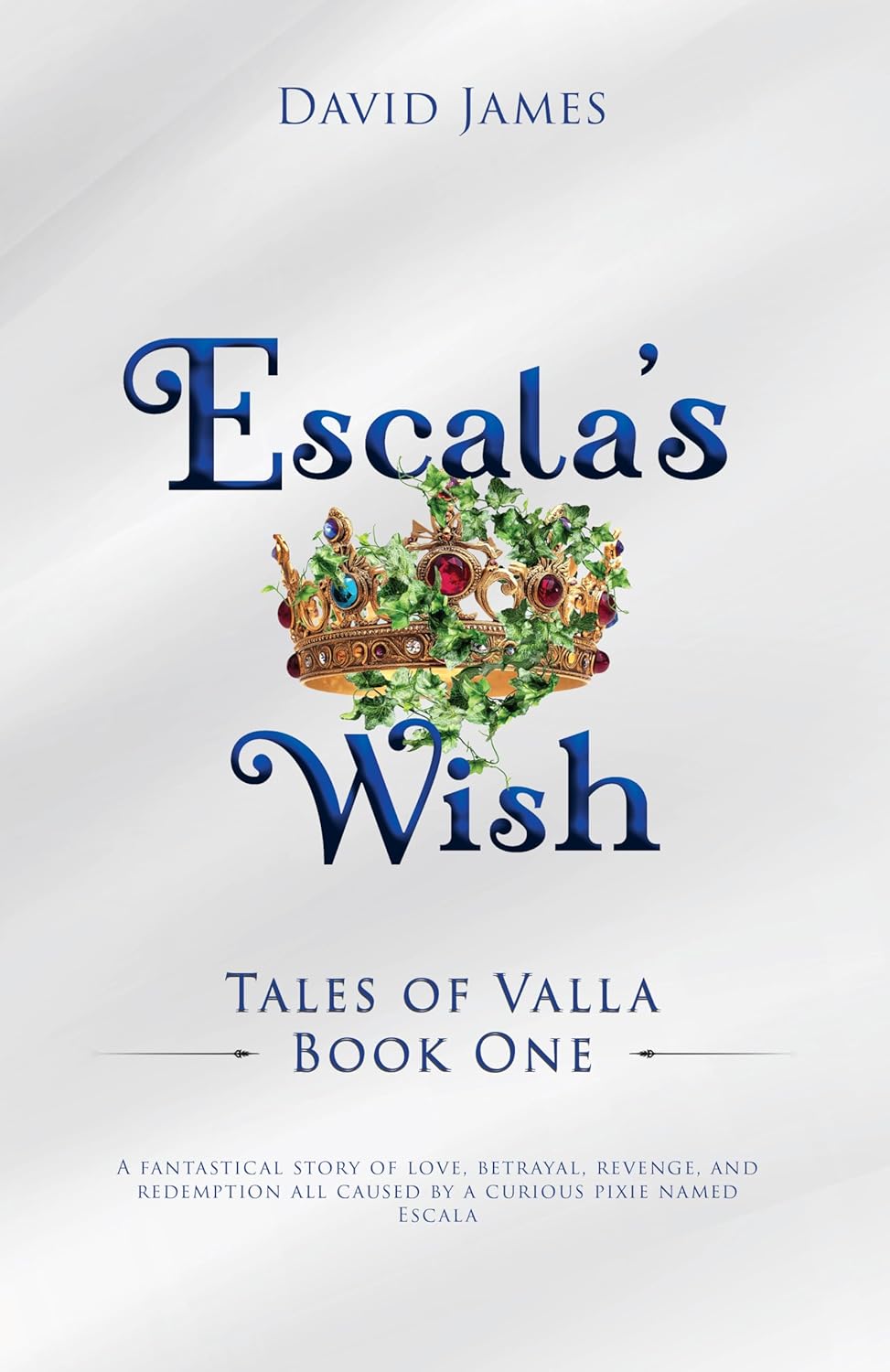
Escala’s Wish is a fantasy novel with a strong romantic fantasy streak, but it also leans into adventure, court intrigue, and the old fairy-tale question of what love is actually worth. The book follows Escala Winter, a pixie from the Court of Dreams whose impulsive kiss of a mortal boy triggers death, exile, and a quest to “remove boulders” from the True Cycle. From there, the story opens outward into a larger struggle involving family secrets, betrayal inside the fey court, Victor Graves and Blackthorn Tower, and Escala’s growing bond with Roedyn as the fate of both the fey realm and Valla starts to come apart.
I was drawn to the author’s choice to make Escala both reckless and sincere. She is not a polished chosen-one type. She starts this mess because she is curious, vain, lonely, and hungry for something real, and that made her easier for me to care about. The book keeps circling questions of intent versus consequence, law versus love, and whether redemption means undoing harm or growing enough to carry it honestly. I think that is where the novel is strongest. It has the emotional logic of a fairy tale, but it also has the sprawl of a quest fantasy, with companions, monsters, royal blood, dragons, and a world-ending threat. There are a lot of characters, a lot of explanation, and a lot of movement. But even when it sprawls, I could feel the heart under it, and that goes a long way with me.
What I liked most is that the book really wants to tell a story. I know that sounds obvious, but as someone who loves fantasy novels, I felt that hunger on the page. The bard framing device gives the whole thing a fireside energy, and Wigfrith’s voice keeps the book lively even when the lore gets dense. Sometimes the novel is playful, sometimes raw, sometimes a little theatrical, but it rarely feels flat. I also liked that David James does not treat the fey as soft and harmless. This version of faerie life is beautiful, social, petty, strict, and often cruel, which gives the world some bite. The ideas around the True Cycle, the Wane, exile, and the different ways fey come into being give the setting a real identity.
I would recommend Escala’s Wish most to readers who enjoy fantasy that wears its feelings openly, especially readers who like romantic fantasy, fairy-court drama, and long quest stories where love and danger keep colliding. If you want something cool and distant, this may not be your book. If you like fantasy that is earnest, dramatic, lore-rich, and willing to be tender right next to brutal, you’ll love this novel. It feels like the kind of story written by someone who genuinely loves fantasy, and I think readers who love that same mix of wonder, heartbreak, and high-stakes magic will feel it too.
Pages: 662 | ASIN: B0G1XRP6DW

Escala’s Wish
If you like your fantasy with a big “someone tell this chaotic gremlin to stop touching magical laws” energy, Escala’s Wish is a fun ride. The story has genuinely high stakes, with heart, jokes, and some genuinely high-stakes.
The whole story is framed like a live tavern performance, told by Wigfrith Foreverbloom, a bard who’s equal parts charming hype-man and messy gossip connoisseur. He’s pitching the tale to get people into The Stag (and keep them buying drinks), so you get this playful, conversational narration that leans into crowd-work humor while still delivering real plot and emotion. At the center is Escala Winter, a pixie from the Court of Dreams, who makes one reckless choice that spirals into tragedy and consequences. The fey legal system is intense, they’re not just worried about “don’t mess with mortals,” they’re obsessed with protecting the True Cycle, and the punishments (like the Wane) are nightmare fuel.
Instead of taking the obvious route, the story sets up a compelling “redemption quest” angle: Escala is sentenced to the material plane to “remove the boulders from the True Cycle,” which becomes this mix of literal helping-people moments and bigger moral/identity questions. And yes, there is betrayal, revenge, and court politics underneath it all. Morvena’s grudge is the slow-burn, generational kind, and it’s the sort of villain motivation that feels petty in a very fae way… until you realize how long she’s been planning.
The narrator is a blast. Wigfrith gives the book a “sit down, I’m about to tell you something wild” feeling, and it keeps even the lore-heavy parts moving. There are also some cool Fey mechanics plus consequences. The True Cycle / Wane / Court-of-Dreams justice system isn’t just set dressing; it drives choices and stakes. The quest has personality as well. Escala earnestly trying to get people to write down that she removed a “boulder” from their True Cycle is both funny and kind of sweet, like watching someone speedrun growth while still socially face-planting. When the story goes big, it really goes big. The latter set pieces feel cinematic: with a dark green vortex, and void-magic horror, party split, and a kind of everything-is-on-fire energy.
This is a lore-forward story. If you’re the kind of reader who wants the worldbuilding to chill for a second, there are stretches where Wigfrith explains fey society and cosmic rules pretty directly. Personally, I didn’t mind because the voice keeps it entertaining, but it’s definitely a style. The framing device is constant. You’re always in “tavern story time” mode, which is great if you like that theatrical feel, less great if you want a fully immersive close-third without commentary.
Under the jokes and action, the book keeps circling back to love as something you do, a choice with a cost, which lands well when everything hits the fan. And it gives Escala an arc that actually feels earned: she starts as reckless curiosity and ends up much more aware that actions have consequences.
Read this if you like fae courts, oaths, and “rules of magic” that actually matter. As well as found-family party dynamics (with banter), redemption arcs and morally loaded wishes, and fantasy that can be funny and go dark. It’s lively, cinematic, and built around a narrator with enough charisma to make you forgive the occasional lore-dump. If you’re into fae politics plus quest fantasy with a strong storytelling voice, I would heartily recommend this book to you.
Pages: 662 | ASIN: B0G1XRP6DW
Escala’s Wish
David James’s Escala’s Wish is an epic fantasy told as a tavern performance: a gnome bard, Wigfrith Foreverbloom, promises his crowd a true story about a pixie princess whose impulsive kiss ripples outward until it nearly unthreads two realms. Escala Winter slips through a fey crossing, charms a mortal for the sake of curiosity (and vanity), and triggers a brutal chain of consequences, a wolf attack, blood on fern-fronds, and the death of her closest friend, Rihanna. The fey justice system is a cold machine, exile or erasure, and Escala is cast out with a maddeningly cryptic “quest” to remove “boulders” obstructing the True Cycle. What begins as a personal reckoning grows into a campaign of alliances, betrayals, and escalating Void-magic, ending in the shattered ruins of Blackthorn Tower and a final wish that costs her dearly while buying one fragile second chance.
What grabbed me first wasn’t the lore (though there’s plenty), but the audacity of the framing: the book keeps winking at the idea of story as currency, Wigfrith isn’t merely narrating, he’s working the room, shaping grief into something an audience can hold without dropping their mugs. That choice gives the novel a lively pulse: the big concepts, law, fate, the ethics of interference, arrive braided with humor and performance instead of dumped like a lecture. Even when the fey court’s rules turn severe, exile, the Wane, the pitiless weight of consequence, the voice keeps the pages turning, as if the book knows that dread lands harder when it’s delivered with a grin that’s one degree too bright.
My strongest reaction, though, was how insistently the story treats “love” as both weapon and wound. Escala’s first choice is selfish, almost childish; she wants to feel something, to test a myth with her own mouth, and the fallout is not abstract. Later, when the conflict widens into Void-storm spectacle and hard-won camaraderie, the book keeps tugging back toward the intimate costs: guilt that doesn’t wash off, loyalty that frays under pressure, and the particular cruelty of memory, what it preserves, what it erases, what it refuses to forgive. By the time the climax cracks open at Blackthorn Tower, the action is ferocious, but the emotional argument is sharper: power without care becomes hunger, and hunger becomes apocalypse.
Escala’s Wish is for readers who want epic fantasy, fae court intrigue, portal fantasy, and romantic adventure with a storyteller’s swagger and a moral spine, especially if you like your magic system half-mythic, half-legalistic, and always ready to bite. If The Name of the Wind by Patrick Rothfuss hooked you with its tavern-born narration and legend-making, Escala’s Wish offers a tale that knows performance can be a form of truth.
Pages: 662 | ASIN: B0G1XRP6DW
Escala’s Wish
Escala’s Wish is a high fantasy novel set in the world of Valla, framed as a story told by Wigfrith Foreverbloom, a gnome bard performing in a Dunwell tavern. He recounts how Escala Winter, a mischievous pixie princess from the Court of Dreams, breaks sacred fey law when she kisses a mortal man to see what love feels like, triggering death, a looming magical punishment called the Wane, and a chain of events that threatens both the fey realm and the mortal world. Around that one impulsive choice the book weaves trials, family secrets, political schemes between fey courts, and a slow, painful reckoning with what it costs to try to fix a mistake.
The frame with Wigfrith on stage works for me: he jokes with the crowd, pauses to explain fey lore or theology, then dives back into Escala’s story, and those breaks give the epic parts some breathing room. The chapters are short and snappy, so even though the book is long, it never felt like a slog. Some of the worldbuilding sections, like the detailed explanation of how different kinds of fey come into being or how the Courts of Dreams, Nightmares, and Twilight work, are still pretty dense, but because they are delivered in Wigfrith’s voice, with little asides and running jokes, it felt more like listening to a talkative friend than reading a rulebook.
What I liked most, though, was how personal the story feels under all the magic. Escala starts out as this curious, slightly spoiled pixie who just wants the kind of love story her parents had, and her playful stunt ends in blood on the grass and the death of her best friend. The book keeps circling that wound: her guilt, her grief, and the way everyone around her responds to it. Her father, Rowan, is torn between his duty to the Court of Dreams and his love for his daughter, and that tension gives the big fantasy stakes some real emotional weight. When the story leans into those family relationships and into Escala’s growth from naive troublemaker to someone who has to make terrible, sacrificial choices, it really lands. At times, the quippy banter and tavern humor brush up hard against serious scenes like parental death or questions of divine justice, and the shift can feel a little quick, but overall, the mix of heartache, sarcasm, and wonder feels honest.
If you like character-driven high fantasy, especially stories that feel inspired by tabletop campaigns, this will probably hit the spot. It has magic systems, fey politics, and a looming cosmic order called the True Cycle, but at its core, it is a coming-of-age fantasy about a pixie trying to live with the consequences of one reckless wish and figure out what love and responsibility really mean. Readers who enjoy long series, tavern tales, and found-family adventuring will have a lot of fun here. If you want a fantasy novel that lets you laugh, wince, and maybe tear up a little while a bard talks to you like you are sharing a table in the back of the inn, Escala’s Wish is worth your time.
Pages: 662 | ASIN : B0G1XRP6DW
Escala’s Wish
Escala’s Wish follows Wigfrith Foreverbloom, a gnome bard who lures a crowd into a Dunwell tavern and then spins the story of Escala Winter, a curious pixie from the Court of Dreams who breaks sacred fey law with one impulsive kiss. That small act ripples outward. A mortal dies, a friend dies, Escala faces the terrifying Wane, and the balance between the fey realm and the world of Valla starts to shake. What begins as a mischievous prank grows into a long quest involving dragons, scheming fey courts, found family, and a final choice where Escala decides what love, duty, and sacrifice really look like.
I had a lot of fun with the way this book is told. The whole thing runs through Wigfrith’s performance at The Stag, so the chapters swing between his patter with the audience and the “real” scenes of Escala’s journey. It feels like sitting in the tavern yourself. The voice is warm, cheeky, and sometimes very silly, then it suddenly hits you with an emotional punch. I liked that contrast. The world-building lands in the same way. There is a huge amount of lore about the fey, the True Cycle, and the different courts, and sometimes Wigfrith leans into full lecture mode, like his long explanation of fey origins and baby myths. Now and then, I felt the momentum slow during those digressions, yet the detail also made the setting feel thick and lived in, not just a backdrop for fights and quips.
On the character side, Escala hooked me more and more as the book went on. She starts as reckless and a bit selfish, chasing the idea of romance the way a magpie chases shiny things. By the end, she owns the damage she caused, and her final decision to become “the boulder” and pull herself out of the Cycle was emotional for me. The book keeps circling back to what love actually is. We see it in Rowan’s stiff loyalty to the law, in Teresa’s choice to leave, in Roedyn’s quiet, stubborn devotion, and in Escala’s own growth as she learns that love is not a feeling you chase but a choice you keep making. I found that theme surprisingly moving. The big set pieces around Blackthorn Tower and the Dream Weaver give those ideas a lot of weight, so the climax feels earned, not just flashy magic and explosions.
I came away feeling like I’d spent time in a full D&D table story, only with sharper emotional through-lines and a bard who never lets the room go quiet for long. The tone leans light and chatty, yet the losses are real, and the final chapters carry a nice ache. I would recommend Escala’s Wish to readers who enjoy character-driven fantasy, people who like fey politics but want humor to cut the gloom. If you want heart, banter, big feelings, and a pixie who grows into a queen, it is a very satisfying start to a series.
Pages: 662 | ASIN : B0G1XRP6DW


