Blog Archives
I Finally Had to Write

Crown Prince follows a man whose extraordinary gift of Sight is a double-edged sword, allowing him to glimpse danger but never freeing him from his own pain. What was the inspiration for the setup of your story?
The New Blood Saga began with a recurring dream so emotionally intense that I would wake up in tears. I finally had to write it. The dream gave me the emotional core but not the characters, so I drew on my background in philosophy — especially my fascination with Socrates — to create Natharr, a man seized by the Daemon of Sight much as Socrates was seized by the Daemon of Philosophy. I already loved drawing maps, and one of them provided the world the story needed. I set out to write a single novel, but the emotional weight and complexity quickly outgrew that plan. I expanded to a trilogy, reading each night’s pages to my wife, whose psychology background helped me refine pacing and character realism (particularly with the female characters). As the world deepened with its history, mythology, and pantheons, I realized even three books weren’t enough, so I allowed myself six. However, while writing book six, my wife asked why it felt like I was rushing. When I told her it was because the story “had” to end in six books, she simply said, “What if I give you permission for more?” And that opened the door to the full eight-book saga.
Natharr avoids feeling like a traditional heroic archetype. How did you approach writing a character who is both capable and deeply constrained?
First of all, thank you. I try to do that with everything I write to at least some degree. When I’m writing anything, whether it’s a novel, a poem, a news story, or just developing a character, I come up with the kernel of the idea, then I think about all the others I’ve read that are similar. Truth of the matter is that all of fantasy if Homer repackaged. So I look for the common thread from all that I’ve read. Then I ask myself, “How can I do the opposite?” What I end up with is rarely the opposite, but it’s usually different enough that it takes readers by surprise. If I manage that, then I’ve achieved my goal: take something that has been done before (to some degree) and throw it on its head. As far as being both capable and constrained, that’s the easy part. Here’s why. Although I pretty much stopped growing when I was 12 (I’ve grown maybe two inches since then), I was a giant growing up. As a result, playing with my friends, doing nothing different than they were doing, I would accidentally hurt them. I didn’t mean to, I always felt horrible, then their parents would make it a thousand times worse. If I wasn’t already crying because I hurt my best friend, then I would be when his mom reamed me for what I’d done. From a very young age, I was fighting internally to control impulses, not rough-housing with my friends because I was so much bigger than them, even when they were having the time of their life. When I started wrestling when I was 6, my workout partners were 9 or 10 because they were my size. They had been wrestling a lot longer and beat me to death every day. I hated wrestling. When the next season came around, my dad (who was also one of my coaches), told me that he knew it was hard my first year, but he thought I had learned a lot. So, if I wrestled one more year and still hated it, I could quit. He was right. That year, I was an All-American in both freestyle and Greco-Roman and, at the peak of my career years later, was world-ranked and qualified to represent the United States in Greco-Roman. So, where normal life left me walking around in a straitjacket, wrestling gave me an outlet where I could let go. There are aspects of Natharr that have similarities, and were easy to write, because I didn’t even have to think to know how it felt.
The Elder and the warped space near the end introduce a new layer of mystery. What role does that kind of surreal element play in the larger series?
Huge. It’s called the All-White Realm or the Faceless Realm. It changes everything in more ways than I could possibly list. Nor would you want me to, because every one of them would be a spoiler. Ellis the Elder is just as significant, aside from being many readers’ favorite character. He is fun, enigmatic, deep, tragic, essential, and also changes everything, much like the other.
Can you give us a glimpse inside the next book in the New Blood Saga? Where will it take readers?
The cast of characters grows significantly. Some are loveable, some are not. Some are respectable, some are not. Some seem like a real problem from the first moment but are not. Some readers will hate, some readers will love. Some will be hated, but their persona will be understandable, perhaps even worthy of sympathy. Very little in the New Blood Saga is black and white.
TAGLINE:
The future of Mankind relies on the Guardian of Maarihk. Can a mysterious Order help him repair the damage of choosing happiness over duty?
BACK COVER COPY:
Despite the Guardian of Maarihk being condemned as anathema, and his very existence relegated to legend, Natharr resumes his ancient responsibilities as Mankind’s protector. He joins with a mysterious Firstborn companion, Ellis the Elder, to journey into the snowy reaches of Biraald, where his Sight promises he will find those who secretly adhere to the ways of the Olde Gods.
Although Biraaldi bloodlines show their Firstborn heritage more clearly than even in Maarihk itself, the two nations have never enjoyed peace. It has been far worse since the rise of Brandt the Usurper to Maarihk’s throne. Natharr and Ellis must navigate the threats not only against the Firstborn, but the Maarihkish, as they seek out the sympathizers he Saw who are brave enough to resist Maarihk’s tyranny. Only then can the damage be repaired from when Natharr chose personal happiness with Darshelle and the young crown prince over his weighty responsibilities as Guardian of Maarihk.
SAMPLE
Natharr leapt up and forward, arching his back, and the blade of a short sword sliced the air only a whisper away from his shoulder blade. He whirled immediately, slashing at the men at his back, but had to turn the attack into a defending stroke, and chopped down into one attacker’s blade, then reversed the motion to feint at the body before striking at the sword in a disarming attack. Their blades threw sparks and the soldier’s eyes bulged, big and brown, as his short sword twisted in his grip and flew to the ground, vanishing in the snow. Normally, Natharr would have pressed the advantage, at least bloodying the unarmed man to make him less of a threat when he retrieved his weapon, but the others were already surging forward to give their companion the necessary cover to rearm himself. Once again, Natharr was impressed with the training of these garrison line troops.
Natharr whirled away and leapt over the top of the snow, throwing a new cloud of white, and he saw Martice and Ellis. They stood, rooted in the knee-deep snow as if they were frozen. The old man’s face was hidden in the shadows of his hood, but the expression on Martice’s face was clear enough. Her eyes bulged and her mouth was open, a look of horror that took a strong woman and transformed her into any maid caught in a difficult situation. He was having a hard enough time fighting so many men in the deep snow, he did not need the distraction of the two of them acting like idiots waiting to be told what to do.
“The trap door!” he yelled, leaping over the top of the snow. “Get through it!”
They did not move.
“Now!”
Natharr turned hard to the right and the soldiers followed. He hoped he could keep their attention on him, rather than turning back toward the Elder and the woman, but that was not certain, particularly when he had just yelled instructions. Swords flew at him in rapid succession. By turning so sharply, he had closed the gap between himself and his pursuers, allowing three to get ahead of him, limiting his paths of escape, all of them back toward Ellis and Martice. His sword arm was heavy, his shoulder and wrist burning; his legs were becoming leaden from fighting through the crusty snow both as he raised each foot and as it came back down. He had to even the odds and he had to do it immediately. There was no telling how much longer he could keep this up. He was only a man and he could do only so much for so long, despite his Sight helping him ward off the worst of their sword strokes.
He attacked.
The three that had cut him off cried out, eyes bulging, as Natharr took his long sword in both hands to rain a barrage of strokes at their heads and shoulders. They stumbled backward through the snow, then one backed into the stiff branches of a pine. His eyes flicked upward for the briefest instant, but it was all the distraction Natharr needed. He swung his sword in a wide arc that ended with a wrist-wrenching impact as his blade bit into the man’s arm at the base of the shoulder. The soldier cursed and dropped to his knees, bright red spraying across the snow as he clutched at the wound. The bone had stopped Natharr’s edge from severing the limb, but the Guardian knew the man would not wield a sword for the garrison again.
It was blind luck that the second of the man’s two fellows ran headlong into him, flipping right over the top of him, upended as they both cried out. Natharr hacked at the man who fell atop his fellow, and his sword point sliced through the man’s fleshy backside, then the Guardian was off again, leaping over the top of the snow. The icy crust seemed thicker, or maybe it was just fatigue beginning to weigh him down, his knee throbbing as if aflame as his ankles started to ache, the repeated impact of the tops of his feet against the underside of the crust taking its toll.
“You heard him!” he heard Ellis yell. “Go through!”
Natharr cursed under his breath. It would be just like Martice to refuse to flee. He glanced toward her and saw that the old man held her aloft, arms locked around her chest. To the Guardian’s surprise, she did not resist. She simply dangled there, staring at Natharr as if stricken. It was that glance that turned Natharr’s head enough to see that Tavish was running through the snow toward him, throwing up his own wake of white, sword also clutched in both hands. The lieutenant sought to cut off Natharr’s path of escape. Tavish’s face was a mask of rage, cheeks red, and he was roaring like a Great Beast. Teeth gritted, Natharr planted his heels to stop and change direction, but his boot soles found no purchase and shot out from under him. The Guardian belched out an inarticulate sound as he fell backward, arms windmilling, despite the length of deadly, blood-wet steel in his hand. Tavish came in at him, unrelenting, sword raised over his head in both hands —
END OF SAMPLE
Author Links: GoodReads | X | Facebook | Website
The future of Mankind relies on the Guardian of Maarihk. Will his Sight be true? Or will his impure Firstblood prove the ruin of us all?
Natharr is Guardian of Maarihk, one of a long line of protectors dating back to the Firstborn Age, before the Aa Conquest. Natharr’s is an ancient role, rooted in his Firstblood, giving him Sight to see what is yet to be. He adheres to his sacred duties even in the centuries since the Firstborn were forced to the brink of extinction by the Aa.
Natharr still stands guard over all men, Aa or Firstborn, Seeing what will come to pass, deciding what is unavoidable and what is not. He spends decades planning how to save the life of the newborn Crown Prince Vikari so he may one day reclaim the throne of the land where Mankind was created, back in the time when the Olde Gods still walked.
Escala’s Wish
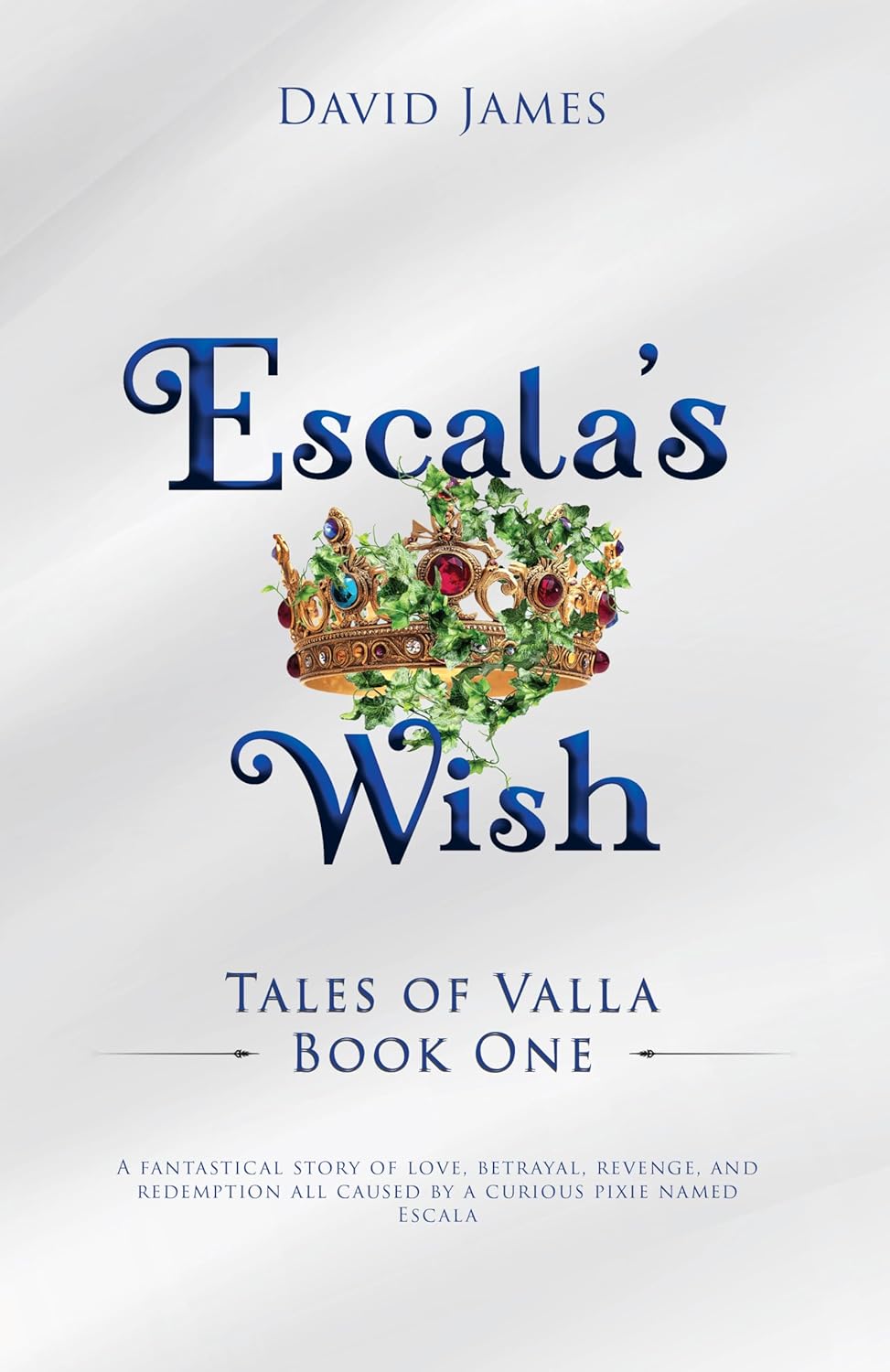

Escala’s Wish is a fantasy novel with a strong romantic fantasy streak, but it also leans into adventure, court intrigue, and the old fairy-tale question of what love is actually worth. The book follows Escala Winter, a pixie from the Court of Dreams whose impulsive kiss of a mortal boy triggers death, exile, and a quest to “remove boulders” from the True Cycle. From there, the story opens outward into a larger struggle involving family secrets, betrayal inside the fey court, Victor Graves and Blackthorn Tower, and Escala’s growing bond with Roedyn as the fate of both the fey realm and Valla starts to come apart.
I was drawn to the author’s choice to make Escala both reckless and sincere. She is not a polished chosen-one type. She starts this mess because she is curious, vain, lonely, and hungry for something real, and that made her easier for me to care about. The book keeps circling questions of intent versus consequence, law versus love, and whether redemption means undoing harm or growing enough to carry it honestly. I think that is where the novel is strongest. It has the emotional logic of a fairy tale, but it also has the sprawl of a quest fantasy, with companions, monsters, royal blood, dragons, and a world-ending threat. There are a lot of characters, a lot of explanation, and a lot of movement. But even when it sprawls, I could feel the heart under it, and that goes a long way with me.
What I liked most is that the book really wants to tell a story. I know that sounds obvious, but as someone who loves fantasy novels, I felt that hunger on the page. The bard framing device gives the whole thing a fireside energy, and Wigfrith’s voice keeps the book lively even when the lore gets dense. Sometimes the novel is playful, sometimes raw, sometimes a little theatrical, but it rarely feels flat. I also liked that David James does not treat the fey as soft and harmless. This version of faerie life is beautiful, social, petty, strict, and often cruel, which gives the world some bite. The ideas around the True Cycle, the Wane, exile, and the different ways fey come into being give the setting a real identity.
I would recommend Escala’s Wish most to readers who enjoy fantasy that wears its feelings openly, especially readers who like romantic fantasy, fairy-court drama, and long quest stories where love and danger keep colliding. If you want something cool and distant, this may not be your book. If you like fantasy that is earnest, dramatic, lore-rich, and willing to be tender right next to brutal, you’ll love this novel. It feels like the kind of story written by someone who genuinely loves fantasy, and I think readers who love that same mix of wonder, heartbreak, and high-stakes magic will feel it too.
Pages: 662 | ASIN: B0G1XRP6DW

Escala’s Wish
If you like your fantasy with a big “someone tell this chaotic gremlin to stop touching magical laws” energy, Escala’s Wish is a fun ride. The story has genuinely high stakes, with heart, jokes, and some genuinely high-stakes.
The whole story is framed like a live tavern performance, told by Wigfrith Foreverbloom, a bard who’s equal parts charming hype-man and messy gossip connoisseur. He’s pitching the tale to get people into The Stag (and keep them buying drinks), so you get this playful, conversational narration that leans into crowd-work humor while still delivering real plot and emotion. At the center is Escala Winter, a pixie from the Court of Dreams, who makes one reckless choice that spirals into tragedy and consequences. The fey legal system is intense, they’re not just worried about “don’t mess with mortals,” they’re obsessed with protecting the True Cycle, and the punishments (like the Wane) are nightmare fuel.
Instead of taking the obvious route, the story sets up a compelling “redemption quest” angle: Escala is sentenced to the material plane to “remove the boulders from the True Cycle,” which becomes this mix of literal helping-people moments and bigger moral/identity questions. And yes, there is betrayal, revenge, and court politics underneath it all. Morvena’s grudge is the slow-burn, generational kind, and it’s the sort of villain motivation that feels petty in a very fae way… until you realize how long she’s been planning.
The narrator is a blast. Wigfrith gives the book a “sit down, I’m about to tell you something wild” feeling, and it keeps even the lore-heavy parts moving. There are also some cool Fey mechanics plus consequences. The True Cycle / Wane / Court-of-Dreams justice system isn’t just set dressing; it drives choices and stakes. The quest has personality as well. Escala earnestly trying to get people to write down that she removed a “boulder” from their True Cycle is both funny and kind of sweet, like watching someone speedrun growth while still socially face-planting. When the story goes big, it really goes big. The latter set pieces feel cinematic: with a dark green vortex, and void-magic horror, party split, and a kind of everything-is-on-fire energy.
This is a lore-forward story. If you’re the kind of reader who wants the worldbuilding to chill for a second, there are stretches where Wigfrith explains fey society and cosmic rules pretty directly. Personally, I didn’t mind because the voice keeps it entertaining, but it’s definitely a style. The framing device is constant. You’re always in “tavern story time” mode, which is great if you like that theatrical feel, less great if you want a fully immersive close-third without commentary.
Under the jokes and action, the book keeps circling back to love as something you do, a choice with a cost, which lands well when everything hits the fan. And it gives Escala an arc that actually feels earned: she starts as reckless curiosity and ends up much more aware that actions have consequences.
Read this if you like fae courts, oaths, and “rules of magic” that actually matter. As well as found-family party dynamics (with banter), redemption arcs and morally loaded wishes, and fantasy that can be funny and go dark. It’s lively, cinematic, and built around a narrator with enough charisma to make you forgive the occasional lore-dump. If you’re into fae politics plus quest fantasy with a strong storytelling voice, I would heartily recommend this book to you.
Pages: 662 | ASIN: B0G1XRP6DW

Escala’s Wish
David James’s Escala’s Wish is an epic fantasy told as a tavern performance: a gnome bard, Wigfrith Foreverbloom, promises his crowd a true story about a pixie princess whose impulsive kiss ripples outward until it nearly unthreads two realms. Escala Winter slips through a fey crossing, charms a mortal for the sake of curiosity (and vanity), and triggers a brutal chain of consequences, a wolf attack, blood on fern-fronds, and the death of her closest friend, Rihanna. The fey justice system is a cold machine, exile or erasure, and Escala is cast out with a maddeningly cryptic “quest” to remove “boulders” obstructing the True Cycle. What begins as a personal reckoning grows into a campaign of alliances, betrayals, and escalating Void-magic, ending in the shattered ruins of Blackthorn Tower and a final wish that costs her dearly while buying one fragile second chance.
What grabbed me first wasn’t the lore (though there’s plenty), but the audacity of the framing: the book keeps winking at the idea of story as currency, Wigfrith isn’t merely narrating, he’s working the room, shaping grief into something an audience can hold without dropping their mugs. That choice gives the novel a lively pulse: the big concepts, law, fate, the ethics of interference, arrive braided with humor and performance instead of dumped like a lecture. Even when the fey court’s rules turn severe, exile, the Wane, the pitiless weight of consequence, the voice keeps the pages turning, as if the book knows that dread lands harder when it’s delivered with a grin that’s one degree too bright.
My strongest reaction, though, was how insistently the story treats “love” as both weapon and wound. Escala’s first choice is selfish, almost childish; she wants to feel something, to test a myth with her own mouth, and the fallout is not abstract. Later, when the conflict widens into Void-storm spectacle and hard-won camaraderie, the book keeps tugging back toward the intimate costs: guilt that doesn’t wash off, loyalty that frays under pressure, and the particular cruelty of memory, what it preserves, what it erases, what it refuses to forgive. By the time the climax cracks open at Blackthorn Tower, the action is ferocious, but the emotional argument is sharper: power without care becomes hunger, and hunger becomes apocalypse.
Escala’s Wish is for readers who want epic fantasy, fae court intrigue, portal fantasy, and romantic adventure with a storyteller’s swagger and a moral spine, especially if you like your magic system half-mythic, half-legalistic, and always ready to bite. If The Name of the Wind by Patrick Rothfuss hooked you with its tavern-born narration and legend-making, Escala’s Wish offers a tale that knows performance can be a form of truth.
Pages: 662 | ASIN: B0G1XRP6DW
Escala’s Wish
Escala’s Wish is a high fantasy novel set in the world of Valla, framed as a story told by Wigfrith Foreverbloom, a gnome bard performing in a Dunwell tavern. He recounts how Escala Winter, a mischievous pixie princess from the Court of Dreams, breaks sacred fey law when she kisses a mortal man to see what love feels like, triggering death, a looming magical punishment called the Wane, and a chain of events that threatens both the fey realm and the mortal world. Around that one impulsive choice the book weaves trials, family secrets, political schemes between fey courts, and a slow, painful reckoning with what it costs to try to fix a mistake.
The frame with Wigfrith on stage works for me: he jokes with the crowd, pauses to explain fey lore or theology, then dives back into Escala’s story, and those breaks give the epic parts some breathing room. The chapters are short and snappy, so even though the book is long, it never felt like a slog. Some of the worldbuilding sections, like the detailed explanation of how different kinds of fey come into being or how the Courts of Dreams, Nightmares, and Twilight work, are still pretty dense, but because they are delivered in Wigfrith’s voice, with little asides and running jokes, it felt more like listening to a talkative friend than reading a rulebook.
What I liked most, though, was how personal the story feels under all the magic. Escala starts out as this curious, slightly spoiled pixie who just wants the kind of love story her parents had, and her playful stunt ends in blood on the grass and the death of her best friend. The book keeps circling that wound: her guilt, her grief, and the way everyone around her responds to it. Her father, Rowan, is torn between his duty to the Court of Dreams and his love for his daughter, and that tension gives the big fantasy stakes some real emotional weight. When the story leans into those family relationships and into Escala’s growth from naive troublemaker to someone who has to make terrible, sacrificial choices, it really lands. At times, the quippy banter and tavern humor brush up hard against serious scenes like parental death or questions of divine justice, and the shift can feel a little quick, but overall, the mix of heartache, sarcasm, and wonder feels honest.
If you like character-driven high fantasy, especially stories that feel inspired by tabletop campaigns, this will probably hit the spot. It has magic systems, fey politics, and a looming cosmic order called the True Cycle, but at its core, it is a coming-of-age fantasy about a pixie trying to live with the consequences of one reckless wish and figure out what love and responsibility really mean. Readers who enjoy long series, tavern tales, and found-family adventuring will have a lot of fun here. If you want a fantasy novel that lets you laugh, wince, and maybe tear up a little while a bard talks to you like you are sharing a table in the back of the inn, Escala’s Wish is worth your time.
Pages: 662 | ASIN : B0G1XRP6DW
Veil of Embers

Veil of Embers is a Celtic-flavored portal fantasy that follows Sorcha, a ranger in the Circle of Light, as creeping corruption seeps into her forest, her city of Lumora, and even the people she loves. Strange reanimated beasts, a spreading sick bloom in the woods, and a willfully blind council set the stage while a second thread follows Kyron of the Tuatha Dé Danann, who faces the cost of dark magic up close, and a third thread tracks Riona as she gets entangled with a forbidden grimoire and the very charming, very suspect Vaelric. As the circle investigates, the rot in their world deepens, the old gods feel nearer, and the story builds toward Sorcha, Kyron, and the shapeshifter Cat stepping through the Veil itself into a new realm, leaving this first installment as a clear launch point for a larger series.
I really liked the way Karla Molina writes moment to moment. The opening trial with Sorcha and the animated wolf grabbed me right away, and the tone never really lets go after that. The prose is descriptive and sensory, with a lot of attention to sounds, smells, and texture, so the forest scenes and Lumora’s streets feel lived in. The library of Verdant Light, with its living tree and the mirror portal tucked into an alcove, is a good example, it feels cozy and ominous at the same time. The banter inside the Circle is warm and funny and gave me that “found family” vibe without feeling like a sitcom room, and the fight and horror scenes with the corrupted wolves, the dead livestock, and the black flower in the woods have real teeth. The pacing stays pretty steady, more slow-burning investigation and creeping dread than constant action, and then ramps up in the last act when the Veil finally opens. I will say it ends on a pretty hard “now we step into the new world” beat, so as a reader, I finished the last page already mentally reaching for book two.
The book worked for me because it is not just monsters in the trees. It keeps exploring the cost of power and the way hurt people go looking for shortcuts. Kyron’s mercy killing of Alenia, whose body has been twisted by dark magic, hits that theme in a brutal way, and it frames his later choices with a lot of quiet grief. Riona’s storyline with the Dark Book feels like watching someone slip into an addiction one page at a time, she is lonely and angry, the book tells her exactly what she wants to hear, and she keeps going back even while she knows better. The text does not glamorize that, it lets you feel the pull and the danger. On top of that, you have Sorcha’s trauma, the loss of her parents, the nightmares, panic, and the way she keeps forcing herself to function while her magic behaves more and more strangely. The preface is clear about the heavy topics, and I appreciated that the story leans into anxiety, despair, and even thoughts of not wanting to go on, but does so with empathy rather than shock value.
The character dynamics were a high point for me. The Circle feels like a real unit, full of teasing, half-serious flirting, and little crushes that may or may not go anywhere. Eirin, Drystan, Mason, Rhosyn, and Emry each get small moments that make them feel like people, not just names standing behind Sorcha in a formation. The romance threads stay fairly low heat and “closed door”, which fits the tone, but there is plenty of tension, especially between Sorcha and Kyron. I liked that their connection grows out of shared responsibility and shared guilt, not just “you are hot and mysterious”. Riona and Vaelric bring a darker, more questionable chemistry that adds another flavor. Worldbuilding-wise, I enjoyed the Irish myth roots, the Tuatha Dé Danann, Samhain, the Pooka, and the Undines in the waterfall, and the glossary up front is a nice touch, so the names and terms do not feel like homework.
By the time Sorcha, Kyron, and Cat step through the cracked earth into a sky full of dragons and a perpetual sunset, I felt both satisfied with the arc of this book and very aware that the larger story is only getting started. I closed it feeling a little wrung out, fond of this messy, brave group, and curious about how far into the dark the story is willing to go in future volumes. I would recommend Veil of Embers to readers who like character-driven epic fantasy with a slightly spooky edge, strong found family energy, Celtic myth influences, and slow-burning romance. It feels especially right for older teens and adults who do not mind heavier themes like grief, anxiety, and dark magic, and who enjoy that feeling of walking from a haunted, familiar forest into a bright and dangerous new world and knowing the real journey is just beginning.
Pages: 371 | ASIN: B0GHQM7JGD
Even Immortality Has it’s Down Side

Of Hunters and Magi follows a battle-worn soldier and a fallen god as they hunt a lost artifact across a wounded world, forcing both to confront who they are when faith, duty, and identity begin to crumble. What first sparked the idea of pairing a disciplined soldier with a god who has lost his divinity?
Defurge’s inclusion was always a given from the very beginning of the story. He is based on a Dungeons and Dragons character I once played, someone whose powers, abilities, and personality weren’t inherently their own but were conferred upon them by a cursed artifact. The original D&D character was not as playful or manipulative as the former god of destruction and madness turned out to be, and that evolution was organic to the story. Many character-building moments needed tension, and he brought it through his manipulation of others for his own amusement.
How did you approach writing gods as flawed, tired beings rather than distant or omnipotent figures?
I’ve always enjoyed the myths of the Greek and Norse deities who were flawed. I also enjoy characters who grapple with immortality, such as the vampire Lestat, Wolverine, and Deadpool. Those characters all have something we think we would want: immortality, but each of their stories discusses the significant downside of the affliction. When I was writing my deities, I brought that mentality into their being. At some point, the interactions would cease to be novel, and everything would become mundane, especially if there was never any danger in their life.
Bronwyn’s inner doubts play a big role in the story. How much of her emotional arc was planned versus discovered while writing?
About fifty percent. I knew before I started that I wanted her character to come from a hard, militaristic life, where she had to struggle for acceptance and to show how she isolated herself as a buffer against it. I wanted her to join a group that accepted her leadership and skills without question, and to show how her character changed when she no longer had to struggle every day for the validation she was seeking. As I wrote and spent time with all the characters, they became more real, and I think that is when Bronwyn’s doubts began to surface. I always wanted her to reevaluate the beliefs she was raised with, but I didn’t expect how that would lead her to question everything around her.
The world feels shaped by long-past choices. How did you decide what history to reveal and what to leave buried?
I’m a big believer in the iceberg theory of world-building, 90% of it is invisible and serves to support the visible 10%. I decided to give the reader as little information as possible to get them from point A to point B to maintain pacing, unless of course, the bit of history was interesting or added flavor to the world. It was a balancing act, and information was added, cut, re-added, re-cut, and moved around a lot throughout the many revisions.
Author Links: GoodReads | Instagram | Website
But first things first, Emestria still needs saving. Bronwyn searches for the Horn of Garanhir, another legendary artifact capable of creating food. With Miro and Clara still angry at Bronwyn for her actions while fighting Defurge, she finds the current incarnation a strange ally. Even with a clear target and set goals, something is still unsettling. Surely, it can’t be the Library of Laevin and the peculiar denizens.
Of Hunters and Magi is the second installment in the Legendary Artifacts series. This epic fantasy picks up two weeks after the first book ended. Captain Bronwyn Amyna, Clara, Miro, and Issaroh are searching for an artifact to help Emestria weather the war with Rouke. But in the back of their minds, they know they will soon have to start searching for the artifact to destroy the Soul Gem that grants Defurge his power.
This is a multi-POV novel. Bronwyn, Clara, and Defurge are the primary points of view. The prologue includes a POV from a character far in the past: Cassandra, the first Void Walker. Mysteries unfold as the adventuring group discovers more about their abilities, the Ywaigwai, and the extent of Defurge’s power. Each character harbors secrets, and no one is candid with each other.
Brandon Sanderson and Patrick Rothfuss fans will enjoy this mythic story crafted in a unique world where gods and goddesses once lived side-by-side with mortals. Christopher J. Harris combines his love for fantasy, video games, comedy, and old-school claymation movies like Jason and the Argonauts in this series.
Escala’s Wish
Escala’s Wish follows Wigfrith Foreverbloom, a gnome bard who lures a crowd into a Dunwell tavern and then spins the story of Escala Winter, a curious pixie from the Court of Dreams who breaks sacred fey law with one impulsive kiss. That small act ripples outward. A mortal dies, a friend dies, Escala faces the terrifying Wane, and the balance between the fey realm and the world of Valla starts to shake. What begins as a mischievous prank grows into a long quest involving dragons, scheming fey courts, found family, and a final choice where Escala decides what love, duty, and sacrifice really look like.
I had a lot of fun with the way this book is told. The whole thing runs through Wigfrith’s performance at The Stag, so the chapters swing between his patter with the audience and the “real” scenes of Escala’s journey. It feels like sitting in the tavern yourself. The voice is warm, cheeky, and sometimes very silly, then it suddenly hits you with an emotional punch. I liked that contrast. The world-building lands in the same way. There is a huge amount of lore about the fey, the True Cycle, and the different courts, and sometimes Wigfrith leans into full lecture mode, like his long explanation of fey origins and baby myths. Now and then, I felt the momentum slow during those digressions, yet the detail also made the setting feel thick and lived in, not just a backdrop for fights and quips.
On the character side, Escala hooked me more and more as the book went on. She starts as reckless and a bit selfish, chasing the idea of romance the way a magpie chases shiny things. By the end, she owns the damage she caused, and her final decision to become “the boulder” and pull herself out of the Cycle was emotional for me. The book keeps circling back to what love actually is. We see it in Rowan’s stiff loyalty to the law, in Teresa’s choice to leave, in Roedyn’s quiet, stubborn devotion, and in Escala’s own growth as she learns that love is not a feeling you chase but a choice you keep making. I found that theme surprisingly moving. The big set pieces around Blackthorn Tower and the Dream Weaver give those ideas a lot of weight, so the climax feels earned, not just flashy magic and explosions.
I came away feeling like I’d spent time in a full D&D table story, only with sharper emotional through-lines and a bard who never lets the room go quiet for long. The tone leans light and chatty, yet the losses are real, and the final chapters carry a nice ache. I would recommend Escala’s Wish to readers who enjoy character-driven fantasy, people who like fey politics but want humor to cut the gloom. If you want heart, banter, big feelings, and a pixie who grows into a queen, it is a very satisfying start to a series.
Pages: 662 | ASIN : B0G1XRP6DW


