Blog Archives
Fighting for Equality

Eroshenko follows a blind Ukrainian Esperantist and writer who moves to Tokyo, where he winds up at the center of early 20th-century Tokyo’s anarchist, feminist, and literary circles. What was the inspiration for the setup of your story?
For years I kept coming across references to Vasily Eroshenko in Japanese art and literature–seeing his portrait in the Museum of Modern Art Tokyo, his photo in the Nakamuraya restaurant, reading about him in novels by famous writers like Kawabata Yasunari and Hirabayashi Taiko. Then a few years ago, I discovered that he had been close friends with Kamichika Ichiko, who has her own wild story of a love triangle with feminist Ito Noe and anarchist Osugi Sakae. I just knew I had to bring these two stories together. About a year after I got the inspiration and started planning the novel, the first translation of some of Eroshenko’s short stories was published under the title The Narrow Cage. In the introduction, the translator, Adam Kuplowski, briefly summarizes Eroshenko’s biography. Several reviewers mentioned that Eroshenko’s life was worthy of a novel. I agreed–I was already working on one.
It was a bit intimidating to write about real people. I wasn’t sure if I had enough material at first. But I discovered that many of Eroshenko’s friends published autobiographies: Kamichika Ichiko, Soma Kokko, Akita Ujaku and others. There was also a biography of Eroshenko published after his death, and the author, Takasugi Ichiro, had interviewed Ichiko, Akita and others who knew him. Some of Eroshenko’s letters and speeches have also been published along with his short stories. Once I realized there was a lot of material, it was more a matter of fitting it together into a narrative and making decisions about personality and motivations.
As much as possible, I used real events and incidents. Every named character is a real person. Ito Noe really did let her baby pee off the verandah in the Bluestocking editorial office, which was just a room in Hiratsuka Raicho’s parents’ house. The other women editors complained about Noe, but it shows how little she cared about propriety. I also used Eroshenko’s and Ichiko’s own words as much as I could, especially when they deliver public speeches.
In some ways, I think of Eroshenko as a companion to my previous novel, Flowers by Night, which is set in Japan about a hundred years earlier. In Flowers by Night, the main character, Ichi, belongs to the guild of blind men, the Todoza, which provided training and a job, and was run by blind people themselves. That history of self-determination and independence of blind communities in Japan explains why Eroshenko found the situation there superior to Moscow and even London. Both novels also show how the gay-straight binary did not exist in Japan until they imported Western-style homophobia in the early twentieth century
What are some things that you find interesting about the human condition that you think makes for great fiction?
I’m very interested in finding states of being that are very unlike our own and making them relatable. What did it feel like to walk down the street in Tokyo in 1915? So much of the outward details are so different, but on the inside we’re all just people. I love being transported to a different time and place but still recognizing that essential humanity.
What were some themes that were important for you to explore in this book?
Even though the story is set in 1915-1916, it’s both inspiring and chilling how many parallels there are with today. The characters are activists for socialism, anarchism, sexual freedom, disability rights, queer identity, women’s rights, birth control and abortion, all things we are still struggling with more than a century later. The real people behind these characters were incredibly brave to protest publicly despite censorship, government repression, and police brutality. At the same time, they made a lot of mistakes, like letting ego and petty jealousy sabotage the movement. The toxic rivalry between Sakai Toshihiko and Osugi Sakae over who would be the leader of the socialist movement in Japan is unfortunately a common story in leftist organizing.
The feminist struggles also feel very relevant to me: Ito Noe trying to manage a career and children; Kamichika Ichiko thinking of herself as sexually liberated, but still finding herself bound by the conventions and sexism around her; men like Osugi Sakae proclaiming themselves feminist allies, then treating the real women in their lives very badly.
Above all, I wanted to depict the struggle for self-determination that was happening in the blind community at that time. Many of the things that Eroshenko said were decades ahead of his time in terms of disability rights. In particular, his comment that the problem was not blindness itself, but the fact that blind people were not taught to live independently nor hired in jobs that would allow them to support themselves. This prefigures the social model of disability by around 50 years. Eroshenko’s imagined solution was to create self-sufficient communes of blind people, which also prefigures by almost a century ideas about disabled people as a class being created by capitalism. I felt it was important to tell his story not only for his remarkable life as an individual, but to challenge the way disability is often represented in literature. Too often, the character with a disability is a lone individual, but in real life, community is essential. Eroshenko’s travels were facilitated through international networks of blind schools, and he dedicated his life to teaching and to publishing in Braille. It was important to me to represent his friendships with other blind people in Japan.
Eroshenko’s life was very hard, full of struggle. But it’s also important to remember people who spoke out against fascism and for peace and equality even in the face of tremendous odds.
Author Links: GoodReads | Website
While WWI rages, half a world away, Tokyo is a hotbed of radical ideas, as cosmopolitan intellectuals and activists from around the world cross paths in a rapidly modernizing city. Socialists and anarchists, musicians and artists from Japan, China, Korea, India, and Russia all passionately advocate for a more just and equal world.
Blind Ukrainian Vasily Eroshenko is drawn to Tokyo in search of greater opportunities and respect for blind people. At a salon for radicals on the second floor of a bakery, he meets the anarcho-feminists of Bluestocking magazine, fearless women fighting for bodily autonomy and free love.
Kamichika Ichiko is a contributor to Bluestocking and the first woman reporter at the Tokyo Daily News. She is most at home among the Bluestockings who dress like men and engage in “sister” relationships. Yet she is drawn to Eroshenko and helps him publish his political fables.
As Eroshenko becomes a celebrated writer and public speaker, he becomes more outspoken in advocating for socialism, feminism, and disability rights, but the authorities will not long tolerate this disruptive foreigner.
Based on extraordinary, heartbreaking true events, Eroshenko is a wild fever dream of utopianism, polyamory, artistic creation, jealousy, and persecution, unfurling against the backdrop of Japan’s belle époque, called Taishō Romanticism. When high and low, East and West, old and new intermingled, these activists dreamed of a better world, trying to stem the tide of growing fascism.
Eroshenko


Eroshenko is a richly textured historical novel that follows the life of Vasily Eroshenko, a blind Ukrainian Esperantist and writer who finds himself at the center of early 20th-century Tokyo’s anarchist, feminist, and literary circles. Through the eyes of Kamichika Ichiko, a headstrong lady reporter navigating her own path in a rigid, patriarchal society, we experience Eroshenko’s passionate ideals, his gentle spirit, and the political tensions simmering just below the surface of Meiji and Taishō-era Japan. The book blends historical facts and imagined dialogue seamlessly, offering a vivid snapshot of a revolutionary time and a cast of unforgettable characters.
I was immediately pulled in by the opening at the Nakamuraya salon. Lennox’s writing here is lush but never showy; the scent of cream buns and the dusty stairs, the eclectic furniture, the buzz of political energy, all of it just hit the right note. And the way Eroshenko is introduced, with his halo of blond curls and strange, tilted eyes, was so captivating I reread that section twice. The dialogue sparkled with personality, especially between Ichiko and Raichō, and there was a real sense of history being made in these cramped, smoky rooms.
Ichiko is smart, proud, and fiercely independent, but she’s also vulnerable, a bit naive, and maybe even a little lost. Her relationships with the other women, especially Noe, were complex and emotionally raw. That conversation over sweets and tea, with Noe breastfeeding and letting her baby pee off the veranda while talking about revolution and broken marriages? That was wild and intimate and, honestly, one of my favorite parts. It made me laugh, feel a little sad, and somehow more hopeful at the same time.
The story of Eroshenko himself, it’s hard not to fall in love with him the way Ichiko does. He’s this strange mix of gentle dreamer and idealistic firebrand. His ideas about Esperanto, storytelling, blind independence, and massaging for a living might sound like an odd combo, but Lennox makes it work. When he’s on the train to Enoshima or kissing Ichiko at the seaside lookout, you feel like you’re watching two lonely people touch the edges of something bigger. But even then, he stays a bit enigmatic. That ambiguity made the emotional payoffs more subtle, and in a way, more real.
This book’s a slow burn in the best way. If you’re the kind of reader who loves character-driven stories, rich dialogue, and historical fiction that doesn’t just name-drop but fully immerses you, Eroshenko is gold. It’s perfect for readers who have a soft spot for the underdog intellectuals and badass women navigating love, politics, and personal truth. It made me think, made me laugh, and made me want to look up everyone in it to learn more. Highly recommended.
Pages: 366 | ASIN : B0DTKL38GR

Mother-Daughter Relationships
Song of the Pearl and Oyster is a multigenerational story that intertwines the lives of several characters from different times and backgrounds. What was the inspiration for the setup of your story?
Surprisingly, a friend from yoga class told me the story of her aunt’s birthday party. It was her 100th birthday, not her 75th, as it is in my book. When she got to the part about the aunt’s half-Japanese daughter showing up for her birthday party when her mother hadn’t seen her since she was six years old, it took my breath away. I asked her if I could write a novel about her family story, and she agreed. I loved the research from the various periods, from Japanese pearl diving to Michigan farms to New York Native American history.
What are some things that you find interesting about the human condition that you think make for great fiction?
Oh my, what a great question! I’d have to say vulnerability and uncovering truths. When an author draws a character at her most vulnerable, combining multiple real-life scenarios for that fictional reality, anything can result – a life lesson, a new understanding, or a perception of beauty that comes only through loss or tragedy. Sometimes, when characters are in the midst of conflict, neither they nor the reader recognize how their journey will take shape. My characters teach me as I discover what they can do; otherwise, why write? Their aha moments make for a satisfying denouement and conclusion!
What were some themes that were important for you to explore in this book?
Unusual mother-daughter relationships were important explorations throughout the book. I like the idea that a sense of family can grow from commonalities that don’t include the family we are born into! And music, so important in my life as a flutist, became important to Nora as an escape, her life’s work, and a means of expression when words weren’t enough.
What is the next book that you are working on, and when will it be available?
My next book, The Compass Point, will be released in December. It is also historical fiction, with a male main character, a reluctant Jewish billionaire. It takes place in 1980s Eastern Europe when Russian propaganda threatened fledgling democracies. It’s filled with political intrigue and a hint of romance.
Author Links: GoodReads | Facebook | Amazon
In Fountain Valley, Nora reconnects with James from her school days. Just when she begins to see a future with James, her quirky new friends, and a career, her one-of-a-kind sable violin is stolen. When James accepts a promising job in New York, Nora struggles with the decision to follow her ambitions, or his. Recipient of the Literary Titan Gold Book Award.
Song of the Pearl and Oyster
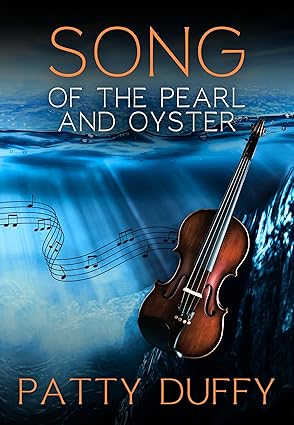
Song of the Pearl and Oyster is a multigenerational story that intertwines the lives of several characters from different times and backgrounds. Set in places ranging from Indianapolis to Yokohama, the book explores themes of cultural identity, family bonds, and the emotional toll of war. Through different perspectives, we follow characters like Nora, Kioshi, and Ruth as they navigate their personal histories, trauma, and love, often set against the backdrop of societal expectations and historical events like World War II.
What struck me the most about this book was its emotional intensity. Author Patty Duffy does a fantastic job of slowly unraveling each character’s motivations and past, allowing the reader to sit with them as they process pain or joy. For instance, Nora’s meeting with her estranged mother at the birthday celebration was heart-wrenching. The tension between them was palpable, and the subtle way Duffy captures Nora’s mix of longing, anger, and hope was a real highlight for me. The pearl ring that triggers memories of a forgotten connection between mother and daughter was a simple yet powerful symbol of the fragile ties that still bind them after years of separation.
The prose is rich with atmosphere and small, meaningful details that bring the settings and characters to life. I appreciated how each chapter felt like peeling back a new layer, whether it was following Kioshi’s pearl-diving adventures in Yokohama or Ruth’s college days in Michigan.
Another strength of the book is its exploration of identity and belonging. Kioshi’s journey from Japan to America, his struggles with fitting into a new country, and the challenges he faced as a Japanese immigrant during wartime were especially poignant. His relationship with Ruth added depth to the narrative as it wasn’t just about their love but also the cultural barriers they faced. I thought Duffy handled the racial and cultural tensions of that time with sensitivity, and it made me reflect on how similar struggles still resonate today.
With so many characters and timelines, I sometimes found it hard to stay invested in each of their arcs. For example, Ruth’s college years were compelling, but I wanted more development of her relationship with Kioshi before diving into the war’s impact on their lives. The fragmented nature of the storytelling left some gaps in emotional continuity, though it did mirror the fractured nature of the characters’ experiences.
Song of the Pearl and Oyster is a reflective and emotionally rich novel that delves into complex relationships and histories. It’s a great read for anyone who enjoys character-driven stories about family, memory, and cultural identity.
Pages: 254 | ASIN : B0C74QHFBJ
Formosan Vampire

Formosan Vampire, by Amadeus Rockefeller, offers a riveting narrative that interweaves the lives of two markedly different characters. Seth, a centuries-old vampire, languishes in prison, haunted by a past rich in conquests, conflicts, and losses. Known previously as the formidable leader of the Dark Order, he finds himself on death row, reflecting on a life marked by horror and regret.
In stark contrast is Eunice, a 26-year-old paralegal, whose experience with racism and derogatory treatment in her youth fuels her ambition in the legal field. Her path crosses with Seth’s when she interviews him, uncovering tales of ancient vampire kingdoms and Seth’s former glory. Their interaction unveils a history marred by the fall of civilizations and governmental corruption, and an unexpected bond forms between them amidst Seth’s psychological ploys.
Rockefeller’s novel is characterized by its sophisticated characters and a plethora of themes that add depth to the narrative. While the book’s length may initially seem intimidating, it quickly draws the reader into its complex world. The narrative, while occasionally pausing in its suspense, is enriched by vivid descriptions and a deep exploration of vampire lore, which together weave a captivating and immersive world. The story is particularly appealing to those with a penchant for horror, offering just enough gore to maintain a gripping atmosphere. The fusion of historical elements with the vampire theme adds an intriguing layer to the story.
Formosan Vampire is a compelling read for anyone fascinated by the lore of vampires and complex character dynamics. Those interested in a novel that blends horror, history, and intricate character studies will find this book a noteworthy addition to their reading list.
Pages: 548 | ASIN : B0CQVYMZHJ



 LITERARY TITAN