Blog Archives
Hi, Honey! A Dementia Diary


Hi, Honey! by Jyl Barlow is a tender and bruisingly honest dementia diary about losing a mother twice: first slowly, through the fog and theft of dementia, and then finally, through death. Written as a series of letters to her mom, Judy, the book follows Barlow through hospice, family upheaval, her mother’s final days, and the strange afterlife of grief, where tiny urns, old gift cards, quilts, Chick-fil-A parking lots, and daily phone calls that can no longer happen become sacred objects. It’s a book about caregiving, but even more than that, it’s about the ache of being someone’s daughter after the person who knew that version of you best is gone.
I liked how unvarnished the book is. Barlow doesn’t try to make grief prettier than it is. She lets it be furious, funny, petty, exhausted, holy, and ridiculous, sometimes all in the same breath. I felt that most sharply in the moments when she’s doing the awful practical work of loss, choosing a “ghost outfit,” dealing with funeral homes and cable companies, dividing ashes into tiny urns, and trying to decide what to keep from a life that can’t possibly fit into boxes. Those scenes have a raw domestic intimacy that made me ache. The book understands that grief doesn’t usually arrive as one grand cinematic collapse. More often, it’s a gift card found in a drawer, a walker no one used, a quilt handed over to the Angus Barn, a phone that no longer rings with “Hi, Honey!”
I also admired the writing, especially its rhythm. Barlow writes with a conversational looseness that can turn suddenly lyrical, and that contrast gives the book much of its force. She can be blunt and profane one moment, then quietly devastating the next. The repeated address to “Mom” becomes the book’s heartbeat, a way of preserving the relationship even as the relationship changes shape. I did occasionally feel the repetition of grief’s spirals, the waiting, the guilt, the anger, the exhaustion, because the book doesn’t smooth those loops into a tidy arc. But I think that’s also part of its truth. Dementia doesn’t give families clean structure. Grief doesn’t either. The book’s messiness feels earned, not careless.
Hi, Honey! had given me something more complicated than comfort. It gave me recognition. Its central idea, that love keeps finding forms after the body and even the mind have failed, is carried with real tenderness, especially in the way Barlow keeps discovering her mother in small rituals, jokes, errands, and acts of care. This is a deeply personal book, but it will speak most clearly to readers who have cared for a declining parent, lost a mother, lived through dementia, or felt bewildered by the ordinary chores that follow death. I’d recommend it to anyone who wants a grief memoir that’s candid, funny in the cracks, and emotionally brave enough to admit that saying goodbye is never just one goodbye.
Pages: 184 | ASIN: B0GWRPZ8X6

A Beacon to Hope and Success
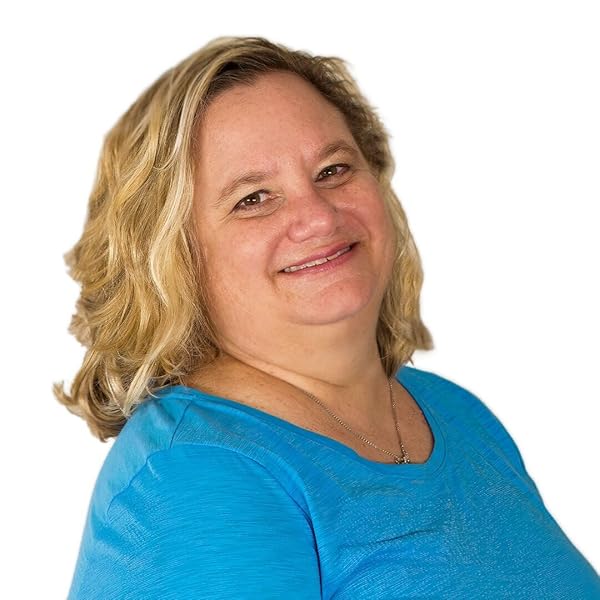
Sparent is a series of personal essays recounting the heartbreak and joy you have experienced within your blended family. Why was this an important book for you to write?
I am passionate about protecting the blended family as, through my experience, I have learned how important it is to keep blended families whole. My blended family was created via a second marriage after divorce. I experienced, first-hand, the effects of the divorce trauma that my stepchildren and husband carried into our blended family. I started journaliing for my own mental health as I pledged to do whatever I could to keep our blended family together and break that cycle of divorce. My hope is that my experiences help those blended families folllowing in our footsteps. This is a family-type with very few helpful resources – I hope that my book provides a beacon to hope and success for those navigating these challenging waters.
I appreciated the candid nature with which you share your story. What was the most difficult thing for you to write about?
I’m not a huge fan of disclosing my failures, but those are the most important stories I can tell. I thought that being a stepmother would be simple. It was a disaster – the first real failure I’d had in my life. Of course that is not something I want the world to know but I understand how important it is to hear. Women are often tasked with putting on a perfect appearance. It is terrifying to tell the world that I wasn’t perfect, that many of my family’s struggles pointed back to me, and that I often felt like giving up but I know these stories are the ones that will be most helpful to others.
How did you decide what to include in your memoir?
Sparent is the first book in a series that will follow my family for several years. It was born from those first journal entries I made when I needed an outlet for my frustrations and feelings of inadequacy. I’ve included every journal entry from the year 2019, though I seriously considered removing some of the more difficult ones. There have been some tweaks to add more details but Sparent is really a direct look into my life.
What is one thing you hope readers take away from Sparent?
That depends on the reader. For blended families, I hope they see themselves in my words and find solutions to any difficulties they are having. For those in tradtional families, I hope they gain appreciation for the challenges of the blended family and become more willing to chat about those challenges with those they might know experiencing them. It is so important that we all stick together and serve as a source of comfort as we all want the same thing: a happy family.
Author Links: X | Facebook | Website
I am the Sparent.
I am the extra parent that no child wants in their lives.
I will always be the Sparent.
It is a role that I have come to embrace.
A role that I am proud to hold.
A position in which I thrive.
Spare or not, I am exactly where I belong.
“As we were sitting in our third therapy appointment in three days (well, four if you count physical therapy to alleviate the neck pain from banging my head into the wall), I thought, “Oh my god…who has three therapists?!” Not us. Three would just be a start.”
Sparent, by Jyl Barlow, is filled with the true tales of life in a blended family. Through laughter and tears, Sparent offers insight and wisdom that is easily applied to all types of families. Jyl is best known for giggling at inappropriate times, something she carries into her writing. As a humorist, Jyl’s writing has been compared to Erma Bombeck’s. As a stepmother, she’s been compared to . . . well, that’s not important.
“Jyl’s wit and wisdom left me feeling seen, heard, and understood. She is both honest and hilarious in guiding others through the beautiful chaos of the blended family.” – Toni G, Raising His Kids Podcast
Sparent is the much-anticipated follow-up to Jyl’s award-winning memoir, What to Expect When You Weren’t Expecting (Parenting Tales from the Most Unqualified Stepmom Ever).


