Blog Archives
Nurse Florence®, What is Fibromyalgia?
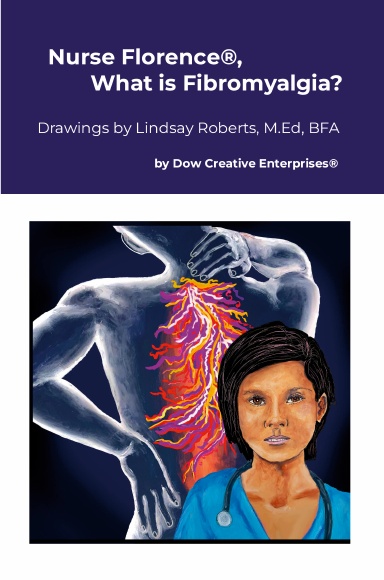

This book takes a pretty heavy topic, such as fibromyalgia, and makes it approachable for kids through a simple lunchroom conversation between Nurse Florence and three curious young girls. Through their chat, the author unpacks everything from symptoms and causes to tests, treatments, and even lifestyle changes. It’s part story, part medical guide, and part inspiration for young learners who might be interested in health or science.
There’s a great little moment early on where Nurse Florence explains how fibromyalgia “affects the whole musculoskeletal system with pain” and how people often feel wiped out even after a full night’s sleep. It’s clear, but it doesn’t sugarcoat. I was also impressed by how the book explains complex ideas like “fibro fog” and diagnostic challenges, stuff even adults struggle to understand, without sounding robotic or confusing.
I really liked how thorough the book is without feeling like a textbook. The section on diagnostics was fascinating. Pages 40 through 58 walk through a bunch of blood tests like CBC, sedimentation rate, and ANA, and then explain what each test checks for. It’s not just a list, it’s an invitation to understand how doctors think through a diagnosis. And Nurse Florence doesn’t dodge tough stuff either, like the link between fibromyalgia and mental health issues such as anxiety and depression. You feel the compassion behind the words.
The tone is warm and casual. Almost like a favorite school nurse, you actually want to talk to. The kids ask smart questions, and Florence gives thoughtful answers. The dialogue feels genuine, and the illustrations by Lindsay Roberts really elevate the story. They’re friendly, engaging, and help keep the content grounded. I also loved the ending, when the girls reflect on what they learned and say things like “I want to eat more vegetables.” It’s sweet, simple, and shows that learning can lead to small but powerful changes.
Nurse Florence®, What is Fibromyalgia? is a perfect read for kids, especially the curious ones who ask a lot of questions. But I’d also recommend it to parents, teachers, and even adults who want a basic, kind, and accurate explanation of a complicated illness. It’s educational without being dry, gentle without being vague, and full of heart. Definitely worth a read, especially if you’re someone who believes that kids can understand way more than we give them credit for.
Pages: 116 | ISBN : 9781304186447

Nurse Florence®, Why Do We Need Vitamin B9 or Folate or Folic Acid?
This cheerful book is a part of the Nurse Florence® educational series, and it centers around teaching kids about folic acid, also known as vitamin B9, folate, or folic acid. Through a friendly lunchtime conversation between three curious girls and Nurse Florence, the book walks readers through the basics of what folic acid is, why our bodies need it, where it comes from, and what happens if we don’t get enough. It also dips into things like how folic acid is absorbed, what it does during pregnancy, and how it interacts with other medications. It’s part story, part science lesson, with a big heart.
Right off the bat, I appreciated the format. The casual back-and-forth between Nurse Florence and the kids felt warm and genuine. It’s not easy to cram medical science into a conversation without it sounding like a lecture, but somehow it works here. One moment I especially liked was when Sonia shares her mom’s lemonade, saying, “If life gives you lemons, then just make some lemonade.” It’s these little lines that add charm and a slice-of-life feel to the story. The girls aren’t just there to deliver lines; they feel like real kids asking real questions. It makes the learning part feel natural.
The book does an excellent job of presenting complex scientific concepts in a way that is accessible to children without being condescending. For instance, Nurse Florence’s explanation of how folic acid contributes to the production of red blood cells and their role in oxygen transport is both clear and informative. Notably, the inclusion of the molecular structure of folic acid is an ambitious choice for a children’s book, but it is executed well. This addition provides young readers with an authentic introduction to the scientific nature of vitamins, demonstrating a commendable respect for their capacity to understand more advanced material.
The section where Nurse Florence lists various foods rich in folic acid is thorough and informative, highlighting just how many everyday items contribute to a healthy intake of this essential vitamin. While this part is content-heavy, it effectively reinforces the message that folic acid is widely available through a balanced diet, an important takeaway for young readers. The book stands out for addressing potential side effects and medication interactions, a level of honesty and depth rarely seen in children’s health books. It adds a layer of responsibility and realism that I truly appreciated.
Nurse Florence®, Why Do We Need Vitamin B9 or Folate or Folic Acid? is a sincere and thoughtful read. It’s perfect for elementary-aged kids, especially the ones who ask a million questions about how the body works. Teachers, parents, and health educators looking to boost science literacy in young minds should definitely check it out. It’s clear, it’s caring, and it plants the seeds for a deeper interest in health and science, which, honestly, is a big deal these days. I walked away smiling, and a little more knowledgeable, too.
Pages: 68 | ISBN : 130426033X

Nurse Florence®, What is Myelosuppression or Bone Marrow Suppression?

This book is a gem wrapped in kid-friendly storytelling. Nurse Florence®, What is Myelosuppression or Bone Marrow Suppression? follows three curious students, Jean, Condi, and Sonia, as they chat with the endlessly knowledgeable Nurse Florence over lunch. What begins as a casual question about oxygen in the blood leads to a full-on deep dive into the world of myelosuppression. In plain terms, this is when the bone marrow doesn’t produce enough blood cells. The book walks us through red and white blood cells, platelets, chemotherapy, infections, symptoms, and even viruses that can cause this condition all explained clearly, with a natural flow and inviting tone.
I didn’t expect to learn as much as I did from a book geared toward kids. But that’s what makes this one stand out. It doesn’t water anything down. It gives kids real medical terms, like “thrombocytopenia” and “neutropenia,” and explains them without a hint of condescension. I especially appreciated the breakdown about neutropenia and how it doesn’t show symptoms directly, but increases the risk of infections. The illustrations help, too. There’s a diagram of bone marrow cells and red blood cells that makes a complex concept click in seconds.
The book strikes a thoughtful balance between delivering medical information and acknowledging the human experience behind the facts. When Nurse Florence explains that anemia can cause a person to feel as though they cannot get enough air, described poignantly as “a desperate feeling,” the simplicity of the phrasing carries emotional weight. It conveys the seriousness of the symptom without overwhelming the reader. Similarly, the discussion around persistent bruising and uncontrolled bleeding highlights the potential severity of the condition, particularly from a child’s perspective. Despite these heavy topics, the book maintains a reassuring and steady tone, offering clarity without inducing fear.
The dialogue leans into a more polished, purposeful tone, clearly reflecting the author’s intent to model positive behaviors and ideas. When one of the characters says, “I love washing my hands. It’s relaxing,” it might not mirror typical kid-speak, but it does reinforce healthy habits in a gentle, memorable way. This approach works well in a book that’s ultimately doing something remarkable: encouraging children to engage with complex health topics in a way that’s both accessible and empowering.
I’d recommend Nurse Florence®, What is Myelosuppression or Bone Marrow Suppression? to parents, teachers, and caregivers who want to spark scientific curiosity in kids. It’s great for young readers who enjoy asking “why” a thousand times a day, and it’s perfect for adults to read along, too. The tone is casual and warm, the facts are spot-on, and the message is clear: understanding our bodies is powerful.
Pages: 128 | ASIN : 1304260356
Nurse Florence®, Tell Me About the Adrenal Glands.
Michael Dow’s Nurse Florence®, Tell Me About the Adrenal Glands, is a friendly explainer for kids about one of the most overlooked parts of the human body. Through a simple lunchtime conversation between three curious students and the ever-patient Nurse Florence, the book breaks down the adrenal glands, those little hormone factories perched on top of the kidneys, and all the important jobs they do. It’s a warm, accessible mix of science facts and educational storytelling that aims to make anatomy less intimidating and a whole lot more fun.
What really stood out to me was how this book doesn’t talk down to its audience. It’s written for children, but Dow clearly believes kids can handle big words and big ideas. Nurse Florence casually explains that the adrenal cortex makes corticosteroid and mineralocorticoid hormones, words that even adults sometimes trip over. But the way it’s framed, with patient step-by-step guidance and illustrations, makes it approachable. I found that refreshing.
The writing has a gentle, conversational vibe that makes everything feel less like a lecture and more like a chat with a really cool school nurse. I smiled when Nurse Florence pulled out her phone to show a diagram of the glands, something any real-life adult would do when explaining something tricky to a group of kids. It’s little moments like that that give the book a sweet, grounded tone. And then there’s the bit about how adrenaline helps us handle fear, and it hit me in a surprisingly emotional way. The explanation connected the science to the real world, and it made me think about how our bodies are kind of amazing in how they help us cope with stress and danger.
What resonated deeply with me was the book’s conclusion. After exploring a wealth of scientific information, the narrative shifts to a moment of quiet reflection among the girls. Sonia remarks, “I’m glad we have a way to deal with stress,” which serves as a gentle reminder that children experience stress just as adults do. Providing them with an understanding of their own physiology becomes a powerful form of empowerment. The brief discussion on coping strategies felt especially timely and meaningful, not simply health education, but practical guidance woven into a scientific context. It was a thoughtful and lasting takeaway.
Nurse Florence®, Tell Me About the Adrenal Glands is perfect for curious kids (probably upper elementary or early middle school), science-loving families, or even teachers looking for something to spark a class discussion. It’s informative without being boring, detailed without being dense, and most of all, it has heart. I’d recommend it for young readers who love asking “why,” or for parents who want to plant early seeds of STEM interest.
Pages: 61 | ISBN : 9781304276063
Nurse Florence®, What are Platelets?
Nurse Florence®, What Are Platelets? is a short, engaging educational book that takes kids on a lunchtime chat between three curious girls and the ever-wise Nurse Florence. As they munch away in the school cafeteria, Nurse Florence answers their questions about platelets: what they are, where they come from, what they do, and how we keep them healthy. With clear illustrations and gentle storytelling, this book aims to teach kids real medical terminology in a friendly, digestible way.
What really charmed me about this book was how it managed to be both informative and warm without ever feeling preachy. The tone is friendly and respectful to kids’ intelligence, which I absolutely appreciated. The question “Is there something like a beaver dam in our body?” turns into a simple yet powerful metaphor: “Yes, that would be platelets.” It’s such a smart way to connect a science lesson to something they’ve just learned in class. It’s these small but intentional moments that make the book feel like a true conversation.
What stood out to me was how committed the book is to teaching real science in a clear, respectful way. Nurse Florence’s explanations, like the conversation on how platelets are made from stem cells in the bone marrow, are solid and easy to follow. The dialogue leans more toward the informative side, which really helps kids grasp the concepts. It’s clear the author knows his audience and wants to make sure the facts come through first. And for kids who love to learn, that’s a gift.
One of my favorite parts came near the end, when Nurse Florence shares everyday tips to keep platelets healthy: don’t smoke, limit alcohol, wear safety gear. It’s the kind of life advice that sticks because it’s simple and said with care. I found myself smiling at how the girls wrap things up, “Science is amazing,” says Jean.
Nurse Florence®, What are Platelets? is a great pick for curious young readers who love asking “why” and “how” about their own bodies. It’s also a nice resource for parents and teachers who want to boost science literacy without boring anyone to tears. If you’re raising a little scientist or just want your kid to know what platelets do in case they skin a knee, this book’s worth picking up. It’s a gentle nudge toward wonder, and sometimes that’s the best kind of lesson.
Pages: 66 | ISBN : 1304343227
Nurse Florence®, Tell Me About the Colon.

Nurse Florence®, Tell Me About the Colon is a charming, educational children’s book that mixes science with everyday curiosity in a simple but effective way. Written by Michael Dow, a nurse with a deep commitment to health literacy, the story follows three young girls, Jean, Sonia, and Condi, who sit down at lunch with Nurse Florence and end up learning all about the colon. Through a calm, friendly conversation, they explore the parts, functions, and importance of the colon, complete with illustrations and gentle scientific explanations.
Author Michael Dow uses real medical terms like “cecum,” “peristalsis,” and “ascending colon,” but makes them easy to understand. Nurse Florence explains the cecum as a kind of one-way gate for food. This kind of clear, relatable comparison makes the science stick. It’s not just a biology lesson, it’s about sparking curiosity and showing that adults can actually explain things in a way that makes sense.
Another strong point is the balance between education and real-life application. It doesn’t just say, “This is what a colon does.” It connects it to healthy habits. The parts where Nurse Florence talks about fiber, hydration, and colonoscopies are handled with such a matter-of-fact tone that it normalizes health care in the best way. I actually found myself thinking, “I need more veggies,” right along with the girls at the end. That’s powerful, when a kids’ book can nudge adults into reconsidering their habits.
The illustrations are clean, approachable, and thoughtfully designed to support the educational content without feeling overly simplistic. While the artistic style leans more toward clarity than creativity, that choice serves the book’s purpose well. What truly impressed me, though, were the detailed visuals of the colon under a microscope and the diagram explaining peristalsis. These images offer a striking and memorable glimpse into real biology, adding a sense of wonder that brings the science to life. It’s the kind of visual element that could easily spark genuine excitement in young readers, encouraging them to see science as both fascinating and accessible.
Nurse Florence®, Tell Me About the Colon is perfect for parents, teachers, or caregivers who want to sneak a little real science into story time. It’s great for curious kids who ask “why” a lot and for grown-ups who sometimes forget the answers. If you’ve got a budding doctor or biologist in the house, or even just a kid who isn’t afraid of learning big words, Nurse Florence® is a warm and clever way to start talking about the human body.
Pages: 70 | ISBN : 1304397289
Nurse Florence®, Why Do We Need Vitamin K?
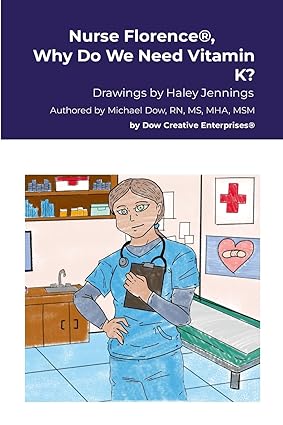
This book follows three curious schoolgirls, Jean, Condi, and Sonia, who sit down with the ever-patient Nurse Florence during lunch and dive into a simple, yet surprisingly thorough conversation about vitamin K. Through a friendly back-and-forth, they explore what vitamin K is, why our bodies need it, where to get it from, and even what happens if we don’t have enough. It’s basically a mini science lesson in storybook form, with bright illustrations and a lot of real, useful health knowledge.
The tone of the story has a calm and comforting energy to it, like a favorite teacher explaining something with genuine care. Nurse Florence never talks down to the kids, even when she’s dropping terms like “osteoporosis” or “jejunum” making this a refreshing read. There’s a scene where she pulls up an image of the intestines and explains how vitamin K is absorbed in the jejunum and ileum. Few children’s books introduce anatomical terms so seamlessly and make them feel entirely appropriate within the context of the story.
When Nurse Florence discusses how newborns are given vitamin K injections, it offers a poignant reminder of how often health education fails to connect meaningfully with its audience. In contrast, this book communicates essential information in a way that is both accessible and impactful. The discussion about green leafy vegetables as sources of vitamin K, followed by Condi’s cheerful remark about pumpkin pie, adds a charming, authentic moment that captures a child’s perspective. Rather than presenting facts in isolation, the book effectively weaves them into relatable, everyday contexts.
While I enjoyed the flow, I did wish the illustrations were a bit more dynamic. They’re fine, and the warm pastel palette suits the gentle tone of the book, but a little more visual engagement wouldn’t hurt, especially for young readers who might get distracted. Still, the visuals do enough to support the content, and Nurse Florence is drawn with the perfect friendly energy. Also, the little journal page at the end is a nice touch.
Nurse Florence®, Why Do We Need Vitamin K? is informative without being boring, honest without being overwhelming. I’d definitely recommend it for parents, teachers, or anyone looking to boost a kid’s science curiosity without resorting to dry textbooks. If you’ve got a little one always asking “Why?” this one’s for you.
Pages: 69 | ISBN : 130441423X
Nurse Florence®, Why Do I Need to Have Iron in My Diet?
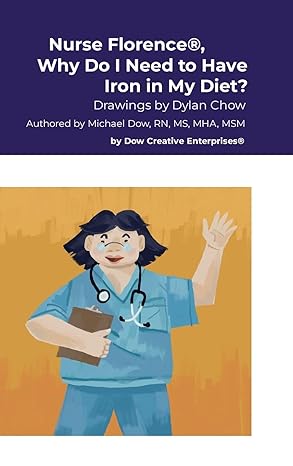
Nurse Florence®, Why Do I Need to Have Iron in My Diet? is a kid-friendly dive into the importance of iron in the human body, told through a lunchtime conversation between three curious girls and a knowledgeable nurse. Nurse Florence breaks down what iron is, why our bodies need it, how it helps us function, and where we can find it in our diet, all in simple language supported by illustrations and some surprisingly detailed explanations for a children’s book.
I found this book genuinely engaging. It respects its young audience by presenting accurate information in a clear, approachable format without oversimplifying or speaking down to them. Instead, it delivers meaningful content in manageable, well-structured segments. For example, when Nurse Florence shows a hemoglobin molecule and explains how iron helps red blood cells carry oxygen, that’s the kind of detail most kids’ books would skip. But here, it’s handled in a way that doesn’t feel overwhelming. The way the characters ask honest, relatable questions like, “Can we get iron from fruits?” helps keep things natural and engaging. That moment made me smile because Condi’s curiosity is contagious.
Some sections of the book delve more deeply into scientific detail, such as the explanations of iron’s role within cells and the immune system. While these concepts may be advanced for some younger readers, this depth adds educational value and creates opportunities for meaningful conversations between children and adults. The inclusion of a glossary and a thoughtful note to parents about the use of complex terminology further demonstrates that the book is intentionally designed to promote learning, curiosity, and shared discussion rather than just passive reading.
The art supports the story without distracting from it, and it was sweet seeing the three girls so excited to learn. The friendly tone of Nurse Florence made the info feel less like a science lesson and more like a chat with a favorite aunt who happens to know a lot about health. And little bits like Jean saying she’ll never eat oysters made it feel grounded and funny in a very real way.
Nurse Florence®, Why Do I Need to Have Iron in My Diet? is a great book for kids around 7 to 11, especially if they’re the type who ask a ton of questions or have even a hint of curiosity about how the body works. It’s perfect for parents or teachers who want to introduce science early in a no-pressure, conversation-style way. Honestly, even as an adult, I learned a few things. So if you’re raising a little scientist or just want your kid to understand why spinach matters, this one’s a winner.
Pages: 70 | ISBN : 1304665607



 LITERARY TITAN