Blog Archives
I Was On To Something

One Night With Finnbar follows a young aristocrat set to join the Royal Fusiliers who develops an unlikely connection with a stable boy, causing the course of his life to shift dramatically as he embarks on an emotional journey of identity. What was the inspiration for the setup of your story?
One Night With Finnbar came to me through the characters themselves. When I agreed to write their story, it was with the understanding that I would recount it honestly — warts and all. I always enjoyed studying history, but knew little to nothing about Georgian England. I relied upon the characters to enlighten me then followed up with my own research.
When I started writing, I had the basic facts of what happened in the 27 days of their time spent together. I was determined to bring their story to life on a canvas that felt both real and relatable. I wanted to anchor the story in actual events, using known historical persons and locations, some of which still exist today in modern-day London. While mining the judicial system and court records of the Old Bailey, I came upon the trial transcript of Elizabeth Brownrigg who murdered a young servant girl, Mary Clifford. As it happened, Brownrigg’s trial and execution (14 September 1767) precisely matched the dates key in my story. I knew then that I was on to something. I can’t count the number of times such coincidences occurred.
It seemed like you took your time in building the characters and the story to great emotional effect. How did you manage the pacing of the story while keeping readers engaged?
I have received critiques from opposite camps on the pacing issue. I believe it has more to do with the preferences of the individual reader than the actual pace itself. Fans of the historical literary genre seem okay with taking the time needed to flesh-out a credible backstory, as long as the pay-off is worth the wait. I never really took pacing that much to heart; instead focusing on crafting a believable world in which the story could flourish.
Martin and Finnbar are in the same city at the same time but are having two completely different life experiences. Boredom and restlessness cause Martin to fall back into the forbidden libertine lifestyle that, if discovered, would bring his downfall. Finnbar, a naïve country boy, struggles every day just to survive in a city that, given half a chance, would happily grind him to pulp. Where their lives do touch, calamity ensues.
What were some themes that were important for you to explore in this book?
Loyalty v betrayal is likely the first theme readers pick up on. Martin demands truth and fealty from Finnbar who has no choice but to comply, then selfishly betrays him.
Martin Atwater is not a likeable character. Born into a world of privilege, he manages to squander his advantage through a life-style of hedonism. He steals from his uncle right under the old man’s nose; racks up gambling debt, then embezzles from the family business, carelessly involving others in a cover-up scheme. He is unwilling to accept responsibility when his plans go awry, instead he blames his troubles on his meddlesome cousin Pierson. Worst of all, when Martin should have manned-up and protected Finnbar by standing up against pure evil, he caves and plays Finnbar as a ‘get out of blackmail free’ card.
This story which took place two-and-a-half centuries ago in the dark and monstrous streets of Georgian London could just as easily have occurred yesterday. Sadly, the innocent are not always protected and are frequently exploited. Finnbar’s low-born status made him a commodity ripe for sacrifice. Fifteen-year-old Irish Catholic boys in 18th century England were, as far as the elites were concerned, a nuisance factor to be dealt with through rigorous application of the 150 laws in the Bloody Code.
But I think there is another, deeper theme here. That being a faith in God that holds our world together when all else fails us. Finnbar’s abiding faith sustained him even in his darkest hours. Martin didn’t have a belief in God, and when he came to the end of his rope, there was no knot to hold on to.
What is the next book that you are working on, and when can your fans expect it to be out?
Currently I am working on a story which immediately follows One Night With Finnbar, but is not a sequel. Constable Bobbie Qualls, a minor character in the first book, works to rehabilitate his reputation for corruption in hopes of becoming a Bow Street Constable. I have also reprised the role of molly house keeper Violet Fennimore, and will be weaving in as much of the city’s colorful ambiance as the plot determines useful. These things take time, but hope to have it done in a year.
Author Links: GoodReads | Amazon
One Night With Finnbar
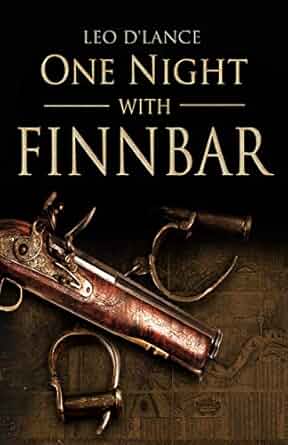

Leo D’Lance’s One Night With Finnbar is a historical novel set in late 18th-century England, following the young aristocrat Martin as he prepares to leave his family estate to join the Royal Fusiliers. What begins as a reflective and somewhat humorous account of country life slowly unfolds into a deeply personal and emotional journey of identity, attraction, and transformation. At the heart of the story is Martin’s unlikely and intense connection with a stable boy named Finnbar, an ethereal, wild figure whose sudden appearance shifts the entire course of Martin’s life. Told with lyrical detail and a sharp eye for atmosphere, the novel weaves themes of class, repression, love, and liberation across a vivid historical backdrop.
The writing is immersive. The book takes its time, and I appreciated that. It’s not in a hurry to throw Martin into drama, but instead builds a world where things matter. The dialogue, too, had its own flavor. It’s clever and organic, full of tension and little moments of humor that make the characters feel real. But more than the writing style, it was the emotional honesty that drew me in. Martin isn’t always likable, and neither is Finnbar, really, but their flaws are human, and that made their bond all the more compelling.
There were also moments when the pacing slowed a bit. Some chapters seemed to linger on internal thoughts or minor domestic scenes. Still, I found myself drawn to the quieter emotional beats, the hesitation in Martin’s thoughts, the unspoken truths hanging in the air. The scenes between Martin and Finnbar crackle with tension, both sexual and social, and I admired how D’Lance didn’t flinch from the confusion, fear, and longing that come with forbidden desire in a rigid world. The book balances sensuality and restraint in a way that feels both grounded and poetic. It’s romantic, but also raw. Brave, but never melodramatic.
By the end, I wasn’t just invested, I was moved. One Night With Finnbar isn’t a sweeping epic or a battle-heavy war tale. It’s a story about moments, small choices that change everything. It’s about the ache of living in between what you want and what you’re allowed. I’d recommend this book to anyone who enjoys quiet but powerful historical fiction, particularly those interested in LGBTQ+ themes, character-driven stories, or slow-burn romance. It’s for readers who enjoy books that aren’t afraid to linger in difficult emotions or sit with the silence between words.
Pages: 346 | ASIN : B07QTC6SDX




 LITERARY TITAN