Blog Archives
Quantularity


I see Quantularity as both a manifesto and a meditation. The book challenges the tidy story of the Singularity by replacing it with something more human, more sprawling, and more chaotic. Instead of one super-intelligence consuming everything, author John Wingate proposes a world where many minds, human, artificial, cultural, and even biological, intertwine without collapsing into sameness. He calls this Quantularity. Across its twenty chapters, the book journeys from philosophy to technology to governance, weaving stories of history, myth, neuroscience, and quantum theory into a vision that feels both speculative and strangely practical. It’s not about chasing one ultimate truth. It’s about celebrating the chorus.
I loved the ambition of this book. The writing is bold, at times almost poetic, and it refuses to be boxed in by one discipline. Some pages read like a TED talk, others like scripture, and others like the notebook of a futurist who stayed up too late. That mix works. It keeps you on your toes. Wingate’s central argument that intelligence is healthiest when distributed and diverse rang true for me. His metaphors, from forests to orchestras to constellations, helped ground abstract ideas in images I could handle. There were times I felt genuinely moved, like when he wrote about consciousness not as a function to be replicated but as a flame to be tended. It reminded me of the fragility of what makes us human, and how easy it would be to lose that while racing ahead with machines.
Chapter 17, on quantum economics and the new value system, was one of the most striking parts of the book for me personally. I liked how Wingate questioned the foundations of money itself and then reimagined value as something rooted in connection, reciprocity, and shared flourishing rather than scarcity and control. The idea of economies designed to honor multiplicity instead of domination feels fresh and humane. It made me realize just how deeply we’ve been conditioned to accept competition and extraction as the natural order. I admired the way the author tied economics to ethics, suggesting that the flow of value could mirror the flow of ecosystems, resilient and regenerative. It didn’t feel like utopian dreaming so much as a dare.
I’d say this book is best for people who like their philosophy messy, their technology hopeful, and their future wide open. It’s not a textbook, and it’s not a technical roadmap. It’s more like a friend, eyes lit up, trying to tell you about the universe they see unfolding beneath the surface of things. If you’re curious about AI, about consciousness, about how we might organize ourselves differently, Quantularity will give you plenty to chew on.
Pages: 182 | ASIN : B0FLPH3QV7

The Embodied Mind
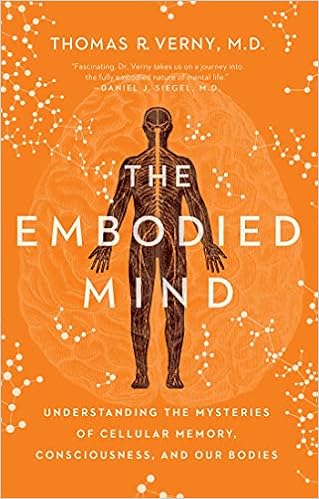
In The Embodied Mind: Understanding the Mysteries of Cellular Memory, Consciousness, and Our Bodies, Dr. Thomas Verny presents a comprehensive exploration of the intricate relationship between the brain, our bodily functions, and the ways our bodies respond to cerebral directives.
Dr. Verny delves into the realms of dreams and consciousness, explaining how our existence is influenced by internal bodily factors and external elements alike. The book is a masterclass in communicating complex ideas, demonstrating how cells utilize consciousness to perform their primary functions.
Aimed not just at medical professionals but at any intellectually curious reader, The Embodied Mind acts as a gateway to understanding the mysteries of the mind, brain, and the human nervous system. The book demystifies how cells maintain behaviors vital to life, leaving the reader with a profound appreciation of the human body’s marvel and the complexities of the brain, often overlooked by the layman.
One of the book’s strengths is its seamless blend of complex discussions and real-life narratives. This is evident from the warm introduction, where Dr. Verny shares his inspiration for writing the book and his fascination with the brain. His account of a young patient highlights individual variations in memory and consciousness and is particularly compelling.
The first chapter— a thought-provoking discussion on the significance of genes and an insightful dive into epigenetics— stands out as a highlight. This informative book covers various complex topics, including the mechanisms behind memory, the workings of the immune system, and the enigmatic nature of human cells.
Dr. Verny’s exploration of how the body retains memory while the brain forgets is a standout section. It resonates due to its relevance to everyday experiences and is presented in a manner accessible to all readers, regardless of their scientific background.
The book is a testament to Dr. Verny’s extensive research, incorporating a wealth of scientific material and revealing fresh insights throughout its ten informative and enlightening chapters. Beyond its educational discussions and engaging narratives, it challenges established scientific concepts and provides clear explanations, making it a valuable resource for anyone seeking comprehensive information on memory, genetics, the human brain, and the body.
Dr. Verny’s insightful understanding of human memory’s nature is impressive, and his ability to explain complex ideas lucidly is commendable. “The Embodied Mind” is a compelling, powerfully engaging read. However, this book isn’t just a testament to Dr. Verny’s expertise—it is a riveting journey into the mysteries of our bodies and minds.
Pages: 238 | ASIN : B08WM42Y2P



 LITERARY TITAN