Blog Archives
By Her Own Hand: War and Passion in a Woman’s Wounded Heart


Jack Deveny’s By Her Own Hand is a war novel, romance, and psychological thriller built around two soldiers who come home carrying much more than memories of Afghanistan. Madeline Crowne and Eliot Lange are both fugitives in their own ways, haunted by disastrous moments in combat that left innocent people dead and their own lives shattered. Madeline’s guilt is especially central to the story. She enters the military partly to escape the pain of leaving her abused younger brother behind, only to accidentally kill a pregnant Afghan woman during a chaotic firefight. Eliot carries a parallel burden after trying to protect his best friend, Will, during a severe PTSD episode and accidentally causing the death of an Afghan civilian. Those opening events give the novel its emotional foundation and explain why both characters see themselves as guilty even when the circumstances are far more complicated.
What makes the novel so interesting is how quickly it moves from the battlefield into a much more personal story. Madeline and Eliot find comfort in each other, and their relationship becomes the safest place either of them has known. Their romance is tender, physical, and sometimes intensely sentimental, but that fits these characters because affection isn’t just affection to them. Holding hands, sleeping beside someone, or being touched without fear becomes evidence that life can still contain something good. Deveny frequently shifts perspective between Madeline and Eliot, letting readers experience how differently they carry similar kinds of guilt. At the same time, the story keeps widening. Madeline’s search for her addicted brother, Eliot’s concern for Will, and the dangerous Mira all pull the couple back toward the violence they’re trying to escape. Mira is especially important because her history with Madeline connects love, jealousy, exploitation, and revenge, giving the novel much of its thriller energy.
In that sense, By Her Own Hand reminded me somewhat of Kristin Hannah’s The Women. Both stories are deeply interested in what happens after combat, especially when a soldier returns carrying guilt and trauma that ordinary life can’t easily absorb. Deveny takes a more action-driven and romantic approach, mixing PTSD, crime, pursuit, international travel, and courtroom drama into the same story. His characters tend to experience everything at full emotional volume, so the book has the feel of a sweeping melodrama as much as a military novel. That intensity works best when Madeline and Eliot’s private pain collides with the question of how other people judge what happened in war. By the final sections, the chase has evolved into a legal reckoning, and the same events that have tortured the characters internally have to be retold as evidence, testimony, and competing versions of the truth. Madeline’s trial, for example, forces witnesses to confront how little certainty can exist in the smoke and confusion of combat.
What I liked most was the book’s belief that healing can become a responsibility. Madeline and Eliot don’t just want to survive what happened to them. By the end, they begin imagining lives built around helping people who have suffered in ways they understand personally. Eliot wants to work with veterans who have PTSD in honor of Will, while Madeline considers helping wrongly accused veterans or women affected by sex trafficking. That ending gives the title another dimension. The characters have spent much of the novel feeling as though their own hands caused destruction, but those same hands can eventually comfort, defend, and rebuild. It’s a very earnest novel, and its mix of war, romance, trauma, crime, and redemption gives it an unusually broad emotional range. For readers who like character-driven stories where love is tangled up with guilt, danger, and the difficult work of living after violence, By Her Own Hand has plenty to hold onto.
Pages: 312 | ASIN : B0FRP4NQY7

From Coercion to Courage: Rising from the Ashes of Past Pain and Outdated Paradigms


From Coercion to Courage is a hybrid of memoir, moral argument, and trauma-informed exhortation. Dr. Stevie Carnegie sets out to name coercion in all the forms people too often minimize or miss, from childhood conditioning and coercive control to workplace sexual pressure, victim-blaming, and the institutional rot exposed through #MeToo and the Epstein files. The book moves from definition to testimony to ethical challenge, then finally toward recovery, arguing that what coercion damages most profoundly is not just safety but identity itself, and that healing begins when that damage is named without euphemism and met with courage rather than shame.
Carnegie doesn’t write as a detached observer. She writes as someone who has lived inside the confusion she’s trying to explain, and that gives even her more didactic passages a raw legitimacy. I found the personal material especially powerful when she describes the long afterlife of manipulation, the way an old message from childhood can become a trapdoor under adult life, or when she revisits her own #MeToo experiences with that awful mixture of self-reproach, disgust, and belated clarity. The imagined challenge in Chapter 7, where the reader is asked to stop blaming victims and inhabit their vulnerability from the inside, struck me as one of the book’s strongest moves. It’s a direct moral demand for empathy.
I think the author is at her best when she’s concrete. The distinction she draws between coercion and brainwashing is genuinely clarifying, and the family examples, particularly the story of being manipulated into making her husband’s parents her sole purpose, give the argument a bruised human texture that abstraction alone couldn’t carry. The book prefers insistence. It repeats, circles back, underlines, and capitalizes. I came to feel that the repetition is part of the book’s emotional logic. Carnegie is writing against a culture of denial, and she clearly believes some truths have to be said again and again before they penetrate. I admired the fierceness of the project, especially in its refusal to separate private suffering from systems, culture, and ethics. The final movement toward post-traumatic growth and courage as a habit of character gives the book a hopeful lift. I appreciated that she aims not merely to diagnose harm, but to imagine a life after it.
From Coercion to Courage is impassioned and sincere. I read it for the conviction and for the hard-won intelligence of someone trying to turn private pain into public clarity. I’d recommend it most strongly to readers interested in trauma, coercive control, survivor testimony, and the ethics of power, especially those who want a book that speaks plainly and feels lived rather than clinically packaged. It’s the kind of book that will matter most to readers willing to meet it heart-first.
Pages: 177 | ASIN : B0GRQ7HHB9

Preparation and Perfectionism

Unstuck digs into the everyday mess of self-sabotage and shows how it hides in fear, doubt, old stories, and protective habits that keep us spinning in place, rather than providing readers with practical tools to build new habits. What inspired you to write Unstuck?
Unstuck was inspired by watching capable, self-aware people repeatedly blame themselves for patterns they didn’t choose. I kept seeing the same frustration show up in different forms, like overthinking, hesitation, perfectionism, and a constant sense of starting over. Most of these people weren’t lacking insight or intelligence. They were responding to fear in ways that once made sense but no longer served them. I wrote Unstuck to explain that experience clearly and to offer practical tools that help people move forward without shame, force, or pressure.
You emphasize that self-sabotage is not a personal flaw. Why is that reframe so important?
Because when people see self-sabotage as a flaw, they respond with self-criticism, and self-criticism almost always strengthens the pattern. The behaviors we call self-sabotage are usually protective responses shaped by fear, conditioning, and past experience. Reframing them this way allows people to work with their nervous system instead of fighting it. Once someone understands that their reactions are learned rather than broken, change becomes something they can practice instead of something they feel judged for.
What patterns do you see most often in people who feel “stuck”?
The most common pattern is overthinking as a form of protection. People delay action while searching for certainty, replay decisions to avoid risk, or use preparation and perfectionism as a way to stay safe. I also see avoidance disguised as productivity and a harsh inner dialogue that erodes self-trust over time. These patterns are subtle, which is why awareness and repetition matter more than dramatic insight.
What does “being unstuck” look like long-term, not just in a breakthrough moment?
Long-term change looks quieter than people expect. Being unstuck means noticing fear without letting it decide, responding instead of reacting, and choosing smaller, steadier actions that build trust over time. That’s also why I created the UNSTUCK Workbook as a companion for readers who want help applying the ideas consistently. The goal isn’t a single breakthrough. It’s learning how to practice awareness, regulation, and follow-through in everyday situations so progress holds.
Author Links: GoodReads | Website | Amazon
You may understand your patterns. You may have read the books, tried the advice, and promised yourself you would “do better next time.” And yet the same cycle keeps repeating. Not because you lack discipline or ambition, but because your mind is defaulting to old protective responses that no longer fit the life you are trying to build.
If you have ever asked yourself why you keep getting in your own way, this book offers a clear, compassionate explanation. You are not broken. Your brain is doing what it learned to do under pressure, fear, and uncertainty.
Built around the A.I.R.™ Method, UNSTUCK helps you recognize self-sabotaging habits as conditioned responses rather than personal failures. Instead of forcing motivation or relying on willpower, the book teaches you how to notice patterns early, interrupt anxiety spirals, and respond with steadier, more intentional action.
Inside, you’ll learn how to:
identify hidden forms of self-sabotage like overthinking, avoidance, perfectionism, and harsh self-talk so you can stop repeating them automatically
calm the inner critic and regulate emotional reactions so fear no longer drives your decisions
rebuild confidence through small, repeatable actions so progress feels sustainable instead of exhausting
create emotional safety around change so growth no longer triggers shutdown or self-doubt
move forward consistently even when motivation fades or pressure increases
Rather than chasing breakthroughs, UNSTUCK focuses on progress that holds. Through practical psychology, real-life examples, and guided reflection, the book shows how to shift from self-protection to self-trust without pretending, performing, or becoming someone else.
Readers and editorial reviewers have noted the book is grounded, emotionally intelligent approach, highlighting its focus on awareness, clarity, and steady change rather than pressure-driven transformation.
UNSTUCK is especially well suited for people who:
feel stuck in cycles of overthinking or fear
know what they want but struggle to follow through
are tired of starting over and blaming themselves
want calm, durable confidence instead of temporary motivation
This is not a book about fixing yourself.
It is about removing the internal resistance that has been blocking who you already are.
If you’re ready to stop restarting and start moving forward with clarity, stability, and self-trust, UNSTUCK offers a grounded path forward.
Read today and begin building progress that lasts.
Eagle Scout to Killer: A Novel Based on True Events
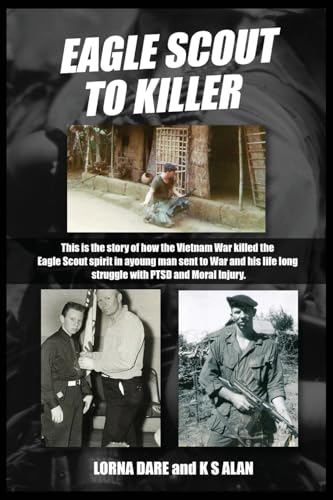
Eagle Scout to Killer by K.S. Alan and Lorna Dare is a harrowing and unflinching account of one man’s transformation from idealistic youth to haunted veteran. Told through the voice of Kurt S. Alan, a soldier whose service in Vietnam blurs the line between heroism and survival, the book chronicles the moral and psychological toll of war. From its opening pages, where Alan recounts his covert involvement in the events surrounding the Gulf of Tonkin, the narrative establishes itself as both historical confession and personal reckoning. This is not a traditional war story; it is an exploration of how combat reshapes identity, erodes morality, and leaves wounds that no medal can redeem.
The authors write with a restrained intensity that makes the book deeply affecting. Alan’s first-person account of meeting CIA operative Coleman and orchestrating a staged naval attack feels chilling in its calm precision. When he admits, “I grew up being taught to never lie, but here I was perpetrating a lie on the U.S. Congress,” the line reverberates beyond his personal guilt; it becomes an indictment of the political machinery that demanded such deception. The prose is unsentimental yet charged with quiet anguish, capturing the conflict between duty and conscience with unsettling clarity.
What gives the book its emotional weight is not only its exposure of covert operations but its portrait of trauma. In the preface and the reflections from Alan’s VA therapist, the story is framed as part of a long process of healing. The therapist describes it as “Kurt’s effort to reclaim his soul,” and the book indeed feels like an act of reclamation. When Alan later visits the Vietnam Memorial and leaves his Special Operations coin at the wall, the gesture becomes a moment of fragile grace amid decades of inner torment. That scene encapsulates the cost of survival and the longing for absolution that haunts so many who return from war.
The combat scenes themselves are vivid, brutal, and often difficult to read. Chapters such as “The Punji Pit” and “Operation Cherry” depict the chaos of Vietnam with visceral precision. Yet the violence never feels gratuitous; it underscores the moral corrosion that the preface warns against. The narrative’s strength lies in its refusal to glorify combat or simplify the psychology of those who endured it. Alan’s voice remains grounded, disciplined, and painfully self-aware. The result is a story that feels at once deeply personal and universally human, a meditation on guilt, loyalty, and the enduring search for meaning after unimaginable loss.
Eagle Scout to Killer is not an easy book to read, but it is an essential one. It speaks to veterans who have carried their battles home with them, and to civilians who have never confronted what war truly demands of those who fight it. For readers interested in military history, moral philosophy, or psychological resilience, this book offers a rare and unsettling clarity. It is both a confession and a cautionary tale, a powerful reminder that while war may end, its echoes never do.
Pages: 264 | ISBN : 9781965390139
Soul Reclaimed: Transforming Trauma into Triumph (Classic Paperback Edition) (The Road to Transcendence)
Soul Reclaimed tells the story of pain, healing, and rediscovery. It follows Julie, a young woman whose life is shattered by a violent assault, and Linda, a woman in midlife struggling with emptiness and disillusionment. Through the guidance of a psychologist named Bill, their separate paths converge into one that explores transformation, consciousness, and the reclamation of self. What begins as trauma and despair unfolds into a journey toward awakening. Author Neal Ritter weaves psychology, spirituality, and raw human emotion into a tapestry of stories that ultimately ask what it means to heal, not just survive.
Reading this book stirred something in me. It’s not a light read, not by a long shot. The first chapters, especially Julie’s harrowing experience, left me shaken. The writing doesn’t flinch, and that honesty made me both uncomfortable and grateful. Ritter doesn’t dress pain up; he presents it as it is, ugly, confusing, and real. But beneath the darkness, there’s this persistent flicker of hope. The therapy scenes between Linda, Bill, and later Julie hit close to home. The dialogue feels lived-in, almost like you’re eavesdropping on real sessions. I could feel Ritter’s experience as a clinician in every line. At times, I wished the philosophical passages had breathed a little more, but even when they grew dense, the sincerity kept me turning pages.
I also found myself wrestling with the mix of psychology and mysticism that runs through the book. One moment, we’re deep in clinical supervision; the next, we’re talking about ego dissolution and soul transformation. But it works. The blend feels honest to the messiness of healing, part science, part spirit, all human. The emotional through-line never wavers. I found myself caring about these people, especially Linda and Julie, whose parallel journeys felt like reflections of different stages of one woman’s soul.
Soul Reclaimed isn’t just a story about trauma. It’s about the stubborn light that refuses to go out. I walked away from it feeling unsettled, inspired, and comforted. I’d recommend it to readers who crave depth and don’t shy away from emotional intensity. Therapists, survivors, seekers, and anyone standing on the edge of change will find something here worth holding onto.
Pages: 294 | ASIN : B0FBGMY329
Girl, Groomed
Carol Odell’s Girl, Groomed is a raw and unflinching memoir that traces her childhood experiences of grooming and abuse at a horse stable, the deep love she had for horses, and the long, painful process of understanding how that past shaped her adult life and relationships. Odell moves between her girlhood innocence, where horses offered her comfort and belonging, and the unsettling reality of how her trust was exploited. As she grows into adulthood, she reckons with the trauma, explores how it bled into her marriage and identity, and shows how therapy, reflection, and courage helped her reframe her story.
The writing is vivid, sometimes almost cinematic, and the way Odell describes both the beauty of horses and the darkness of abuse made me feel pulled in two directions at once. There were moments where I found myself smiling at her descriptions of childhood wonder, then seconds later reeling from the cruelty and manipulation woven into those same memories. I admired her honesty, but I also found myself feeling frustrated on her behalf, angry at how easily her vulnerability was taken advantage of, and heartbroken that the safe space she longed for was the same place that hurt her.
What impressed me most was how Odell refuses to simplify her story. She doesn’t paint herself as a perfect victim. She shows her younger self caught in admiration for her abuser, which was difficult to read but also profoundly true. That honesty made the book feel even more important because it illustrates the messy, confusing ways trauma imprints on us. I appreciated the way she linked her past to her marriage struggles later in life, and I found myself pausing often to reflect on how our old, unexamined wounds shape the way we love, fight, and cope.
I would recommend this book to readers who want a deeply personal exploration of trauma and survival, but also to anyone interested in the psychology of how abuse and grooming take root. It’s not an easy read, but it’s an essential one. I think therapists, survivors, and anyone willing to confront hard truths will find it valuable. It left me unsettled and hopeful at the same time, which to me is the mark of a powerful memoir.
Pages: 222 | ASIN : B0D96PPVDQ
THE BROKEN MIRROR (A transition from military and civilian lifestyle and beyond
The Broken Mirror is a raw and unflinching account of a soldier’s life after war. It begins with his transition from military service into civilian life, tracing the jagged path of PTSD, broken family ties, and personal battles that stretch across decades. He writes about his service, his divorce, the loss of his parents, the distance with his daughter, and the constant shadow of invisible demons. This isn’t a straight line memoir. It’s more like a series of entries pulled directly from his mind and heart, sometimes sharp, sometimes wandering, always honest. This is a story about survival, regret, and the hope that love, especially the love between a father and daughter, can outlast the damage of war.
Some passages were tough to get through because of how blunt he is. I could feel the pain dripping from them. I admired his bravery for putting it all out there. He’s not pretending to be a hero. He’s showing the ugliness and the shame alongside the small moments of healing. His style jumps around, which mirrors the chaos of PTSD. It was hard to follow at first, but then I realized it pulled me closer to his state of mind. It felt less like I was reading a neatly packaged book and more like I was sitting across from him while he unloaded years of grief and rage.
There’s also a tenderness in these pages that surprised me. His love for his daughter is obvious and heartbreaking. I could feel his desperation to make sure she knows he tried, that he never stopped caring, even when he fell apart. Those parts made me pause and think about the weight kids carry when parents stumble. His reflections on family, loyalty, and betrayal were heavy, but they were also deeply relatable. He doesn’t ask for pity. He just wants someone to hear him out, to acknowledge that the fight doesn’t end when the uniform comes off.
I walked away from this book feeling grateful. I’d recommend this stirring memoir to anyone who wants to understand what living with PTSD feels like from the inside. It’s especially important for family members of veterans because it shows the ripple effects of war long after the battlefield is gone. And for veterans themselves, it might feel like sitting with a brother-in-arms who isn’t afraid to tell the truth. The Broken Mirror is powerful, and it left me with a deep respect for the fight he continues every day.
Pages: 142 | ASIN : B0DLLD2CXC
Our Legacy

Big Blue Society: Fishtails and Mayhem is a collection of true stories following a group of lifelong friends as they overcome life challenges and live life by one motto: Go for It… and Deny Everything. What inspired you to write this book and share these stories?
We were lucky to be part of a brotherhood that formed in the great outdoors, and we wanted to share that experience with others. But the inspiration to write the book did not take hold until one of our men died. His passing let us in on the unspoken obvious… that we all will pass, and the Big Blue Society along with it. This book is our legacy, and we pass it on to our family, friends, and anyone else who has felt their soul expand in the wild.
How did you balance the need to be honest and authentic with the need to protect your privacy and that of others in your memoir?
The statute of limitations ran out. Seriously, we were involved in some illegal activities back in the day, but some are no longer prosecuted, like smoking marijuana. And there was a time when we had to keep Society activities hidden from our children lest they get the wrong idea, but they are grown now and can handle the truth. Finally, we guarded our reputations in the past, lest we lose employment or get sanctioned in some way. Now, as elder retired statesmen, if you will, we don’t give a hoot about our reputations. We have the liberty of candor and honesty, and in that spirit of full disclosure, we revealed all in this memoir. Let the chips fall.
What were some ideas that were important for you to share in this book?
For our war-torn hero, Norm Hansen, he found healing in the Big Blue brotherhood. TWe all did. And there was no “political correctness” about it. That mattered because the Society stood apart from the societal standards. We were in revolt against the straight jacket placed upon men these days. Our motto, “Go for IT… and deny everything,” has a certain ring to it.
What do you hope is one thing readers take away from your story?
Guys love each other in unconventional ways. The ties that bind us through misadventures help us endure the hard realities of life. And sometimes, a guy needs to cut loose, get whooped-up and, hell yeah, have a little fun… so they can deal with the daily responsible grind.
Author Webpage
When disabled Vietnam veteran and war hero Norm Hansen returned home in a body cast and suffering from PTSD, he felt helpless, hopeless and lost. He asked his best friend to take him to catch a fish. The one place where fishing success was ensured was posted and patrolled. They got arrested and threatened with jail time if caught trespassing again, which meant they had to take their angling pursuits on the road.
From the soothing silence of the Adirondacks to the roaring heart of Yellowstone, these men chase their dreams with a tackle box, a tent, and a penchant for adventure. Over 40 years of fishing and camping trips, hijinks in the wilderness, campfire stories, raucous initiations… and occasionally catching fish.
Equal parts emotional healing, misadventure and enduring camaraderie, Big Blue Society is about a once-in-a-lifetime brotherhood that formed around Norm, and how it healed them all. Outdoor adventure enthusiasts and fans of camping and fishing humor books will never forget the quiet, reflective, thoughtful moments in the book, as beloved members pass and the remaining members soldier on… for the Big Blue Society lives on so long as one of them draws a breath.


