Blog Archives
Mirrors of Humanity
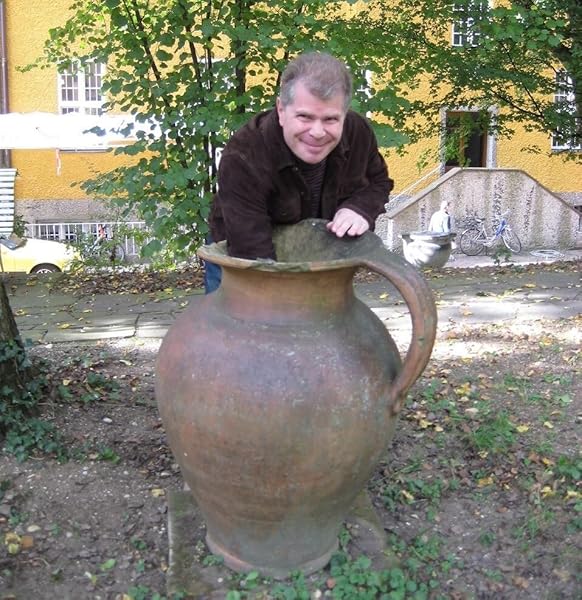
Terra Secundus follows a war-weary journalist sent to Titan, where humanity’s quest for discovery collides with its oldest flaws: ambition, control, and the fragile meaning of being human. What inspired you to set Terra Secundus on Titan rather than another world or moon?
In my exploration of the world of science fiction, I often encountered situations where many famous writers with multiple awards and nominations set their novels on many planets of the solar system and seldom on any satellites of the gas giants such as Jupiter, Saturn, Uranus, and Neptune. Before I decided to place my protagonist in a new world, I carefully studied the science literature about the possibilities of colonizing moons and planetoids orbiting the gas giants. Saturn’s moon Titan was a very strong contender for such an endeavour, and after studying everything I could about that unique moon, I decided to send my protagonist there, since Titan is considered a good candidate for a colony. Many scientists believe it could become a smaller version of Earth, since Titan has a thick atmosphere composed of nitrogen and other gases. Add oxygen to it, and humans could theoretically breathe its air.
The novel’s tone feels both futuristic and nostalgic. Was that a conscious stylistic choice to evoke classic science fiction?
I love classic science fiction novels and my exploration into this literary genre started with many memorable books by Ben Bova, Issac Asimov, Ray Bradbury, Arthur C. Clarke, Frank Herbert, Allen Steele, and Robert Heinlein. When writing about a future removed from our time more than 1,200 years, I tried to imagine a future society of the 32nd century to develop amazing new technologies and modify its social and religious beliefs. In this novel, I tried to use a classic style of storytelling, because for most readers it is much easier to understand. I believe that every society must learn from the past experience and try to avoid repeating tragic mistakes that led to the fall of ancient civilizations and magnificent extinct cultures. The roots of the future are in the present, and I hoped to tell this story in such a way as to entertain and educate my readers about the fascinating distant worlds, new technologies that border on magic and what it means to be human.
How did you approach writing the Artborn androids like Erika, as characters, machines, or mirrors of = humanity?
Interesting question. I like robots. Even as a kid, living in a different society during the Cold War, I liked all science fiction movies that featured cyborgs and robots. Since those days, robotics and and cybernetics both made giant strides forward, and now we see many cybernetic models starting to imitate humans. We are also witnessing the radical advances in Artificial Intelligence and autonomous systems that help us to explore other places and other planets. My approach to such characters as Artborn Erika was both scientific and philosophical. In my story, Artborns are advanced synthetic humanoids that were created to assist humanity, working in most dangerous places in space and underwater. They are essential mirrors of humanity and in some ways are better than us when it comes to programmed mission parameters and sense of duty. In my novel, androids like Erka are employed as explorers, personal servants and bodyguards but they can certainly do much more than that.
If Paul Rexton were alive today, what story would he report on Earth in 2025?
If my protagonist, Paul Rexton were alive today, I believe that he would be deeply fascinated, intrigued and disturbed by the Earth in 2025. His world is certainly very different from ours in many respects, but he would be able to understand our world and form his own unbiased opinion about it. He would no doubt be pleased about the technological progress and human rights, Very concerned about environmental pollution and deeply affected by the fact that there are still powerful evil forces exist on the planet, making life difficult for their neighbors and many other countries. He would no doubt be fascinated by our means of mass entertainment and our taditionsl and electronic libraries of vast human knowledge that contain many centuries of wisdom. I would imagine Paul Rexton standing on a hotel balcony in a quiet and beautiful Japanese village, visiting the beautiful museums of Europe or enjoying a good book at home with a glass of old, smooth, wellaged brandy.
Author Links: GoodReads | Amazon
Terra Secundus: A Novel of Colonization of Titan


Terra Secundus is a richly imagined sci-fi novel that follows Paul Rexton, a soldier-turned-news-explorer sent to report on humanity’s colonization of Titan, Saturn’s largest moon. Through his journey, the book explores ambition, identity, and the dangers of unchecked progress. From Earth’s “Longevity Wars” to the discovery of Blue Ice, a mysterious energy source that could reshape civilization, the story blends political drama, personal reflection, and wonder at the unknown.
The author paints a future that feels both vast and believable, filled with new technologies, evolving religions, and the long shadow of human history. The glossary of terms felt like stepping into a fully realized civilization. Yet, at its core, the story stays personal. Paul isn’t a stereotypical space hero; he’s a curious, conflicted observer trying to make sense of a world that keeps expanding faster than its morality.
The writing often feels old-fashioned in a good way, dense, descriptive, and philosophical. When Paul’s editor, Lana Emerson, sends him on his Titan assignment, their exchange brims with tension and respect. It’s less “blast-off adventure” and more about duty, curiosity, and the cost of truth. I especially loved the sections describing Titan itself: the orange skies, the methane seas, and the eerie silence of an alien world. The conversation between Paul and Evelyn Best, a local officer, about Blue Ice and the fragile ecosystem beneath Titan’s crust perfectly captures the book’s sense of awe and unease.
What makes Terra Secundus stand out is its focus on people, not just technology. The Artborn androids, like Erika, Paul’s robotic companion, are more than machines. They’re reflections of humanity’s desire to create, control, and connect. The pacing is slow at times, but it suits the introspective tone. Each scene feels like it’s building toward something deeper, a question about what progress really means.
Terra Secundus isn’t flashy space opera; it’s thoughtful, emotional, and quietly haunting. It’s perfect for readers who enjoy rich, idea-driven science fiction like The Expanse or Solaris. If you like stories that make you think long after the last page, this one will stay with you like a distant echo from the edge of space.
Pages: 157 | ASIN: B0FPBN7GQ8




 LITERARY TITAN