Blog Archives
The Interchange
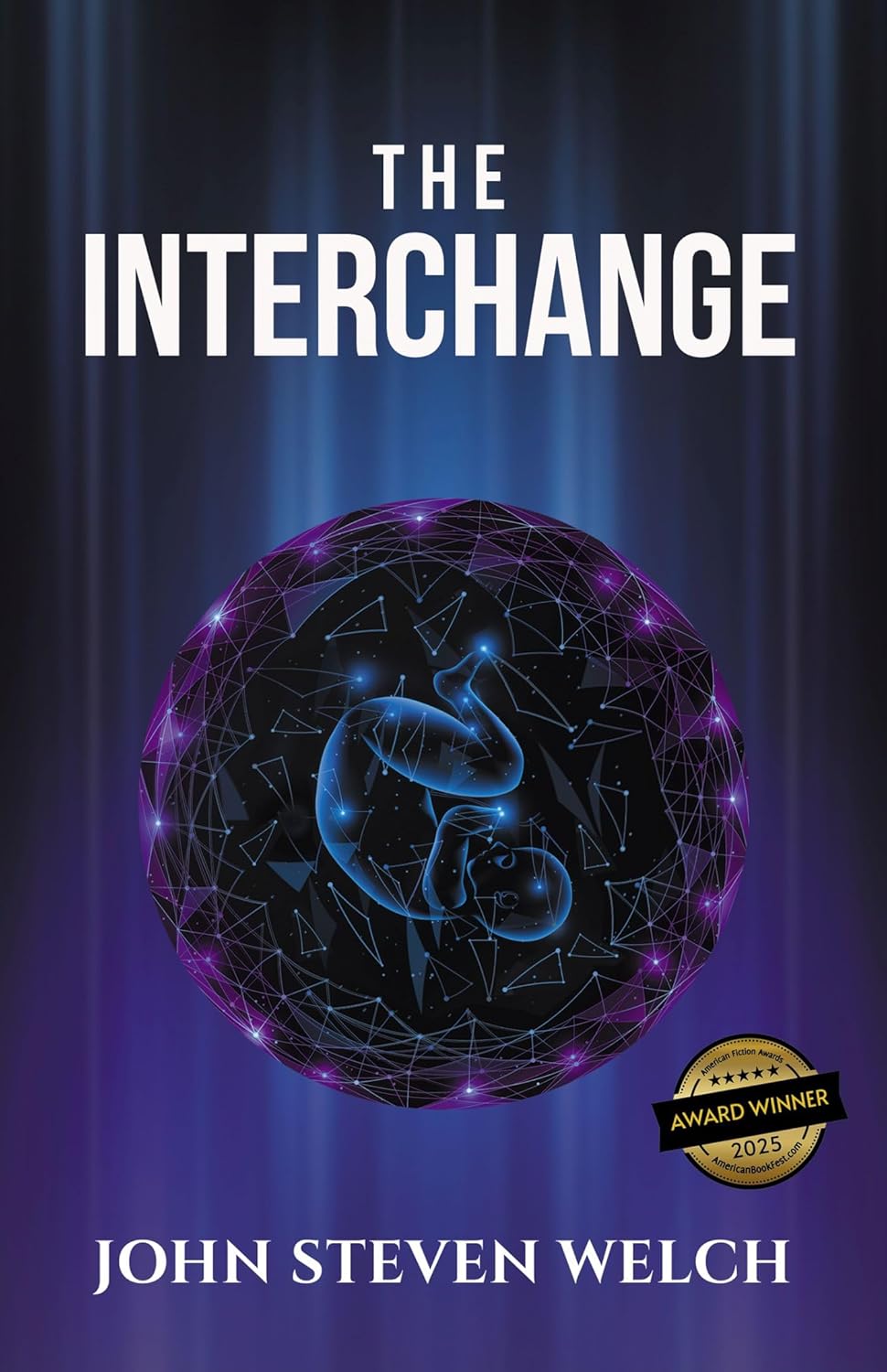

The Interchange imagines a future where identity, family, and power collide in a society rebuilt from catastrophe. It follows Manx Aureole Agnor, a formidable warrior and state leader, as she wrestles with her role in a rigid social order defined by “The Interchange,” a system that categorizes people not by sex but by inherent nature. Against the backdrop of political rituals, national pride, and underground resistance movements, Aureole finds herself torn between her public duty and private doubts, especially as she confronts forbidden desires for motherhood in the “Old Ways.” The story weaves battles both physical and emotional, building a world that is at once grand in scale and deeply personal.
The writing is bold, vivid, and often unflinching, painting scenes of spectacle and violence with almost cinematic flair. Yet the real tension lives in the quieter spaces, where Aureole questions her bond with her son or feels jealousy toward her brother’s easy grace. Those moments struck me harder than the boxing matches or military intrigues. At times, the prose leaned into exposition, explaining the rules and history of New America in detail, but I found myself forgiving it because the ideas were fascinating. The balance between action and introspection kept me engaged, even when I felt the narrative tugging me in too many directions at once.
Emotionally, I went back and forth. Sometimes I admired Aureole’s strength, her drive, her pride. Other times, I felt an ache for her vulnerability, her longing for something she could never fully claim. That push and pull made the book feel alive to me. The ideas here about gender, control, science, and rebellion aren’t just intellectual exercises. They play out in flesh-and-blood relationships, in a mother’s coldness, a grandmother’s pride, a child’s distance. I’ll admit, I got frustrated with the world’s rigidity, and at times even with Aureole herself, but maybe that’s the point. The book isn’t about offering comfort. It’s about showing what happens when systems try to define the deepest parts of who we are.
I’d recommend The Interchange to readers who enjoy dystopian or speculative fiction that asks hard questions rather than giving easy answers. The Interchange reminded me of the sharp social critique in The Handmaid’s Tale and the futuristic ambition of Brave New World, though it carries its own distinctive blend of raw emotion and political spectacle. If you’re drawn to stories of power, family, and identity, and you don’t mind sitting with some discomfort, this book has plenty to offer.
Pages: 238 | ASIN : B0DTZJ3SLP




 LITERARY TITAN