How We Tell the Story
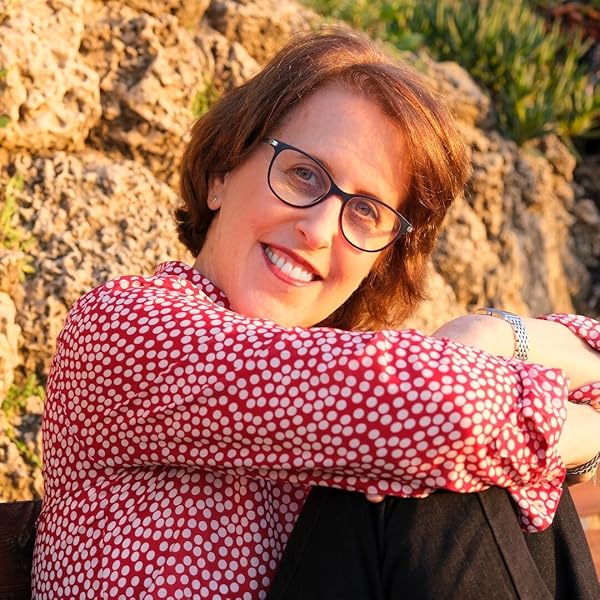
Landed: A yogi’s memoir in pieces & poses is a deeply personal exploration of identity, culture, and the search for belonging. Why was this an important book for you to write?
I’ve been writing about identity, culture, home, and the search for belonging for years. It was as if I was obsessed or possessed. I wrote in longform narrative, personal essay, compression, flash, circular structure, acrostic, prose poem, you name it. Writing it in full, in book-length form, helped get it out of my system. To see my way to the finish line. To take the final steps in my journey from point A to point B and to move on, beyond.
What were some ideas that were important for you to share in this book?
Shortly after returning to Israel in 2011, I began a blog called Open to Israel for my yoga students, family, and friends in the US, Jewish and not Jewish. I wrote about celebrating the holidays, about sending my son to the army, about voting in my first election, about navigating the bureaucracy. I wanted to show what life was like here in this tiny, complicated, misunderstood country. The more I wrote, the more I sensed my mission: to show life in Israel for people who don’t know or understand its complexities, its history, its importance, and its presence. To show, as Martha Engber writes in her review of my book, the lightness, darkness, and in between rainbow colors.
In addition, I write about change and choice, freedom, and selfhood. There is so much we cannot control in the world, but we do control how we tell the story.
What was the most challenging part of writing your memoir and what was the most rewarding?
Hands down, the structure was the most challenging part of this book. The story of my seven-year journey written in seven long sections—in present, past, and [yoga] poses—was obvious because seven is significant in both yoga and Judaism. I chose to tell the narrative in present tense and through poses but jumped back in time, in the past tense (indicated with year and place), thematically. Between each of the seven-year sections is a short scene about learning the seven chakras or spiritual energy channels in yoga, beginning from the root/pelvis and ending at the crown of the head, as learned in class with my first teacher, Rodney Yee, in Oakland, California circa 1996. I was convinced the structure could be the death of the manuscript and wasn’t sure how to revamp it.
After Vine Leaves Press sent me an offer of publication, I felt understood, seen, and validated. That seemingly convoluted structure was redeemed. My greatest reward. It worked.
What do you hope is one thing readers take away from your story?
Decades ago, when working in Paris and immersing myself in French, I learned the idiomatic expression “être bien dans sa peau,” literally translated as to be comfortable in one’s skin. At some point in my intense, new relationship with a Frenchman, I lost my sense of self. Only 23, I lost my way, my voice, my identity. And from that point on, I no longer felt comfortable in my own skin.
Home is a given for many people. But for me, it felt shaky. My one takeaway for readers is how important it is to stay true to yourself, your core, your home.
On a side note, I want to share that in today’s world—a completely different one from when I started writing about Israel—I sign my emails with “The region where I live is fragile. Please treat my words with care.” Thank you for reading my work.
Author Links: GoodReads | Facebook | Website | Amazon
American-born Jennifer traces her journey—both on and off the yoga mat—reckoning with her adopted country (Israel), midlife hormones (merciless), cross-cultural marriage (to a Frenchman) and their imminent empty nest (a mixed blessing), eventually realizing the words her yoga teachers had been offering for the past twenty-three years: root down into the ground and stay true to yourself. Finally, she understands that home is about who you are, not where you live. Written in experimental chapterettes, Landed spans seven years (and then some), each punctuated with chakra wisdom from nationally-acclaimed Rodney Yee, her first teacher.
Posted on October 13, 2024, in Interviews and tagged author, biography, book, book recommendations, book review, Book Reviews, book shelf, bookblogger, books, books to read, ebook, goodreads, indie author, Jennifer Lang, kindle, kobo, Landed: A yogi’s memoir in pieces & poses, literature, memoir, nonfiction, nook, novel, Personal Transformation & Spirituality, Philosophy & Spiritual Growth, read, reader, reading, story, Women's Personal Spiritual Growth, writer, writing. Bookmark the permalink. Leave a comment.



Leave a comment
Comments 0