Multilingual Connectors
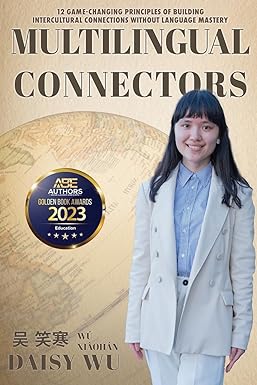

Daisy Wu’s Multilingual Connectors is a heartfelt and eye-opening guide for non-native English speakers who want to thrive, not just survive, in multicultural settings. Blending personal experience with practical advice, Wu proposes a bold idea: that language proficiency is not the ultimate barrier to connection. Instead, mastering communication essentials, understanding human psychology, and developing self-awareness are far more crucial. Through her Multilingual Connectors (MLC) Framework, she lays out 12 game-changing principles to help others bridge cultural divides and build authentic relationships without chasing the mirage of “perfect English.”
Reading this book felt like sitting down for an honest, late-night talk with a friend who’s been through it all and figured some stuff out. Wu doesn’t sugarcoat anything. She talks openly about the insecurity, self-doubt, and exhaustion of constantly trying to sound native. She writes, “Life didn’t become better even when my English was better,” a statement that struck me with particular force. It is this level of vulnerability that lends the book its depth and emotional resonance. She describes rehearsing English lines alone in the shower and still feeling excluded in meetings despite her fluency. It made me reflect on the emotional cost of fitting in and the invisible weight of trying to sound like someone you’re not.
What stood out most was how Wu reframes language itself. Instead of idolizing flawless grammar, she zooms in on connection, making people feel seen, heard, and understood. The idea that “connection is a function of value” felt like a lightbulb moment. She reminds us that being relatable, warm, and real matters more than sounding polished. In fact, some of the most influential people she met didn’t speak perfect English, but they knew how to connect on a human level. Her emphasis on likeability, friendliness, relevance, empathy, and realness makes communication feel attainable rather than intimidating.
I found the book’s emphasis on inner development particularly compelling. Wu persuasively argues that “your connections are only as good as you,” positioning self-awareness, confidence, and emotional resilience as more critical than linguistic accuracy alone. Her assertion that “you don’t need to be 100% to give 100%” was especially impactful, prompting reflection on the many moments I hesitated to engage, waiting to feel more fluent or prepared. Rather than merely offering communication strategies, this book fosters a profound shift in perspective, encouraging readers to confront fear, embrace authenticity, and recognize their cultural identity as a strength rather than a hindrance.
Multilingual Connectors is a must-read for international students, immigrants, or really anyone navigating life in a second language. It’s uplifting, honest, and filled with practical takeaways. Wu isn’t just offering a framework; she’s offering hope and a much-needed reminder that connection doesn’t require perfection. If you’ve ever felt not good enough because of your accent or fluency, this book will feel like a warm, encouraging hand on your shoulder. It certainly did for me.
Pages: 268 | ISBN : 0645569186


Posted on June 10, 2025, in Book Reviews, Five Stars and tagged asian american, author, biographies, book, book recommendations, book review, Book Reviews, book shelf, bookblogger, books, books to read, community and culture, Daisy Wu, ebook, goodreads, indie author, kindle, kobo, literature, memoirs, Multilingual Connectors, nonfiction, nook, novel, personal development, read, reader, reading, story, writer, writing. Bookmark the permalink. Leave a comment.



 LITERARY TITAN
Leave a comment
Comments 0