PARADOX FORGED IN BLOOD
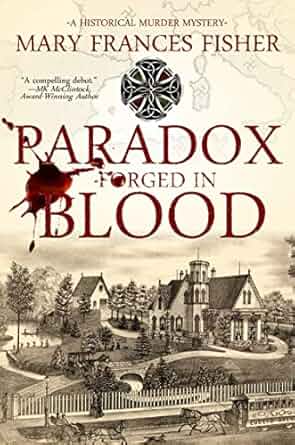

Paradox Forged in Blood is a historical murder mystery rooted in the decades-long repercussions of a brutal crime. Told through multiple timelines and perspectives, it weaves the tragic tale of Ellen O’Malley Szabo, who harbors a chilling secret stemming from a 1939 murder of a Cleveland socialite. As the story unfolds from Ellen’s early years through post-WWII America, it uncovers the dark entanglements of love, loss, guilt, and justice. Based on true events and enriched with authentic period detail, Fisher’s novel explores themes of trauma, moral ambiguity, and the long shadows cast by war and prejudice.
From the get-go, I was pulled in by Fisher’s talent for bringing history to life. The early chapters read like sepia-toned memories, layered with texture and heart. Her characters, especially Ellen, feel heartbreakingly real, flawed, brave, and haunted. Fisher doesn’t just tell a story—she captures a world. The prose is straightforward and emotionally direct, often charged with a kind of raw nostalgia. That said, the pacing sometimes slows, especially in the middle, where the plot steps back from the murder mystery and focuses more on historical backstory. While that deepens the characters and themes, it slightly muddles the genre expectations for a mystery. Still, I didn’t mind too much, I was already invested in the people more than the puzzle.
What stuck with me most wasn’t the crime, but the emotional wreckage it left behind. Ellen’s guilt seeps into every corner of her life. I also appreciated the undercurrent of social commentary. The anti-Semitism, the lingering trauma of war, the costs of silence. Fisher doesn’t preach. She shows us what it feels like to live with choices you can’t undo. At times, the story gets heavy, but it earns that weight. There’s grief here, but also grit. And love, the kind that quietly saves you, even if it can’t fix everything.
Paradox Forged in Blood isn’t just a mystery. It’s a reckoning. A slow burn about how the past refuses to stay buried. I’d recommend this book to fans of historical fiction who appreciate a strong emotional arc and morally complex characters. It’s especially suited for readers who like their mysteries more character-driven than clue-packed. If you’ve ever wondered how one secret can echo through generations, this one’s for you.
Pages: 662 | ASIN : B09WYSRZ6Q


Posted on June 24, 2025, in Book Reviews, Four Stars and tagged author, book, book recommendations, book review, Book Reviews, book shelf, bookblogger, books, books to read, ebook, fiction, goodreads, historical mystery, indie author, kindle, kobo, literature, Mary Frances Fisher, murder, nook, novel, PARADOX FORGED IN BLOOD, read, reader, reading, story, suspense, thriller, writer, writing. Bookmark the permalink. 1 Comment.



 LITERARY TITAN
I would love to be able to contact the person who wrote this review. I’m in the throes of writing a book about my Volga German grandparents who emigrated from Russia to America in 1913. I want to weave in the horrors of the Russian history as the book involves the Russian Revolution through WWII and what Stalin did to the Volga Germans. I would appreciate what the reviewer wrote in the second paragraph about the pace regarding history vs characterization and plot. I need some advice on that about the book I’m writing. –Janet Walraven