Woman in the Abbey
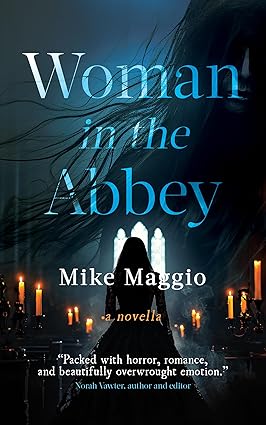

Woman in the Abbey is a rich and relentless gothic tale, told in a voice that’s both seductive and sinister. The novel spins a dark fable about temptation, regret, faith, and the blurred line between good and evil. The story is narrated by a voice we eventually come to recognize as infernal—Lucifer himself—who recounts a centuries-old cycle of suffering, fear, and tragic desire, all centered around a decaying abbey haunted by the sins of its cloistered inhabitants. Two women—Perdita and later Graziella—are pulled into the abbey’s clutches, and their stories unfold with dread, horror, and strange tenderness. The narrative is drenched in fire and shadow, full of rich, lyrical descriptions and emotional torment, while Lucifer himself wrestles with an aching, impossible longing for love and redemption.
The writing is intense—florid, poetic, deliberately archaic at times—and it works, because the story needs to feel like a fever dream. Maggio clearly delights in language, and he lets the sentences unfurl like dark ribbons, twisting into corners you didn’t see coming. I found myself rereading lines out loud just to let the rhythm hit. That said, the style won’t be for everyone. It’s indulgent, dense, and sometimes over-the-top, but honestly, that’s part of the fun. The narrator is a fallen angel who wallows in tragedy, so of course, he’s going to be melodramatic. But the emotional core, his longing, his regret, his unholy desire to be seen, is real and even moving. There were moments when I pitied him, hated him, and rooted for him, all at once.
What really got me was how Maggio managed to make this ancient villain feel heartbreakingly human. I didn’t expect to feel so much for a character that’s supposed to be the embodiment of evil. And Graziella—sweet, terrified, resilient Graziella—she felt like a candle flickering in the dark. Her struggle to escape, her confusion, her faith, all hit harder because we see it through the eyes of someone who both adores and threatens her. The abbey itself feels alive, crumbling and grotesque, a character in its own right. Sometimes the horror is physical, other times it’s spiritual or emotional, but it’s always there, pressing in. The book doesn’t give easy answers or tidy arcs. It leaves you rattled, unsettled, but also weirdly satisfied.
I’d recommend Woman in the Abbey to anyone who loves gothic fiction, horror with a heart, or stories that sit in your gut long after you’ve closed the book. It’s for readers who like to get lost in dark places—not just spooky ones, but the kinds lit by flickering candles and lined with grief. If you want atmosphere, emotion, and a narrator who’ll charm and repulse you in equal measure, this book will stick to your bones.
Pages: 134 | ASIN : B0DMNG21RT


Posted on June 24, 2025, in Book Reviews, Five Stars and tagged author, book, book recommendations, book review, Book Reviews, book shelf, bookblogger, books, books to read, ebook, fiction, ghost, goodreads, gothic, horror, indie author, kindle, kobo, literature, Mike Maggio, nook, novel, occult, read, reader, reading, romance, story, suspense, Woman in the Abbey, writer, writing. Bookmark the permalink. Leave a comment.



 LITERARY TITAN
Leave a comment
Comments 0