My Land, My Nile
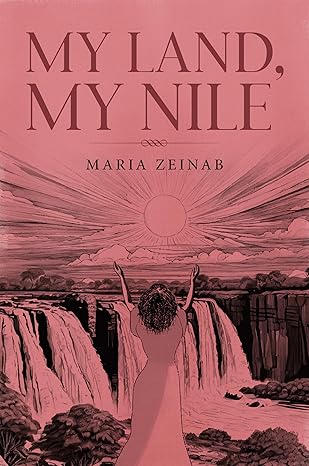

My Land, My Nile, by Maria Zeinab, is a sweeping and multi-generational tale that threads together history, myth, and personal memory along the Nile’s banks, from the Abyssinian Highlands to the Nubian Valley. It blends the oral traditions of Nubian culture with vivid depictions of displacement, political tension, and familial bonds. Through interwoven narratives, crocodiles as sacred guardians, the fall of the legendary Yahodi Nog, and the odyssey of Nabra-Isat Soliman returning to her ancestral land, Zeinab paints a textured portrait of a people’s resilience against the tides of time, politics, and water. The novel drifts between the past and present, memory and vision, often blurring the lines between the real and the mystical.
Reading this book felt like stepping into an old Nubian home where the walls are lined with family photographs, some faded, some vivid, each whispering a story. Zeinab’s writing is drenched in sensory detail like the smell of sandalwood, the glint of green crocodile eyes, the oppressive hush of a summer noon, and that attention to the tangible pulls readers deep into the narrative. Her characters are layered, never reduced to tropes, and their conversations carry the weight of centuries. That said, the lyrical style can be somewhat demanding. The shifts between timelines and voices require patience, but for me, that challenge was part of the reward. The story never panders. It trusts the reader to wander, to get a little lost, and to return richer.
What moved me most was how the novel treats loss, not just the loss of people, but the erasure of land, language, and ways of life. Zeinab doesn’t rush to offer hope. Instead, she lets grief sit in the room, lets it breathe beside the characters, until its edges soften into something like acceptance. I felt my chest tighten during the moments of cultural theft, like when Nubian names are stripped from official documents, because it’s not just fiction; it mirrors real wounds that history keeps opening. Yet even in the heaviest passages, the story never forgets the beauty of what it’s trying to preserve. It’s a rare balance of lament and love.
I would recommend My Land, My Nile to readers who appreciate historical fiction that leans into poetry and myth, and to anyone who has a soft spot for intergenerational sagas rooted in place. For those who have ever felt the pull of an ancestral home, whether visited or only imagined, this book will feel like a homecoming, with all the joy, ache, and ghosts that it entails.
Pages: 352 | ASIN : B0FH2Q9KQT


Posted on August 17, 2025, in Book Reviews, Five Stars and tagged author, book, book recommendations, book review, Book Reviews, book shelf, bookblogger, books, books to read, Cultural Heritage, ebook, fiction, goodreads, Historical Dramas & Plays, historical fiction, indie author, Indigenous Literature & Fiction, kindle, kobo, literature, Maria Zeinab, My Land My Nile, myth, nook, novel, read, reader, reading, story, writer, writing. Bookmark the permalink. Leave a comment.



 LITERARY TITAN
Leave a comment
Comments 0