Blog Archives
People Like You and Me

Waves Toward the Pebbled Shore follows a physicist and her husband as they face a planetary crisis that becomes something personal and morally complicated. What was the inspiration for the setup of your story?
The protagonist of Waves Toward the Pebbled Shore, Māori physicist Aroha Whakatane, was a character in the second book of my trilogy, The Loss of What Is Past. In that story, Aroha works with its protagonist, Kapono Ailana, on some clandestine experiments involving antimatter and tachyons. When Kapono decides to use those technologies for an ethically and legally dubious personal project, Aroha calls him out on his arrogance and irrational behavior. I thought it would be interesting to weave a story in which the proverbial shoe is on the other foot—where Aroha is tempted to use the same technologies for what she believes is a very good reason, even though her actions would be not only a felony but would also violate the most sacred beliefs of the Māori. As the story unfolds and the planetary crisis looms, Aroha must decide between her deeply held beliefs—and fervent objections from her husband and father-in-law—and her responsibilities as a mother and Earth’s chief physicist.
How important was it to portray a scientist whose cultural identity and family relationships are just as important as her intellect?
It was crucial. I strive to pen characters who, although they may be brilliant scientists, are vulnerable and relatable … people like you and me, and far from perfect. Aroha and her husband Rangi Ngata are two of Earth’s leading physicists. But they’re also lovers, spouses, parents, someone’s daughter or son, and friends to many. Their values and behavior are largely shaped by Māoritanga—the traditional culture, way of life, and belief system of the Māori. Thus, I knew that their cultural identities, and those of the other Māori characters in the novel, would have to be integral to the story. Fortunately, I had invaluable help from two consulting editors from New Zealand on the Māori and Kiwi aspects of my book, and I researched the novel in New Zealand in early 2026.
The novel explores antimatter, tachyons, artificial intelligence, and time travel with considerable technical detail. How much scientific research went into building the world?
Quite a bit, although I was able to borrow significantly from the universe I’d created for the first two books in my trilogy. I want the science fiction in my stories to be science-based as much as possible and seem plausible to readers—at least to the point they may think, “Yeah, I can see how that could happen.” I include my references in the back of each novel, so readers can see that, for example, there really is such a thing as Quantum Drive. But I don’t want the science to get in the way of the story such that readers are overwhelmed by technobabble. I try to make my novels approachable to people who may not have a scientific background and may not even particularly like sci-fi stories. Now, since this story begins in the mid-22nd century and ends at the dawn of the 23rd century, I had to make a few guesses as to what technologies like AI and antimatter would look like then. And, as for the time travel … as the frosh roommate of the protagonist of the first novel of this trilogy told her once, “There are some things in science-fiction stories we just need to accept.”
Do you see Waves Toward the Pebbled Shore as a standalone story, or do you imagine returning to this world?
Waves is the conclusion to the trilogy I began with The Lightning in the Collied Night. But I wrote Waves to stand alone, so that readers who haven’t yet read the first two books of the trilogy can start with Waves, then loop back to the other books if they wish. As for returning to this world … I hadn’t planned on it. But then, I didn’t plan on a sequel to Lightning, nor a trilogy! If I do return to this universe I created, it would be with a new story set in the 23rd century and (almost all) new characters. I hinted at who the protagonist for such a story could be in the last entry of the Timeline of Events in the back of Waves. I don’t have a story flushed out yet, but I do know that this protagonist would find that, as Bob Dylan sang, the times they are a-changin’ … and not always for the better.
Author Links: GoodReads | Facebook | Website | Amazon
Although this novel is the conclusion to a trilogy, it was written to stand alone and thus can be read independently of the other two books.
The five main characters and some secondary characters are Māori, the indigenous people of New Zealand-very rare for a sci-fi novel. This novel explores the culture, religion, and language of the Māori in a futuristic sci-fi setting.
Waves Toward the Pebbled Shore


Waves Toward the Pebbled Shore, by David Backman, is a science fiction novel about time, family, grief, and the frightening weight of scientific power. Set mostly in the 22nd century, the story follows Aroha Whakatane, a brilliant Māori physicist, and her husband Rangi Ngata as they face a comet that could end all life on Earth. What begins as a planetary crisis becomes something more personal and morally complicated, especially as antimatter, tachyons, time travel, and heartbreaking loss force the characters to ask what should be saved, what can be changed, and what the cost of survival really is.
I was taken by how grounded the book feels even when the science fiction ideas get huge. Backman is dealing with extinction-level danger, advanced technology, artificial intelligence, and time loops, but the emotional center stays close to home. Aroha is not just a scientist solving a problem. She is a daughter, wife, mother, and Māori woman carrying her values into rooms where cold logic could easily take over. I appreciated that. The novel spends real time with grief, humility, responsibility, and cultural identity, which gives the science fiction genre a warmer and more human shape. The technical detail is heavy, but it also makes the world feel carefully built rather than casually imagined.
I also found myself thinking about the author’s choices long after certain scenes ended. Backman does not treat time travel like a clever trick. He treats it like a wound that might heal one thing while opening another. That made the book more interesting to me. The story asks whether doing the right thing is still right when the outcome is uncertain, and whether saving the world can excuse choices that damage the soul. Some parts move with the steady patience of a family saga, while others tighten into disaster-thriller territory. That mix will not be for every reader, especially those who want nonstop speed, but I liked the room it gave the characters to breathe.
I would recommend Waves Toward the Pebbled Shore to readers who enjoy thoughtful science fiction more than flashy spectacle. Fans of time-travel stories, near-utopian future settings, ethical dilemmas, and character-driven speculative fiction will likely find a lot to appreciate here. It’s best for readers who do not mind science, politics, and family drama sharing the same table, because that is where this novel is at its strongest.
Pages: 230 | ASIN : B0GX36QXXM

Inherited Courage

Beneath the Swamp’s Shadow is a historical fiction novel inspired by the Lumbee and Tuscarora resistance against the Ku Klux Klan during the 1958 Battle of Hayes Pond. Why did you choose historical fiction, rather than nonfiction, to tell this story?
I chose historical fiction because I really wanted readers to feel the story, not just learn the facts. Nonfiction can tell you what happened, but historical fiction gave me a platform to allow readers to step into the fear, the tension, the pride, and the generational memory that surrounded the moments leading up to the Battle of Hayes Pond.
The Battle of Hayes Pond is often described as the night the Lumbee people ran the Klan out of Robeson County, but the deeper story is much larger than that. It is about family, identity, inherited courage, and a people who had already endured generations of hardship. Historical fiction gave me room to honor the documented history while also exploring the emotional truth behind it.
I wanted the reader to understand that Hayes Pond did not happen in isolation. It came from a long legacy of resistance, including the memory of my 5th great-grandfather, Henry Berry Lowry, and the revolution of the Lowry War. Fiction allowed me to connect those threads in a way that felt personal and human.
How much research went into recreating Robeson County as it would have felt in 1958?
A great deal of research went into recreating Robeson County as it would have felt in 1958. I began writing this book in 2015, so this was not a quick project. For more than a decade, I researched the events surrounding Hayes Pond, the people involved, and their genealogies, newspaper articles, oral history interviews, family histories, local geography, businesses of the 1950s, and the social climate of the time.
I wanted this book to feel like home.
Like sitting in your grandma’s living room on a Sunday afternoon, the smell of home-cooked Lumbee meal drifting from the kitchen, the sweet warmth of cedar logs crackling in the wood heater and the sound of your elder’s voice carrying stories that remind you exactly who you are, and whose blood runs in your veins.
That’s the spirit I poured into this book. I wanted Robeson County to feel alive on the page, not just as a setting, but almost as a character itself. That meant paying close attention to the details: the roads, the communities, the way people spoke, the foods our people ate, the fear surrounding Klan activity, and the pride and closeness within Lumbee and Tuscarora families. I also wanted the environment to feel accurate—the cold January night, the broomstraw grass, the swamps, and the atmosphere of rural Robeson County during that era.
Because this history is personal to me, accuracy mattered. I did not want to simply recreate a historical event. I wanted to honor the people who lived it, the families connected to it, and the descendants who still carry that memory today. This is not just history. It is my people’s story. A Sunday story. The kind passed down while shucking corn on the porch, shelling peas at the table, or sitting close enough to an elder to understand that memory is one of the ways we survive.
The novel explores courage as something inherited as much as chosen. What does courage mean to you?
To me, courage is not the absence of fear. Courage is knowing fear is present and still choosing to stand for something greater than yourself.
In Beneath the Swamp’s Shadow, courage is inherited through blood memory, family, and community. It is passed down through the stories of ancestors who endured, resisted, and survived. The people at Hayes Pond did not suddenly become brave that night. They came from generations of people who had already learned how to survive intimidation, injustice, and violence.
Courage is also responsibility. It is understanding that your actions may protect not only yourself, but your family, your community, and the generations that come after you. That kind of courage is deeply rooted in Lumbee history.
Do you see yourself continuing to explore Indigenous history and Lumbee heritage in future books?
Absolutely. Preserving and sharing Lumbee history is a major part of why I write. Our stories deserve to be remembered, studied, and passed forward, not only within our own community, but beyond it.
There are so many parts of Indigenous history, especially Lumbee history, that have been overlooked, misunderstood, or left out of larger conversations. I feel a responsibility to help bring those stories forward in a way that is honest, respectful, and meaningful.
Beneath the Swamp’s Shadow is part of a larger mission for me. I want my work to help preserve our history, honor our ancestors, and give future generations something they can look to with pride. Our people have always had powerful stories. I plan to keep telling them.
Author Links: GoodReads | X (Twitter) | Facebook | Website | Amazon
Creature of Secret Sorrows

Creature of Secret Sorrows, by Dianne L. Hagan, returns to Cadence, New York, a town where history is never inert and the dead have unfinished claims on the living. When Randy Nichols disappears during a rockhounding walk, the search leads Marian Greene and her neighbors to a brutally lynched body in the woods. What begins as a murder investigation widens into a confrontation with ancestral violence, hidden family lines, supernatural guardians, and the damage passed down through the Hayward legacy. The mystery coils around Randy’s grief for his newly found mother, Madison’s fractured family, and the apparition of the asanbosam, a creature that seems less interested in terror than in justice.
I was struck by how Hagan refuses to separate the procedural from the spiritual. Cadence is full of police work, interviews, evidence, and old documents, but it is also a place where lake drums, bears, legends, and restless souls press against ordinary life. That mixture could have felt ungainly in a lesser book, but here it gives the story its pulse. The supernatural elements are not decorative fog; they are moral weather. They make visible what polite history tries to bury.
My strongest reaction was to the novel’s emotional density. Hagan writes community with breadth: meals, jokes, old resentments, marriages, griefs, and arguments all crowd the page. At times, the large cast demands attention, especially for readers new to the series, but the reward is a world that feels inhabited rather than staged. Randy’s tenderness, Madison’s jagged survival, and Marian’s weary courage give the horror a human temperature. I appreciated that the book is not content with simply exposing evil; it asks what repair might look like after truth has done its bruising work.
I would recommend Creature of Secret Sorrows to readers who enjoy supernatural mystery, psychological thriller, Black horror, historical suspense, ancestral trauma fiction, and community-centered crime novels. Fans of Stephen King’s small-town supernatural stories may recognize the sense that an entire place can become a haunted witness, though Hagan’s focus is more intimate, more reparative, and more explicitly tied to racial history. This is a dark, sinewy mystery with a conscience.
Pages: 320 | ASIN : B0GZK9V7MX
My Land, My Nile
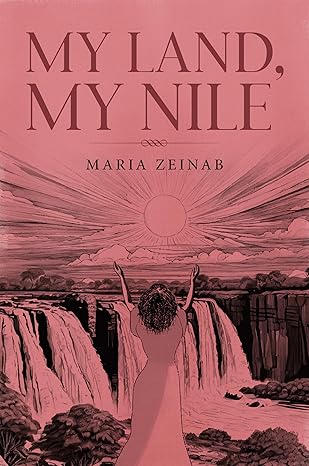

My Land, My Nile, by Maria Zeinab, is a sweeping and multi-generational tale that threads together history, myth, and personal memory along the Nile’s banks, from the Abyssinian Highlands to the Nubian Valley. It blends the oral traditions of Nubian culture with vivid depictions of displacement, political tension, and familial bonds. Through interwoven narratives, crocodiles as sacred guardians, the fall of the legendary Yahodi Nog, and the odyssey of Nabra-Isat Soliman returning to her ancestral land, Zeinab paints a textured portrait of a people’s resilience against the tides of time, politics, and water. The novel drifts between the past and present, memory and vision, often blurring the lines between the real and the mystical.
Reading this book felt like stepping into an old Nubian home where the walls are lined with family photographs, some faded, some vivid, each whispering a story. Zeinab’s writing is drenched in sensory detail like the smell of sandalwood, the glint of green crocodile eyes, the oppressive hush of a summer noon, and that attention to the tangible pulls readers deep into the narrative. Her characters are layered, never reduced to tropes, and their conversations carry the weight of centuries. That said, the lyrical style can be somewhat demanding. The shifts between timelines and voices require patience, but for me, that challenge was part of the reward. The story never panders. It trusts the reader to wander, to get a little lost, and to return richer.
What moved me most was how the novel treats loss, not just the loss of people, but the erasure of land, language, and ways of life. Zeinab doesn’t rush to offer hope. Instead, she lets grief sit in the room, lets it breathe beside the characters, until its edges soften into something like acceptance. I felt my chest tighten during the moments of cultural theft, like when Nubian names are stripped from official documents, because it’s not just fiction; it mirrors real wounds that history keeps opening. Yet even in the heaviest passages, the story never forgets the beauty of what it’s trying to preserve. It’s a rare balance of lament and love.
I would recommend My Land, My Nile to readers who appreciate historical fiction that leans into poetry and myth, and to anyone who has a soft spot for intergenerational sagas rooted in place. For those who have ever felt the pull of an ancestral home, whether visited or only imagined, this book will feel like a homecoming, with all the joy, ache, and ghosts that it entails.
Pages: 352 | ASIN : B0FH2Q9KQT
Connections Make the World Go Round

Before We Arrived follows three people, each marked by loss, resilience, and quiet strength, who seek refuge at a goat sanctuary; they find not only healing but also a found family. What was the inspiration for the setup of your story?
First I’d like to thank Literary Titan for the interview. I absolutely loved writing this novel and am thrilled it’s resonating with people on a deep level.
The idea for the rescue sanctuary came easily. I adore animals and the notion that they have the power to aid in the healing process for humans. ‘Herd’ species—goats, donkeys, horses, and alpacas—were chosen because they need each other as well as their human caretakers. It was also a way to inject a bit of fun into the mix with their shenanigans. I was keen to have the work volunteers live on-site, enjoying shared meals and private sleeping spaces. I’ve had personal experience with various forms of communal living and it made sense to incorporate that. I wanted King Solomon Sanctuary to serve as an interactive setting that chunks of the story arcs could pivot around. The workers have the option to come and go as they please during off-hours but most choose to stay in close proximity to one another and the animals—it’s their own special tight-knit community of second chances.
Henry, Rivka, and Jayce all come to the sanctuary for different reasons, holding onto trauma that has kept them closed off until now. What was the inspiration for the relationship that develops between the characters?
Connections make the world go round. In Before We Arrived we witness the interactions within each of the biological families, as well as between the narrators and secondary characters as new friendships are forged and old ties change shape. All three families have struggled through adversity, and we learn the details of their backstories as the chapters progress. The world can be harsh and cold, relationships complicated and messy. What are the multitude of elements that guide our path and our decisions? Can we build a meaningful life after experiencing tragedy? How do we best care for ourselves and each other? These are the kinds of questions that motivate me to create stories.
What were some themes that were important for you to explore in this book?
I’ll preface this answer by noting that I did not set out to write a book specifically about grief and resilience; that just happened organically as the outcome of each character’s story and their relationships with one another.
The novel explores questions about race/culture/identity, the short and long-term effects of personal and generational trauma, family dynamics, and issues around marginalization. I’ve also had a perennial fascination with ancestral memories, so that was layered in, along with the underlying truths about the universality of suffering and the value of connection and empathy. Naturally some of these themes overlap.
What is the next book that you are working on, and when can your fans expect it to be out?
Before We Arrived was recently released and I’m not quite ready to think about beginning a new project. Writing does energize me so another novel is within the realm of possibilities.
Author Links: GoodReads | Website
In the summer of 2005, three dissimilar people—Henry, a grieving Black landscaper; Rivka, a restless Jewish social worker; and Jayce, a guarded Indigenous archaeologist—find their lives colliding in quiet, powerful ways.
From New England to Vietnam, this lyrical novel traces their search for peace, meaning, and joy amid the rubble of personal and ancestral trauma. Lush, moving, and deeply human, Before We Arrived is a celebration of resilience, found family, and love in its many forms.
Before We Arrived is a soulful, literary journey through grief, healing, and unexpected connections. Fans of James McBride and Lily King will feel right at home.
Before We Arrived
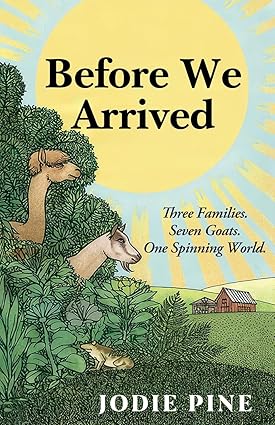
Jodie Pine’s Before We Arrived spins a beautiful tapestry of interconnected lives across time, grief, and healing. Told through alternating chapters set between 1975 and 2005, the story traces three families—each marked by loss, resilience, and quiet strength—as they find each other through fate and a shared sanctuary. A former archaeologist, a social worker, and a man recovering from injury and trauma become unlikely kin under the roof of a goat sanctuary, of all places. But it’s more than goats. It’s about second chances, and third. It’s about holding sorrow in one hand and still reaching out with the other.
As a widow, I didn’t expect this book to hit me like it did. From the very first chapter with Henry and his mangled hand, I felt my heart slide into that familiar hollow space. The line—“trying so hard to keep things light”—caught in my throat. That’s exactly what it’s like when you’re walking around with your grief zipped up under your coat. Henry’s story reminded me how healing doesn’t look like a movie montage. It’s awkward, reluctant, even a little muddy. His growth is slow but steady, like learning how to breathe again after forgetting for a while.
Then there’s Rivka. Oh, Rivka. I adored her. The way she stepped into Nina King’s quiet, grief-soaked apartment, dripping wet and uninvited, but still offering help with a kind firmness—it was deeply moving. Her voice felt familiar to me, like someone I would’ve met. Her compassion for baby David, and her refusal to flinch in the face of Nina’s silence or mistrust, showed the kind of stubborn kindness I’ve come to cherish in my own life. The moment when Nina finally lets her hold the baby? That nearly did me in.
Jayce’s chapters, especially the funeral scene and the pact he makes with his mother, stirred something in me. We can’t disappear with our dead. I loved how his archaeology background tied into the theme of digging—literally and emotionally—for what’s been buried. His arc wasn’t flashy, but it was profound. Quiet endurance. I know it well.
What Jodie Pine does so beautifully is show how people can be shattered and still be whole. There are no villains here, just folks doing their best with their pain. The prose is warm and alive, sometimes messy, just like real conversation. I chuckled more than once—especially during Henry’s first day with the goats—and found unexpected joy in the ordinary moments: Rivka eating Fig Newtons at her desk, David fixing a bike, a fox sculpture on a table. These small details made the world feel lived-in, like someone left the light on for you.
This book is for anyone who’s ever been broken open and needed help stitching themselves back together. It’s for people who are lonely but not hopeless. For readers who don’t mind stories that move like real life—with detours, overlaps, long silences, and sudden beauty.
Pages: 395 | ASIN : B0FG3L2V5Q
Conflict Over the Centuries
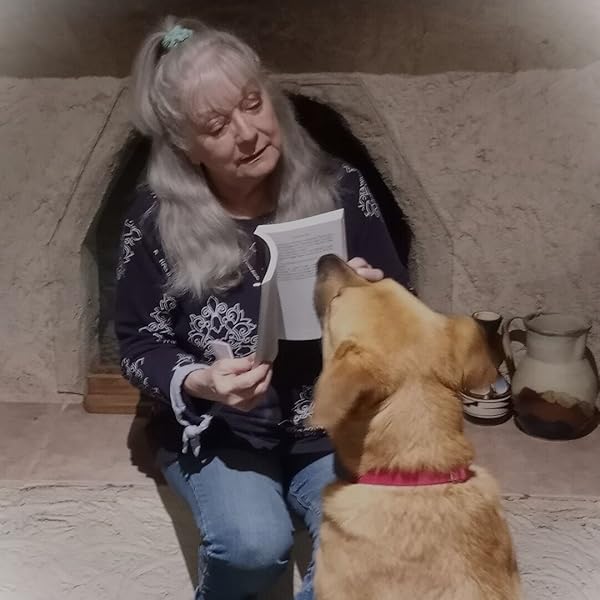
Whispers Through Time follows a successful writer whose life is upended when a former lover reappears with a stack of photographs and a secret about her origins, leading her on a journey of cultural identity and into a decades-old mystery surrounding the American Indian Movement. What was the inspiration for the setup of your story?
The inspiration for Whispers Through Time came from a trip my husband, Kevin, and I made in 2000 to South Dakota, which is a truly magical state. While there, we visited, among other historical places, the Pine Ridge Indian Reservation, the Wounded Knee Memorial, and the American Indian Movement (AIM) Museum, which commemorated AIM’s 1973 Occupation of Wounded Knee. As I stood beside the Wounded Knee Creek, near where the original massacre had occurred, I had a strange, empathic experience that changed my life…and gave me the most important kernel of truth to build on in Whispers Through Time: Heroine Sierra Masters learns that through her newly-discovered Lakota maternal bloodline, she can receive visions that help her ‘see’ historical mysteries and solve them.
The supporting characters in this novel were intriguing and well-developed. Who was your favorite character to write for?
That’s a really hard question because I love them all, but I think – outside of Sierra Masters – my favorite character to write had to be Nathan Winterhawk. He was based on several Lakota elders I met while on our vacation, or have followed over the years. He came to life immediately. His humor and optimism were interspersed with his love of tradition, and his right-below-the-surface, always-simmering rage was almost eerie in its truth. His dialogue and unusual way of expressing his feelings wrote themselves, as did his compassion for Sierra’s situation. He was certainly the easiest character to write because I felt like I knew him intimately after 20 years of research.
What were some themes that were important for you to explore in this book?
These are really great questions – thank you so much! More than anything else, I wanted to tell a really great story.
But I also wanted to show both sides of the White/Indian conflict over the centuries and to explore the vantage point of both ethnicities, from a historical view as well as from the White, without making the novel a political commentary of left vs. right. I think we’ve had enough of that. I also wanted to illuminate to people of all races across the US and the rest of the world the truth about the 1973 Occupation of Wounded Knee, and what AIM was trying to illustrate by taking it over. Finally, I wanted to create a real, honest-to-God love story between a man and a woman that was long-lasting with real heartache that had occurred many years earlier, but still affected them now.
When will Book Two be available? Can you give us an idea of where that book will take readers?
I’m nearly finished with the first draft of Journey of the Heart, Book Two of the Whispers Through Time series, so I don’t know at this time when it will be out. It will take readers into Comanche Indian territory on the Llano Estacado of Texas, a centuries-old treasure hidden in a canyon located on a Panhandle ranch belonging to Sierra’s best friend’s grandfather, and the final truth about a young girl with red-gold hair captured by Comanches during the 1860s.
Author Links: GoodReads | X (Twitter) | Facebook | Ronni Hoessli | Website | Amazon
Hunter Davenport realizes the evidence he’s shared with Sierra could indeed destroy her—but it could free her as well. The decision is yanked from her hands when the past and present collide through a historical portal on sacred Native American land. Will she take the gift that is offered? And will Hunter do what he didn’t do twelve years earlier—stand by her? Only time will give them their answers.


