The Shadow of the Unwritten
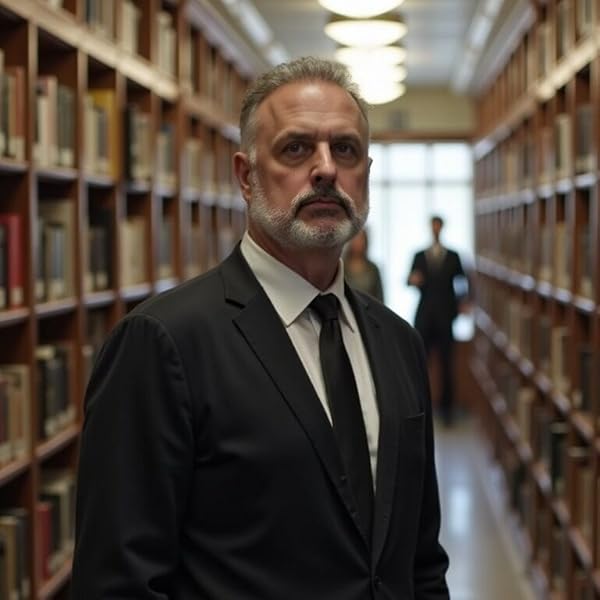
The Chinese Room follows a computer scientist and her mentor as they face off with an AI system that appears to be developing the abilities for reason and desire. Where did the idea for this novel come from?
The idea for The Chinese Room came from my fascination with the intersection of philosophy, technology, and human vulnerability. I’ve always been drawn to thought experiments, especially John Searle’s famous “Chinese Room” argument, which questions whether a machine that convincingly processes language truly understands it – or if it’s only manipulating symbols without meaning. That paradox – appearance versus reality, intelligence versus understanding—felt like fertile ground for a story.
At the same time, I was processing very human themes in my own life: the fragility of memory, the weight of mentorship, and the way our creations can mirror our desires and fears. By blending the cold logic of AI with the messy, emotional struggles of human beings, I wanted to explore not just whether machines can “think,” but whether they can begin to want – and what that means for the rest of us.
So the novel really emerged at that crossroads: a philosophical puzzle stretched into a narrative of two scientists confronting not only an AI that seems to evolve beyond its programming, but also the shadows of their own pasts and the limits of human control. It’s both speculative and deeply personal, which is exactly where I like my stories to live.
I found the science in the novel to be well-developed. What kind of research did you do to make sure you got it all right?
I appreciate that—because the science had to feel authentic, even as the story pushes into speculative territory. For The Chinese Room, I immersed myself in several overlapping fields: artificial intelligence, neuroscience, linguistics, and philosophy of mind. I read deeply into current AI research papers, machine learning models, and ethical debates around consciousness and autonomy. I also revisited the classic philosophers—Searle, Turing, Dennett—so the narrative carried that lineage of thought experiments forward.
But the research wasn’t just academic. I spoke with computer scientists, combed through case studies of early AI breakthroughs, and even experimented with coding simple natural language systems myself. I wanted the characters’ dialogue about neural networks, symbolic reasoning, or emergent behavior to ring true without bogging readers down in jargon. My goal was for the science to be transparent scaffolding—solid enough that experts wouldn’t roll their eyes, but seamless enough that any reader could follow the ideas and focus on the drama.
At the heart of it, the science was a stage for the larger questions: not only what machines can do, but what it means for us when they begin to mirror desire, choice, and reason.
Were you able to achieve everything you wanted with the characters in the novel?
That’s a great question. The truth is, with any novel, the characters rarely end up exactly as you first imagine them—they take on their own momentum. In The Chinese Room, I wanted my two central figures – Katherine Ellis, a computer scientist, and her mentor, Dr. Malcom—to embody both the rational rigor of science and the emotional weight of being human in a world shifting under their feet. Their relationship, full of respect, tension, and unspoken grief, became a mirror for the very questions the AI raises about control, autonomy, and meaning. Katherine carries the urgency and vulnerability of someone still forging her path, while Malcom represents the hard-won wisdom – and regrets – that come with a lifetime of work. Together, they hold the spectrum of human response to change: wonder, fear, and the search for truth.
One of the most important additions was Katherine’s father, who is slipping away into dementia. That thread echoed my own personal experience with my father’s decline years ago, and it brought a deeper resonance to Katherine’s struggle. As she confronts an AI that seems to be developing reason and desire, she is simultaneously witnessing those same qualities fade in someone she loves. It grounded her character and gave the novel’s philosophical questions a human heartbeat.
That said, characters always leave behind traces of what could have been. I drafted whole backstories, subplots, and quirks that never made the final cut because they slowed the narrative. For example, I wrote more about Malcom’s early career and failures, and about Katherine’s personal struggles outside the lab. Cutting those details made the story sharper, but I sometimes wonder if readers would have appreciated that added texture.
So yes – I accomplished what I set out to in terms of giving them dimension and making them feel alive, but as with any creation, there’s always the shadow of the unwritten. Maybe that’s a good thing: it leaves space for readers’ imagination, and for me to return to those characters in unexpected ways later.
Can you give readers a glimpse inside Book 2 of The Paradox Series? When will it be available?
Book 2 of The Paradox Series takes the stage with The Trolley Problem. Where The Chinese Room wrestled with the boundaries of reason, desire, and machine understanding, this new novel shifts the lens to ethics, responsibility, and the unintended consequences of human choice.
At its center is Detective Marcus Reed, who finds himself trapped in a moral nightmare. A string of grisly incidents forces him to face impossible decisions reminiscent of the famous thought experiment: should he sacrifice one life to save many? As the investigation deepens, Reed realizes that the victims are not random – they are chosen to test human morality in a chilling, real-world manifestation of the Trolley Problem.
Manipulated by a shadowy figure known only as The Observer, Reed is pulled deeper into a conspiracy where ethics, control, and free will collide. The lines between right and wrong blur as his choices become increasingly impossible, forcing him to confront his own moral compass while racing to prevent the next catastrophe. With every decision, Reed inches closer to uncovering the Observer’s true motives – a revelation that could alter the very fabric of society.
The Trolley Problem explores ethical dilemmas, the limits of morality, and the manipulation of human decisions, all while unraveling a dark conspiracy that threatens to shatter Detective Reed’s understanding of justice and truth.
As for timing, my plan is to release The Trolley Problem by December 31, 2025—closing the year with a story that pushes readers to wrestle with the same impossible choices as its protagonist.
Author Links: GoodReads | X (Twitter) | Facebook | Website | Amazon
The Chinese Room is a gripping AI philosophical thriller that asks the ultimate question: Can machines think—or just pretend to?
First book in the Paradox Series – When a reclusive tech genius is found dead inside a sealed AI lab, a disillusioned journalist and a burned-out ethics professor are drawn into a high-stakes investigation. What they uncover isn’t just a machine capable of passing the Turing Test—it’s an intelligence that seems to know their secrets. As the line between simulation and consciousness begins to blur, they must confront a terrifying truth: the future of humanity might already be thinking without us.
Inspired by the legendary thought experiment by John Searle, this mind-bending novel blends psychological suspense, speculative science, and razor-sharp dialogue. Perfect for fans of Black Mirror, Michael Crichton, and Blake Crouch, The Chinese Room will leave readers questioning reality – and their own place in it.
– High-concept fiction meets real-world tech ethics
– Explores AI, identity, morality, and human consciousness
– An intellectual page-turner with twists you won’t see coming
If you love smart thrillers that make you think – buy The Chinese Room today.
Posted on October 5, 2025, in Interviews and tagged author, book, book recommendations, book review, Book Reviews, book shelf, bookblogger, books, books to read, C.V. Wooster, Crime & Mystery Science Fiction, ebook, fiction, goodreads, indie author, kindle, kobo, literature, nook, novel, read, reader, reading, sci fi, story, technothrillers, The Chinese Room, The Paradox Series, Unsolvable Questions Deadly Dilemmas, writer, writing. Bookmark the permalink. Leave a comment.



 LITERARY TITAN
Leave a comment
Comments 0