The Corpse War of 1793
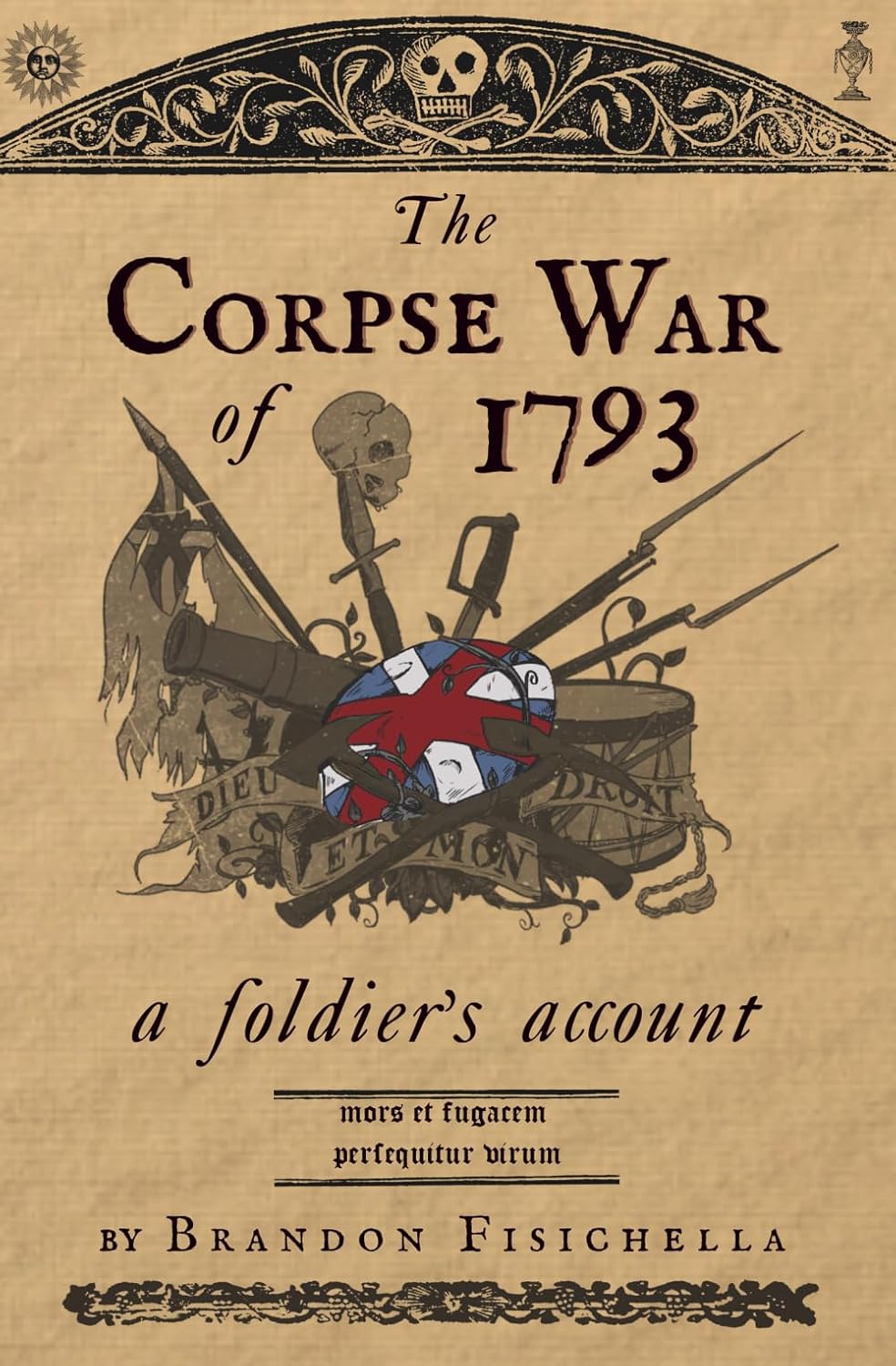

The Corpse War of 1793 is a grim and immersive work of historical horror presented as a British soldier’s account of an unnatural campaign in Norfolk, where rumors of walking corpses become a military catastrophe. What begins as barracks gossip about “Choleric Dead” soon carries the narrator and his comrades to Stowlham, a town gone quiet with dread, and then into a siege and battle where eighteenth-century discipline, muskets, artillery, and courage are tested against the dead. The book is not merely a zombie story in powdered wigs; it is a campaign narrative, a survivor’s confession, and a study of how quickly martial confidence can curdle into terror.
I was struck first by the book’s commitment to texture. The diction, illustrations, glossary, and mock-period apparatus could have become a gimmick, but instead they give the story a peculiar authority, as if some worm-eaten pamphlet had been pried from an archive and found still damp with fear. The military detail is especially strong. Marching orders, billet arrangements, sentry duty, weapon handling, regimental hierarchy, and battlefield formation all have weight. The horror works because the world around it feels so procedural. When the dead arrive, they don’t enter a vague gothic fog; they crash into a machine of rank, drill, punishment, and pride.
The novel understands that horror is not only what lunges from the dark, but what one must keep obeying after seeing it. The narrator’s guilt over John, Bennett, Richards, and the others gives the book its human pulse. I admired the way the story resists easy heroics. Men behave bravely, foolishly, cruelly, and tenderly, often in the same breath. The battle scenes are grisly and kinetic, but the quieter moments, the weeping in a tent, the empty streets of Stowlham, the postwar invalid limping away from the army, have the sharper blade.
The target audience is readers who enjoy historical horror, military fiction, alternate history, and survival horror with a serious appetite for atmosphere and period detail. Fans of Max Brooks’s World War Z will recognize the pleasure of a large-scale undead catastrophe treated with tactical sobriety, while readers of Bernard Cornwell may appreciate the mud, command structure, and hard-earned soldierly voice. The Corpse War of 1793 turns the undead into a matter of empire, drill, and conscience. It’s a musket-smoked nightmare that marches forward and bites like hell.
pages: 343 | ASIN: B0G5B1B3YZ

Posted on June 2, 2026, in Book Reviews, Five Stars and tagged author, book, book recommendations, book review, book reviews, book shelf, bookblogger, books, books to read, Brandon Fisichella, ebook, fiction, goodreads, historical fiction, horror, indie author, kindle, kobo, literature, nook, novel, read, reader, reading, story, The Corpse War of 1793, thriller, writer, writing. Bookmark the permalink. Leave a comment.



Leave a comment
Comments 0