Fate of the Helios: Over the Edge
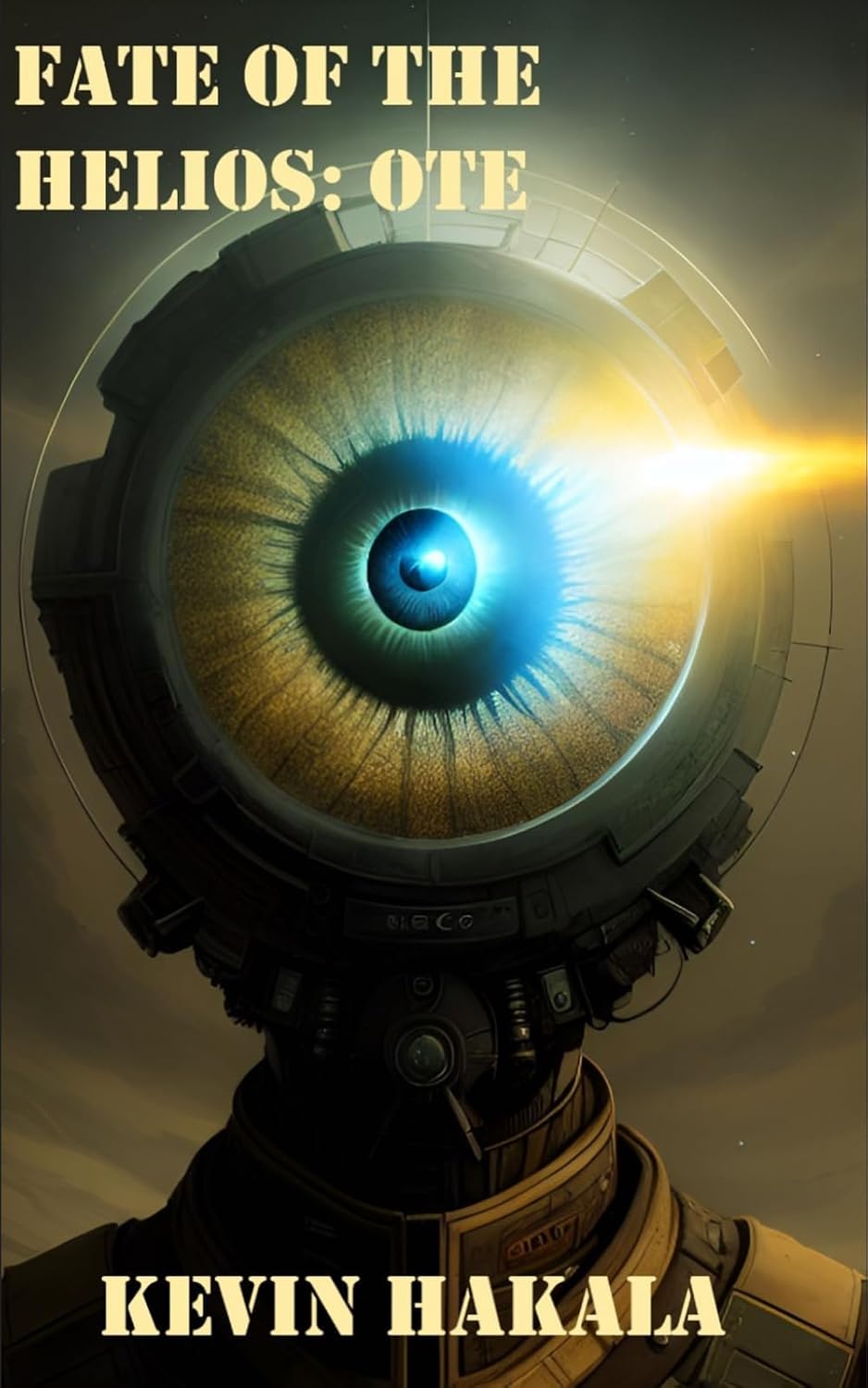

Kevin Hakala’s Fate of the Helios is an ambitious military science fiction novel that blends space exploration, interstellar warfare, political intrigue, and cosmic horror into a sprawling story about humanity’s place in the universe. Set in a future where Earth has united under the militaristic United Earth Coalition (UEC), the novel follows the crew of the Helios, an aging but formidable spacecraft whose mission takes a catastrophic turn. A devastating attack on the alien world of Sighten leaves the crew stranded on a mysterious planet, where they encounter dangers that challenge everything they understand about life, death, and reality. What begins as a story of military duty and survival gradually develops into something far stranger, exploring the consequences of humanity’s relentless pursuit of power and its tendency to treat the unfamiliar as a threat.
The novel’s characters give its enormous fictional universe a human dimension. Lieutenant Lauren Andrews, a gifted weapons officer whose upbringing has prepared her for a distinguished military career, occupies a particularly interesting position in the story. Her struggle with duty, personal responsibility, and the consequences of following orders becomes increasingly important as events unfold. The relationships among Andrews, Ortaga, Roth, and their fellow crew members bring warmth, humor, resentment, and genuine affection to an otherwise unforgiving environment. Major Henderson’s leadership and the tensions within the UEC introduce questions about loyalty, ambition, and the morality of military action. Hakala is especially interested in what happens when people who have dedicated their lives to an institution begin confronting the consequences of its decisions. The crew’s increasingly desperate circumstances bring those conflicts into focus, making their personal relationships as consequential as the extraordinary dangers surrounding them.
I enjoyed the extraordinary amount of attention Hakala gives to worldbuilding. The UEC has its own elaborate military hierarchy, specialized equipment, political factions, scientific developments, and social customs. Technical descriptions of spacecraft, weapons, and military operations sit alongside accounts of everyday life, giving the fictional society a substantial sense of history. The supplementary material, including technical specifications, descriptions of alien species, and additional accounts of life under the UEC, expands that world even further. Hakala’s prose is dense, highly descriptive, and frequently graphic, particularly when the story ventures into body horror and the disturbing possibilities of alien biology. His storytelling also moves between different periods and perspectives, gradually revealing the decisions that brought the Helios to its predicament. The combination of military detail, philosophical reflection, dark humor, and increasingly surreal encounters creates a distinctive atmosphere. At times, the extensive exposition and elaborate vocabulary slow the narrative, but they also reflect the sheer scale of the universe Hakala has constructed. The later chapters introduce fascinating ideas about consciousness, time, and existence that give the earlier events additional significance.
Fate of the Helios: Over the Edge will appeal most to readers who enjoy immersive, detail-heavy science fiction and are willing to spend time learning the history, technology, and complicated social structures of an unfamiliar universe. Fans of military science fiction will appreciate the attention to spacecraft operations, combat procedures, and the relationships between officers and enlisted personnel. Readers drawn to cosmic horror will find plenty to interest them as the story moves beyond conventional warfare into encounters with entities whose existence challenges human understanding. The novel’s graphic violence, unsettling imagery, and morally complicated characters make it particularly suited to an adult audience comfortable with darker fiction. There’s also a substantial philosophical dimension for readers interested in questions about free will, authoritarianism, humanity’s relationship with other civilizations, and the possibility that our understanding of existence is profoundly incomplete. Hakala has created a vast and often disturbing fictional universe, and the book’s combination of military adventure and existential mystery gives readers plenty to think about after the final chapter.
Pages: 500 | ASIN : B0C5Z3K9VK


Posted on October 1, 2026, in Book Reviews, Four Stars and tagged author, book, book recommendations, book review, book reviews, book shelf, bookblogger, books, books to read, colonization, cyberpunk, ebook, Fate of the Helios: Over the Edge, fiction, goodreads, indie author, Kevin Hakala, kindle, kobo, literature, military sci fi, nook, novel, read, reader, reading, sci fi, science fiction, space fleet, story, writer, writing. Bookmark the permalink. Leave a comment.



Leave a comment
Comments 0