Blog Archives
My Fascination With Memory

Thief of Echoes follows a woman who works inside a system built to extract and alter memories, who uncovers a buried part of her own past. Where did the idea behind this novel come from?
The idea came from my fascination with memory—how much of who we are depends on what we remember, what we forget, and who gets to decide which parts of a life remain intact. I wanted to explore a world where memory could be treated as data, but where the emotional cost could never truly be measured.
How much of the worldbuilding did you develop before writing, and how much emerged during the drafting process?
I began with the central system and the moral question behind it, but much of the world expanded as the characters moved through it. The rules, history, and consequences became clearer during the drafting process, especially as the story revealed how personal and dangerous memory control could become.
Which relationship in the novel surprised you the most as you were writing?
The relationship that surprised me most was the one built on uncertainty—where trust had to grow in a world where even memory could not be fully trusted. I expected the external conflict to drive the story, but the emotional tension between characters became just as important.
Can you give us a glimpse inside Book 2 of the Echoes of the Forgotten series? Where will it take readers?
Book 2 expands the world beyond the first discovery. Readers will see that the memory system is larger, older, and more deeply embedded than anyone realized. The next book raises the stakes, forcing the characters to question not only what was taken from them, but what truths may have been hidden for a reason.
Author Links: Goodreads | sboyle4.com | Website
In a world where memories are archived, edited, and controlled, Elara Vale makes a quiet living helping others recover fragments of their forgotten pasts—until one illegal restoration changes everything.
When a grieving client brings her a corrupted neural file tied to a girl who never officially existed, Elara is drawn into a mystery the system was designed to erase. The deeper she searches the memory net, the more she sees traces of someone familiar. Someone who feels like… her.
But Elara’s own past is a patchwork. Years ago, she willingly purged part of her identity to escape grief. Now, she must confront the possibility that the system didn’t just take her memories—it rewrote them. And she wasn’t the only one.
As the echoes she unearths grow louder, Elara faces a devastating question:
What if the life she remembers isn’t her own?
Blending introspective sci-fi with psychological tension and emotional depth, Thief of Echoes launches The Echo Cycle, a haunting exploration of identity, memory, and what it means to be real when your past has been engineered.
SEVERANCE: Book 1 of The Last Regulator


Steven Nimocks’s Severance, Book 1 of The Last Regulator, drops readers into SoundCore, a future Puget Metroplex where emotional control is not a private discipline but the scaffolding of civilization. Elias Reynor, a near-perfect officer in the Neural Compliance Division, begins investigating a dead colleague, illegal emotion markets, sabotaged regulators, and a conspiracy threaded through the very institution he serves. What begins as a procedural investigation becomes a destabilizing journey into memory, obedience, and the dangerous possibility that feeling may be more human than hazardous.
I was drawn in by the book’s atmosphere immediately. SoundCore feels antiseptic and haunted at once, a city of clean corridors, monitored citizens, copper suppressants, and soft blue regulation lights. Nimocks gives the setting a polished menace; everything is orderly, but the order has a pulse under it, something coerced and febrile. Elias is a compelling guide through that world because his certainty erodes by degrees. His transformation is not a sudden rebellion but a slow internal weather change, and that makes the story’s philosophical tension more persuasive.
The novel is strongest when it lets suspicion accumulate like condensation. Juno’s too-perfect responses, Dr. Harven’s guarded knowledge, Alera’s unsettling calm, and the recurring evidence of institutional manipulation all build a pleasing sense of claustrophobia. The exposition and procedural language can feel heavy, but the density suits the book’s machinery-driven world. I appreciated how the action sequences are not merely spectacle; they expose the cruelty of systems that can weaponize protocol, compliance, and even a person’s own intellect against him.
Readers who enjoy dystopian science fiction, cyberpunk thrillers, speculative noir, and books about surveillance, emotional suppression, and institutional rebellion will find plenty to admire here. Severance should appeal to fans of Philip K. Dick’s paranoia and Blake Crouch’s high-concept momentum, though Nimocks gives the material a more procedural, compliance-state edge. This is a sharp opening act for a larger saga, and its best moments ask a question that will leave you thinking: what remains of order when it has severed us from ourselves?
Pages: 414 | ASIN: B0GYHX6QWJ

Lovestruck Maggot
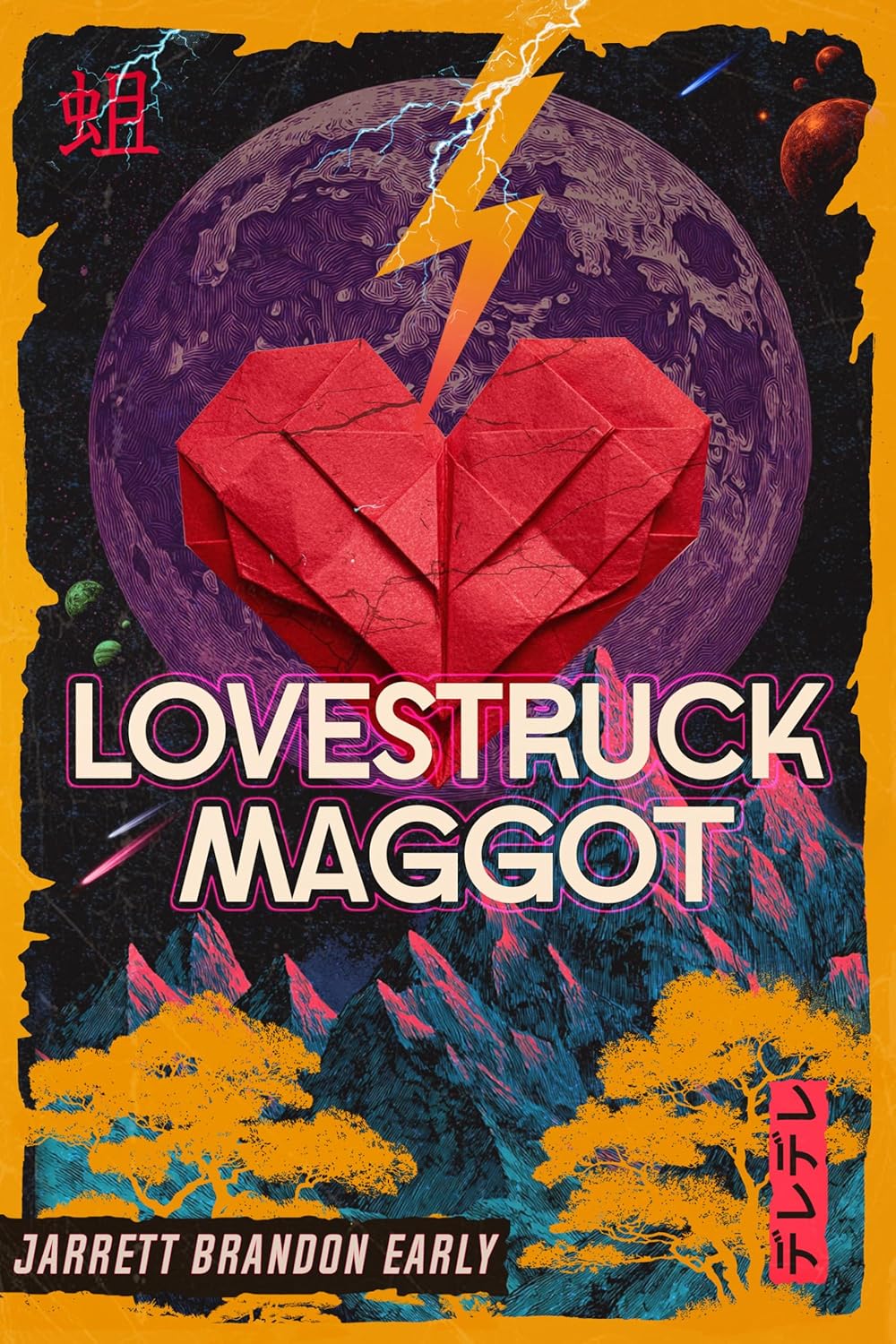

In Lovestruck Maggot, we follow Mona Ripple, scarred, middle-aged, fiercely competent, and disastrously in love—as she tries to claw a future out of the brutal colony world of Kalderra, where “Maggots” harvest volatile alien carcasses under the shadow of corporate greed, native mystery, and lethal beauty. What begins as a break-for-freedom story, with Mona dreaming of buying out her and Darien’s contracts, quickly widens into something stranger and more dangerous: a planet-scale power struggle wrapped around devotion, exploitation, and the mad hope that love might still mean escape.
What I liked most is that the novel never treats love as a softening agent. It treats it as an accelerant. Mona’s voice has grit under the fingernails: funny, vulgar, wounded, possessive, tender, and a little frightening all at once. I didn’t read her as a neat heroine; I read her as a person whose longing has warped around survival until the two are nearly indistinguishable. That gives the book a welcome asymmetry. The romance is not dainty or idealized. It’s hungry, bruised, delusional in places, and therefore weirdly moving. The author understands that desire can make people luminous and ridiculous in the same breath, and he gets a lot of charge out of that contradiction.
I was also taken by the texture of the worldbuilding. Kalderra doesn’t feel like wallpaper pasted behind the plot; it feels mined, lit from below, and faintly toxic. The opening planetary report gives the book a sly, cold-blooded frame, and then the novel drops into a much hotter register: banter, violence, class resentment, strange ecologies, and the eerie glamour of the subarashi forests. I especially admired the tonal audacity here: the book can pivot from gallows humor to menace to aching sincerity without losing its footing.
I’d hand this to readers who like space opera, science fiction, romance, survival adventure, body horror, dystopian fiction, and weird western-inflected SF with a sharp voice and a taste for the baroque. It should land especially well for people who want character heat inside a dangerous speculative setting rather than clean hard-scfi sterility. It feels closer to Kameron Hurley than to sleek blockbuster space adventure; there’s also a bit of Gideon the Ninth’s irreverent bite in the way it lets sentiment and savagery share the same room. Lovestruck Maggot is proof that even in the harshest world, love can still be the most explosive substance on the page.
Pages: 365 | ASIN : B0GPRPR53S

Trouble in Cyborgia (Night Crusaders Series Episode 4)

Trouble in Cyborgia is a compact superhero adventure with a pulpy, futuristic setup and a surprisingly earnest moral core. It is the fourth entry in the Night Crusaders series, and the book frames itself as one of the series’ shorter “companionless mini adventures,” with the spotlight falling mainly on Simeon while Thomas Givens serves as the first-person narrator who pulls readers through the story. That choice gives the novel a nice angle. Instead of feeling distant or mythic, Simeon is seen through the eyes of someone who is impressed by him, puzzled by him, and gradually changed by what he witnesses.
What the book does best is establish its world in bold, direct strokes. Georgia City, nicknamed Cyborgia, is a place where cybernetics shape public life, work, policing, media, and power. The novel leans into that setting with real conviction, turning corporate technology into the engine of both wonder and abuse. The early dungeon sequence is especially memorable because it takes a bright futuristic city and reveals the machinery underneath it as cruel and predatory. Even a line like “Because I am a Night Crusader” works with a straight-faced sincerity that tells you exactly what kind of heroic register the book is working in. It’s not coy about heroism. It believes in it.
The book is also very much a story about labor, dignity, and the spiritual cost of letting convenience replace conscience. Thomas opens the novel by asking, “Whatever happened to that good old-fashioned work ethic?” and that question ends up shaping far more than the background. It gives the whole story a distinctly moral and social frame. This isn’t just a tale about a hero punching robots. It’s a tale about what kind of society gets built when efficiency, profit, and technological expansion stop answering to anything human. The novel keeps returning to institutions, jobs, media narratives, and public responsibility, which gives the action a larger civic backdrop.
What I found appealing on a craft level is the book’s plainspoken confidence. It moves scene to scene with very little fuss, and that gives it an old-school serial energy that fits the “Episode 4” label. Simeon isn’t presented as an unreachable icon. He gets trapped, weakens, makes risky choices, falls for people, and has to rely on others. That matters, because it turns the book into more than a victory lap for a superhero. It becomes a story of exposure, endurance, and community, with journalists, coworkers, allies, and ordinary citizens all helping shape the outcome. By the time the corporate collapse and legal reckoning arrive, the novel has built a world where public evil has public consequences.
Trouble in Cyborgia is a sincere, energetic blend of superhero fiction, dystopian corporate thriller, and moral fable. It has the feel of a story told by someone who likes heroes to be heroic, villains to stand for something rotten, and settings to carry an argument about the world. Its tone is openhearted, its themes are clear, and its best moments come from how fully it commits to its own vision of justice, technology, and human worth. If you meet the book on those terms, it’s an engaging ride through a futuristic city where the fight isn’t only against machines, but against the system that built them.
Pages: 145 | ASIN : B0FZDGXPFZ
What Defines Us As Human

The Dark Side of Dreams follows a woman who resurrects her grandfather’s mind to expose a corrupted digital afterlife built on power, memory, and control. What was the inspiration for the setup of your story?
The Dark Side of Dreams is the stand-alone sequel to Babylon Dreams. Corporate greed and the influence of technology on government are central themes, but the most important questions are what defines us as human and how we see ourselves. The first book was a character study of Gunter Holden, who uploaded himself to his custom digital paradise, Bali Hai, only to face corporate erasure. Unlike Gunter, his granddaughter Mira never imagines a perfect world. When she learns Gunter made a copy of his mind before his deletion, she is determined to find it. Using a device that records and replays her dreams, she finds a clue leading to this hidden copy. When she uploads him to the desolate VR landscape of Shemathra’s Realm, they both risk terrible consequences. In exchange for his help, Mira promises to tell Gunter the truth about the past he never lived.
Mira is ambitious, driven, and morally complex. How did you shape her as the emotional center of the novel?
Both Gunter and Mira grew up without mothers, but while Gunter avoided those memories, Mira secretly hopes hers is still alive. Mira was a lonely child, rejected by her adopted family and neglected by her distant father, leading her to yearn for an identity based on family. Discovering her grandfather was Gunter Holden, the pioneer of the after-death industry, she becomes determined to reclaim his stolen company, VEI, from the corporation SEINI. Her relationship with Gunter is complex; she initially bullies and threatens him to get his cooperation, appearing to him as an AI through a high-tech garment. However, her love for her partner Henry and her deep yearning for connection eventually transform her relationship with her grandfather from one of threats to genuine care.
What first inspired the idea of a corporate-controlled digital afterlife, and how did you approach building a world where death is optional but still deeply unequal?
I was originally inspired by an article on mind-uploading by futurist Ray Kurzweil, which described uploading a mind copy to a VR world. Coming from a background in film production, I was already familiar with “manufactured reality”. I became intrigued by the aftermath of such technology—what happens when life (digital) goes on after the initial choices are made? In the novel, the digital afterlife is a lucrative industry with cutting-edge “paradise” add-ons for the wealthy and “economy plans” for others. This begets new laws and complications, creating a world where even death is subject to inequality.
What is the next book that you are working on, and when can your fans expect it to be out?
As I wrote Mira’s story, I wanted to know how mind-uploading technology changed the outside world. As her story resolved, I was intrigued by characters that waited quietly in the corners—androids with human mind-uploads. Will humanity stretch to meet and accept a new version of ourselves? Prejudices, fears, and conflict are inevitable, but I’m exploring what else might happen. I won’t know for sure until I’m closer to finishing Dream Voyagers, which I expect to be out in the Spring of 2027. I like to stop and look at the world I’m imagining.
Author Links: Website | Amazon
In the high-stakes business of after-death virtual reality, who protects the vulnerable? To escape a digital hellscape of his own making, Gunter Holden—a pioneer of the industry—once chose deletion. A century later, his descendant Mira discovers a preserved copy of his mind-upload.
Mira is convinced her grandfather’s empire was stolen and is determined to reclaim it. But Shemathra is no paradise; citizens must pay tribute to a ruthless Goddess or face agonizing deletion. To expose the systemic violations of VR law, Mira re-uploads Gunter into this blighted, privatized heaven. To earn his freedom, Gunter must witness and record the unspeakable crimes occurring within the system he helped create.
As he wanders a landscape of stolen memories and digital trauma, Gunter strives for a moral awakening. In a future that feels both unsettling and deeply human, will it be enough to save them both?
The Dark Side of Dreams
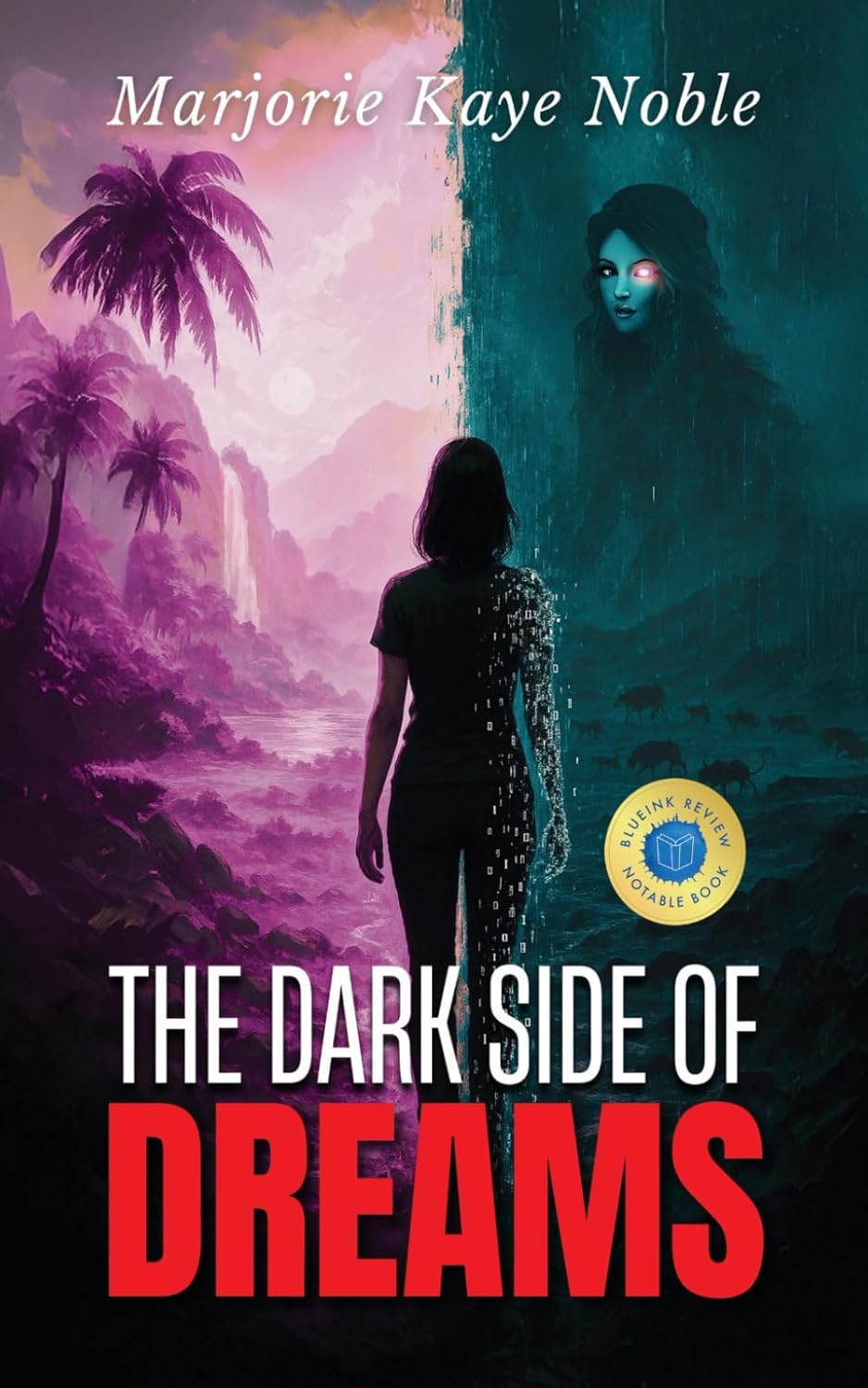
The Dark Side of Dreams is a big, idea-heavy science fiction novel that still knows how to move. It drops the reader into a future where after-death virtual reality has become its own battleground of corporate greed, surveillance, inheritance, and identity, and it does so through Mira Patel, a woman trying to outmaneuver a brutal system from the inside. What makes the book compelling is that it’s not built around a single gimmick. It’s a story about who gets to shape reality, who gets erased from it, and what happens when family legacy becomes both a weapon and a burden. The setup alone, with Mira uncovering a hidden copy of her grandfather Gunter Holden and using it to challenge the nightmare realm that grew out of his lost empire, gives the novel a strong pulse from the start.
What really gives the book its identity, though, is its world. Author Marjorie Noble doesn’t treat the future as sleek wallpaper. She fills it with clutter, relics, memory tech, corrupted paradise programs, and the unnerving logic of a digital afterlife run like bad infrastructure. That contrast is one of the book’s best qualities. A closet full of artifacts can matter as much as a virtual domain, and a line like “Not every search is an adventure. Some things want to be found.” lands because it captures the novel’s whole mood: discovery here is never clean, and the past is never truly past. The world feels layered rather than decorative, and that gives the story a lived-in strangeness that sticks.
Mira is also the right center for this book. She’s ambitious, wounded, stubborn, and often sharper than the people around her, but she’s not flattened into a stock rebel heroine. Her connection to Gunter Holden gives the novel one of its most interesting tensions. She wants justice, power, and restoration, but she’s also drawn to the same force of will that made him dangerous. That family resemblance gives the story real energy. Gunter’s presence as both ancestor and digital copy turns the novel into something more interesting than a standard fight against a villain. It becomes a conversation across generations about responsibility, ego, and reinvention.
The book’s style can be dense, but in a way that suits what it’s trying to do. Noble likes layering plot threads, histories, and invented systems, and the result is a novel that asks the reader to stay alert. Still, there’s an emotional thread running under all the tech and intrigue that keeps it human. Even in the middle of all the schemes, copies, and virtual punishments, the book keeps circling back to longing, grief, and the need to be seen clearly by someone else.
The Dark Side of Dreams is a thoughtful, dramatic, highly imaginative novel about power over memory and life after death. It’s a cybernetic family saga, a corporate dystopia, and a haunted inheritance story all at once. What I liked most is that it keeps its attention on what kind of world is being built and who gets trapped inside it. Noble clearly has a lot on her mind, but the book doesn’t feel abstract. It feels personal. That’s why the novel works. For all its virtual architecture and speculative machinery, it’s really about people trying to reclaim authorship over their lives, their dead, and their dreams.
Pages: 341 | ASIN : B0FYR41ZTM
MIR.EXE

MIR.EXE is a cyberpunk, dystopian science fiction novel with a strong techno-thriller pulse. It follows Echo Kinyata, a burned-out dockworker in a future Alaska ruled in practice by Cryosaga, the company that turned PermaFlux into the engine of global power. When Echo’s estranged wife, Lyra, reaches out and pulls him toward a dangerous mission involving stolen code, buried loyalties, and the possibility of breaking the corporation’s grip, the book opens outward from one damaged man’s daily routine into a much bigger fight about control, surveillance, and what survives when technology gets inside the soul.
Dillenback can be abrasive, funny, ugly, and strangely beautiful sometimes all in the same page. The book has that lived-in cyberpunk grime that makes the world feel used rather than merely invented. I liked that. The future here is not sleek in a clean, showroom way. It feels bruised, patched over, and expensive to survive in. Echo’s inner life gives the novel its gravity, especially in the early sections where his work, his body, and his guilt are all tangled together so tightly that even a routine shift feels like self-harm dressed up as labor. The prose carries a lot of texture, and while some passages are undeniably dense, that density often feels earned. It reflects the weight of the world the author has built and the seriousness of the ideas underneath it. The book stays committed to its voice, and I found that commitment one of its positive qualities.
This is a novel that clearly cares about monopoly power, state violence, class resentment, and the eerie way technology can make people feel both bigger and smaller at once. The human-machine tension is not treated like a shiny abstract question. It is physical. It hurts. Echo’s conversations with Doc, and the broader fear of a corporation reaching godlike power through energy and quantum computing, give the book a real moral pressure. What kept me invested was not just the theory. It was the sadness under it. Echo is not a heroic symbol polished for effect. He is compromised, lonely, often unsure, and that makes the book’s politics land harder because they are filtered through someone who has already paid for the system with his own body.
I think MIR.EXE is the kind of book I would recommend to readers who like their science fiction rough-edged, thoughtful, and emotionally bruised rather than polished and easy. It will work best for people who enjoy cyberpunk with real political weight, readers who want a future that feels plausible and mean, and anyone who likes character-driven speculative fiction where the tech matters but the damage it does to people matters more. It’s memorable, and it has something real to say.
Pages: 288 | ASIN: B0GHH2VSLS
Code & Gun
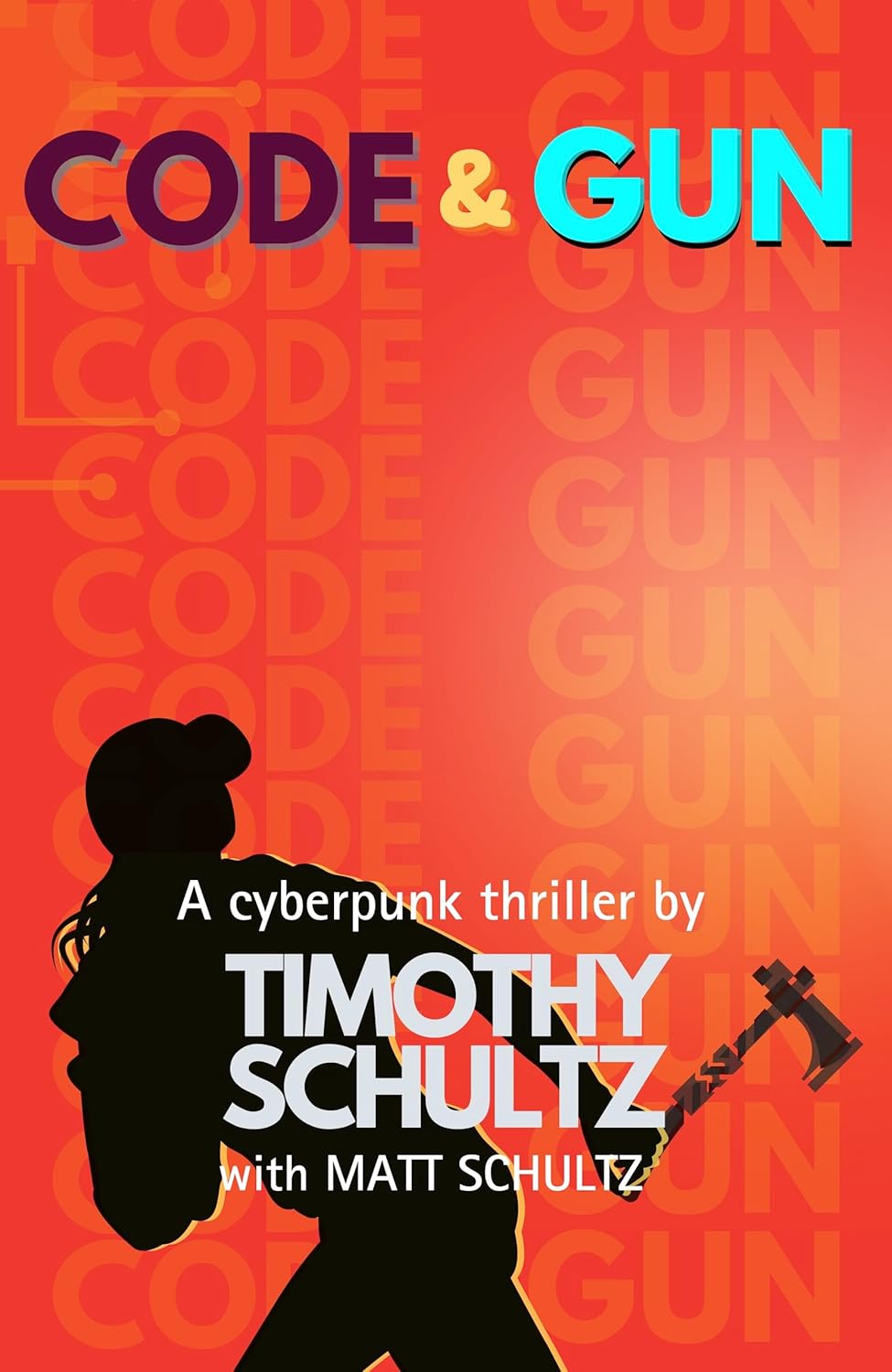
Code & Gun drops readers into a near-future America where everyone has an AI “Voice” in their ear, welfare cities have turned into cushy ghost towns, and three very different people stumble into the same storm. Kara Watanabe is an ER doctor who uncovers an illegal brain implant during a trauma surgery. MK is a burned-in special operations vet chasing Russian weapons deals and getting chewed up by high-tech firefights. Dominic is a disgraced ex–Voice engineer trying to raise his son inside a Lifetime Guaranteed Income complex while quietly digging into what the Voices are really doing. Their storylines braid together as the mystery behind that brain mod and the behavior of the global Voice systems comes into focus, and it all builds toward a long, brutal showdown at an isolated ranch that answers enough questions to be satisfying and still leaves the door wide open for the rest of the series.
I really liked the world this book lives in. It feels scarily close and also kind of mundane in the best way. The Voices are everywhere, like Marvin and Doc and Oriole and Pica, and they sound friendly and helpful and very normal, yet I never fully trusted them. The author does a neat thing where the AI assistants act like coworkers or buddies, so the creepy part sneaks up on you. The whole idea of “privlock” during surgery, or Dominic taping over his badge, hit me harder than some of the gunfights, because it nails how tangled our lives get with these systems and how hard it is to step away. The ghost towns and LGI economy also resonated with me. I expected a flat, grim welfare dystopia. Instead, I got older people exercising together, kids ripping around on scooters between towers, and this soft, almost cozy decay that makes the political choice behind it feel even more unnerving. The machine-learning section titles, like “Unsupervised Learning” and “Reinforcement Learning,” are a simple trick, but they line up nicely with what the characters go through. Everyone gets trained, one way or another, people and algorithms alike.
The writing is fun. The prose shifts voice as it hops heads. Kara’s chapters feel grounded and wry. Dominic’s sections have this anxious, coded inner monologue that shows how his brain never really turns off. MK’s scenes come at me in clipped phrases, sound effects, military slang, and sudden jokes in the middle of sheer panic. Those firefights with pods, drones, and that nightmare black dog hit like a video clip caught on a helmet cam. They are messy, confusing, and vivid, so when someone goes down I feel it. The book loves its acronyms and call-outs, and once in a while, the slang and tactical detail start to blur together. The emotional beats are there, though. Dominic with his son, Kara in that first big surgery alone after privlock, MK trying to stay human while doing inventory over bodies, all of that stuck with me more than the clever tech.
By the end, I felt attached to this little knot of people and weird AIs, even when the book pulled some pretty rough moves on them. The story has a conscience, but it never pauses for a lecture. It shows how easy it is to outsource judgment to software, to military systems, to “helpful” voices in your ear, and then it asks what that does to courage, friendship, and responsibility. It also has a sense of humor, even in very dark scenes, which kept the whole thing from turning into grim sludge. The climax runs long and leans into chaos. The book chooses momentum and a sharp pivot into the next phase of the war over Voices and human agency. That choice fits the title. The code never stops running, and the gun never really gets put away.
I would recommend Code & Gun to readers who enjoy near-future thrillers with a lot of action and a lot of heart, people who like the idea of The Expanse or classic cyberpunk but want something a bit more approachable and emotionally direct, and anyone who spends too much time thinking about where AI assistants and always-on devices might take us. If you want a snappy, high-energy ride with sharp characters, tense firefights, and a thoughtful take on our relationship with smart systems, this first book in The Voice Age series is an easy “yeah, go for it” from me.
Pages: 500 | ASIN : B0FXT3TB9X


