Memory Is Identity
The Many Lives of Adam Capello follows a sixteen-year-old boy who can remember lives spanning centuries, but as his past identities reveal unexpected abilities and a mysterious connection between lifetimes, his search for answers becomes a struggle to remain himself. What central question did you most want to explore through Adam’s journey?
To be honest, I started writing about Adam Capello in opposition about my father’s beliefs in Scientology. I wanted to show what a world would look like where Past Life regression was truly possible through a proven science that didn’t hide its techniques and results from their own followers. But as I followed Adam’s adventures through his past and listened to his thoughts and descriptions of the modern world he lives in, I realized he was leading us through a history of mankind, the universe, and everyone’s place in this construct that we call life. As his consciousness expanded, so did the reader’s viewpoint, to make us all question what we see, do, and contribute. I realize that’s quite a big concept, especially when you throw in quantum mechanics, dimensional space, and philosophy for good measure. Overall, I just wanted to stimulate ideas and discussion. It’s too big a subject to have any real answers. Funny enough, I’ve heard a couple of reviews from Scientologists since, and they love it!
How did you develop Adam’s personality and voice, and how did his understanding of himself change as he encounters increasingly different versions of who he once was?
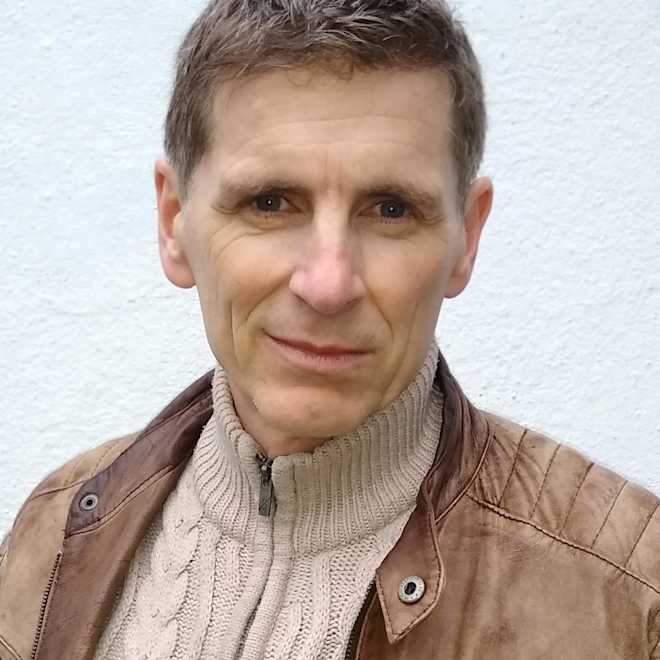
That was probably the easiest part – He’s just a younger, smarter version of me. The front cover is my son, and lately I’ve just managed to make an AI book trailer to bring that cover to life, showing Adam changing into a lot of his different personalities. Writing the story was like watching a very long film, where I’d have moments of watching him in my mind, deal with the challenges he was presented with. As he rapidly grew and matured during Awakening, I was able to go on that journey with him, using ‘our’ voice to tell the story.
How does the possibility of practical immortality complicate ideas about freedom, responsibility, and the value of a single lifetime?
Wow, that’s a deep question. The biggest part was that you cannot escape your past just because you change your face. As quickly described with the young Jewish girl finding out she’d once been Adolph Hitler. No more can evil dictators die in their sleep and escape justice as if it were the Mexican border. And, with the final challenge presented to Adam and Martin Kale, the whole world is going to have to learn to be more responsible and help each other.
What does the novel suggest about the relationship between memory and identity?
Memory is identity. We only have to see the devastating effects of Alzheimer’s or dementia to see how people have their identities slowly robbed off them over time. It’s horrific. The novel highlights that we are not just our own memory, but that we are everyone else’s memory. We live on in the minds of our loved ones… or people who despise us. That’s why so many powerful leaders are so worried about their legacy. To them, it is their immortality: to live on in all our minds after they have died. Winston Churchill is incorrectly attributed with writing, ‘History will treat me well, for I intend to write it.’ Says it all really.
Author Links: GoodReads | Facebook | Website | YouTube
Posted on October 6, 2026, in Interviews and tagged adventure, author, book, book recommendations, book review, book reviews, book shelf, bookblogger, books, books to read, ebook, fiction, goodreads, indie author, kindle, kobo, literature, M. W. Taylor, metaphysical, nook, novel, read, reader, reading, science fiction, story, The Many Lives of Adam Capello, time travel, writer. Bookmark the permalink. Leave a comment.



Leave a comment
Comments 0