Blog Archives
Memory Is Identity
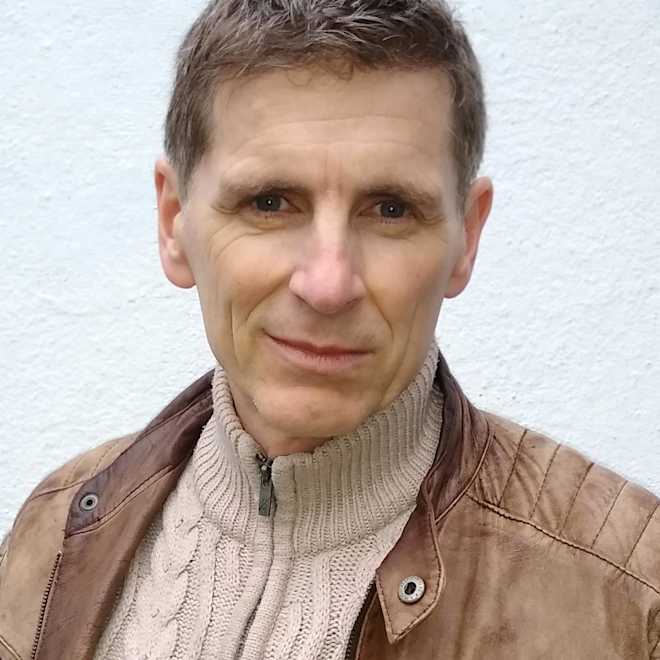
The Many Lives of Adam Capello follows a sixteen-year-old boy who can remember lives spanning centuries, but as his past identities reveal unexpected abilities and a mysterious connection between lifetimes, his search for answers becomes a struggle to remain himself. What central question did you most want to explore through Adam’s journey?
To be honest, I started writing about Adam Capello in opposition about my father’s beliefs in Scientology. I wanted to show what a world would look like where Past Life regression was truly possible through a proven science that didn’t hide its techniques and results from their own followers. But as I followed Adam’s adventures through his past and listened to his thoughts and descriptions of the modern world he lives in, I realized he was leading us through a history of mankind, the universe, and everyone’s place in this construct that we call life. As his consciousness expanded, so did the reader’s viewpoint, to make us all question what we see, do, and contribute. I realize that’s quite a big concept, especially when you throw in quantum mechanics, dimensional space, and philosophy for good measure. Overall, I just wanted to stimulate ideas and discussion. It’s too big a subject to have any real answers. Funny enough, I’ve heard a couple of reviews from Scientologists since, and they love it!
How did you develop Adam’s personality and voice, and how did his understanding of himself change as he encounters increasingly different versions of who he once was?
That was probably the easiest part – He’s just a younger, smarter version of me. The front cover is my son, and lately I’ve just managed to make an AI book trailer to bring that cover to life, showing Adam changing into a lot of his different personalities. Writing the story was like watching a very long film, where I’d have moments of watching him in my mind, deal with the challenges he was presented with. As he rapidly grew and matured during Awakening, I was able to go on that journey with him, using ‘our’ voice to tell the story.
How does the possibility of practical immortality complicate ideas about freedom, responsibility, and the value of a single lifetime?
Wow, that’s a deep question. The biggest part was that you cannot escape your past just because you change your face. As quickly described with the young Jewish girl finding out she’d once been Adolph Hitler. No more can evil dictators die in their sleep and escape justice as if it were the Mexican border. And, with the final challenge presented to Adam and Martin Kale, the whole world is going to have to learn to be more responsible and help each other.
What does the novel suggest about the relationship between memory and identity?
Memory is identity. We only have to see the devastating effects of Alzheimer’s or dementia to see how people have their identities slowly robbed off them over time. It’s horrific. The novel highlights that we are not just our own memory, but that we are everyone else’s memory. We live on in the minds of our loved ones… or people who despise us. That’s why so many powerful leaders are so worried about their legacy. To them, it is their immortality: to live on in all our minds after they have died. Winston Churchill is incorrectly attributed with writing, ‘History will treat me well, for I intend to write it.’ Says it all really.
Author Links: GoodReads | Facebook | Website | YouTube
The Many Lives of Adam Capello


M. W. Taylor’s The Many Lives of Adam Capello is an ambitious work of speculative fiction that combines reincarnation, historical exploration and philosophical inquiry into a story about identity and the nature of human existence. Set in a future where a process known as Awakening allows people to recover memories and abilities from previous lives, the novel follows sixteen-year-old Adam Capello as he begins exploring his own extraordinary past. What starts as a journey of personal discovery gradually develops into an investigation of consciousness, immortality and humanity’s place in the universe. Through Adam’s first-person journal, Taylor imagines a society fundamentally transformed by the ability to retrieve the experiences of countless generations. This intriguing premise raises the question at the heart of the novel: as people accumulate the knowledge and personalities of their former selves, “do we lose ourselves?”
Much of the novel’s appeal lies in the variety and historical detail of Adam’s recovered lives. His experiences range from Victorian Britain, where he inhabits the body of pioneering photographer William Umpleby Kirk, to the brutality of plantation slavery, the philosophical debates of ancient Greece and encounters with medieval alchemists. Taylor uses these contrasting experiences to explore how historical circumstances shape individual personalities, beliefs and moral judgments. The vivid descriptions of Victorian photographic techniques are particularly engaging, while Adam’s traumatic experiences as an enslaved man demonstrate the profound psychological consequences of Awakening. The book’s journal format gives Taylor considerable freedom to move between periods, introducing historical figures and examining the social implications of rediscovering the past. Adam’s conversational voice, youthful humour and growing self-awareness provide continuity throughout these journeys, making his development as a character central to the narrative.
Beyond its historical adventures, the novel examines the ethical and emotional complications of a world in which death has acquired an entirely different meaning. Questions of criminal responsibility, romantic relationships, religious belief and personal freedom emerge naturally from the premise of reincarnation. Adam’s encounters with his former identities also expose him to grief, depression, love and violence, forcing him to confront aspects of himself that he struggles to reconcile with his present personality. His relationships with Millie, his family and his Awakening facilitator, Mike, provide an important emotional foundation as his experiences become increasingly unsettling. Taylor’s willingness to explore these ideas at length gives the book a distinctly philosophical character, with some chapters reading almost as personal essays interspersed with historical adventures. As the recurring mystery of the crystal skulls develops, the narrative shifts toward a larger science-fiction story involving ancient civilizations, advanced intelligence and the possibility of accessing both past and future lives.
The novel’s final chapters bring its historical, philosophical and speculative elements together as Adam’s unusual abilities attract the attention of Martin Kale, the scientist responsible for developing Awakening. Their investigations expand the story beyond individual reincarnation into questions about time, dimensional existence and the future of humanity, culminating in discoveries that open the way for further exploration. Yet the emotional significance of Adam’s journey remains rooted in his present life. Reflecting on the importance of his family and friends, he observes, “They are the ones who help glue my present identity, keeping me in the here and now.” This sentiment captures one of the book’s most compelling ideas: that the accumulated wisdom of many lifetimes acquires meaning through the relationships and choices of the person experiencing them. With its combination of historical detail, accessible philosophical discussion and increasingly expansive science-fiction concepts, The Many Lives of Adam Capello offers a thought-provoking exploration of what it means to be human when a single lifetime is only a small part of existence.
Pages: 300 | ASIN : B06ZZXBMHN



