Fairness and Equality
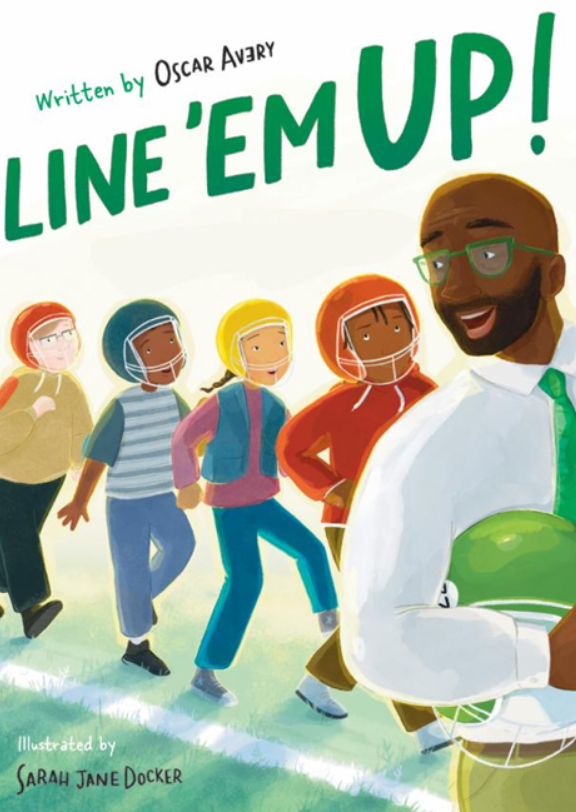
Line ‘Em Up! follows a group of students whose world is changed by a new teacher who shows them how to find the greatness inside themselves. What was the inspiration for the setup of your story?
I was incredibly fortunate to have one of my early stories critiqued by the late James Alan McPherson. He once told me that the most powerful stories are often about ordinary people placed in extraordinary situations. That idea stayed with me, but as a special education teacher, I found myself drawn to the reverse: extraordinary individuals navigating what the world considers ordinary.
My students—many of whom have disabilities—work every day to master skills that others take for granted. Something as simple as forming a straight line can be an enormous triumph. That contrast fascinated me. I wanted to explore the dignity, determination, and quiet heroism embedded in those moments.
So I paired these extraordinary children with a teacher who is extraordinary in a very different way—a former professional football player who once seemed invincible, now facing the realities of chronic traumatic encephalopathy. Placing these two worlds side by side allowed me to explore resilience, vulnerability, and the ways people lift one another up.
Ultimately, I hoped to create a story that resonates because we all know someone who appears larger than life, and we all know someone who faces daily challenges due to disability or illness. Line ’Em Up! brings those experiences together in a way that I hope feels both heartfelt and universal.
Is there anything from your own childhood included in the characters in Line ‘Em Up?
Growing up in Massachusetts in the 1970s, I saw how students in special education were often separated from the rest of the school. I didn’t understand it then, but as I grew older and became a special education teacher, I learned that those classrooms held a wide range of students. Some were there because of genuine cognitive disabilities, while others were placed there due to emotional trauma, unstable home lives, or circumstances far beyond their control.
That understanding shaped the way I think about fairness and equality—two ideas I consider very different. Equality means everyone gets the same thing; fairness means everyone gets what they need. That distinction has guided my teaching and deeply influenced Line ’Em Up!
While none of the characters are based on specific individuals, the emotional truth of the story comes from witnessing how children grow when they’re understood, supported, and included.
The artwork in your book is wonderful. Can you share with us a little about your collaboration with illustrator Sarah Jane Docker?
One of the main reasons I reached out to Sarah Jane Docker is simply because she’s an exceptionally talented illustrator. When I looked through her portfolio, I immediately felt she was the right fit for this story. Her characters didn’t look like the typical, polished industry illustrations you see everywhere—there was warmth, honesty, and a lived‑in quality to her work that felt real.
Representation was also incredibly important to me. According to a 2019 study by the Cooperative Children’s Book Center, only about 3.4% of children’s books feature a main character with a disability. When I saw that Sarah naturally included Black, white, Asian, and disabled characters in her illustrations—not as statements, but as part of the world she creates—I knew she understood the heart of this book. That says a lot about an illustrator.
I also want to highlight the tremendous contribution of our layout artist, Anna Lubecka (and her husband Greg), founder of Banana Bear Books. The collaboration between Sarah and Anna elevated the entire visual experience. Without their combined talents—the illustrations and the thoughtful layout—the artwork wouldn’t resonate with readers in the memorable way it does now.
What were some ideas that were important for you to share in this book?
Several ideas were especially important for me to explore in Line ’Em Up! One is the distinction between fairness and equality—a theme that runs through both my teaching and my writing. Equality means everyone gets the same thing; fairness means everyone gets what they need. That difference matters deeply in classrooms and in life.
I also wanted to play with the contrast between the extraordinary and the ordinary—how children who are often overlooked can show remarkable strength in everyday moments, and how something as simple as forming a straight line can become a powerful act of growth and pride.
And finally, the idea of “Champions” versus “Champeons” is woven into the heart of the story. Readers will understand the meaning once they experience the book, but it speaks to the difference between looking like a champion and truly becoming one.
These themes guided me as I wrote, and I hope they resonate with readers of all ages.
Author Links: Instagram | Email
Posted on January 24, 2026, in Interviews and tagged author, book, book recommendations, book review, Book Reviews, book shelf, bookblogger, books, books to read, childrens books, ebook, goodreads, indie author, inspiring stories, inspiring stories life lessons, kindle, kobo, life lessons, Line 'Em Up!, literature, nook, novel, Oscar Avery, picture books, read, reader, reading, story, writer, writing. Bookmark the permalink. Leave a comment.



 LITERARY TITAN
Leave a comment
Comments 0