Blog Archives
The Boy From Vines


The Boy From Vines is a historical fiction novel with a strong mystery thread and a light current of romance running underneath it. It begins with Ruth, a historian traveling in France, finding an old journal in an antique shop in Paris. The journal belonged to Joseph Durand, a young man in Nazi-occupied France whose entries move from ordinary vineyard life into fear, hiding Jewish families, loss, and dangerous acts of rescue. What follows is part wartime story and part present-day search, as Ruth traces Joseph’s path through Rouen and Normandy, uncovering family records, graves, photographs, and living descendants until the past stops feeling distant and starts pressing directly against the present.
I enjoyed the book’s sense of intimacy. Author Nicholas Teeguarden writes in a way that keeps readers close to the page. The journal entries give Joseph a quiet, steady voice at first, and then the pressure builds until even the simplest details start to feel loaded. I liked that choice. It lets the horror arrive by degrees instead of turning every scene into a performance. Ruth’s sections can be earnest, even openly emotional, but for me, that mostly worked because the novel is clearly invested in memory, witness, and what it means to treat history as human before treating it as argument. At its best, the prose has a patient, lamp-lit quality. It feels less like being told a story and more like sitting with someone who found something important and cannot quite get over it.
This is not just a World War II novel about danger and bravery. It’s also a book about archives, inheritance, and the uneasy line between evidence and belief. Ruth is not simply uncovering facts. She is constantly asking what kind of truth can be responsibly claimed from fragments, journals, graves, parish records, and family stories. I found that genuinely interesting. It gives the novel a professional edge that sets it apart from more straightforward historical dramas. The book does lean into coincidence and emotional symmetry in a way that some readers will embrace. I didn’t mind it much, because the story knows exactly what it cares about. It cares about names. It cares about remembrance. It cares about the moral weight of not letting people vanish twice, first in history and then in memory. That lands.
I came away feeling that The Boy From Vines will mean the most to readers who enjoy historical fiction that is reflective rather than flashy, especially if they like wartime stories told through personal documents, family memory, and the slow assembly of truth. I would recommend it most to people who enjoy novels where history, mystery, and emotion are braided together, and to readers who do not mind a story that pauses to think about what the past asks of the living. It is thoughtful, sincere, and easy to stay with. For me, that was the book’s real strength.
Pages: 317 | ASIN : B0GNKT6WKK

Tailor-Made for Historical Fiction

Operation South Pacific traces how James A. Michener transformed wartime experience into Tales of the South Pacific—and how those stories became South Pacific, a landmark musical that dared to confront racism on the American stage. What drew you to James Michener as a subject for historical fiction?
I’ve followed the life of James Michener for over twenty years. I spent four years researching and writing his biography (2005). I have always been impressed and inspired by his dedication to his craft, and it was his duty in the South Pacific that launched his extraordinary career. Over the fifty-year span of his career and in many of his novels he explored the culture and history of the nations of the world. It was his beginnings in World War 2 to the debut of the musical South Pacific that I find the most compelling. Such a courageous ascent on his part was tailor-made for historical fiction.
What surprised you most during research about the Pacific theater?
One of the surprising things I found about Michener was the number of people he encountered during his tour of duty. He met Melanesians, Polynesians, Tonkinese, Japanese, naval personnel and civilians.
These diverse voices helped provide the depth and veracity of his first novel Tales of the South Pacific.
How did you balance documented history with imaginative reconstruction?
I was very careful to stick to the truth. Why? Because the truth in this case was far more interesting and surprising than any sensationalism I could have added to the scenes or dialogue. That is why I tried to balance the historical record of the war with the personal lives of his central characters.
What is one thing that you hope readers take away from Operation South Pacific?
Of all the writers I have studied, I have not found any backstory more engrossing than James Michener’s rise to fame. If there is one thing I would like to readers to come away with, it is this. If you want to be a writer, dive into the task, absorb as much as you can about your fictional environment, keep steady, believe in your mission, and don’t waste time worrying about becoming a best-selling writer. And who knows, you just might create something of value that readers love, and editors admire. Perhaps, like James Michener, unimaginable and wonderful results will come from your efforts.
Author Links: GoodReads | Amazon
While attempting to write about his war experiences and fulfill his military obligations, Lt. Michener encounters several unforgettable characters: a churlish Tomkinese field worker named Bloody Mary; a patriotic French planter willing to fight for the Free French in the islands; a remarkable American nurse who will change his life; and a motley but valorous band of fighting men.
This is the inspiring account of how one man with a story to tell rose from complete obscurity to become one of the most honored and distinguished writers of the past century. Fighting self-doubt and the blanket indifference of the book industry, Michener published Tales of the South Pacific in 1946. The novel eventually attracted the attention of Broadway superstars Rodgers and Hammerstein, who adapted his prize winning account into the one of the great stage musicals of all time, South Pacific.
In this story based on true events, James Michener overcomes whatever obstacles are placed in his way by using his creative bravery, his Quaker humility, and his uncompromising search for the truth to win the hearts and minds of his readers.
Operation South Pacific is a must read for all aspiring authors and artists.
Forgotten History

On the Wings of Flying Tigers follows a Florida farm boy turned pilot who goes from rural poverty into the morally uncertain skies of prewar China, where choosing to act may matter more than choosing sides. What was the inspiration for the setup of your story?
The almost forgotten history of the Flying Tigers, how they began our unofficial entry into the Second World War.
I used my recollections of a place where I had lived for several years, Palatka, Florida, to make the story more lifelike. As writing instructors say, “Write about what you know.” This farm town launched my story.
What boy doesn’t marvel at his first sighting of a prop plane sputtering overhead? I, too, held that fascination, but unlike my main character, I did not pursue that curiosity into a lifetime career. I chose instead the study of microbes that led to my becoming a pathologist. It’s a story about early impressions and where they might lead us.
One of the book’s strongest tensions is moral rather than military. Why did you want to focus on prewar ambiguity instead of clear-cut conflict?
Life is a constant struggle between what is right and what is easy. People are constantly torn between which fork in the road to take. Often lost in the noise of battle is the tenderheartedness of those in the trenches. I chose to focus on this aspect and not create just another story filled with bombs dropping and active trench warfare.
The book lingers on mechanical, physical details—oil-stained hands, training rituals, engineering problem-solving. Why were those moments important to you?
I felt it was important to transmit the experience of working on these machines, the training involved in getting the skills to put together these marvelous machines, and the constant technical attention to maintaining them to be airborne ready quickly to save lives. The mechanics who work on these fighter planes are unsung heroes.
What do you hope readers take away about conviction, courage, and responsibility?
I hope my readers take away the understanding that courage and conviction in doing what’s morally right isn’t always easy. One must live with the consequences of one’s choices, which may not be those that were truly right for us at the time.
Author Links: GoodReads | Amazon
But dreams come at a cost. Determined to serve and soar, Albert joins the military, enduring grueling hardship and sacrifice as he rises through the ranks. His journey eventually takes him halfway around the world, where he becomes part of the legendary Flying Tigers—an American volunteer group fighting under the Chinese Army’s banner during World War II.
In the cockpit, Albert finds the freedom he’s always sought. Yet every mission tests not only his courage but his very sense of self, reminding him that true freedom often demands the highest price.
A Personal Journey

In the Face of the Foe is a collection of three tales following British prisoners of war struggling with choices that could either end their lives or set them free. What was the idea, or spark, that first set off the need to write this book?
My grandfather endured the majority of the Second World War as a prisoner of war. As a child, my limited memories of him are of a quiet, withdrawn man, who spent a large part of the day either in bed smoking his hand-rolled cigarettes or absent down the local pub. Now an adult and novelist, with a better understanding of the past and the suffering that forged the man I knew, I wanted to ‘talk’ about the world he was unable to: celebrate his and all his fellow POWs’ bravery and endurance. Through no fault of their own, they found themselves confined and forgotten as the world focused on the combatants and battles, while those lucky enough to return home after the war received no hero’s welcome, carrying guilt and their trauma for the remainder of their lives. So, I wanted to write a series of character-driven adventures, which never shun the darker side of prisoner of war life, but afford the protagonists their moment in the sun, replacing the unrelenting boredom of confinement with a heroic burst: a fact-based framework, supporting some fantastical adventures. This was not about claiming some unwritten truth but manoeuvring through the bustling crowd of heroic men and women from this golden generation and ensuring the POWs are noticed amongst them too.
How much research did you undertake for this book, and how much time did it take to put it all together?
Like all my novels, there is a long gestation period as ideas form, and I develop my knowledge, laying the foundation upon which I build my characters and narrative. Understanding my grandfather’s military service was a personal journey, not driven by a desire to borrow for my writing, but it certainly inspired me. Within the UK, family members can request the service records of those in the military in WW2. The documents are all penned in a matter-of-fact manner, with entries like ‘missing in action 25 May 1940’ or ‘war crime witness’. It stirs more questions than answers and encourages the author to populate the holes. Fortunately, we also have excellent regimental museums, holding the official records of the actions of their battalions. I was most grateful to receive from one of the select paragraphs which told the sorry tale of my grandfather’s battalion and its short-lived role in the first year of the war. Combining this personal research with the benefit of wonderfully researched non-fiction books and memoirs of survivors gave me a hint at the world to implant my hero within. As an author of adventure tales, I occasionally utilized my artistic license to bend the historic facts, adjusting the scenery for the action, but keeping it within an accurate historic stage remained important, and this would have been impossible without the contribution of other sources.
What were some themes that were important for you to explore in this book?
War is abhorrent and not worthy of celebration. However, the individuals dragged into war always have a worthwhile story to tell. The human spirit is tested to the extreme: there is the worst of humanity and the best, and it’s often the case that one side or one individual carries elements of both. In these tales, choice has a small role; it is necessity with survival at stake that shapes the lives of the prisoners. How they react, pull together, break down, recover, ride their luck, or make it through tells us about their core character, the weaknesses, and strengths. The final story in the collection is very important because, although told after the war, it explores how the experience of war and imprisonment has shaped and scarred Jock. His fight to survive the war did not end in 1945, and on release from the stalags, it followed him and directed him until his death in 1984. I question the legitimacy of the old adage, what doesn’t kill you makes you stronger, but there is something admirable about finding the strength to survive what killed so many others.
What is the next book you are working on, and when will it be available?
From the past, I will return to the future and work to finish the third and final book in my Liberty series, a dystopian adventure that explores the meaning of freedom in a broken world. Previously, the novels looked at how fear and ignorance impinge on our liberty (Liberty Bound) and how lies and illusions can be confused for freedom (Where Liberty Lies). In this final work, I want to explore the fragility and endurance of liberty, delivering my protagonists into another maelstrom of danger and suspense. It could take a while to finish it, so I may also take a small diversion to write a children’s novel. Too many children’s books unsubtly preach today, and I have in mind an old-fashioned treasure hunt adventure, where the children succeed because they do what children do: make mistakes, cause mischief, but grow through friendship, role models, and experience.
Author Links: GoodReads | Facebook | Website | Amazon
After surrendering to the all-conquering Wehrmacht in France in May 1940, Jock faces five years of captivity in distant Poland under the brutal Nazis, and a lifetime of trauma and torment from his memories. Disarmed and forgotten, starved and mistreated, Jock and his friends have their own battles to fight; none greater than surviving the war and then rebuilding their lives.
Triumphant Where It Dares Defy (1941) – For those in the British army captured holding back the advancing Germans, allowing their comrades at Dunkirk to evacuate, things look grim. The Nazis have stolen their freedom and dignity, but after a year in captivity, it’s time to steal something back. Against his better judgement, Jock Mitchell finds himself at the centre of a brazen plan to give Hitler a bloody nose. To succeed, he needs to break out of the prison camp… and back in.
A Place More Dark (1945) – After five years of hell, it’s about to get worse for the prisoners of Stalag XXA. Pawns in a deadly World War endgame, victory for the starved inmates is surviving their brutal Nazi overseers and an unforgiving winter’s march across Europe. Weak and a shadow of the man he once was, Jock still finds the strength to rescue the most unexpected of companions from the dangers of war-torn Europe. (Literary Titan Gold Book Award winner, Finalist in the Independent Authors Network Book of the Year Award 2025)
For All the Treasures Buried Far (1948) – (exclusive to this edition) – Germany has surrendered, but for the survivors from Stalag XXA, their war never ends. Still a prisoner of the ghosts and demons from his time as a captive under the Nazis, Jock returns to Poland, where death offers a drastic means of escape from his internal torment. But a greater, more appealing prize awaits if he can survive one last adventure in a new type of war against an old ally turned enemy, the Soviet Union.
In the Face of the Foe

In the Face of the Foe brings together three wartime tales that follow British prisoners of war and the strange mix of fear, grit, and shaky hope that shapes their survival. The story opens inside Stalag XXA, where boredom and danger sit side by side. Men spar, argue, dream, and stumble into choices that could kill them or free them, sometimes on the same night. The early chapters move from camp politics to tense missions beyond the wire, and the book keeps piling on moral knots that force each character to decide what they are willing to risk and who they want to be.
As I moved through the book, I felt myself leaning in, drawn by the rough humor and the raw strain between the men. The writing feels direct and sharp. It never hides the ugliness of fear. It also never forgets that soldiers can be petty and foolish and brave all at once. I liked how the author gives room for small moments that say more than the big ones. A quiet exchange over stolen cherries, the sting of a bad joke, the uneasy pause when a guard appears in the dark. These details felt honest, and they gave me a sense of standing right there in the mud with them. The dialogue sometimes slips into playful banter, and I found that mix of light and dark strangely comforting. It felt real in a way that polished war stories often miss.
The book kept raising questions without preaching. What does loyalty look like when every man is starving? What does courage mean when the cost falls on someone else? Some choices hit hard. One scene with a child had me holding my breath because the moment felt too close to the edge. The tension built slowly, then snapped tight. The writing does not tidy up the mess afterward, and I appreciated that honesty.
It is a story for readers who enjoy wartime fiction that focuses more on people than battlefields. Anyone who likes character-driven plots, moral puzzles, and a close look at the fragile ties that hold people together will find a lot here. I would recommend it to readers who want grit without glamor and heart without sentiment.
Pages: 508 | ASIN : B0G1K6GG7F
Hard Evidence
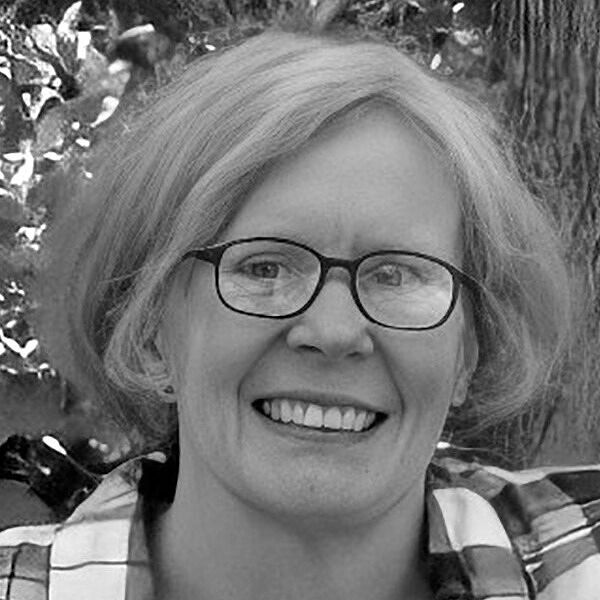
Red Anemones follows a woman’s search for her buried Jewish heritage, unfolding into a multi-generational story of love, resilience, and moral awakening across 20th-century Germany and America. What inspired you to explore your genealogy, and how did that journey shape Red Anemones?
Since I come from a small family, I’ve never been particularly interested in genealogy. There aren’t that many of us that I know about, especially on my mother’s side. Both my parents were the youngest in their families by nearly a generation, so I never met my grandparents or very many extended family members personally on either side, and in most cases, have never seen pictures of them, so I’ve never given any of them much thought.
Then, one cold and rainy Sunday afternoon in late winter of the second year of the COVID crisis, for reasons that involve boredom but otherwise remain a mystery to me, I decided to search my maternal grandmother’s name on a genealogy site, and one thing led to another. I learned that her mother, Bertha Michael, immigrated from Germany, passing through Ellis Island late in the 19th century. Finding that her surname was of Jewish origin, I learned that 446 records containing that surname end in Holocaust death records. Further investigation suggested that 49 of these individuals were likely either directly or indirectly related to my great-grandmother and, by extension, to me. I sat with the emotional chaos and horrifying realization that I had family members who died in Nazi death camps, induced for more than a month, allowing it free rein to sort itself out.
Discovering I was a matrilineal Jew confirmed something I’d long suspected, had hard evidence to support, and was thrilled to know is true. But this was all I knew, because throughout her life, each time I tried to talk to my mother about it, she was struck deaf and refused to acknowledge this reality in her life – and in mine.
Meanwhile, Bertha has taken up rent-free residence in my head and refuses to leave. Ultimately, I determined I had no choice except to write her story as best I could imagine it, given I knew almost nothing about her.
The novel balances historical scope with intimate emotional depth. How did you find that balance in your writing process?
Once I decided to write Bertha’s story, it took on a life of its own, and I just followed the characters wherever they wanted to go, letting them do what they wanted to do and say what they wanted to say. I was merely the vehicle through which they expressed themselves, and I encouraged them to write their own story with the least amount of interference possible from me. They were all very articulate, which made my job much easier.
Nathalie’s internal struggle between duty and freedom feels personal. Was she drawn from your own experiences or someone in your family’s history?
Good question! My best guess is that on some level, nearly every woman of Nathalie’s generation struggled with the conflict between what they wanted for themselves and what society, culture, family, and religion demanded of them. It seems to me this struggle is historical, universal across generations, and endemic to the female experience, and in that sense, there is a personal component to Nathalie’s struggle. However, I made different choices than she felt she could make.
While women today have more freedom, choices, and opportunities than Nathalie did, many continue to face the challenge of balancing what they want for their lives with what others expect of them. What’s very interesting to me on a personal level is that my mother, her sister, and her brother all graduated from major colleges/universities, which was almost unheard of for women, and for many men, in early 20th-century America, and was an expectation that was passed down to me.
The prose feels deliberate and lyrical. Which writers or works most influenced your style and storytelling voice?
This is a hard question to answer because my characters define the style and voice of the story themselves. I focus my efforts on character development, then put the characters in charge of the story, get out of their way, and let them tell it however they want to. If I disagree with where they’re going, I invite them to take a walk so we can discuss it, with a view toward finding common ground we can both live with. My intention always is to create characters who, one way or another, are good storytellers, then let them do what they do best.
In terms of non-fiction, David Marraniss is one of the most beautiful writers I’ve ever read in terms of both style and storytelling ability. His descriptions bring a story to life in ways most non-fiction writers don’t.
Fiction, however, is a little different in that there is much more room for creativity and imagination, and no two authors are alike in terms of how much control over the story and their characters they exert, how much they surrender to their characters, and how much they retain for themselves.
Author Links: GoodReads | Facebook | Website | Amazon
Natalie Barlow’s journey of self-discovery begins when her estranged mother’s sudden death releases a storm of unrevealed family secrets reaching back to pre-WWI Germany.
As Natalie navigates the complexities of her newly discovered Jewish identity and her ancestral heritage, she comes face-to-face with the early 20th-century German immigrant experience, which included strong anti-German sentiment and deep antisemitism that prevailed across America.
Through diaries and letters her mother saved, Natalie learns of the personal costs this ugly reality extracted from generations of her own family. Ultimately, she must confront the question of her own identity.
Like Israel’s red anemones carpeting the western Negev and Dvira Forest of the Judean foothills year after year, Natalie is determined, no matter the personal costs, to find the courage, resiliency, and passion to embrace the changes that bring new beginnings. Inspired by a true story.
To Inspire and Enrich

Growing Up O’Malley is a Historical Fiction novel, based on true stories from your family, of an Irish immigrant couple raising seven boisterous children in Ohio during the early 1900s as they face famine, war, love, heartbreak, and rebirth. Why was this an important book for you to write?
It’s a gentle reminder of life’s simplicity before the onslaught of technological advances. Stories passed down from my parents, and interviews of their remaining siblings (some passed before my journey as an author began) reveal lives searching for purpose and a quest for truth. They highlight the importance of a common sense approach to life’s dilemmas as a universal convergence present throughout history. Reliance on faith, love, and empathy applied to everyday life serve as mainstays toward understanding one another. Life has become divisive and Growing Up O’Malley transports the reader to a time highlighting the application of these principles in our search for individual peace.
Since you based this book on true events from your family history, how did you decide what to include and leave out in your book?
The goal of my writing is to inspire and enrich the reader, hopefully uplifting those facing insurmountable odds. The majority of stories in Growing Up O’Malley are based on facts with a touch of blarney to make them enjoyable. One example is the 1923 birth of my aunt, Veronica O’Malley Collins, clearly before my time. My aunt, Marge O’Malley DuChez, told me two important facts: (1) a bundle was placed on the kitchen table and Marge, the oldest, believed it was a doll until it moved. Her iconic response, “It’s a bay-by” was included exactly as she relayed; and (2) William O’Malley was heartbroken because his father promised him the next baby would be a boy—upset with yet another girl in their abode, he tried to ignore her. With these two facts, I mentally travelled back in time and imagined my own mother’s response at the age of three! I could feel my mother’s smile from heaven as I relived life more than a century past. Although negative incidents are mentioned, I attempted to offset them in two ways: humor or the power of faith to combat problems, many of them universal and inescapable.
What were some goals you set for yourself as a writer in this book?
I had two primary objectives: (1) create a book where the reader felt they were either part of the story or could identify with its characters; and (2) include historical events without making the reader feel they were being schooled (like the series “Beyond the headlines” revealing background facts without sensationalism). I conducted a brief informal history quiz on Gen Z kids and was shocked to discover they were unaware of many important events shaping our history (one example is McCarthyism). If my book has enriched even one person’s life with facts no longer covered in today’s curriculum (and shared those with others), my goal would be achieved.
What is the next book that you are working on, and when can your fans expect it to be out?
I’m actually working on two books: When I Grow Up: A Collection of Short Stories and Never Truly Alone, a psychological thriller. My goal is a release of short story compilations in 2026 and, hopefully, my thriller in 2026 as well.
Author Links: Website | Amazon | Facebook | Instagram | GoodReads | X | LinkedIn
Growing Up O’Malley is a poignant story of an Irish immigrant couple raising seven boisterous children in the early 1900s. Their antics provide the backdrop for a story filled with humor and determination to navigate life’s challenges—the Great Depression, kidnapping, deadly illness, and World War II. Their journey focuses on optimism, Irish wit, and faith to provide inner strength hidden until tested by fate.
GROWING UP O’MALLEY
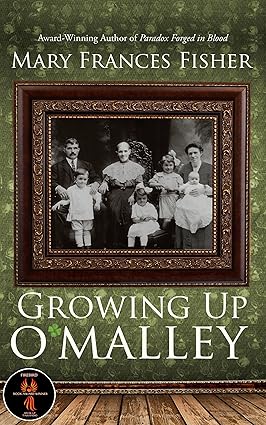
Growing Up O’Malley by Mary Frances Fisher is a sprawling historical saga rooted in family, Irish heritage, and the immigrant experience in America. Set primarily between Ireland and Cleveland, Ohio, the story traces generations of the O’Malley family as they face famine, war, love, heartbreak, and rebirth. Blending fact with fiction, Fisher brings to life the struggles of Irish immigrants, their fierce pride, and the everyday resilience that shaped not just a family but a community. Anchored by matriarchs like Elizabeth Ginley and spirited descendants like Mary Ginley and Michael O’Malley, the novel is a love letter to enduring spirit and cultural identity.
Fisher’s prose is heartfelt and raw, sometimes poetic, and often tinged with a gentle humor that softens the blows of hardship. I was taken by the way she wrote about poverty, not with pity, but with grit and beauty. The characters are deeply real, layered with flaws and love and history. I cared about them, especially Mary, whose emotional journey from innocent girl to heartbroken woman to strong matriarch stuck with me. Sometimes the dialogue leaned heavily on dialect, but it added charm rather than distraction. I found myself rooting for these folks like they were my own distant cousins.
With over a hundred chapters, a multitude of characters, and detailed events packed into nearly every page, it sometimes felt overwhelming. That said, it’s clear Fisher wrote this with love and reverence—each anecdote, each trial, each joyful reunion rings with authenticity. The blend of fact and fiction is seamless. It’s history with a beating heart. And her sense of humor, especially in the small asides and character quirks, offers a delightful balance to the more sobering passages.
Growing Up O’Malley is a heartfelt and relatable tale that will resonate with anyone who’s ever felt the tug of heritage or family duty. If you enjoy sweeping family sagas, stories about resilience, or have Irish blood in your veins, this one’s for you. It’s not a quick read, but it’s a rich one that is best read slowly. For fans of Angela’s Ashes or Brooklyn, this book will feel like coming home.
Pages: 482 | ASIN : B0CK8YJ1YT



