Blog Archives
The Stories Of Women In The Past

The Aphorism Club follows a brilliant young Australian woman who, rejected by her family because of her birthmark, finds strength among artists and outsiders as she fights to become a writer and claim authority over her future. What was the inspiration for the setup of your story?
I have always been inspired by the stories of women in the past, and in my own past who have struggled against injustice, rejection, suppressive social norms to become their own person. To find and use the gifts they have to make a life initially denied them. This is not just a thing of the past as young people are swamped by social perceptions of beauty and personal worth based on how they look, or what they wear or how much money they have. I want readers to have a role model who embodies the fact that there is nothing more you need than to be at home in your own skin, to value your talents and build the community you want to be a part of.
Why did you choose the aphorism “Look up and find a light, or build a fire yourself” as a guiding principle for Ruby’s journey?
This is perhaps my own guiding principle. Optimism, self-reliance, problem solving and self-belief are superpowers, much under-valued superpowers, but ones, if mastered allows a life to be built. Ruby is smart, given wise counsel and encouraged to take control of her destiny and shed any thought of being a victim of circumstance. She is led to believe that seeing yourself as a victim is stultifying, seeing yourself as a survivor is empowering.
The novel contrasts “the family you got” with “the family you made.” What did you want Ruby’s chosen communities to reveal about the meaning of family?
Love comes in all forms and at the heart of ‘family’ is respect. Respect for all one is, and what one wants to be. A family is a cheer-squad, a protective cordon that is prepared to kick you in the pants if you need it. The family Ruby has made in the Aphorism Club reveals that connection is not about what makes us the same but how we appreciate and value the uniqueness of individuals.
How did you balance Ruby’s personal coming-of-age story with the novel’s exploration of suffrage, class, sexuality, reproductive autonomy, war, and labor conditions?
Setting the novel in the 1920s meant the key social changes had to be recognised. Ruby’s awakening to injustice in her community gave voice to her writing. In essence, she recognised that she could have had a life of comfort given her family’s wealth and position, but she really only grows out of naivety and perhaps a little self-pity when she comes to understand that life for women, particularly those in the lower socio-economic classes, is bereft of opportunity, potentially violent and utterly miserable. And it is key to women today understanding how our female ancestors fought for the life we now live. While we have a way to go, the privileges of the few in the early 20th century are now for all.
Author Links: Facebook | Website | Instagram
In Melbourne in 1910, Ruby Pearl Hart is born into a family that does not want her. Failing to appreciate her gifts, all they see is the raspberry birthmark on her face.
Cast out, Ruby finds a makeshift family with the colourful misfits populating her Aunt’s home, the Mary Street Terrace. Here, her intelligence, creativity and hope are allowed to thrive.
But when tragedy strikes, Ruby’s ambitions for her life seem dashed. It’s not until she is forced to move from Melbourne to Launceston that she comes to understand the battle for women’s freedom is still being waged – and for some, life is much, much worse.
Exiled in this small town, she meets a group of artists and writers who call themselves ‘The Aphorism Club’. Unique, clever and bohemian, they too are broken and cut adrift. In them, Ruby finally finds a safe harbour where she can dream, dance and reach for a life beyond social expectations.
In Tracey Lee’s The Aphorism Club, there are forces working against Ruby that will take more than hope to overcome. In an unprecedented shift, Ruby is given a choice – but can she hope to make the right one in a world determined to keep her down?
The Aphorism Club
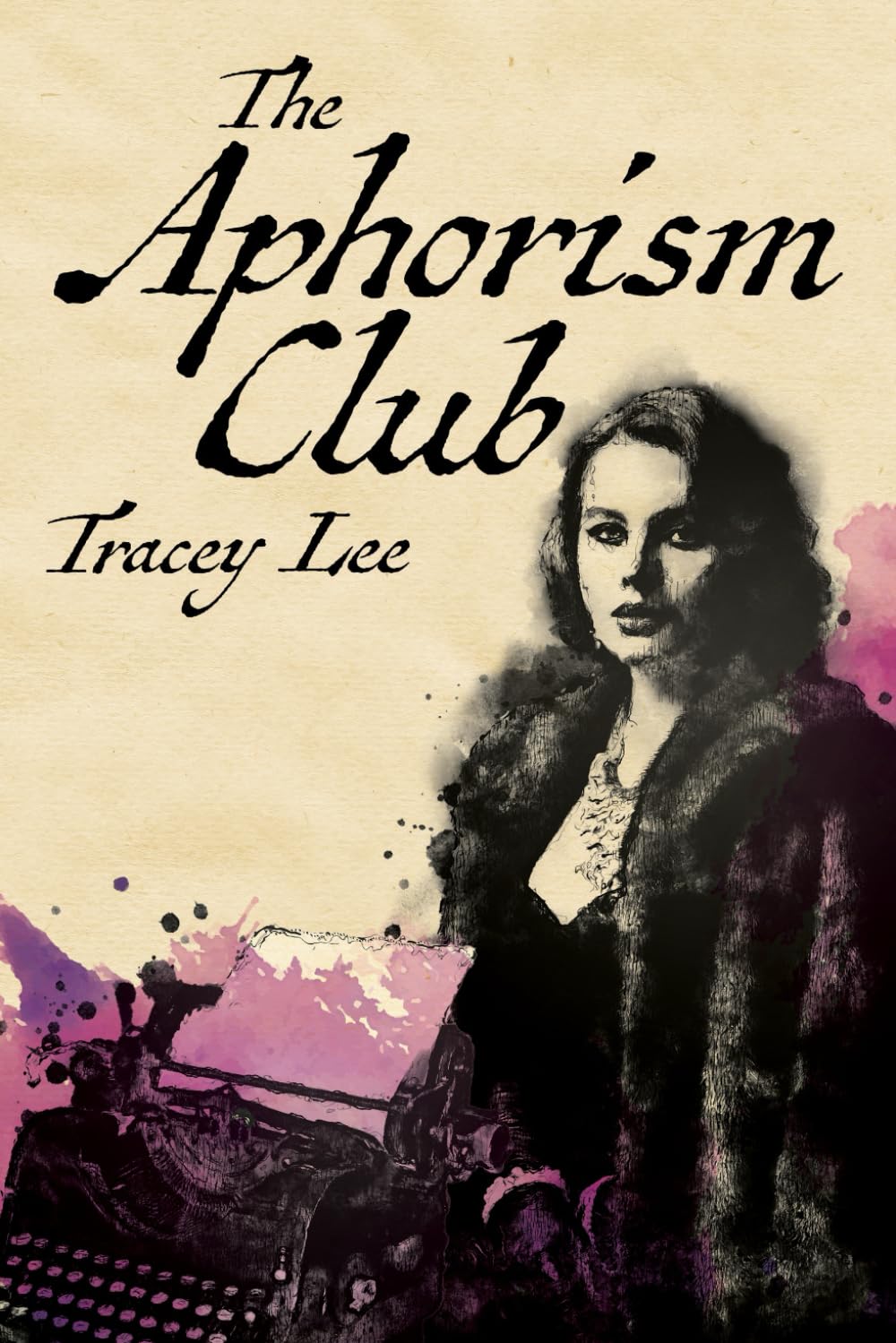

Tracey Lee’s The Aphorism Club is a historical coming-of-age novel centered on Ruby Pearl Hart, a gifted young woman born in Melbourne in 1910 with a prominent port-wine birthmark. Ruby enters a family that regards her appearance as a defect and her existence as a burden, but her great-aunt Minerva provides the affection, education, and confidence that her father and grandparents withhold. After illness and loss dismantle this early sanctuary, Ruby must repeatedly adapt to new homes and expectations. The novel follows her from childhood into early adulthood, tracing the formation of a writer whose intelligence and ambition steadily outgrow the narrow roles prescribed for her.
Ruby’s development is shaped by communities of women, artists, teachers, and social outsiders who recognize her potential. Minerva establishes the novel’s moral vocabulary through her instruction to “Look up and find a light,” followed by the more forceful advice, “And if you can’t find the light, bloody build a fire yourself.” That combination of hope and defiance guides Ruby through bereavement, bullying, family neglect, and institutional restrictions. Her eventual move to Tasmania brings her into contact with journalists, performers, writers, and artists whose informal collective gives the novel its title. Within the Aphorism Club, creative work becomes both a profession and a means of claiming authority over one’s own life.
The novel is especially effective when it connects Ruby’s personal growth to the social changes surrounding her. Women’s education, suffrage, labor conditions, reproductive autonomy, sexuality, artistic freedom, war, influenza, and class prejudice appear through the experiences of the characters. Lee’s lively ensemble cast gives these concerns emotional range, while Ruby’s observant, frequently sardonic voice keeps the story energetic even when its subject matter is painful. The early distinction Ruby recognizes between “the family you got and the family you made” becomes one of the book’s central ideas. Family, in this novel, is created through protection, intellectual fellowship, honest disagreement, and sustained acts of care.
The Aphorism Club is a novel about authorship in its broadest sense. Ruby learns to write stories, report on injustice, interpret her own history, and direct the course of her future. Her birthmark remains an important part of her experience, but the narrative gradually enlarges the reader’s understanding of her until her appearance no longer determines the boundaries of her identity. By concluding with several credible paths available to Ruby, Lee presents independence as the capacity to choose among meaningful possibilities. The result is a compassionate and socially engaged portrait of a young woman discovering that love, education, creative purpose, and freedom can belong within the same life.
Pages: 228 | ASIN: 192351735X



