Blog Archives
To Inspire and Enrich

Growing Up O’Malley is a Historical Fiction novel, based on true stories from your family, of an Irish immigrant couple raising seven boisterous children in Ohio during the early 1900s as they face famine, war, love, heartbreak, and rebirth. Why was this an important book for you to write?
It’s a gentle reminder of life’s simplicity before the onslaught of technological advances. Stories passed down from my parents, and interviews of their remaining siblings (some passed before my journey as an author began) reveal lives searching for purpose and a quest for truth. They highlight the importance of a common sense approach to life’s dilemmas as a universal convergence present throughout history. Reliance on faith, love, and empathy applied to everyday life serve as mainstays toward understanding one another. Life has become divisive and Growing Up O’Malley transports the reader to a time highlighting the application of these principles in our search for individual peace.
Since you based this book on true events from your family history, how did you decide what to include and leave out in your book?
The goal of my writing is to inspire and enrich the reader, hopefully uplifting those facing insurmountable odds. The majority of stories in Growing Up O’Malley are based on facts with a touch of blarney to make them enjoyable. One example is the 1923 birth of my aunt, Veronica O’Malley Collins, clearly before my time. My aunt, Marge O’Malley DuChez, told me two important facts: (1) a bundle was placed on the kitchen table and Marge, the oldest, believed it was a doll until it moved. Her iconic response, “It’s a bay-by” was included exactly as she relayed; and (2) William O’Malley was heartbroken because his father promised him the next baby would be a boy—upset with yet another girl in their abode, he tried to ignore her. With these two facts, I mentally travelled back in time and imagined my own mother’s response at the age of three! I could feel my mother’s smile from heaven as I relived life more than a century past. Although negative incidents are mentioned, I attempted to offset them in two ways: humor or the power of faith to combat problems, many of them universal and inescapable.
What were some goals you set for yourself as a writer in this book?
I had two primary objectives: (1) create a book where the reader felt they were either part of the story or could identify with its characters; and (2) include historical events without making the reader feel they were being schooled (like the series “Beyond the headlines” revealing background facts without sensationalism). I conducted a brief informal history quiz on Gen Z kids and was shocked to discover they were unaware of many important events shaping our history (one example is McCarthyism). If my book has enriched even one person’s life with facts no longer covered in today’s curriculum (and shared those with others), my goal would be achieved.
What is the next book that you are working on, and when can your fans expect it to be out?
I’m actually working on two books: When I Grow Up: A Collection of Short Stories and Never Truly Alone, a psychological thriller. My goal is a release of short story compilations in 2026 and, hopefully, my thriller in 2026 as well.
Author Links: Website | Amazon | Facebook | Instagram | GoodReads | X | LinkedIn
Growing Up O’Malley is a poignant story of an Irish immigrant couple raising seven boisterous children in the early 1900s. Their antics provide the backdrop for a story filled with humor and determination to navigate life’s challenges—the Great Depression, kidnapping, deadly illness, and World War II. Their journey focuses on optimism, Irish wit, and faith to provide inner strength hidden until tested by fate.
GROWING UP O’MALLEY
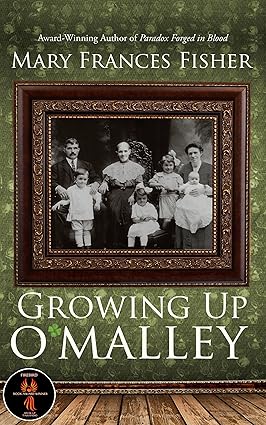

Growing Up O’Malley by Mary Frances Fisher is a sprawling historical saga rooted in family, Irish heritage, and the immigrant experience in America. Set primarily between Ireland and Cleveland, Ohio, the story traces generations of the O’Malley family as they face famine, war, love, heartbreak, and rebirth. Blending fact with fiction, Fisher brings to life the struggles of Irish immigrants, their fierce pride, and the everyday resilience that shaped not just a family but a community. Anchored by matriarchs like Elizabeth Ginley and spirited descendants like Mary Ginley and Michael O’Malley, the novel is a love letter to enduring spirit and cultural identity.
Fisher’s prose is heartfelt and raw, sometimes poetic, and often tinged with a gentle humor that softens the blows of hardship. I was taken by the way she wrote about poverty, not with pity, but with grit and beauty. The characters are deeply real, layered with flaws and love and history. I cared about them, especially Mary, whose emotional journey from innocent girl to heartbroken woman to strong matriarch stuck with me. Sometimes the dialogue leaned heavily on dialect, but it added charm rather than distraction. I found myself rooting for these folks like they were my own distant cousins.
With over a hundred chapters, a multitude of characters, and detailed events packed into nearly every page, it sometimes felt overwhelming. That said, it’s clear Fisher wrote this with love and reverence—each anecdote, each trial, each joyful reunion rings with authenticity. The blend of fact and fiction is seamless. It’s history with a beating heart. And her sense of humor, especially in the small asides and character quirks, offers a delightful balance to the more sobering passages.
Growing Up O’Malley is a heartfelt and relatable tale that will resonate with anyone who’s ever felt the tug of heritage or family duty. If you enjoy sweeping family sagas, stories about resilience, or have Irish blood in your veins, this one’s for you. It’s not a quick read, but it’s a rich one that is best read slowly. For fans of Angela’s Ashes or Brooklyn, this book will feel like coming home.
Pages: 482 | ASIN : B0CK8YJ1YT

Hatfield 1677

Hatfield 1677 is a vivid historical novel rooted in the real-life events of King Philip’s War. The story centers on Ben and Martha Waite, a Puritan couple whose lives are ripped apart by conflict between English settlers and Native tribes in colonial Massachusetts. When Martha and her children are captured by Native warriors, Ben sets out on a perilous mission to bring them home. Through alternating perspectives, including that of a Nipmuc sachem, the novel explores survival, love, loss, and the brutal toll of war.
From the first chapter, where Ben says goodbye to his wife and children before riding off to war, the writing has this warm, steady heartbeat. It’s historical fiction, but it never feels dry or overly formal. Rader’s prose strikes a compelling balance between lyrical and grounded. She captures intimate, sensory moments with remarkable clarity, Martha rinsing her hair in lavender water, Ben riding through the ruins of Deerfield, the tense stillness before a storm. The detail is immersive without becoming excessive. Even in the opening chapter, as Ben says a quiet, emotional goodbye to his daughters, the writing evokes a tenderness and fear that is both deeply human and hauntingly real.
What really struck me, though, was the moral weight Rader builds into the action. She doesn’t sugarcoat anything. The chapter on the Falls Fight was gutting. When Ben storms a Native camp and ends up sparing a young mother and child, it’s not some triumphant moment; it’s raw and messy. He throws up afterward. His pistol shakes in his hand. He can’t even speak about it when he gets home. It’s that emotional honesty that makes the violence and grief in this book hit so hard. And then you get Ashpelon’s chapter, a Native leader telling a parable about greedy squirrels, and suddenly, the whole war feels even more tragic. It’s layered and thoughtful without being preachy.
One thing I didn’t expect and ended up loving was Martha’s voice. She’s not just “the wife back home.” She’s smart, she’s tough, and she’s trying to survive just like everyone else. Her scene with Hannah, when they talk about love, abuse, and the impossible choices women face, felt painfully modern. There’s one line, when Martha’s holding her daughter and watching her husband ride off, where she says, “Your fair beard will need a trim when you return.” That crushed me. Because it’s not really about his beard, it’s hope, and fear, and trying not to fall apart.
Hatfield 1677 is a love story wrapped in a war story, with sharp writing and real emotional stakes. If you’re into historical fiction with heart and teeth or if you just want a book that’ll leave you thinking about it long after the last page, this one’s for you. Fans of Cold Mountain, The Last of the Mohicans, or even Outlander (minus the time travel) would feel right at home. I highly recommend this book to readers who like stories that are as much about people as they are about history.
Pages: 410 | ASIN : B0CW18FWXS

Inspired by Historical Fiction

A Tapestry of Two Worlds follows a young boy growing up in 19th-century Lancashire and his family’s transition to life during the Industrial Revolution. Where did the idea for this book come from?
A Tapestry of Two Worlds tells a story based on the life of my Great-grandfather. Using the known facts of his life blended with social history, I imagine dialogue, reactions to those events, and interaction with other characters, to build the character arc. This story breaks his world into two distinct aspects; his life in Northern England compared to the last half of his life in India.
How much and what type of research went into planning and writing this novel?
I begin my stories with a timeline of factual events for my protagonist and key relationships in their lives. Layered in, I research the social history of the places during those times. Extensive research happens before and during the process of crafting the manuscript. I discovered my protagonist on a ship’s passage notice in the China and London Telegram, a paper used by the P&O Shipping line to share news from the colonies. Another great find came from a letter posted on a blog site, detailing a similar journey around the same time. As it turns out, this person travelled on the same ship my character did.
What draws you to the historical fiction genre?
We have such a rich world of stories in our history. Exploring the lives from the past can teach us about resilience, courage, and inventiveness. I love writing in this genre. Recently, I’ve explored other forms of writing from poetry to flash fiction, but still find myself inspired by historical fiction.
What is the next book that you are working on, and when will it be available?
Due in 2026! Story Synopsis:
In 1932, at the age of 47, Victor Veevers, left his Indian birthplace, Bombay, to settle his family in London, England. Born in 1885 to a British father and a mother of Portuguese and Indian descent, he lived during a period of growing unrest in India and sought economic security as well as protection from the mounting resentment his family faced in Bombay.
Vic’s skills as a photographer and cine-recorder, along with his local knowledge of India, earned him a spot on the British Gaumont Studios production team hired to film the 1933 Lady Houston Mount Everest Expedition. The daring adventure would test both aviation and photographic technology by attempting to take aerial images of one of the last frontiers of the world, Mount Everest. The story arc follows the production unit as they prepare and film the events, culminating in the Academy Award for short film in 1936.
Within a year of leaving the birthplace that rejected him and his family, Victor finds himself back in India. The story reveals challenges and triumphs on his path of acceptance as Victor explores the dual perspectives of his British and Indian heritage.
It may also include memoir pieces; the discovery of my heritage, and the mixed-race heritage influenced future generations.
Author Links: GoodReads | Facebook | Website | Substack | Instagram | Amazon
Raised in a middle-class English family during the Industrial Revolution, James Harrison Veevers escapes to East Asia in 1863. Exchanging pastoral views, dingy factories and crushing poverty in his Lancashire home, for the exotic, intoxicating culture of India. James pulls at the threads, unraveling the expectations of others. Determined to design his own life, James artistically weaves a colorful new tapestry from the filaments of his experiences gathered across two continents.
If you love stories rich with description and adventure, share the journey with James as he travels to the exotic world of India.
Imperfect
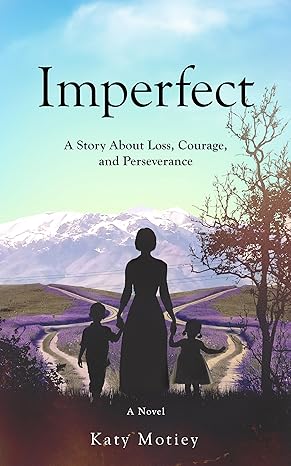
Katy Motiey’s Imperfect is a poignant historical fiction novel that transports readers to the tumultuous era of 1970s Iran through the eyes of Vida, a mother trying to hold her family together as the world around her crumbles. Set against the backdrop of the Iranian Revolution, the story chronicles Vida’s struggles after losing her husband and navigating a culture where women, especially widows, are marginalized. The novel delicately balances themes of loss, resilience, and love, making it an emotional journey through a period of personal and national upheaval.
I absolutely loved how Motiey intertwined the personal with the political. Vida’s challenges as a widow in a rigidly patriarchal society gave the story an emotional weight that resonated deeply with me. Early in the book, the scene where Vida is left out of a wedding ceremony because she’s considered a “bad omen” hit me hard. The sheer injustice of it is infuriating, but it’s also a subtle way the book shows how women were often dismissed or disregarded. I couldn’t help but feel Vida’s anger and frustration. How could someone so strong, who had already suffered so much, still be viewed this way?
Motiey’s writing is vivid and immersive, making it easy to connect with Vida’s emotional world. One scene that stuck with me was when Vida reflects on her children’s future, wondering how she’ll raise them without their father. Her thoughts, while sitting in the back of a car passing through Tehran, painted such a vivid picture of her anxiety and isolation. The dirt on the roads, the thorny bushes blowing in the wind, I felt like it all mirrored her inner turmoil. The imagery is simple, but it’s so effective in pulling you into her mindset.
What also makes this book so gripping is the way it tackles the weight of cultural expectations. Vida’s internal struggles with oppressive societal norms often come to the forefront. You can feel the tension when she’s trying to secure her children’s future, particularly the part where she attempts to gain guardianship. Her interactions with her father-in-law, who seems more concerned with the color of his tea than her plea for independence, highlight just how stifling her environment can be. It’s a heartbreaking reminder of how culture can simultaneously nurture and trap its people.
If you are someone who enjoys women’s historical fiction that digs deep into personal and societal struggles, Imperfect is a must-read. It’s about a mother’s love, a widow’s fight for respect, and the courage it takes to forge a new path when everything you know is falling apart. It’s an emotional rollercoaster, but one that leaves you feeling inspired.
Pages: 355 | ASIN : B0CZTPFBZF
Water Fire Steam

Set against the backdrop of the 19th-century Westward Expansion, Water Fire Steam, by Mitzi Zilka tells the compelling story of Rolla, a young engineer eager to make his mark on the rapidly developing Wild West. With a promising contract to build Spokane, Washington’s water system, Rolla moves to the burgeoning city with his young wife, full of hope and ambition. However, his world is turned upside down when a devastating fire ravages the town, leaving destruction and chaos in its wake. Injured and out of work, Rolla faces a new reality, struggling to come to terms with the life he had envisioned slipping away. As Spokane rebuilds and flourishes around him, Rolla becomes increasingly isolated, haunted by the ghosts of his past. The question remains: Can he find the strength to forgive himself, rebuild his life, and rediscover his place in the world?
Through Rolla’s poignant journey, Zilka masterfully explores the triumphs and tragedies of the human spirit. The author does an exceptional job of immersing readers in the historical context of the story, capturing the essence of the era with meticulous attention to detail. The inclusion of real events, such as The Great Spokane Fire of 1889, grounds the narrative in history, lending it an authentic feel. Zilka’s vivid descriptions transport readers to early 19th-century Spokane, from its humble, mud-covered streets to the modernized cityscape that emerges after the fire, complete with concrete buildings, sidewalks, and curbs. These descriptions vividly bring to life the setting, landscapes, and architecture, allowing readers to fully imagine what life was like during that transformative period. Zilka also skillfully weaves in the social realities of the time, addressing issues such as childhood mortality, the suffragette movement, and public health crises. These elements are handled with nuance and sensitivity, adding depth to the narrative and enriching the historical context. Through these details, Water Fire Steam becomes a beautifully crafted story that is both historically accurate and deeply human.
Water Fire Steam is an engaging novel with well-developed characters, and its focus on a pivotal moment in history adds a layer of intrigue that will captivate readers. I highly recommend this book to all readers, especially those who have a passion for drama and historical fiction.
Pages: 420 | ASIN : B0B2L4HW8R
The Road to Moresco

Mark Jamilkowski’s inaugural novel, The Road to Moresco, presents a sweeping narrative that spans over 150 years, intricately weaving the threads of global historical events with the intimate saga of an Italian family. The novel’s canvas stretches from the mid-1800s in Sicily to contemporary Italy, tracing the Moresco family’s odyssey across continents and generations. Jamilkowski blends historical fact with fiction, creating a richly detailed world where readers can vividly experience both the grandeur and the turmoil of the times.
The novel’s strength lies in its complex and dynamic characters. It features a diverse ensemble, each navigating the turbulent waters of their personal and political realities. Particularly noteworthy are the novel’s female characters. They are portrayed as formidable and resilient, actively shaping their destinies against the backdrop of societal constraints.
Jamilkowski’s prose is evocative, painting each scene with such vivid imagery that readers feel transported into the heart of the story, experiencing its highs and lows alongside the characters. At the core of The Road to Moresco are themes of fascism, Nazism, and the ramifications of the Second World War. The narrative delves into the intricate dynamics of a mother-daughter relationship set against this tumultuous historical backdrop.
The story primarily focuses on Maria-Luisa Moresco, a determined pianist, as she juggles her career ambitions with the demands of family and motherhood, and her daughter, Chiara, who navigates her own complex path of love and duty. Their relationship, marked by love and conflict, mirrors the larger historical and cultural shifts of the era.
Jamilkowski’s debut novel blends music, war, love, and family life. It all comes together in a resonant and powerful narrative. This book is an engaging read for those interested in the interplay of history, culture, politics, and personal stories within the grand tapestry of a family saga. Jamilkowski’s work leaves an indelible mark, making The Road to Moresco a commendable addition to the genre.
Pages: 310 | ASIN : B0CCK7DMPJ
I Wanted To Give Him A Voice

Pontius Pilate: An Unexpected Memoir looks at Pilate’s family life, childhood, military and political careers, how he ended up in the crucial role of Jesus’s crucifixion, and what life was like after. What inspired you to tell this story?
For one of the central figures in the crucifixion story, little was known about the man Pontius Pilate. He was recalled to Rome after an incident involving rebels in a small village in Judea, but beyond that, little was known about him. My intent was to give this historical figure flesh and bones. To give him a loving family life beyond the military. To have him torn between staying at home or fighting another battle for Rome or expanding Rome’s territory. Most importantly, I wanted to give him a voice, not to vilify but to understand him and the need for him to be there at the Praetorium to wash his hands, because had he let Jesus go, scripture prophesy would not have been fulfilled.
What is one thing that people point out after reading your book that surprises you?
Readers have told me they were surprised at the depth of Pilate’s character that I portrayed, making him a man with feelings of love, kindness, and empathy, and that I depicted ancient Roman life so accurately and fully. I was most surprised when a producer of note told me she was moved to tears by the ending of the story.
What is the next book that you’re working on, and when can your fans expect it out?
Pablo has several more books that have been published and as many that have not yet been published. He keeps writing, so I keep falling behind in editing his manuscripts. We expect to submit another book soon.
Author Links: GoodReads | Facebook | Website
Pilate’s roots ran deep in the Italian countryside, and as he aged, he yearned more and more for home and family, for vineyards and barley fields, and for the laughter of children. His beloved wife Claudia had a gift of discernment, an ability to forecast events and outcomes. When Pilate became governor of Judea, a loathsome assignment to him, he took Claudia with him. What transpired from then on was life-changing for both of them.
Pontius Pilate was the unwilling participant in the crucifixion of Jesus, so regretful of his act that he washed his hands over and over again. As American playwright Arthur Miller once said, “Maybe all one can do is hope to end up with the right regrets.”


