Blog Archives
Living In The Moment Method

Bart Bantam The Flying Rooster follows a small bantam rooster who has big dreams of flying, offering young readers important lessons about believing in themselves. Where did the idea for this story come from?
The inspiration for this book actually began 25+ years ago. You see, I am a father of two sons, and when I needed to wake them up for primary school, I coerced them to get up and get ready by using a chicken’s voice. The irritation of my chicken voice worked supremely well! In 2014, I bought an iPad and started doodling. It came to me with a sketch of a bantam rooster and a vague outline of a story. A barnyard chicken is not very large; however, a smaller Bantam, with an even smaller voice, sparked my imagination. Wouldn’t it be surprising if this small rooster did what others were incapable or unwilling to do? As a former therapist, I witnessed the struggles of children in families. I saw Bart as a friend to anyone needing a friend, and a voice to convey a message to further help others in a meaningful way.
What was your favorite scene in this story?
This is an easy answer for me. I gravitate to the final page of the book where Billy, a former bully, has reformed into an appreciative young rooster whose life has changed forever. Billy can’t contain his gratitude, and he lifts the bantam roosters in his wings as the teacher and classmates cheer them on.
The artwork in your book is wonderful. Can you share with us a little about your illustration process?
I am both a writer and an illustrator of my books. Both tasks are challenging to say the least. I am currently using an art program called Procreate. This app allows scenes to be stacked like pages in a book. The tools I use while drawing allow my story to develop. I build the storyline as I draw. Let’s back up a bit. I had the idea for the chicken, then the idea for a Bantam rooster. Finally, alliteration kicked in and Bart Bantam became the main character’s name. As I began drawing young Bart, it helped me see his unique personality. I felt my way through the book page by page, and as I drew, I developed the narrative and the story’s conflicts and resolutions. I believe they call this technique “Pantser.” “Flying by the seat of your pants.” Or as I have laughingly renamed it, “Living in the moment method.” There is an honesty and freshness to this technique in my humble opinion, though editing has become an important collaborative tool.
Can we look forward to more books for young readers soon? What are you currently working on?
Yes indeed! So far, The Tales of Bart Bantam series has a total of four books. Also, there is a supplemental coloring book encouraging young children to express themselves in coloring their favorite characters of Bart and his friends. I also have an adorable non-fiction children’s story about carving a rabbit out of a dead tree stump. As you can probably guess by now, I’m just getting started with this new-found love of writing and illustrating books. Thank you again for your attentiveness. Kindly yours, Papa Fred.
Author Links: GoodReads | Facebook | Website
★★★★★ “… Brimming with charm, gentle humor, and an uplifting message, (this book) offers inspiration without ever feeling heavy-handed. …Young readers will find a hero in Bart’s boundless enthusiasm.” – Literary Titan
Get ready for an adventure like no other! Join Bart Bantam, a young rooster with big dreams, as he navigates life on the farm with his mother, Mama Betty. But things take an unexpected turn when Bart finds himself in a showdown with the school bully, a rooster much larger than him. With the help of a new friend named Buddy, they set out to do what no other chicken has done before, “Fly!” But when danger strikes, Bart and Buddy must use their newfound skills to save the day. Will they succeed? Find out in the thrilling tale of Bart Bantam The Flying Rooster!
This story highlights:
achieving goals
perseverance and resilience in doing hard things
handling peer pressure around a bully
showing kindness and compassion to others
the power of friendship
Bart’s journey will warm your hear and inspire readers of all ages. From beautifully hand drawn illustrations with vivid color and detail to a tender story from the author’s heart about friendship and forgiveness, Bart’s kindness leads the way!
This book is a true labor of love. It is a created by a dedicated author who uses his own story and illustrations from his own hand (No AI) to help children in a meaningful way. Large 8.5×11 pages bring the characters to life and engages the reader whole heartedly. Premium color and glossy pages make these illustrations dynamic to grab one’s imagination. This short story is perfect for shared reading with little ones or as independent reading for primary school readers ages 7 and up.
If you enjoyed books like Charlotte’s Web and Stuart Little, you’ll love Bart Bantam The Flying Rooster. So don’t wait, grab your copy now and lose yourself in the wonders of Bart’s World.
Bart Bantam The Flying Rooster


Bart Bantam the Flying Rooster, written and illustrated by Fred Pollard, delivers a warm, spirited tale that appeals to readers of every age. Brimming with charm, gentle humor, and an uplifting message, it offers inspiration without ever feeling heavy-handed. Geared toward children ages 5–8, the story follows Bart short for Bartholomew Bantam, a small bantam rooster with an outsized dream: to fly. In a world where chickens stay earthbound by instinct and self-doubt, Bart pushes past limits with courage, kindness, and a determination that refuses to dim. His journey becomes a reminder that self-belief can lift even the most impossible dreams off the ground, a theme that resonates with anyone who has ever reached for something beyond their grasp.
The illustrations bring the story to life with vivid color and lively detail. Each page feels animated and inviting, pulling young readers deeper into a landscape shaped by whimsy and perseverance. Pollard’s artwork mirrors the cadence of the narrative, making the book a natural fit for family read-aloud moments. Beneath its playful tone, the story carries a deeper truth: differences are not drawbacks but quiet strengths waiting to be acknowledged and celebrated.
What resonated with me most was its message, one that stirred ambitions I’d long tucked away. Dream boldly. Rise above ridicule. Keep going when the world insists you can’t. Even under the weight of Billy’s bullying, Bart and his friend Buddy leap to help when danger threatens him. Forgiveness, bravery, and self-trust intertwine here with surprising depth. Pollard takes a simple premise, a rooster determined to fly, and uses it to explore resilience, kindness, and the grace of choosing compassion over resentment.
Bart Bantam isn’t just another children’s comic; it’s a feel-good reminder that small wings can still carry enormous dreams. Young readers will find a hero in Bart’s boundless enthusiasm, while adults will appreciate the quiet wisdom tucked between the lines.
Pages: 26 | ASIN : B0DYNS8LK6

The Kids’ Book of Sensitivity: A Gentle Book for Highly Sensitive Kids

The Kids’ Book of Sensitivity is a soft, steady hug in the form of a picture book. It gently walks young readers through what it means to feel deeply, notice little things others might miss, and live with a sensitive heart. Through calm words and playful illustrations, it shows how emotions live in our bodies, how to name them, how to ask for what we need, and how to take care of ourselves when the world feels a bit too loud. It’s part guide, part comfort, and entirely a celebration of noticing more, feeling more, and being okay with who you are.
I loved the tone of this children’s book. It didn’t talk down to kids—it talked with them. The language is simple but honest. I felt seen reading it, and I’m not even the target audience. The way it described emotions, from butterflies in your tummy to “tight ears at a party,” was so relatable. The “feelings thermometer” and “body map” ideas are brilliant. They don’t overcomplicate things. They’re practical, visual, and perfect for kids (and, honestly, for grown-ups too). It’s the kind of book that feels like it’s been missing from shelves for a long time.
But what really hit me was the kindness baked into every page. This book doesn’t try to fix kids or change them. So many books rush to teach or correct. This one pauses. It validates. I could see this being a lifesaver for sensitive kids who don’t always have the words yet. It also gently teaches adults to slow down and listen, too. The sections on change, making mistakes, and sensory overload were especially thoughtful—never dramatic, just honest and clear. And the watercolor artwork is absolutely fantastic.
If you know a kid who feels a little more, notices a little more, or just sometimes needs a break from the noise, this book is for them. It’s also for parents, teachers, and caregivers who want to understand and support those kids better. It’s warm, wise, and truly one of the most empathetic children’s books I’ve come across.
Pages: 47 | ASIN : B0F6M3N8SY

Who is “Not Me”?

Not Me! follows a little boy on his first day of school who learns an important lesson in responsibility when he is forced to take the blame for his own actions. Where did the idea for this book come from?
“Not Me” came from a situation that often happened to me as an early childhood educator for 39 years. Oftentimes when a child did something “accidentally” and I would see it happen, I would go over and ask “who did this”? The child didn’t want to admit their mistake, even though I had seen it, and would often reply “not me!” One day this happened 5 times before lunch. I was convinced we had someone in our class named “Not Me.” I held a class meeting with all the kindergartners sitting around me. I asked the children to stand when they heard their name and to stay standing. After everyone was standing, I added one more name, Not Me. The children glared at me and said, “we have no one in our class named Not Me.” I explained that it is important to admit our mistakes rather than blame others. I am not saying Not Me never got blamed again but instead wrote a humorous children’s book to illustrate to all of us how we can learn from our mistakes.
What is your favorite scene in Joshua’s story?
My favorite scene in the story is the last page, when Not Me leaves B.A. Friend Elementary. Joshua knows the importance of admitting his mistakes and doesn’t need to put the blame on Not Me. I often ask readers “where do you think Not Me” is going next? I listen to their priceless reactions but often conclude with “I hope he’s not going to your house/school.” I want the discussion to lead to the importance of taking responsibility for your actions. I also like the scene where Joshua and Not Me are talking in Mr. Fair’s (the principal’s) office. Not Me realizes he is not needed anymore and Joshua wants to learn from his mistakes.Things have calmed down once the principal enters the room and Joshua can admit all the things he has done wrong.
Where did you get the inspiration for Joshua’s traits and dialogue?
I loved writing the character descriptions, especially for Joshua. He is the oldest with twin younger sisters at home. He is the first child in his family to go to school and he is a people pleaser. Even though I don’t have twin siblings, I am the oldest and have always loved school and pleasing others. Joshua’s dialogue is based on my many conversations teaching kindergarten and first grade children. Most of the time, they love their teacher and want to please him/her. As I was writing Joshua’s dialogue, I felt the anguish of wanting to do everything right but making mistakes along the way. I wanted a book that let children know that making mistakes is part of growing up.
What do you hope young readers take away from Not Me?
I hope readers find “Not Me” to be humorous and that they can relate to at least one character. My illustrator, Carissa Harris, did a wonderful job bringing the story to life with Not Me’s dialog in a cartoon bubble. I think this distinguishes real from make believe. I hope my book provides discussion between the reader and those that love them, that we all make mistakes and what we learn from those mistakes is most important.
Author Links: Facebook | Instagram | Website
How would you handle a character like Not Me? Will he come to visit you next?
Not Me!

Not Me! by Deb Mortensen is a fun and meaningful children’s book about responsibility and honesty. The story follows Joshua, a young boy excited for his first day of school, but things don’t go quite as planned. A mischievous little character named Not Me appears on Joshua’s shoulder, whispering excuses and leading him to deny his mistakes. As Joshua’s day unravels, spilled milk, a runaway class hamster, and even a cafeteria mishap, he finds himself in deeper trouble. Eventually, he learns that blaming Not Me isn’t the answer, and taking ownership of his actions is the only way forward.
One of the best things about this book is how relatable it is. Every kid has been in Joshua’s shoes, messing up and wanting to dodge the blame. When he spills milk at breakfast and instinctively blurts out, “Not Me!,” I could almost hear the chorus of kids everywhere doing the same. The story captures that real moment of hesitation between telling the truth and avoiding trouble. Mortensen nails that internal conflict kids feel, making it an engaging and teachable story without ever being preachy.
The way Not Me! builds up Joshua’s frustration is hilarious and a little heartbreaking. Every time he tries to shake off Not Me, the troublemaker just digs in deeper. One of my favorite scenes is when Joshua, desperate to fit in, launches peas across the cafeteria and immediately hears Not Me blurt out the excuse. It’s a perfect moment of peer pressure, mischief, and regret all rolled into one. The humor keeps the story light, but there’s a clear emotional undercurrent that kids (and even adults) will recognize.
The turning point is what really makes this book special. When Joshua finally admits to everything, there’s no harsh punishment, no dramatic meltdown but a simple conversation with the principal and a realization that honesty feels better than hiding. That moment feels so genuine. When he tells Not Me to go away because he’s “not any fun,” it’s a small but powerful act of maturity. Instead of being lectured into honesty, Joshua arrives at it himself, making the lesson feel earned and real.
Not Me! is a fantastic read for kids who are just starting school or struggling with personal responsibility. The playful language and lively illustrations make it fun, while the underlying message about honesty sneaks in without feeling forced. Teachers, parents, and librarians will appreciate how it sparks conversations about accountability in a way kids actually understand. This is the kind of book that sticks with you and not just because of the charming story but because every kid will meet their own Not Me at some point. Hopefully, like Joshua, they’ll learn to send him packing.
Pages: 34 | ISBN : 978-1779441867
The Esperanza – Chasing Hope – Book 2 of The Terracolina Trilogy
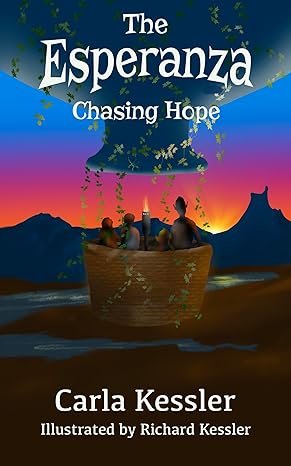
In The Esperanza: Book Two of the Terracolina Trilogy, Carla Kessler weaves a compelling continuation of twelve-year-old Thomas’s journey, blending themes of fantasy, friendship, and self-discovery. Returning from three intense days in the magical world of Terracolina, Thomas grapples with the rigid expectations of his parents, leaving him yearning for purpose and autonomy in a world that often feels stifling. Though faced with the prospect of math camp instead of adventure, Thomas finds solace in his friendships with the savvy Sai and popular Jax, uncovering new ways to impact both his human world and Terracolina. Amidst personal struggles and looming ecological threats, Thomas embarks on a search for meaning, confronting both inner turmoil and external perils.
Kessler delves deeply into Thomas’s complex emotions, especially his grief and desire for acceptance. The emotional weight of the story resonates as Thomas faces rejection from his parents, who seem unyielding and cold. This dynamic brings up frustration and sympathy, and readers may question whether Thomas’s inclination to escape to Terracolina was driven by the emotional void in his family life. As Grumog’s dark influence grows, Thomas’s journey toward healing and self-acceptance continues to unfold. The friendships he fosters, particularly with Sai and Jax, inject the story with camaraderie and hope, making his path all the more touching. The book introduces a challenging continuity issue that may unsettle dedicated readers of the trilogy. In the first book, Thomas physically enters Terracolina, with real time elapsing in the human world. In The Esperanza, however, he now accesses Terracolina in a dream state, where no time passes back home. This change creates a dissonance, as book two revises details from book one, suggesting Thomas camped in the woods before dreaming his way into Terracolina—a stark departure from the original narrative. While a minor flaw, this inconsistency detracts slightly from the immersion in an otherwise well-crafted, poignant story. The Esperanza remains a rich story of healing, growth, and acceptance, embracing the challenges of grieving and finding one’s place in the world. Thomas’s struggles, his earnest journey to overcome them, and his loyal friendships make him an endearing and relatable character. The story feels deeply personal, and readers may find themselves wanting to reach out and support him as he navigates this turbulent path. With the final book yet to come, hopes and expectations build for a satisfying conclusion to this heartfelt trilogy.
For Middle-Grade readers, The Esperanza offers a magical, emotionally resonant adventure, interwoven with messages of resilience, self-confidence, and the power of small actions to effect change. This fantasy tale, with its touches of adventure and thought-provoking themes, is sure to captivate young and old alike.
Pages: 230 | ASIN : B0DHB2FWMS
Terracolina – A Place to Belong

In Terracolina: A Place to Belong, Carla Kessler crafts a heartwarming and deeply emotional middle-grade fantasy about a boy named Thomas, who, on the edge of his twelfth birthday, is weighed down by the loss of his beloved Grandpa and the rigid expectations of his family. Before Grandpa passed, Thomas’ world sparkled with stories of a mystical place, filled with lush plants and fantastical creatures. Now, those magical tales feel like a distant memory, and Thomas’ life has become a gray routine of following rules. Determined to break free and find answers, he sets off and soon stumbles into the very world he thought only existed in dreams, where he learns he has a crucial role to play in protecting both worlds.
Kessler’s portrayal of grief in this story is nothing short of powerful. Thomas feels disconnected, battling sorrow that neither his family nor his friends seem to recognize. The emptiness he carries shapes every aspect of his world, creating a weight that many readers who’ve faced loss will recognize. I found myself deeply moved; the story felt like a mirror, reflecting experiences of complex grief that I hadn’t fully processed myself. Thomas’ journey to trust, to confront his pain, and to open his heart resonated with me profoundly. It felt like walking beside him, each step toward healing a reminder of the resilience that lives in us all.
This book’s magic doesn’t stop at its emotional depth. Despite its size, Terracolina is packed with wonder and unforgettable characters. Geven, the warm-hearted gardener, quickly became one of my all-time favorite fantasy characters, while Nib and Nob, the spirited Nubbins, brought a whimsical charm reminiscent of Wonderland. Misty, with her quiet insightfulness, rounded out a quirky and lovable cast that added life and color to Thomas’ adventure. Richard Kessler’s illustrations add extra vibrancy, capturing the beauty and personality of the Terracolina realm.
Terracolina: A Place to Belong is a moving and magical story of finding hope and purpose after loss. The book gently explores tough themes, including fantasy violence and mentions of death, making it a meaningful read for middle-grade readers and anyone looking for a story about courage, healing, and finding one’s place in the world.
Pages: 204 | ASIN: B09XS1G166
SELF-Love and Compassion

Petunia the Perfectionist follows a young girl who is determined to achieve perfection in everything, usually forgetting to relax and just have fun. What was the inspiration for your story?
My oldest daughter, now 11, and I have something in common: we are both perfectionists. We strive to be “perfect” in all we do, even at the cost of relaxing and enjoying life more. This has been something I’ve been working on since I was in my 20s, but seeing it in my daughter really hit home: I knew I needed to work harder at letting go of the need to be perfect, so I could model the importance of making mistakes — and learning from our mistakes — for my child. Truly, the book was deeply inspired by her first grade teacher, Ms. Bruce. On their first day of school, Ms. Bruce told the kids that she loves when students make mistakes, because every time you make a mistake, your brain grows. This helped us change the negative narrative around mistake-making, and taught us that making mistakes means we’re trying and learning new things!
Children today are often overwhelmed with social media and seeing “perfection” online, leading to an unrealistic view of themselves. What were some driving ideals behind your character’s development?
While Petunia doesn’t have social media in Petunia the Perfectionst, I agree that this is a huge problem in today’s culture (not just for children, but for adults too!). As I was developing Petunia’s character, I really wanted to portray her as the ultimate perfectionist — the child who is so afraid to make a mistake, that she’ll forgo having fun with her friends and family to read, color inside the lines, practice her guitar for hours, etc. She desperately wants to be perfect. This extreme personality trait was important to me so that when she actually does make a mistake — and realizes that something GOOD comes from it — it makes a bigger impact on readers.
What were some ideas that were important for you to share in this book?
One major idea I wanted to convey in Petunia the Perfectionist is the importance of having a growth mindset and understanding that mistakes don’t mean we’re failures, but rather that they give us an opportunity to continue to learn and grow. I also wanted to convey the importance of self-compassion. In this book, Petunia lets her friends off the hook for making mistakes, but she won’t do the same for herself. Why? Why does she extend more grace and compassion to others, but holds herself to a higher standard? I want readers to understand the importance of SELF-love and compassion, and know that it’s OK to offer those things to ourselves, too.
What is the next book that you are working on, and when will it be available?
To be determined — but when I’m able to share it with you, I will!
Author Links: GoodReads | Facebook | Website
Petunia does not like to make mistakes. In fact, she’ll do just about anything to avoid making one. So instead of enjoying her jam sessions on her guitar, Petunia practices ‘til her fingers ache. And rather than creating art with her crayons, she spends her time color-coding them instead.
Petunia’s so busy trying to be perfect, there’s no time left in her life for being creative or having any fun!
Though Petunia’s mom often reminds her that mistakes are important because they help us learn and grow, Petunia’s not convinced. That is until she makes a mistake that inspires everyone…even herself.
Will Petunia finally understand that it’s okay to make mistakes, and begin to accept herself for who she is – imperfections and all?
This book is PERFECT for perfectionists (children and grown-ups!) and belongs in classrooms, libraries, and every child’s bookshelf.
Why readers will love Petunia the Perfectionist…
Promotes Growth Mindset. Teaches children to view mistake-making as an opportunity for growth and life-long learning.
Encourages Flexible Thinking. Helps children move from rigid, fixed beliefs about making mistakes to more flexible and positive ones; for instance, “People won’t accept/like/love me if I make a mistake,” to “Everyone makes mistakes, and I don’t think less of others when they do.”
Boosts Self-Compassion. Illustrates the importance of offering ourselves the same respect, grace, and kindness we’d extend to others if they made a mistake or faced a challenge.
Builds Resilience. Emphasizes the idea that we learn from our mistakes, which, in turn, helps build confidence and resilience, and gives us the courage to try again or even create something new from our error.


 LITERARY TITAN