Blog Archives
Seductive Mysterious People

Birth of the Vampire Pimp follows a powerful Oakland pimp who catches the attention of a vampire queen searching for a new king, thrusting him into a dangerous supernatural kingdom where he can become a ruler or another victim. What was the inspiration for the setup of your story?
My inspiration for Birth of the Vampire Pimp comes from me thinking outside of the box and combining situations that aren’t common place in vampire stories, my vision of Birth of the Vampire Pimp comes from me growing up in Oakland and watching pimps interact with their women, to make a long story short, vampires are creatures of the night, and so are pimps, vampires are charming and charismatic, and so are pimps, vampires can make you do unspeakable things without giving it a second thought, and so can pimps, but you have to be careful because even though vampires and pimps are looked at as seductive mysterious people they’re also beast that can and will kill you.
How did you develop JB’s personality, particularly his confidence, ambition, charisma, and willingness to use violence, and what aspects of his life in Oakland did you want to carry into his identity as a vampire?
I grew up watching and actually studying pimps, I’ve known several pimps and there are certain rules to being a “real” pimp, these rules come with the attitude and the way you should carry yourself as a pimp, I simply carried these characteristics over to my main character JB, when JB is transformed into his new life as a vampire I didn’t want him to stray away from who he was when he was alive, I wanted him to remain that same hard nosed street hustler that he was when he was in Oakland, that continuation of him kept his street wits intact and also allowed for a few funny antics in the book.
How does Birth of the Vampire Pimp explore the relationship between wealth, influence, intimidation, and authority?
JB uses the same political vantage point that he used in Oakland; money and influence are power; he could shape and mold reality to be what he wants it to. After he injects bits and pieces of his own influence into it, JB will hand it back to you. Once he’s certain that you understand his way of thinking he’ll kick back and watch you do his bidding. JB has shown some parts of empathy in this book, but he’s definitely not a “good guy.”
Do you envision continuing JB’s adventures or exploring other characters and regions within the world of Vol’kare?
JB will definitely continue his adventures in Vol’kare. Everyone will discover so many questions are answered in the second book. I purposely left a lot of questions unanswered in Birth of the Vampire Pimp. I have a bunch of aha moments that will make you go back to the first book and make you bridge the gaps, The second book will be just as good as this one is; I can actually guarantee it.
Author Links: GoodReads | Amazon
When the women called out to him their voices carried through the night and that’s when Queen Sasha learned his name, this man that these women adored so much was named JB, JB was a muscular curly haired dark complected man with white gold and diamonds covering his body, his presents was captivating yet dark at the same time, Queen Sasha could tell that JB would do nicely as the new king of Vol’kare, when JB completed his meeting with his followers he got back into the car and he was driven off by his female chauffeur, Queen Sasha followed, the car stopped at an establishment and the female chauffeur got out of the car and opened the door for JB to exit the vehicle.
Before JB entered the establishment he reached back into the car and grabbed a shirt by his own design, this shirt was special to him and by wearing it, the shirt made a statement as to who JB really was, JB proclaimed this shirt to be a pimp shirt, JB designed it and it made all other shirts seem dull and boring, JB was always on the look out for new talent and tonight was no exception, JB saw one of the most beautiful women he’d ever seen and she tried to walk past him without him introducing himself to her, after JB made his introduction to this beautiful woman he learned her name was Sasha, JB took Sasha to his office upstairs in the establishment and that’s when JB learned Sasha’s true nature, Sasha sunk he vampire fangs into JB’s neck and drained him of his blood and his strength, Sasha made JB a deal, she would give him everything that he ever desired and all he had to do was drink her blood, JB wasn’t conscious enough to make any kind of decision but he drank from her regardless, this act started the transformation of JB from a human to a vampire, after a few minutes JB was dead and his body was taken to the kingdom of Vol’kare where JB would start his new life as a vampire.
Birth of the Vampire Pimp


Jason C.W. Baugh’s Birth of the Vampire Pimp brings Oakland street fiction into an adult dark fantasy adventure filled with vampires, witches, and dangerous ambitions. At its center is JB, a wealthy pimp whose encounter with Queen Sasha carries him into the strange world of Vol’kare. His street instincts become survival tools in a place governed by blood, magic, and competing interests. It’s a bold combination, and the book gets much of its personality from letting JB bring his language, attitude, and appetite for control into unfamiliar territory. The appeal starts with that collision between an Oakland hustler and a supernatural kingdom.
Vol’kare gives this vampire horror novel plenty to explore. Its three moons make nightfall and sunrise feel like practical concerns, while its forests, settlements, and imposing castle create a landscape that’s beautiful and threatening at the same time. Baugh fills it with distinctive creatures and unusual customs, giving JB’s travels a steady supply of surprises. The ravens are an especially effective recurring presence, adding an eerie sense of being watched. The fantasy world also has recognizable social divisions: wealth opens doors, authority invites abuse, and ordinary people struggle with the consequences. Those details give the setting concerns that extend beyond its monsters.
JB is charismatic, calculating, brutally violent, and capable of moments of generosity that complicate your response to him. His treatment of women can be troubling, and the narration often admires the same control that makes him disturbing. That tension is part of the reading experience. His encounters with people such as Summerly, a young artist, also make room for encouragement, vulnerability, and questions about personal freedom. For readers drawn to morally complicated protagonists in vampire fiction, there’s plenty to consider in the gap between JB’s view of himself and the behavior he displays.
The writing has a direct and talkative style, with slang, blunt humor, and long stretches of dialogue shaping its rhythm. JB’s voice stays rooted in Oakland even as the surroundings grow stranger, which helps hold the genre blend together. The action is frequent and graphic, and the sexual material is explicit, giving this supernatural adventure a distinctly adult tone. Its structure is episodic, with encounters building up the world as JB moves through it.
What stayed with me about Birth of the Vampire Pimp was the confidence of its central idea and the amount of imagination poured into Vol’kare. Baugh connects supernatural power with the kinds of influence JB already understands: persuasion, intimidation, loyalty, and money. That connection gives the story a recognizable thread through its many creatures and conflicts. Readers who enjoy adult dark fantasy, vampire horror, and the swagger of urban fiction will find a distinctive combination here. The book’s strongest qualities are its outspoken voice, its unsettling central character, and a world that keeps giving him new reasons to question who holds the power.
Pages: 356 | ASIN : B0H7YRWXP9

The Reckoning Wind


Gregory De Sylva’s The Reckoning Wind is an ambitious and unusual novel that brings together extreme weather, Native American history, spiritual mystery, and political intrigue. Set in 2047, the story opens in Oklahoma, where a team of storm chasers encounters a terrifying tornado during an unprecedented outbreak of destructive storms across the United States. Atmospheric scientist Janis Jansen, graduate student Shane Cheney, and their rough-edged driver Mort Taylor are trying to understand what’s causing the increasingly violent weather. When Shane discovers a mysterious Native American amulet in the aftermath of a tornado, their scientific investigation takes an unexpected turn. The artifact leads them into the rugged canyon country of Utah, where they meet Takoda Parsons, an Arapaho spiritual practitioner whose understanding of nature challenges everything Janis believes about the physical world. What begins as a weather mystery gradually becomes a much larger story about historical injustice, the consequences of broken promises, and the possibility of healing wounds that have remained open for generations.
I liked the way De Sylva makes the natural world feel both magnificent and dangerous. His descriptions of tornadoes, desert canyons, flash floods, and mountain wilderness are remarkably detailed, often giving readers the sensation of standing alongside the characters. There’s genuine tension in the storm-chasing sequences, particularly when scientific knowledge and sophisticated equipment prove insufficient against nature’s power. De Sylva clearly enjoys the technical side of his subject, and that enthusiasm comes through in his explanations of meteorology, geography, and survival. The novel also has a strong sense of adventure, with remote landscapes, hidden places, unexpected discoveries, and encounters that test the characters’ courage. Janis is especially interesting because her scientific skepticism gives the story an important counterpoint to Takoda’s spiritual convictions. Their evolving relationship adds an emotional dimension to a narrative filled with physical danger and larger social questions.
Readers familiar with Michael Crichton’s Jurassic Park will recognize something appealing in De Sylva’s approach. Both authors build suspense around scientific investigation while exploring what happens when human beings encounter forces beyond their ability to predict or control. Like Crichton, De Sylva enjoys explaining how things work, and he uses technical detail to make extraordinary situations feel plausible. But The Reckoning Wind takes that scientific-adventure framework in a distinctly spiritual and historical direction. Its central mystery connects contemporary catastrophe with the treatment of Native Americans, especially the massacres, dispossession, and broken treaties that remain part of the nation’s legacy. De Sylva weaves these concerns into conversations, political debates, supernatural experiences, and personal relationships. At times, the extensive historical explanations and technical discussions slow the pace, and some exchanges feel designed to communicate information more than reveal character. Still, the book’s combination of scientific curiosity, moral conviction, and supernatural suspense gives it a distinctive personality.
De Sylva approaches Native American history with evident compassion and a desire to bring greater attention to suffering that deserves continued recognition. The novel’s spiritual elements, especially its portrayal of the relationship between human actions and the natural world, encourage readers to consider how different traditions understand justice, balance, and accountability. There’s also considerable warmth in the story’s portrayal of loyalty, sacrifice, and the bonds that develop between people facing extraordinary circumstances. Some readers will be drawn primarily to the dangerous weather and outdoor adventure, while others will connect more deeply with its historical themes and philosophical questions. The book rewards readers who enjoy a substantial, idea-driven narrative and don’t mind spending time with its scientific and historical detail. With its mixture of thriller, speculative fiction, romance, and social commentary, The Reckoning Wind offers an imaginative story that invites readers to think about the past, our relationship with nature, and the responsibilities we carry into the future.
Pages 334 | ASIN : B0HH1RD1KH
The Mystery of Nature

The Relic follows an exiled monk sent across a deadly desert with what everyone believes is a fraudulent relic, until it starts to speak to him and leads him on an unexpected spiritual journey. What does the title The Relic mean to you beyond the magical object at the center of the story?
The essence of the relic is that it has been rejected by institutional piety as illegitimate and worthless. Yet when someone decides to treat it with reverence or even just respect, it reveals itself to be a guide into the great Mystery, with a capital M. In my story, it leads Magnus/Mateo into the mystery of Nature, which I call “the song”.
What does his transformation from Magnus into Mateo represent, and how does Mateo’s understanding of himself change once he is separated from the institutions and people who previously defined him?
It’s a device used in many mythical stories, and I could go on at length about it. Even Gandalf, when he descends fighting the Balrog, returns as Gandalf the White instead of Gandalf the Grey. The device is a profound one. When a character goes through a death and rebirth, he is reborn or given a new name. He has a new consciousness and power, and a new way of being in the world.
The Relic contains painful subjects alongside humor, romance, magic, and tenderness. How did you approach balancing those different emotional registers?
In the language of the story, it’s all part of the song, not in the abstract, but in the immediate integration of our individual experience with our experience of others. Nature shows us how.
When readers finish The Relic, what do you hope stays with them about identity, love, happiness, and the courage required to truly belong in the world?
The epilogue says it all, really: how the magic of kindness and healing and belonging can’t be extinguished by cruelty, greed, and suffering. What I want to stay with readers is the sense that the beauty of the song will never be extinguished and is present all around us, even in the mycelium under our feet.
Author Links: GoodReads | The Relic | Facebook | Bluesky | Website | Amazon
Betrayed by his monastery brotherhood, Magnus is sent into a brutal desert on a mission intended to kill him — deliver an obscure relic to a ruthless warlord. The relic is a known forgery, but the desert is both real and unforgiving.
When the relic begins to speak to him, it promises Magnus happiness, inviting him into its strange magic. But its gifts are double-edged—sight to see the world’s secret soul, the power of flight, and the terrifying burden of a healer.
From the corridors of a corrupt monastery to the sacred spring at the heart of a witch’s garden and a home in the arms of a traveling musician, Magnus follows a rejected, wild magic which endures more powerfully than the world of human making.
An enchanting tale of nature, magic and love, The Relic treads a thin line between ecstasy and madness andasks, “How much courage does it take to truly belong in the world?”
The Relic

Lloyd A. Meeker’s The Relic is a spiritual fantasy, a queer love story, and a fable about belonging all at once. It begins with Brother Magnus, a young monk whose desperate need to belong has made him vulnerable to people who take advantage of his trust. After the corrupt Father Xavier falsely accuses him of sexual misconduct, Magnus is sent on what amounts to a suicide mission: carry the supposedly sacred Mantle of San Sarvras across the desert to General Tun and return with Brother Calmas. The complication is that the relic is already known to be a fake. Yet while the object may have a fraudulent history, its power turns out to be very real. It speaks to Magnus, saves his life, and slowly leads him away from the rigid world he knows. What starts as a pilgrimage becomes a much more personal journey about deciding who he wants to be when nobody else gets to define him.
The strongest part of the novel is Magnus’s transformation into Mateo and the relationships that grow around his new identity. Zoya, the witch who gives him a home, challenges almost everything he has been taught about goodness, faith, work, and nature. Her nephew Nuri brings something different: music, humor, sexuality, imagination, and eventually love. Mateo’s romance with Nuri gives the book much of its emotional warmth because it directly answers the loneliness established in the opening chapters. Mateo has spent most of his life believing belonging is something he has to earn through labor, obedience, or sex. With Zoya and Nuri, he begins to understand belonging as connection instead of payment. Even his magical transformation follows that idea. The relic literally becomes part of his body, and by the end, Mateo chooses to become a tree beside Nuri. It’s a wonderfully strange conclusion, but it fits the novel’s belief that love can change the form of a life without erasing its meaning.
Meeker’s magic is especially interesting because it depends on language, intention, and agreement. Mateo can heal Nuri’s crushed hand, force a habitual liar to tell the truth, protect people from harm, and reshape lives through statements that become magical contracts. That makes words consequential in a way that suits a story so concerned with promises, lies, and trust. Some of the most memorable scenes come from Mateo slowly discovering that power and then realizing power itself isn’t wisdom. The novel deliberately circles its central lessons several times, especially the distinction between love and approval, the danger of confusing punishment with justice, and the importance of accepting the world before trying to act within it. That repetition gives the story a meditative, almost devotional rhythm. At times it slows the plot, but it also makes Mateo’s development feel like a practice. He has to keep learning the same truths at deeper levels.
In that respect, The Relic reminded me most of Paulo Coelho’s The Alchemist. Both books send an earnest young man across a desert and turn a physical journey into an education in how to listen to the world. Both treat nature as alive with meaning, and both allow signs that might initially seem like coincidence or superstition to become part of a larger spiritual language. The difference is where the two journeys lead. Santiago in The Alchemist learns to pursue his Personal Legend, while Mateo gradually becomes less interested in an individual destiny and more interested in relationship, community, and what Nuri calls “the song.” Meeker’s version of spiritual awakening is more bodily and communal. Love, sex, farming, animals, trees, sickness, death, and magic all belong to the same living system. Mateo doesn’t discover himself by separating from the world. He discovers himself by becoming more entangled with it.
What stayed with me most about The Relic is its sincerity. Meeker takes some genuinely unusual ideas, including a talking relic, magical bargains, lovers becoming intertwined trees, and a former monk learning to hear the music of the natural world, and treats them with complete emotional seriousness. The result is a novel that feels tender even when it deals with exploitation, religious corruption, violence, and loss. Mateo’s final choice works because the whole story has been moving toward it. The epilogue extends that idea beautifully, turning the two trees into a source of healing for others while the larger world continues with all its ordinary messiness. The Relic is a story about learning that happiness isn’t control over what happens to us.
Pages: 267 | ASIN : B0GT5183RL
Supernatural Event

Out of the Thicket follows the people of Yana who, for over a decade, have had all their twelve-year-old boys vanish on the same night each year; only this year, two boys decide to run, trying to escape their fate. What was the inspiration for the setup of your story?
One evening, an image popped into my mind unbidden: a man and a woman sitting on the ground facing one another, with a boy between them. I thought, “That’s a strange idea. Maybe I can make a story out of that.” I had to ask, “Who are these people, and why are they sitting like that?” From there, I came up with the ritual surrounding the supernatural event called the Seizing that serves as the backdrop for my story.
What interested you about exploring faith through characters who do not always agree about what they believe or how belief should guide them?
I wanted to write a book that showed the struggle of faith. Jacob, the patriarch from the Bible, is a very important character to me. He wrestled with God and was blessed for it. I wanted to depict people who wrestled with doubt, beliefs, religion, prayer, and God’s silence. I think many books addressing faith make life too clean and easy. I wanted to mirror what faith looks like in the real world through my fantasy.
Yana has developed traditions, sayings, prejudices, religious practices, and rituals around its history. How did you approach creating a culture shaped by generations of fear and loss?
I had a lot of fun creating the world of Out of the Thicket. My starting point was the biblical world of the Old Testament, a place guided by sacred texts, complicated by corrupt religious leaders, and visited by mysterious prophets. A land where miracles happen. But I didn’t want it to read like Bible fan fiction or historical fiction, so I made up new cities, backstories, rituals, and proverbs. I hope the result is a story that arrives in a world that already feels lived in.
What is the next book that you are working on, and when will it be available?
I’m working on a dystopian, three-volume southern gothic tale about truth. Like Out of the Thicket, it contains some elements of magical realism. I’m taking my time with it and have no idea when it will be published.
Author Links: GoodReads | Facebook | Website | Instagram | Amazon
One mother, Ramia, refuses to participate in the ritual, which infuriates Hannah, revealing that her motives have more to do with issues surrounding her own son’s untimely death. When Ramia’s son, Hazaq, and his best friend, Bear, try to escape The Seizing by running away, Yana is thrown into a maelstrom of intrigue and doubt.
Featuring a cast of fiercely independent female leads, heartwarming childhood friendships, complex villains, sage prophets, and dubious religious leaders who are caught in an entertaining plot full of twists,
Out of the Thicket is a story about the sacrificial nature of love.
Out of the Thicket

Drew Kizer’s Out of the Thicket begins with a wonderfully unsettling idea: every year in the seaside town of Yana, twelve-year-old boys vanish in an event known as the Seizing. No amount of running, hiding, chaining boys to their beds, prayer, or magic has stopped it, so the town has built rituals around an apparently unavoidable grief. From that premise, Kizer builds a fantasy adventure that mixes mystery, folklore, religious imagery, family drama, and some surprisingly funny moments. The story feels lived-in because Yana has its own sayings, prejudices, legends, political arrangements, religious practices, and old wounds. All of those details gradually turn out to matter, so the worldbuilding isn’t just scenery. The town itself becomes part of the mystery.
The strongest part of the novel for me is its cast, particularly Hannah. She’s abrasive, controlling, funny, wounded, brave, and often painfully wrong, which makes her much more interesting than a conventional heroic figure. After losing her son Baruch, she creates stories and ceremonies meant to help Yana’s families survive the Seizing, but her determination to help is tangled up with her own inability to release what she’s lost. Ramia, whose son Hazaq is approaching the Seizing, challenges Hannah’s assumptions at nearly every turn, while Hazaq and his best friend Bear give the story its adventurous heart. Bear is especially easy to like. His enormous size, gentleness, appetite, fearfulness, and loyalty make him funny without turning him into a joke. As the boys run from Yana, encounter the mysterious Isaac, uncover buried history, and stumble into dangers much larger than they expected, their friendship keeps the book grounded.
Kizer also gives the story more thematic weight than the fantasy mystery initially suggests. Images of hands, eyes, water, light, sacrifice, thickets, and things being held or released repeat throughout the novel until they gather meaning. The central question becomes less about defeating a supernatural phenomenon and more about the difference between loving someone and trying to possess, protect, or control them. Hannah’s journey is especially effective because the book doesn’t erase her flaws as she changes. Her final choices grow directly out of everything she’s been wrestling with from the beginning, and the conclusion turns the novel’s recurring language of clutching and grasping into an image of open hands. The biblical imagery is clearly intentional, beginning with the epigraph from Genesis, but Kizer works most of it through character and story.
I recommend Out of the Thicket to readers who enjoy character-driven fantasy with a moral or spiritual dimension, especially people who like stories built around mystery, friendship, sacrifice, grief, and redemption. Readers of fantasy with biblical or mythic echoes will have plenty to notice, but the emotional appeal is broader than that. It’s also a good fit for someone who likes an adventure populated by imperfect adults and believable young characters. By the end, the Seizing has become more than the strange hook that opens the novel. It’s the pressure that exposes what these people fear, what they believe, what they’re willing to surrender, and what love asks of them. That gives Out of the Thicket an ending that feels connected to the questions it has been asking all along, while leaving behind a hopeful image of a community learning to live with open hands.
Pages: 371 | ASIN : B0FP44T3Z1
Strange Inheritance at River’s Edge
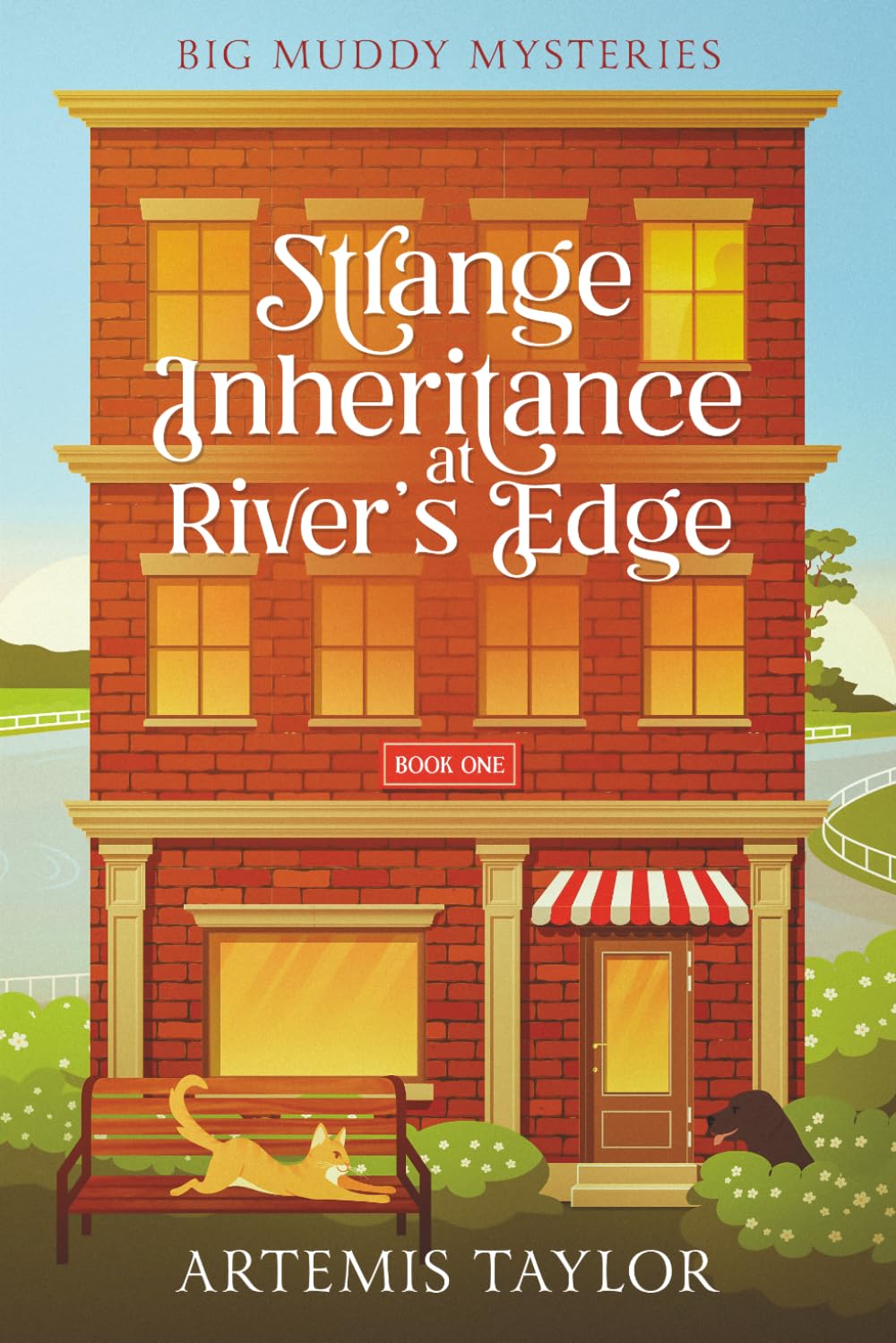
Strange Inheritance at River’s Edge follows Rebecca “Becky” Whitmore, a wounded veteran and former security professional who returns to Hannibal, Missouri, after inheriting her missing Aunt Iris’s strange old magic shop. What begins as a practical errand, settle the taxes, assess the building, maybe sell it, turns into a reckoning with family history, grief, buried secrets, and an Emporium that seems to have its own will. With a black Lab, a regal cat, a watchful river, and a town full of sharp tongues and soft loyalties, the novel opens a mystery that feels both supernatural and deeply personal.
I liked the way the book lets Becky be formidable without making her emotionally invulnerable. She can read a room like a threat map, handle herself under pressure, and still be undone by an old letter, a remembered recipe, or the ache of being called “Becky” by people who knew her before war and loss remade her. The story’s tenderness has grit in it. It’s splintered, wary, and earned. The Emporium’s magic works best when it feels less like spectacle and more like inheritance, objects remembering, rooms holding their breath, the past refusing to stay politely boxed.
I also enjoyed the texture of Hannibal as a living community rather than a postcard backdrop. The banter is brash, funny, and sometimes wonderfully cantankerous, with Rita, Delilah, Tessa, Jake, and the others giving the book a noisy human pulse. The novel lingers in emotional aftermath more than a conventional mystery might, but for me that patience became part of its identity. This isn’t only a whodunit or a haunted-shop tale; it’s a story about what protection costs, what mercy means, and whether a broken person can still become a shelter for others.
I would recommend Strange Inheritance at River’s Edge to readers who enjoy cozy mystery, magical realism, and veteran-centered women’s fiction with a supernatural edge. Fans of Sarah Addison Allen’s warm, uncanny small-town atmosphere may feel at home here, though Artemis Taylor brings more scars, more river mud, and a sharper sense of danger to the table. Strange Inheritance at River’s Edge is a tender, haunted mystery about coming home to a place that has been waiting, not to save you, but to ask you to stay.
Pages: 254 | ASIN: B0H56SWMPL


