Blog Archives
Nurse Florence®, What are Eosinophils?
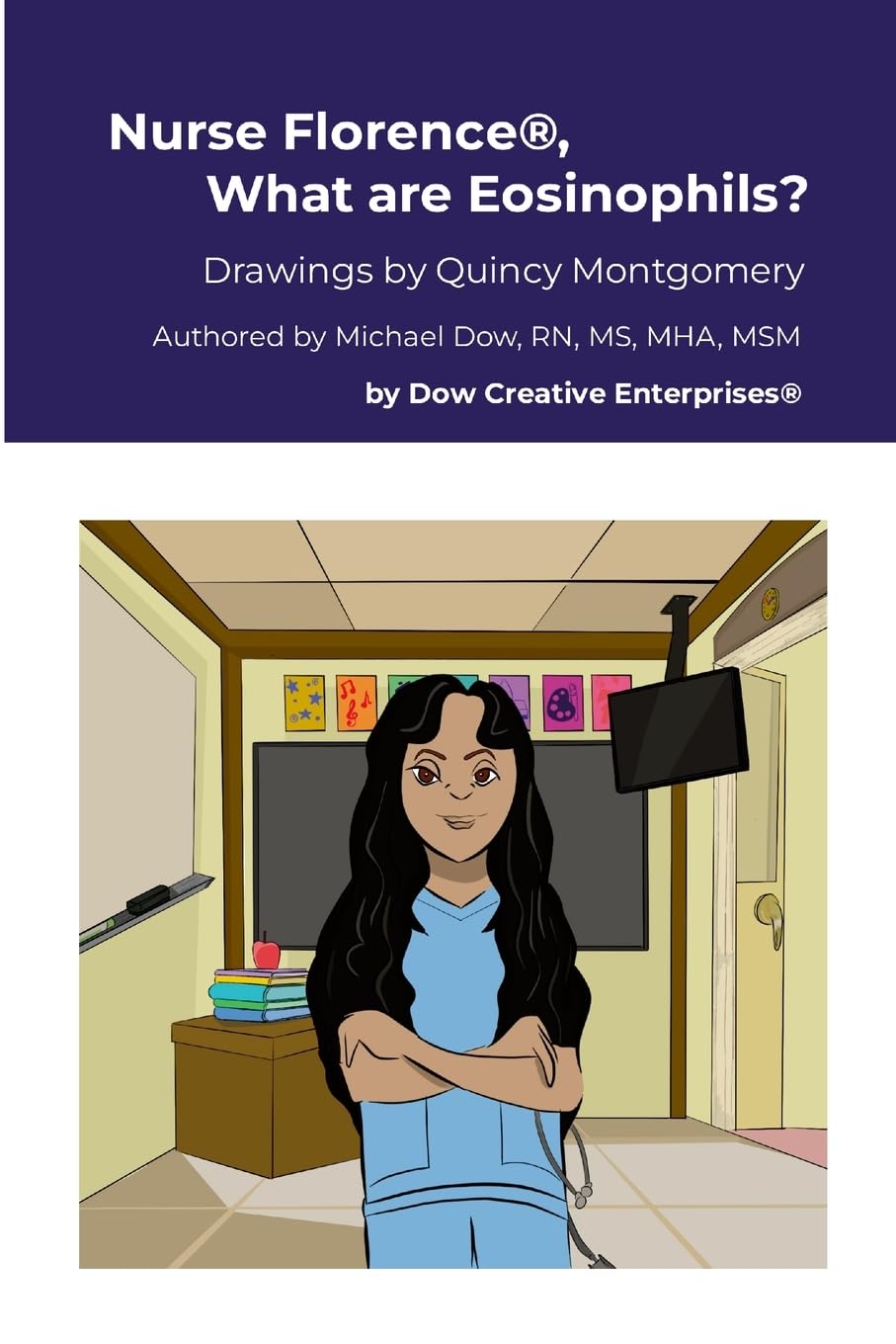

Nurse Florence®, What Are Eosinophils? offers a clear and approachable explanation of a complex part of the immune system through a simple narrative involving three students and Nurse Florence. The book introduces eosinophils, explains where they originate, how they function, and what happens when their levels become too high or too low. The structure is straightforward, and the illustrations support the scientific concepts without overwhelming young readers.
One aspect I appreciated was Michael Dow’s ability to present advanced vocabulary in a way that respects a child’s capacity to understand. When Nurse Florence describes eosinophils as white blood cells with a “two-lobed nucleus” and “granules” containing toxic proteins, the explanation is concise yet accurate. The book manages to treat its audience seriously while still maintaining accessibility, and I found that balance effective.
I also found the discussion of health conditions linked to eosinophil levels to be handled with notable care. The sections describing Cushing’s syndrome, sepsis, or inflammation of the lungs and digestive tract avoid sensationalism, focusing instead on clarity and factual grounding. For example, the explanation of how eosinophils respond to allergens and may contribute to asthma is direct but reassuring. This approach helps young readers and the adults guiding them engage with medical information without feeling alarmed.
Another strong element of the book is its emphasis on practical habits. Nurse Florence’s advice on avoiding allergens, maintaining good hygiene, limiting alcohol, and preparing food safely demonstrates the author’s commitment to tying scientific understanding to everyday actions. These suggestions are simple, but they reinforce the idea that personal choices can support the body’s natural defenses. I found this integration of science and daily behavior thoughtful and well-placed within the narrative.
Nurse Florence®, What are Eosinophils? would be well suited for elementary-aged readers with an interest in how the body works, as well as educators and parents seeking reliable, age-appropriate introductions to medical concepts. It offers clear explanations, steady pacing, and information presented with respect for young learners’ curiosity. Readers who enjoy science-themed picture books or who are beginning to explore topics in human biology would find it especially beneficial.
Pages: 68 | ASIN: 1300913924

Nurse Florence®, What are Regulatory T-Cells or Tregs?

Nurse Florence, What are Regulatory T-Cells or Tregs? by Michael Dow transforms a simple school lunchroom scene into a clever gateway to immunology, inviting young readers to follow a friendly conversation that demystifies the immune system. Nurse Florence introduces Regulatory T-Cells, “Tregs” as the body’s quiet guardians, the cells that steady our defenses by controlling infections and calming immune overreactions. The book walks readers through where these cells originate, what they do, and how they relate to concepts such as lymph nodes and cytokines. With Shav Wright’s bright illustrations and Dow’s approachable explanations, complex biology becomes surprisingly easy to grasp.
Dow excels at making dense scientific material feel natural for children. Instead of overwhelming readers with technical detail, he leans on recognizable characters and a familiar school setting, allowing the science to unfold gently through dialogue. The Nurse Florence series consistently exudes warmth, and this installment continues that trend. Here, the discussion around Tregs not only informs but sparks curiosity, steering clear of flat, textbook-style delivery.
A standout strength of the book is Dow’s willingness to trust his audience. He introduces authentic scientific vocabulary without diluting its meaning, choosing instead to integrate new terms into conversation so that young readers absorb them with confidence rather than intimidation. The scenarios illustrating how Tregs work make the biology feel tangible, giving kids a bridge between real-life experiences and scientific ideas.
Shav Wright’s illustrations contribute an energetic visual layer that helps unpack challenging concepts at a glance. Additional features, a glossary, journaling prompts, and activity sections, invite readers to keep exploring after the story ends, extending learning beyond the narrative.
If anything may give very young independent readers a moment’s pause, it’s the occasional technical term. Still, the book’s encouraging tone naturally promotes curiosity and discussion, making it a strong choice for shared reading. In the end, Dow offers an engaging and effective introduction to a vital piece of immune science. Parents, teachers, and librarians seeking to spark early interest in health, biology, or STEM will likely find this book an excellent fit.
Pages: 66 | ISBN: 1300816317
Many Types of Families

Pesky Penguins follows two adopted sisters who get whisked away by a magical beam of light to all sorts of places after they wish for different things. What was the inspiration for the setup of your story?
Becky and Sonya’s adventures were originally written as short-story drafts with the intention of making a picture book series about the girls. I decided against that model after publishing The Dee Lanson Series, which is for middle-grade readers. I love writing chapter books! So, I tossed around the idea of combining the adventures into the fantasy novel now known as Pesky Penguins and went with it!
What was your inspiration for their characters’ interactions and backstories?
At first, I imagined Becky and Sonya as friends and neighbors, but I felt the story would have greater depth if they were sisters. Being one of three sisters, I know how important and strong the bonds can be. Also, there are many types of families, so I wanted to show that adopted siblings can have a strong connection even if they come from different backgrounds.
Family, responsibility, and helping others are virtues that are highlighted throughout the story. Why are these important to telling the story?
Becky and Sonya are presented with a challenge when the baby penguin follows them home. They feel sad for Petey because he is separated from his family. The strong bonds within their own family fuel their desire to return Petey to his, even though they would love to have him for a pet. They assume the role of caregiver while they figure out what to do. It is a great learning experience for them and for the reader also.
Will this novel be the start of a series, or are you working on a different story?
I would love for The Adventures of Becky and Sonya to become a series, but at the moment it is a stand-alone book. The future of The Adventures of Becky and Sonya is yet to be decided!
Author Links: GoodReads | Website | Amazon
Two adopted sisters, Becky and Sonya, get a big surprise when a beam of light transports them to Antarctica! They are surrounded by penguins as their adventure begins! When a baby penguin follows them home, they see just how fun and wacky life can be. Their attempts to get him back to his penguin family don’t go as expected; they never know where the light beam will take them next. Join Becky and Sonya on their exciting, magical journey!
Pesky Penguins is a heartwarming story of the importance of family, developing responsibility, and helping others.
Janice Laakko is the award-winning author of “Gloppy”, the first book in “The Dee Lanson Series”
Nurse Florence®, What Do Hormones Control?

Nurse Florence, What Do Hormones Control? by Michael Dow invites young readers into the fascinating world of hormones through a lively exchange between Nurse Florence and a circle of inquisitive students. The narrative moves quickly yet smoothly, guiding children through what hormones are, how amino acids help create them, and why these chemical messengers influence everything from appetite and growth to mood and sleep. Clear explanations, approachable language, and an assortment of fun facts, food examples, and real-life scenarios help anchor the concepts. Emily Daugherty’s illustrations further illuminate the material, turning complex biology into something both welcoming and enjoyable.
Dow’s approach is inventive and well-paced, offering an accessible entry point into a topic that can easily overwhelm. Framing the lesson as a casual lunchroom conversation softens the science and creates a sense of ease, as though readers are simply listening in on a friendly chat. Nurse Florence serves as a confident and reassuring guide, encouraging curiosity and giving children the freedom to explore scientific terms and medical ideas without intimidation.
Clarity stands out as one of the book’s defining strengths. Technical words, amino acids, homeostasis, and others, are introduced thoughtfully and woven into everyday dialogue, complete with pronunciation guides to support young learners. Vivid, relatable examples, such as signals traveling from the stomach to the brain to announce hunger, help translate abstract science into something tangible. Dow’s commitment to building health literacy is unmistakable, extending from his careful explanations to his emphasis on real dietary sources of the nutrients that support healthy hormone function. Rather than relying on oversimplification, the book presents a genuine, interconnected view of the body, linking hormones to emotions, physical development, sleep patterns, and reproduction.
Emily Daugherty’s artwork enriches each chapter, giving readers visual anchors for the chemical structures and processes described on the page. A glossary and journal section at the end offer additional layers of engagement, transforming the book into a resource that can grow with young readers. While certain scientific terms may stretch the vocabulary of the youngest audience members, the narrative encourages discussion and welcomes adult guidance, making questions a natural part of the learning journey.
Nurse Florence, What Do Hormones Control? lays a solid foundation for budding interest in science and personal health. Families, educators, and school libraries will find it a valuable tool for nurturing curiosity and helping children build an early understanding of how their bodies work.
Pages: 66 | ISBN: 1300839228
Nurse Florence®, Tell Me About Adipose Tissue.
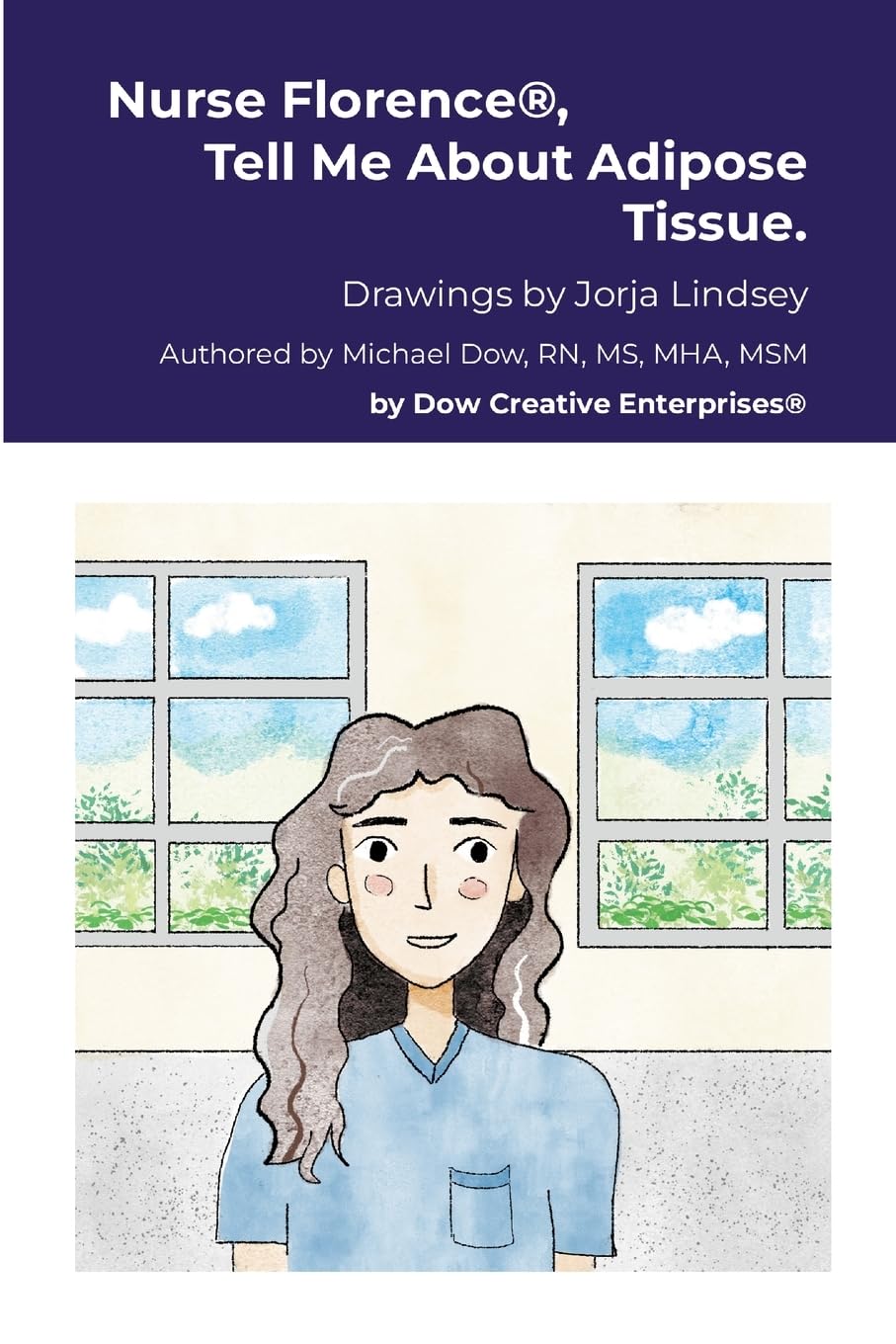
Nurse Florence, Tell Me About Adipose Tissue is a short, friendly children’s book that follows three girls, Jean, Condi, and Sonia, as they chat with Nurse Florence in the school cafeteria and learn what body fat actually does. The book moves from simple ideas, like fat acting as insulation, to surprisingly detailed explanations of hormones such as leptin, adiponectin, and estrogen. It mixes everyday examples with easy visuals and keeps the tone warm and encouraging throughout.
As I read it, I found myself smiling at how casually the story slips into teaching real medical concepts. The girls talk about insulation in houses and then flip right into insulation in the body, and somehow that transition feels natural and kind of cute. When Nurse Florence shows them an illustration and explains that adipose cells are “big and round because they hold fat inside,” the moment is simple but strangely satisfying in its clarity.
I also appreciated how the book doesn’t shy away from more advanced ideas. For example, the section about hormones, like leptin telling the brain to reduce appetite or adiponectin helping regulate blood sugar, surprised me. Even though the ideas get pretty heavy, the book keeps things breezy. It never feels patronizing, which I really appreciated. Michael Dow genuinely believes kids can manage real science, even when the vocabulary gets a little hefty or awkward.
Another moment that stuck with me was the reminder that the body is interconnected, that if one system changes, another reacts. Nurse Florence explains homeostasis in a calm, almost cozy way that I didn’t expect for such a big idea. It gave the book a bit of emotional weight and left me thinking. The closing page, where the girls reflect that having too little or too much fat can hurt the body, hits a balanced note without being preachy.
I’d recommend Nurse Florence, Tell Me About Adipose Tissue to curious kids, parents who like reading science together, and teachers who want approachable STEM material. It’s simple, sweet, and surprisingly informative, and even as an adult I walked away with a tiny spark of “hey, that was fun to learn.” The tone is warm, the drawings are gentle, and the science is real.
Pages: 62 | ISBN : 1300911441
Nurse Florence®, What is Sickle Cell Disease or Sickle Cell Anemia?

Nurse Florence: What Is Sickle Cell Disease or Sickle Cell Anemia? offers a clear and structured introduction to a complex medical condition, presented through a narrative designed for young readers. The book follows a student named Condi, who seeks information from her school nurse after learning that her baby cousin has been diagnosed with sickle cell disease. Through their conversation, the book walks through the genetics, symptoms, complications, diagnostic methods, and treatments associated with the illness. The format blends accessible storytelling with straightforward explanations, resulting in an educational resource that feels both purposeful and sincere.
As I read, I appreciated the author’s commitment to clarity. The explanations are direct, and the writing avoids ambiguity. When Nurse Florence notes that sickled red blood cells survive “10 to 20 days instead of 120 days,” the significance of that difference becomes immediately apparent, even for a younger audience. Condi’s questions, such as when she asks if she can be tested for the gene, lend the dialogue an authenticity that makes the information easier to absorb. The tone remains calm and reassuring, which supports the book’s mission to educate without overwhelming its readers.
I was also struck by the book’s willingness to address serious complications with precision. Topics such as acute chest syndrome, stroke symptoms, gallstones, and avascular necrosis are presented plainly, without sensationalism. When Nurse Florence explains that stroke symptoms can include paralysis on one side of the face or body, I found the frankness notable for a children’s text. Rather than feeling out of place, these details reflect a respect for young readers and an understanding that many families affected by sickle cell disease must confront these realities directly.
Recommendations regarding hydration, nutrition, avoidance of extreme temperatures, physical activity, and preventive care offer a sense of agency. I found the emphasis on emotional and community support, such as speaking with a therapist or joining support groups, especially meaningful. These sections remind the reader that living with sickle cell disease extends beyond medical management; it also involves fostering resilience and connection.
When Condi eagerly shares what she has learned with her mother, the book leaves the reader with a sense of empowerment and understanding. It reinforces the idea that knowledge can help reduce fear and encourage informed conversations within families.
I would recommend Nurse Florence®, What is Sickle Cell Disease or Sickle Cell Anemia? to elementary and middle school students, parents seeking to build health literacy, educators looking for accurate medical explanations, and even adults who want a concise overview of sickle cell disease. Its blend of approachable narrative and well-organized information makes it a valuable resource for a wide audience interested in understanding this condition.
Obesseus Feasts Of Legends (The Slam-Fu Edition 1)
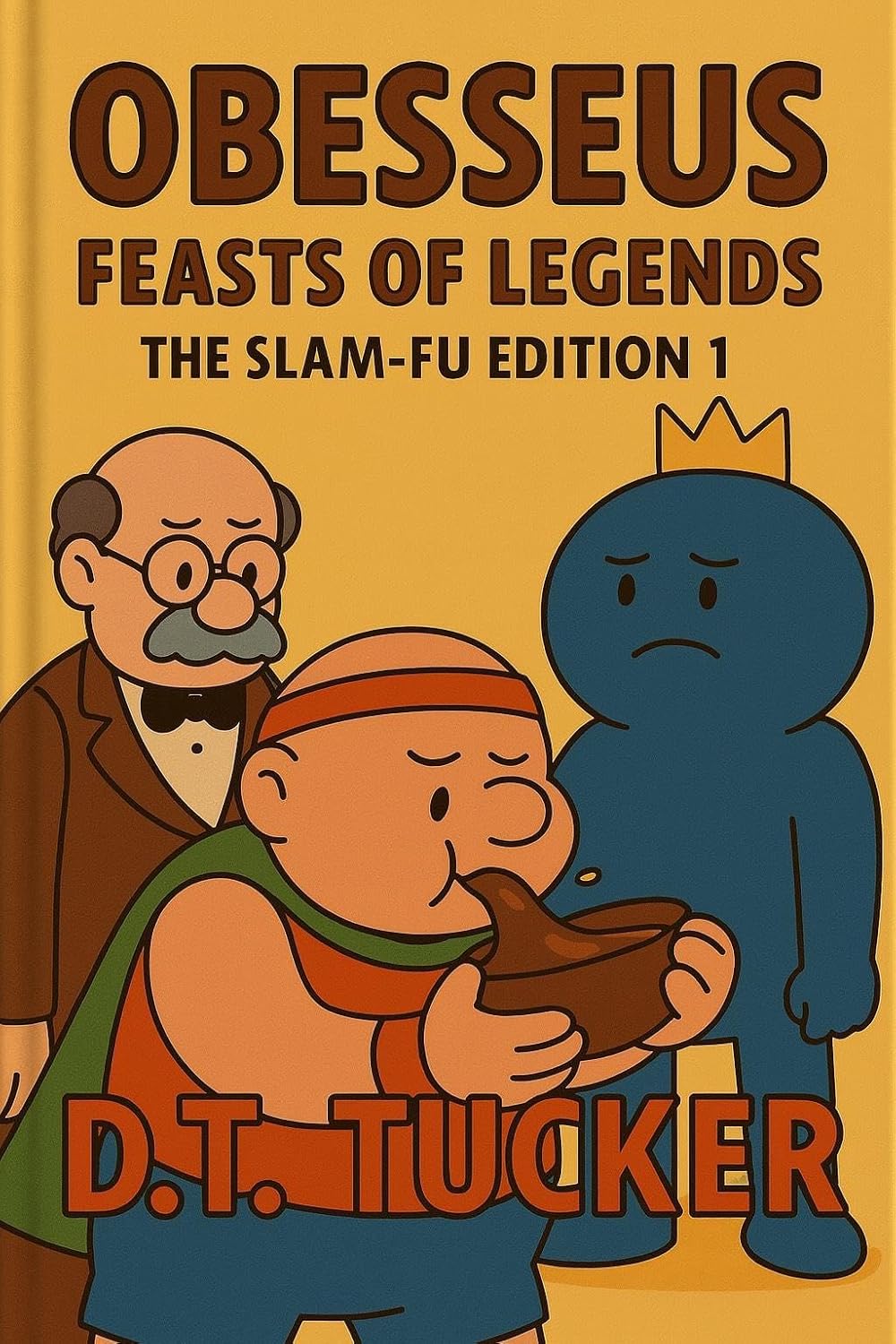

I just finished Obesseus Feast of Legends, and what a wild ride. This book tells the story of Obesseus. He is a hero. His belly is big. His heart is bigger. He just wants to eat dumplings. A former friend, Monica Mango, starts a war. She leads the “Juice Regime.” She hates solid food. Obesseus must fight. He learns a power called Slam-Fu. The book follows his journey. He defends the world of Buffetland. It is a huge, sprawling, absolutely massive food fight.
The writing is a total trip. Sentences are short. Sometimes just one word. Then a long, rambling thought. Things are yelled in capital letters. It felt less like reading a novel and more like reading a script. A script for the most frantic cartoon ever. The sheer number of ideas is surprising. The author just throws everything at the wall. And honestly? I loved watching it stick. It was a blast.
I really connected with the ideas here. The book is not just about food puns. It’s about big feelings. Obesseus himself is pure joy. He represents indulgence. He fights against control. The villains are great. They are juice-cleanse tyrants and asparagus-god dictators. I felt a lot for the side characters. Conflicted Tomato was my favorite. He just wants to know where he belongs. What a mood. I will say the plot gets messy. Part 1 was simple. Part 3 was just bananas. New characters kept appearing. Muffin Ninjas. Sinister Shrimp. A gaslighting grapefruit named Grant. It was a lot.
I am genuinely happy I read this. It is a messy, chaotic, and wonderful book. Do not read this if you want a quiet, serious story. This is not that. This book is loud. This book is strange. This book is wacky. I would recommend this to anyone with a wild imagination. It’s for people who grew up on hyperactive cartoons. It’s for anyone who just wants to see a hero win. A hero who wins with a full belly and a good burp.
Pages: 262 | ASIN : B0FZD69XD4
Nurse Florence®, What are Signs Something is Wrong with My Kidneys?

Nurse Florence®, What are Signs Something is Wrong with My Kidneys? is a friendly, kid-focused walk-through of kidney basics and early signs of kidney trouble. The story follows three curious girls, Jean, Condi, and Sonia, as they chat with Nurse Florence in the school cafeteria and learn how kidneys work, why they matter, and what warning signs to look out for. The book mixes simple explanations, gentle illustrations, and clear examples, making a complicated topic feel surprisingly easy to absorb.
I found myself smiling at how straightforward the storytelling is. The moment where Nurse Florence explains that kidneys filter “a large bathtub full of fluid every day” made me sit back in awe, because that’s an image that sticks with you. I also loved that the book doesn’t dodge real medical words, like nephron and electrolyte, but still manages to keep the mood light. It never feels stuffy or lecturing, just honest and clear. I appreciated that balance, and I think kids will too.
The way the book lays out the symptoms feels powerful but genuinely useful. When the book mentions muscle cramping as a sign of electrolyte imbalance or foamy urine being linked to excess protein, it made me think about how many adults don’t even know these things. The writing offers small moments of surprise without ever trying to alarm the reader. Even the bit about puffy eyes, something almost everyone has dealt with, feels like a friendly nudge to pay attention to your body. I liked how the examples are simple but surprisingly memorable.
The characters’ responses help maintain a warm and inviting tone. When the girls conclude by saying that understanding their bodies “makes you feel empowered,” the sentiment resonated with me. It’s sweet but also real, there’s an emotional lift to it. The book consistently conveys the message that understanding one’s health is both possible and meaningful, a sentiment I found genuinely moving. And the illustrations sprinkled throughout add a nice bit of charm without distracting from the information.
I’d recommend Nurse Florence®, What are Signs Something is Wrong with My Kidneys? to curious kids, parents who like reading educational stories together, or anyone who wants a friendly intro to kidney health without digging through medical websites. It’s simple, upbeat, and surprisingly engaging.
Pages: 69 | ISBN : 1300886765



 LITERARY TITAN