Blog Archives
Teamwork Lightens the Load

Chaos in the Courtyard follows a busy dingo running a hotel who tries to prepare for an approaching storm but keeps getting interrupted by guests who need his help. Why did you choose an approaching storm as the central challenge that brings the characters and their problems together?
Many children have experienced a storm, and perhaps watched or helped their parents prepare for it—moving pot plants, covering the pool, storing the furniture. This scenario brings plenty of tension and action, which is fun to write, especially since Dallas seems to be the only one preparing for the approaching storm. It gave me a chance to delve into his job as a hotelier who wears many hats, while also highlighting the importance of teamwork and kindness.
How did you approach creating six animal residents with distinct personalities, needs, and ways of communicating?
Anastasiya Halionka’s animated illustrations brought the characters’ personalities to life. It was really a blend of her vision and mine that gave each character that spark—Dallas’s willingness to please; Oma’s nervousness; Queenie’s dramatic flair.
How does the story encourage children to understand that asking for help can be just as important as offering it?
In the story, Dallas grows increasingly flustered as he tries to solve everyone’s problems and prepare for a storm. This shows how trying to fix others’ problems alone can be stressful. The turning point comes when they all see the devastation the storm left behind. Everyone pitches in to help Dallas clean up the courtyard, proving that teamwork can lighten the load.
Where does the next book in the series take the characters?
Besides Dallas, I’m quite fond of Tiny Tarsier. He’s naïve, and his English isn’t the strongest. As shown in “Chaos in the Courtyard,” he sometimes misinterprets colloquial expressions. I’ll explore this further, as it leads to some hilarious situations.
Author Links: GoodReads | Website
With so much on his plate, Dallas Dingo is feeling the pressure, but the residents of the Ragtag Hotel are counting on him. Can he secure everything amid the fierce winds while trying to fix everyone’s problems? Brace yourself, as a storm is brewing!
🌏 Learn about animals from the different corners of the globe
🎁 Perfect gift for teaching young children about friendship and kindness
🌙 A short bedtime story to send your child off to sleep with a smile
❤️ Charming characters and illustrations ideal for young children ages 4-9 years
Giving the House a Voice

The House as Witness is your debut poetry chapbook exploring how a New Hampshire home holds the sounds, memories, routines, and quiet acts of love that shape family life across generations. What inspired you to give the house its own presence as a witness?
I’ve always thought houses must know an awful lot about the people who live in them. They hear the arguments, the laughter, the crying babies, the conversations nobody else is supposed to hear. They see us at our best and our worst, and they’re still standing there the next morning.
When I started writing this collection, I was thinking about how much had happened within the walls of our home, particularly as my children were growing up and my mother was growing older. I was interested in the idea that the same hallway could hold the sound of children running through it and, years later, the memory of someone who was no longer there.
I wanted to give the house a voice because, in a way, it had been there for all of it. We tend to think of ourselves as the ones who make a house into a home, but I think the places we live shape us just as much as we shape them.
In poems like “Laundry Spinning Like Time,” everyday chores carry emotional weight. How do you decide which ordinary moments deserve closer poetic attention?
I have three children, so laundry is practically a permanent fixture in my life! There’s something funny and a little maddening about spending so much time on a task that’s never actually finished. You wash everything, fold it, put it away, and somehow the basket is already full again.
I think that repetition is what interested me when I wrote “Laundry Spinning Like Time.” So much of family life involves doing the same things over and over, often without anyone noticing. You make dinner, clean the kitchen, and do it all again the next day. But those routines are also a large part of how we care for one another.
I don’t sit down intending to write a poem about housework. Usually something about a familiar task catches my attention, whether it’s the sound of the washing machine or a stack of dishes that seems to multiply overnight. I like the challenge of finding something worth saying about the parts of life we usually rush through.
Your poems explore the overlapping responsibilities of being a parent and a daughter. How have these roles shaped your understanding of caregiving and home?
I think one of the strangest parts of adulthood is realizing that you can be responsible for raising your children while also worrying about the health and well-being of your parents. You’re still someone’s daughter, but suddenly you’re the one making decisions, checking on medications, bringing food, and wondering whether you’re doing enough.
My mother’s illness and death were a significant part of what informed this collection. The section about the apartment at the back of the house is particularly personal. Poems like “The Hallway Between Us” and “Tea Cups Left in the Sink” explore how complicated caring for a parent can be, especially when you’re watching someone you love become less independent.
As an emergency medicine and addiction medicine physician, I spend a lot of my professional life caring for people in difficult circumstances. You might think that would make caring for a family member easier, but it doesn’t necessarily. Knowing what might happen medically doesn’t make you any less of a daughter.
I think I’ve learned that caregiving isn’t always graceful or even particularly satisfying. Sometimes you’re tired, frustrated, worried, or all three. You still bring the glass of water. You still check on them. And sometimes those small things are all you can offer.
The changing New Hampshire seasons appear throughout the collection. How does the relationship between weather and domestic life reflect the emotional changes within a family?
I’ve lived in New England my entire life, so the seasons are a huge part of how I experience home. In New Hampshire, the weather has a way of making itself everyone’s business. Winter means snowbanks, wet mittens, and everyone spending a little too much time together indoors. By summer, we’re eating on the deck, leaving windows open, and trying to make the most of the daylight.
I wanted the seasonal poems to reflect those familiar rhythms, but also the way a house can feel different depending on what’s happening within the family. A snowstorm might be exciting when the children are little and everyone is hoping for a day off from school. That same storm can feel very different when you’re worried about an aging parent’s health or whether someone will be able to get to an appointment.
One of the things I love about living here is that the seasons don’t particularly care what else is going on in your life. Spring arrives whether you’ve had a wonderful winter or a terrible one. There’s something reassuring about that, although after a long New Hampshire winter, I’m usually more than ready for it!
Author Link: Instagram | Website
As you step inside, may you feel the presence of a house that has watched, held, and remembered. May its poems invite you to consider what your own walls have witnessed, your living, your loss, your letting go, and the tenderness found in every ordinary moment.
Welcome Home…
At the Ragtag Hotel: Chaos in the Courtyard


Freya Novak’s Chaos in the Courtyard is a lively and heartwarming children’s book about kindness, cooperation, and the challenges of keeping everyone happy when there’s so much to do. Dallas Dingo has a busy job looking after the Ragtag Hotel, where an assortment of animal residents keeps him on his toes. With a storm approaching, Dallas needs to prepare the courtyard for some wild weather. Unfortunately, his plans are repeatedly interrupted by residents who need help with everything from missing belongings to household mishaps. Each new problem adds to his growing list of responsibilities, creating a playful story that captures the feeling of having too many things to do and too little time to do them.
Dallas is an appealing central character whose patience and helpful nature make him easy to root for. Novak gives the hotel residents distinctive personalities, from the dramatic Queenie Quokka to the endearing Tiny Tarsier, whose misunderstandings of everyday expressions add some especially funny moments. The dialogue is animated and conversational, making the story well suited to reading aloud. There’s a steady rhythm to the residents’ requests, with each interruption bringing another little surprise. Beneath the humor, the story explores how people can become so absorbed in their own concerns that they overlook what someone else might be dealing with. It’s a relatable idea presented through situations that young readers can easily understand.
The animal characters have wonderfully expressive faces, and their exaggerated gestures help communicate everything from panic and confusion to exhaustion and delight. Dallas’s changing expressions are particularly entertaining, offering visual clues to his growing frustration even as he continues helping his neighbors. The illustrations also make excellent use of movement, with swirling leaves, billowing fabric, and dramatic skies emphasizing the approaching storm. Bright blues, warm oranges, and rich purples create an inviting setting, while the darker storm scenes bring a welcome shift in atmosphere. There are plenty of amusing visual details for children to discover, and the pictures complement the storytelling with energy and humor.
One particularly appealing feature is the book’s celebration of different cultures and languages. The residents come from various parts of the world, and their conversations introduce words and expressions in Lingala, Spanish, Swahili, and Filipino. These touches feel like a natural part of the hotel’s lively community. A world map at the back shows where the animals come from, while additional pages share interesting facts about their real-life counterparts. These extras extend the reading experience and invite further conversations about animals, geography, and language. At its heart, Chaos in the Courtyard is an engaging story about looking out for one another, recognizing the efforts of others, and discovering what a community can accomplish when everyone lends a hand. It’s a cheerful, amusing read with a message that families can enjoy discussing together.
Pages: 36 | ASIN : B0HHWGM4Q7

The Boy Who Wanted to Fly
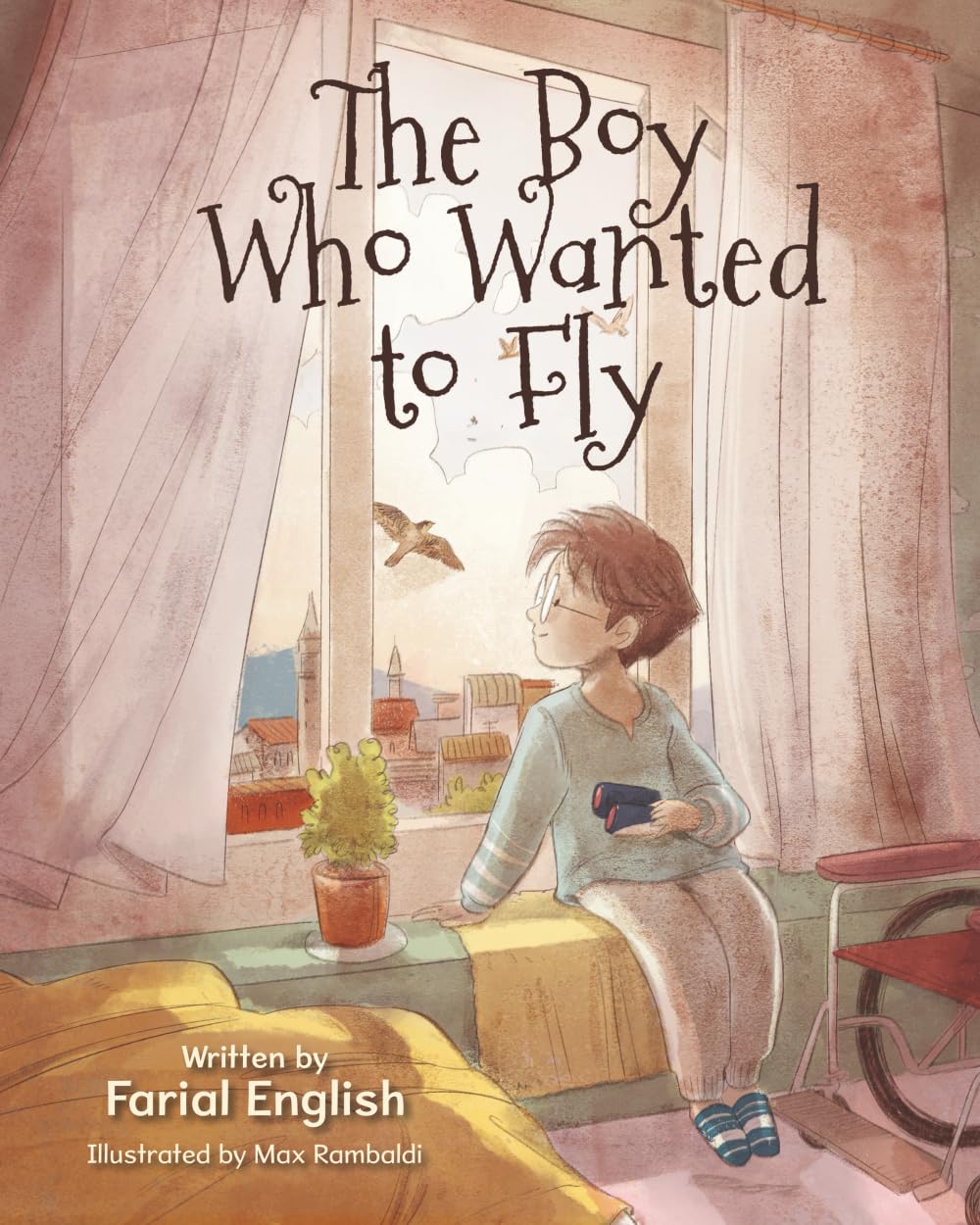
In The Boy Who Wanted to Fly, Farial English introduces us to Max, a young boy in a wheelchair who dreams of soaring among the clouds. Day after day, he gazes from his bedroom window, captivated by birds darting gracefully between the buildings. One afternoon, while Max is lost in thought, his sister Maya bursts in with thrilling news: the family will spend spring break at the beach. Excitement fills the house. For Max, however, the trip is more than a getaway; it is a chance to bring his dream to life. He quickly begins planning, determined to construct something that might carry him skyward. The question lingers: will Max find a way to fly?
This story shines for many reasons. At its heart lies a celebration of inclusivity. Max’s wheelchair never sets him apart from his sister; the two share the same joy, mischief, and determination. English resists the temptation to dwell on limitations, instead allowing Max’s ingenuity and creativity to take center stage. Children reading the story learn not to fixate on disability but to focus on the imagination and resilience that define Max’s character.
Equally compelling is the portrayal of family. The anticipation of a simple beach trip brims with warmth, highlighting that what truly matters is time together rather than the destination. English weaves this theme seamlessly, reminding readers that life’s simplest pleasures often create the richest memories.
A delightful surprise awaits readers as well: ten colorful kites are cleverly hidden throughout the book. This treasure-hunt element adds an interactive twist, turning storytime into an engaging game for children and parents alike. The illustrations by Max Rambaldi deserve special mention. Each full-page artwork is meticulously detailed, with muted tones that perfectly echo the gentle, heartfelt narrative.
The Boy Who Wanted to Fly is more than a children’s story; it is a celebration of imagination, inclusivity, and family. With its heartfelt message, engaging storytelling, and stunning illustrations, it is a book that resonates with readers of all ages. Highly recommended.
Pages: 32 | ASIN : B0FLF3H3MY



