Blog Archives
Life’s Like A Book…


Life’s Like A Book…, by Christina M. McKenzie, is a contemporary women’s fiction novel that blends romance, grief, friendship, family, and personal reinvention into the story of Kloey, a young woman whose carefully planned life has stopped feeling like her own. At the beginning, she’s ending a five-year relationship, finishing law school, dealing with the lingering effects of a serious medical condition, and questioning what she actually wants from adulthood. Then the sudden death of her best friend, Brandi, changes the direction of everything. What follows is less about finding one simple answer and more about Kloey learning how to participate in her own life again.
One of the strongest parts of this contemporary romance and women’s fiction story is the way grief remains present even when Kloey is doing ordinary, funny, messy, or impulsive things. Brandi’s death doesn’t disappear whenever romance enters the picture. Instead, Kloey carries her friend with her, quite literally for much of the novel, scattering Brandi’s ashes in meaningful places and eventually incorporating some into a memorial tattoo. That gives the book an unusual mixture of sadness, humor, sensuality, and everyday life. Kloey can be mourning one moment, flirting with Henry the next, worrying about work after that, and then thinking about food, her dog, or something completely mundane. It makes her feel like a person whose life keeps happening even when she isn’t emotionally prepared for it.
The romantic storyline with Henry fits naturally into Kloey’s larger journey because attraction forces her to confront insecurities that existed long before she met him. Her illness has changed her body, her former relationship damaged her confidence, and dating exposes both wounds pretty quickly. Henry’s response to her scars becomes an important early moment because he treats them as evidence of a life lived. Their connection develops alongside separations, career decisions, long-distance conversations, and Kloey’s fear of allowing another major change into her life. That makes the romance feel connected to the book’s broader questions about confidence, intimacy, independence, and whether feeling safe is always the same thing as feeling fulfilled.
By the end, Life’s Like A Book… has grown into a story about accepting that a life can contain several different versions of the same person. Kloey has lost Brandi and her grandmother, begun establishing herself as an attorney, reopened herself to Henry, and reached a point where career, home, and love may all require another leap. The final pages deliberately leave her at that crossroads, considering a different firm, the possibility of taking over her family’s Florida farm, and a future with Henry before finally deciding to listen to what she wants and beginning to type. For readers who enjoy contemporary women’s fiction, romantic fiction, stories about grief and healing, and character-driven novels about starting over, this is an intimate look at how one chapter of a life can close while the next one is still being written.
Pages: 150 | ASIN : B0DH7T452J

Viaje de Autodescubrimiento

El regalo especial de Áloe Vera sigue a una pequeña planta que, al compararse con las coloridas flores de su jardín, emprende un dulce viaje de autodescubrimiento hasta comprender que su mayor regalo siempre estuvo en su interior. ¿Qué la inspiró a convertir una planta de aloe vera en la protagonista de una historia sobre autoestima y aceptación personal?
La inspiración nació de algo muy sencillo y cercano a mí: el jardín y la manera en que los niños, al igual que las plantas, crecen a su propio ritmo.
El aloe vera no es necesariamente la planta más colorida ni la que primero llama la atención en un jardín. No tiene los pétalos brillantes de una flor, pero posee algo extraordinario en su interior. Esa idea me pareció una metáfora hermosa para hablar con los niños sobre la autoestima, la identidad y el valor personal.
Como madre, abuela y educadora, he visto cuán temprano los niños comienzan a compararse con los demás. Quería crear una historia que les recordara que no necesitan parecerse a nadie más para tener valor. A veces aquello que nos hace diferentes es precisamente lo que algún día se convierte en nuestro regalo más especial.
¿Por qué decidió mostrar el descubrimiento del valor de Áloe a través de la ayuda que brinda a los animales del jardín?
Quería que Áloe descubriera su valor a través de la experiencia, no porque alguien simplemente le dijera que era especial.
A medida que puede ayudar a los animales del jardín, comienza a comprender que aquello que antes veía como una diferencia tiene un propósito. Para mí era importante mostrar que nuestros dones adquieren un significado aún mayor cuando podemos utilizarlos con bondad y para ayudar a los demás.
Los animales también hacen que ese descubrimiento sea mucho más accesible para los niños pequeños. Cada encuentro permite que el mensaje se revele poco a poco, de una manera natural y afectuosa.
Al final, Áloe no tiene que transformarse en otra cosa. Sigue siendo exactamente quien siempre fue; lo que cambia es la manera en que logra verse a sí misma.
¿Cómo trabajó el equilibrio entre el mensaje educativo del libro y la necesidad de mantener la historia divertida y accesible para los niños pequeños?
Siempre quise que El regalo especial de Áloe Vera fuera, ante todo, una historia que los niños disfrutaran.
Mi formación como educadora influye naturalmente en mi escritura, pero no quería que el libro se sintiera como una lección. El aprendizaje debía surgir de la historia, de los personajes, de las emociones y de las experiencias de Áloe.
Por eso utilicé un jardín lleno de vida, animales, pequeños momentos de descubrimiento y situaciones que los niños pueden comprender fácilmente. Los conceptos de identidad, autoestima, empatía y propósito están presentes, pero se encuentran integrados dentro de la aventura.
Creo profundamente que los niños pueden explorar ideas importantes cuando les damos historias que les permitan sentirlas antes de tener que explicarlas.
También me encanta que la conversación pueda continuar después de terminar el libro. Un padre, maestro o cuidador puede preguntar: “¿Cuál crees que es tu regalo especial?” y, de pronto, una historia se convierte en una oportunidad para que el niño piense sobre quién es.
Las estaciones y los cambios del jardín refuerzan de manera muy bonita el mensaje de la historia. ¿Qué importancia tenía para usted incluir ese elemento?
Era muy importante porque el jardín representa crecimiento.
En la naturaleza, nada florece todo el tiempo ni todo crece de la misma manera. Hay temporadas de cambio, de espera, de crecimiento y finalmente de descubrimiento. Quería que el mundo alrededor de Áloe reflejara también su transformación interior.
Los niños están creciendo constantemente, aunque ese crecimiento no siempre sea visible. Sus intereses cambian, desarrollan nuevas habilidades y comienzan poco a poco a descubrir quiénes son.
Las estaciones me permitieron transmitir ese mensaje de una manera muy orgánica: no tenemos que apresurarnos para florecer ni compararnos con alguien que se encuentra en una etapa diferente.
Cada niño tiene su propio tiempo, su propia manera de crecer y algo especial esperando ser descubierto.
Enlaces del autor: GoodReads | Website | Amazon
Un conmovedor libro ilustrado sobre la autoestima, el amor propio, la resiliencia y la magia de la naturaleza.Cuando Áloe Vera observa el jardín, ve flores radiantes y pétalos de todos los colores. A su lado, ella se siente sencilla y espinosa. Nadie parece notarla… hasta que un caluroso día de verano trae quemaduras de sol, raspones y picazón, y Áloe descubre que posee un regalo muy especial.
Al compartir el poder sanador de su gel con sus amigos del jardín, comprende una gran verdad:
aquello que la hace diferente también puede convertirse en su mayor fortaleza.
El regalo especial de Áloe Vera es un hermoso libro ilustrado que inspira a los niños a fortalecer la autoestima, el amor propio, la confianza en sí mismos y la inteligencia emocional. A través de una historia tierna y esperanzadora, los pequeños descubrirán que todos tenemos dones únicos y que la verdadera belleza nace de nuestro interior.
Love Beyond Eros


Love Beyond Eros, the third book in Chris Neo’s The Love Secret series, is an ambitious mix of romantic drama, psychological exploration, family story, and high-stakes adventure. The novel begins with Aris missing from the remote Greek village where his relationship with Angelica has reached a painful turning point, then quickly turns his disappearance into a life-or-death crisis. From there, the story keeps expanding, bringing friends, family members, military figures, enemies, and former lovers into an increasingly elaborate chain of events. That scope fits Neo’s stated purpose for the series: he wants an emotionally driven story that explores love and relationships while keeping the plot moving quickly. What makes the book distinctive is how fully it commits to that combination. Love here isn’t simply romantic attraction. It becomes the force behind friendship, loyalty, sacrifice, jealousy, forgiveness, parenthood, and the difficult choices people make when someone they care about is in danger.
The emotional center of the novel is Aris, but the story works through a large ensemble, and several of the most interesting developments happen because other characters are forced to reconsider who they are. Angelica’s devotion to Aris becomes fierce and protective. John and Uri discover that friendship means showing up even when they’re frightened, inconvenienced, or powerless to fix the situation. Varo has one of the book’s largest arcs, moving through obsession, suspicion, buried trauma, loyalty, and a growing understanding of her own past. Granny, Zoe, Gina, Adonis, and others each contribute another variation on the book’s central question: what does loving someone actually require of you? The title gradually earns its importance because the novel keeps pushing beyond eros, or romantic desire, toward agape, family bonds, friendship, compassion, and self-sacrifice. Angelica eventually gives that idea its clearest expression when she describes a love that reaches beyond eros, tying the title directly to the emotional argument the story has been building.
Neo tells all of this in a deliberately heightened style. The book moves from a Greek village and a mysterious poisoning into military flights, international maneuvering, assassins, rescues, betrayals, martial arts confrontations, family reunions, pregnancies, old romances, and long-delayed revelations. It has the energy of a serialized adventure, with short chapters and frequent shifts in location and perspective designed to keep another complication arriving just as the previous one settles. That can make the experience feel almost breathless, but it also gives the novel its personality. Serious conversations about love and identity can sit beside broad comedy, sensual scenes, action sequences, and larger-than-life characters without the story losing its basic emotional direction. By the final chapter and epilogue, the sprawling cast has been drawn back toward family, healing, changed relationships, and the possibility of another journey, giving the ending the feeling of both a conclusion and a continuation.
I’d recommend Love Beyond Eros most strongly to readers who enjoy emotionally intense stories that combine romance with adventure, family drama, friendship, danger, and questions about why people love the way they do. It should especially appeal to readers who like big casts, dramatic reversals, passionate dialogue, Greek cultural touches, and characters whose emotional growth matters as much as the physical action surrounding them. Since this is Book Three, it will have the greatest impact on readers who already know Aris, John, Uri, Varo, Angelica, and the relationships developed earlier in The Love Secret series. The novel asks for a reader willing to enter its heightened world and care about its characters with the same intensity that they care about one another. For that reader, this is a generous, eventful finale built around a sincere idea: desire may begin a love story, but loyalty, sacrifice, forgiveness, friendship, and family are what reveal how deep love can become.
Pages: 416 | ASIN : B0CXB6NQTL
There Is Worth In Everyone

Dignity is a tender coming-of-age novel about a schoolboy whose unlikely friendship with a misunderstood binman named Bogie teaches him about dignity, friendship, and the hidden richness of ordinary lives. Where did the idea behind this novel come from?
There’s a song by the Scottish band Deacon Blue called Dignity. The story told in the song was the inspiration behind the book and the central character Bogie. I’ve always loved the premise of an underdog quietly striving to achieve a goal. That formed the basis for the narrative and provided the foundation to allow the story to unfold.
Bogie speaks very little, often communicating more through his actions than his words. What drew you to such an understated character?
The book is set in my hometown of Petone, New Zealand. When I was growing up there, we had a local binman who kept our streets clean and very much kept himself to himself. I didn’t know the man at all, but as I created Bogie, I couldn’t help but wonder what that binman from my 80s childhood was like. His presence was very much with me as I wrote, and he evolved as he landed on the page. Because he said so little, the character Bogie intrigued me. I placed myself in the boy’s shoes, trying to understand him more, yet from the outset, I knew he’d have a reticence to share anything about himself. It’s funny, but there’s a school of thought that authors should know everything about their characters before they set them on the page, and some writers adopt that by creating whole dossiers on the characters within their books. I’m completely the opposite; I want to discover my characters as I go along and see how they react to events as they happen. Sometimes they surprise me, and that’s the joy of writing: when the unexpected appears on the page, and I think, Woah, didn’t see that coming!
The narrator is also undergoing a coming-of-age journey. How did you balance his growth with Bogie’s story so that neither character overshadowed the other?
Dignity was always going to be about Bogie, but given his taciturnity, he was never going to tell the tale himself. The older narrator, looking back at his pre-teen years and his relationship with the older man, became the vehicle for telling Bogie’s story. In itself, though, I didn’t think there was enough to sustain a novel, so I introduced backstory for the boy, conscious that the pursuit of the boat was imperative to the outcome. If I’d placed more emphasis on the boy’s growth and his life, I believe I would have lost the foundation of the story, and a different book would emerge that placed Bogie into the background, the very place from where I wanted him elevated!
What do you hope readers notice differently about the overlooked people in their own communities after reading Dignity?
One of the great disparities in the developed world is the reward that comes to those who, I consider, do very little that is worthy. For reasons I will never fully understand, our capitalist model rewards certain industries and roles far more greatly than others. Yet some of our most honorable professions- teachers, carers, service workers, emergency services, the key workers that we couldn’t do without during the pandemic – are the least rewarded, and often some of those professions are looked down upon. If there’s one thing that I hope readers take away, it’s the understanding that there is worth in everyone, and no matter how overlooked, those people should be recognized as contributing something important to our society and be allowed to pursue their dreams.
Author Links: GoodReads | Threads | Bsky| Facebook | Website
At its heart, it is the story of a quiet man overcoming adversity and a young man finding his place in the world. With vivid characters and a sharply observed setting in 1980s New Zealand, DIGNITY reminds us that there is much to respect about those who choose to walk quietly among us.
Friendships Should Be Treasured

The King and the Ogre follows a kindhearted king and his gentle ogre best friend as they investigate a group of dragons disturbing the villagers and discover things are not what they seem. What attracted you to using familiar fairy-tale characters such as kings, ogres, and dragons?
I think that such fairy-tale characters would resonate best with young readers, as these characters are often friendly, silly, and altogether familiar. Their personalities, too, are light-hearted, good-natured, and easily relatable, not just to young people, but to everyone in general. The combination of the king and the ogre as lifelong friends in particular is an unlikely and unique pairing that is not often found in such settings, one that I hope will set this story apart from others. And in a setting such as this, silly dragons, simply misunderstood, only add to such uniqueness. As an historian, I have always been interested in the medieval period. To tell a light-hearted story in a fairy tale genre that imparts an important message about kindness, caring, and acceptance has proven to be a wonderful writer’s experience.
The story encourages children not to judge someone by appearance. What do you hope children understand about people who seem different from them?
Simply put, children should embrace the beautiful diversity in the world all about them, explore the differences they discover, and not jump to hasty or quick conclusions or assumptions about others, just because someone looks or acts differently than themselves. This can be said of both the ogre Arlo and the silly dragons that frighten the villagers every year. Below the surface both Arlo and the dragons, as clearly illustrated in the book, have only the very best of intentions at heart. Every new person, every new encounter is potentially a wonderful new learning and growing experience.
The book presents friendship as something that can cross very obvious differences. What does friendship mean to you personally?
Friendship is something to be treasured, absolutely. I have met many people in my lifetime and can proudly point to a handful of lifelong friends whom I consider family. These bonds are equally important and have helped to shape my own life in positive ways. These are important connections that have been there in both good times and bad. Friendships are by no means always easy, and do require an honest and sincere effort, especially in a world that continues to become more and more complex. Friendship is a safe place where we can all go, where we can be ourselves, rejoice in old memories and make new ones with those people who mean the most to us.
Would you like to revisit King Liam and Arlo in future stories?
At present I am concentrating on the writing of another series of fantasy action-adventure novels, a trilogy in fact, though I would not completely rule out the possibility of another adventure with King Liam and Arlo in the future. I am certain that there are other important and kindly life lessons that they could both teach us.
Author Links: GoodReads | Instagram | Facebook | Website
Dignity

Craig Brown’s Dignity is a warm, quietly observant coming-of-age novel set in 1980s Petone, New Zealand, built around an unlikely friendship between a schoolboy narrator and Malcolm Beaumont, better known around town as Bogie. Bogie is a council binman, bottle collector, pub regular, former sailor, and a man most people notice only enough to dismiss. The narrator does something different. He sits beside him at lunch, asks questions, watches his habits, and gradually discovers a life far richer than Bogie’s shabby clothes and near-silence suggest. At the center of that life is a dream: Bogie has been collecting refundable bottles for years so he can buy a boat. That simple goal gives the novel its structure, but the real story is about the relationships that form around it and the way a boy’s understanding of other people slowly becomes more generous and complicated.
One of the book’s strengths is the way Brown lets Bogie reveal himself without turning him into a speechmaker. He’s famously economical with words, sometimes answering questions so literally that the narrator has to puzzle out what he means. Much of what we learn comes instead through Bogie’s routines: collecting discarded bottles for their few cents of value, carefully depositing his coins, restoring an old sailboat plank by plank, quietly absorbing insults, and refusing to perform his goodness for anyone. His patience becomes especially meaningful after his boatshed is set on fire and the vessel he has spent so long restoring is damaged. Rather than letting anger define what happens next, Bogie repairs the boat again. Eventually he replaces its old name, BIT BY BIT, with a single word painted in gold: Dignity. The choice captures what the novel has been showing all along. Dignity here isn’t status, polish, or respectability. It’s the ability to know your own worth without demanding that everyone else recognize it first.
The first-person narrator gives the novel a second coming-of-age story alongside Bogie’s pursuit of the sea. He’s funny, insecure, observant, occasionally selfish, and believable as a boy who doesn’t yet have the language for everything he’s learning. His friendship and early romance with Katie Parata bring some of the book’s sweetest scenes, while his encounters with Willy Simmonds and Willy’s friends bring out fear, resentment, jealousy, and eventually a more difficult kind of empathy. These schoolyard relationships could easily have stayed fixed in simple categories, but Brown allows them to change. One of the most satisfying developments comes when hostility begins to loosen its grip and the boys are forced to see one another as more than enemies. Bogie’s influence is central to that change, though he rarely teaches through explicit advice. Near the end, the narrator reflects that it was through Bogie’s “silences and actions, through his patience and forgiveness” that the lessons came. That feels like a good description of the novel’s method too.
The setting gives Dignity much of its personality. Brown fills Petone with paper rounds, dairies, rugby fields, pubs, school socials, Guy Fawkes fireworks, battered bikes, returnable bottles, working-class homes, and the windy waterfront. The detail creates a community that feels inhabited. There’s also a strong awareness of class throughout the story. The narrator grows up among people who’ve learned to keep their ambitions modest, while Bogie occupies an even stranger social position, known by almost everyone but understood by very few. That makes his eventual decision especially powerful. When the narrator asks where he plans to go once the boat is ready, Bogie finally gives an answer expansive enough for the life he wants: “Wherever I want.” It’s a small line, but after watching him save, endure, repair, and wait, those words feel enormous. Freedom in Dignity isn’t abstract. It has been purchased bottle by bottle and earned through years of persistence.
What I liked most was the novel’s affection for people whose inner lives can be easy to overlook. Bogie becomes memorable because Brown doesn’t reduce him to a symbol of virtue. He drinks, smokes, holds grudges, dislikes certain people, enjoys his solitude, and can be frustratingly difficult to read. His dignity comes from being fully himself. The closing chapters give that idea a lovely payoff. Bogie sails away without fanfare, and years later a postcard arrives for the narrator from somewhere warm and distant. There’s no long explanation, just a photograph of Dignity on clear water and two words from Bogie: “ALL’S GOOD.” By then, that’s enough. Dignity is ultimately a novel about seeing people more closely, about the understated ways one person can shape another, and about a man who spends years building the means to choose his own horizon. The book earns its emotion patiently, which makes its final image of Bogie living on his own terms feel deeply satisfying.
Pages: 296 | ASIN : B0GX2WSJ59
The Bear and Cat Chronicles

Kris Neely’s The Bear and Cat Chronicles is a warm, thoughtful book built around the everyday lives of two old friends. Bear is earnest, reflective, and prone to overthinking, while Cat is older, sharper, and often able to cut through a problem with one well-placed question. Their cottage, garden, checkerboard, and nearby Fine Gold Creek become the setting for short stories about presence, acceptance, change, friendship, and the odd ways we complicate our own lives. The book describes its chapters as small meditations that can be read in sequence or individually, and that structure suits the material beautifully.
What gives this book its personality is the way big ideas arrive through wonderfully ordinary things. A broken vase becomes a lesson in seeing obstacles differently. An empty bowl opens a conversation about making room for what comes next. A buried seed exposes the difference between patience and mentally living in the future. Checker games, muddy paw prints, a scratched gate, spilled coffee, an old fishing net, and even a badly chosen hat all become opportunities for Bear and Cat to notice what’s really happening. Neely draws heavily from Zen and Taoist philosophy, but the stories work because the philosophy is attached to recognizable emotions: embarrassment, grief, impatience, anxiety, loneliness, self-consciousness, and the desire to control an uncertain world. The recurring humor, especially Cat’s dry observations and Bear’s occasional physical mishaps, keeps the reflective material lively.
As the book progresses, the friendship gains more emotional weight. Cat’s history as a frightened stray, the death of her mother, her aging body, and her memories of people and creatures who have disappeared from her life add depth to what might otherwise have remained a collection of charming philosophical exchanges. Some of the strongest chapters deal directly with loss and letting go. In “The Impossible Move,” grief becomes something one moves through, while “The Unfinished Game” explores the painful habit of waiting for another person to provide closure. Cat eventually puts away a checker game left unfinished by her absent friend Pim, keeping one piece simply as a remembrance, and that small action captures one of the book’s most affecting ideas: loving something and waiting for it aren’t the same thing.
That emotional foundation makes The Bear and Cat Chronicles an inviting example of inspirational and contemplative books about mindfulness for readers who like their reflection delivered through story. Its final chapter, “The Purr,” is especially fitting because it brings the book’s philosophy back to the friendship at its center. Bear is overwhelmed by practical worries, and Cat doesn’t respond with a solution. She simply sits with him and purrs until the problems feel like circumstances he can face instead of emergencies swallowing the moment. Her conclusion that friends can’t fix one another’s lives but can refuse to let each other face them alone gives the collection a satisfying emotional destination. The Bear and Cat Chronicles ultimately feels like spending time with two companions who’ve learned that wisdom often shows up while making tea, playing checkers, watching the creek, getting muddy, and staying close when somebody needs a purr more than an answer.
Cognizance: But You Can Call Me Toggy
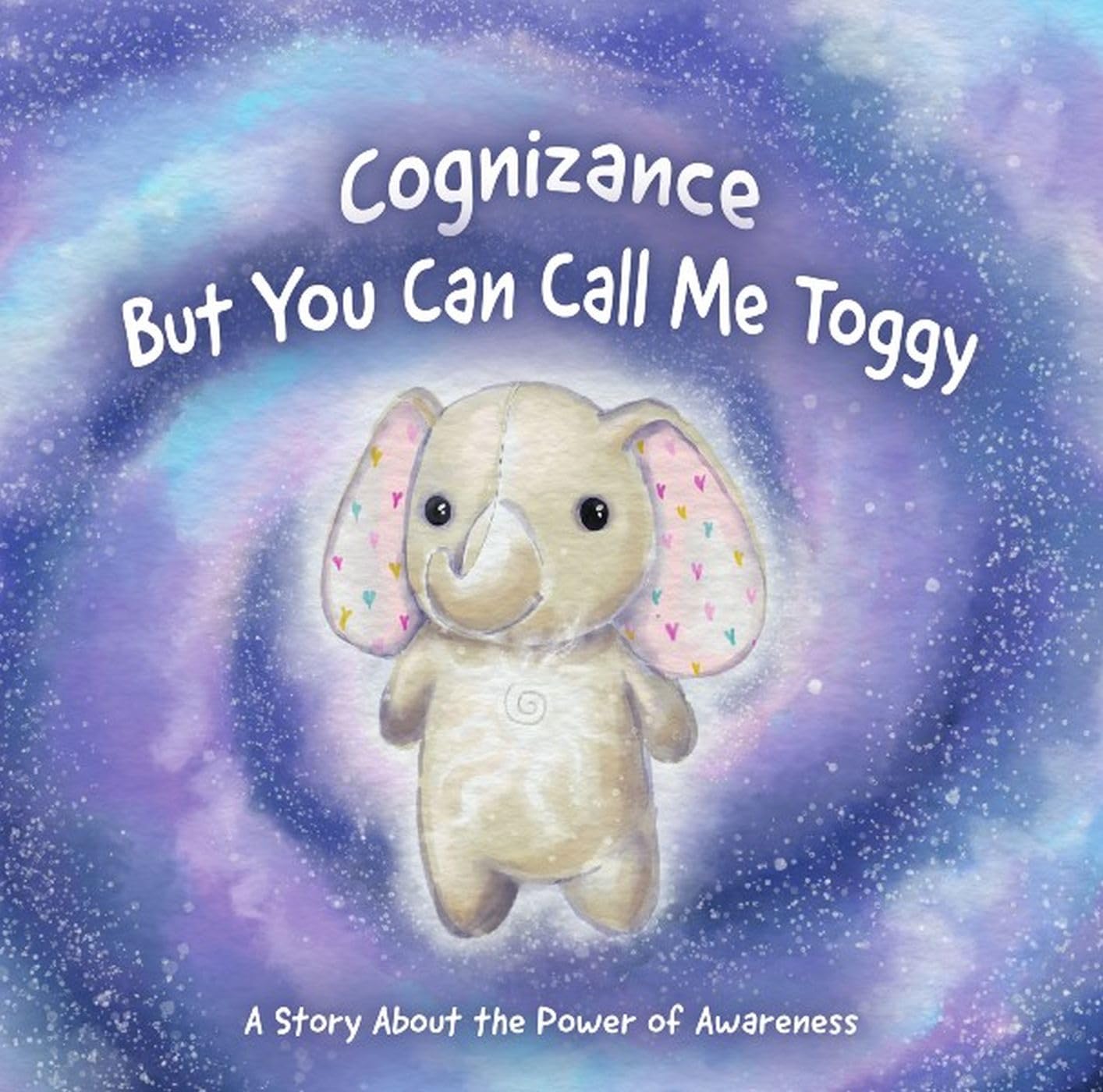
Cognizance by TC & LJ is a gentle children’s story about awareness, empathy, and the quiet power of noticing how other people feel. Toggy begins as a small gray stuffed elephant sitting alone on a shelf in a Manhattan boutique. After a family brings him home, a warm light awakens inside him, and he gradually realizes that he can sense emotions others might overlook. He notices joy, sadness, worry, and peace, and he learns that simply paying attention can be an act of love. That idea gives the story a clear emotional center without making Toggy feel like a traditional superhero. His gift is attentiveness, and the book treats that as something meaningful and powerful.
The strongest part of the story is the way Toggy’s awareness develops through small moments. His relationship with Snuggs, a worn teddy bear carrying a quiet sadness, is especially effective. Toggy doesn’t try to solve Snuggs’s feelings or give him a speech. He simply moves closer and tells him, “I see you.” That scene captures the book’s message in a way young readers can understand: kindness can begin with paying attention and being present. As Toggy continues caring for Snuggs and the other stuffed animals, his spark seems to spread through the room, creating a feeling of warmth and connection.
The illustrations are a major part of the book’s personality. They have a soft watercolor look, with hazy blues, purples, pinks, and warm washes that make the pages feel dreamy and comforting. Manhattan appears busy and colorful, while the child’s bedroom becomes a calmer, almost glowing space filled with stars, soft light, and cozy stuffed animals. Toggy’s inner spark is shown visually as ribbons or bursts of pale light, so children can literally see the feeling the text is describing. I also liked the visual contrast between crowded city scenes and the quieter nighttime pages. The artwork makes emotional awareness feel almost tangible, especially when Toggy sits beside Snuggs or watches over the sleeping child. The pictures give younger readers plenty to notice even when the text is exploring fairly abstract ideas.
The ending turns Toggy’s discovery into something children can actually practice. Readers are invited to ask themselves how they’re feeling, wonder how someone nearby might be feeling, and think of one small kind thing they can do. That interactive touch fits naturally with the story because Toggy has spent the whole book learning those same habits. Some of the language about consciousness, vibration, and emotional energy is more philosophical than what appears in many picture books, but it matches the authors’ stated goal of encouraging emotional awareness, kindness, self-trust, and connection. Overall, Cognizance: But You Can Call Me Toggy is a warm, reflective story that gives children a memorable little character through whom they can explore empathy, feelings, and the value of truly noticing the people around them.
Pages: 34 | ASIN : B0GZCRTBC7


